

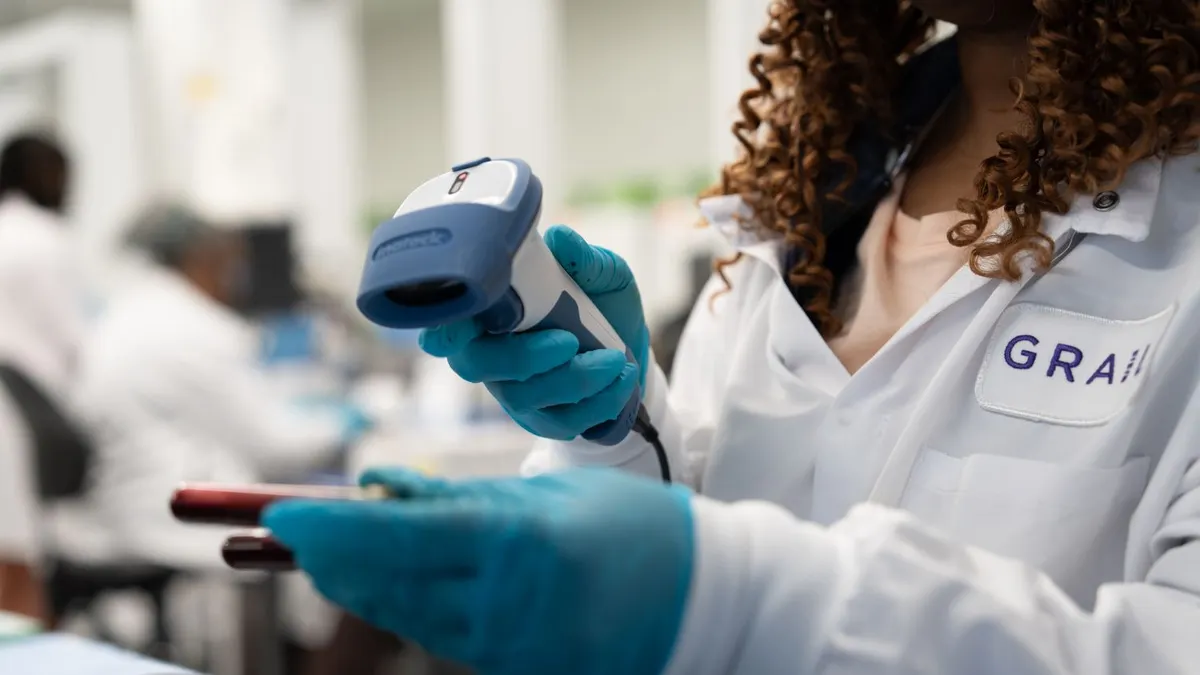
The United States Food and Drug Administration (FDA) has formally scheduled a meeting of its Molecular and Clinical Genetics Panel of the Medical Devices Advisory Committee for September to evaluate the Premarket Approval (PMA) application for Grail’s Galleri multi-cancer early detection (MCED) test. This highly anticipated review marks a pivotal moment for the diagnostics industry, as Galleri seeks to become the first-ever MCED blood test to receive full regulatory approval for clinical use. The outcome of this committee meeting will likely set the regulatory and reimbursement precedent for an emerging class of "liquid biopsy" technologies designed to screen for dozens of cancers simultaneously from a single draw of blood.
The upcoming panel session will involve an independent group of outside experts who will scrutinize the clinical data, safety profile, and efficacy metrics submitted by Grail, a healthcare company recently divested from Illumina. While the FDA is not legally bound by the recommendations of its advisory committees, the agency historically aligns its final decisions with the panel’s consensus in approximately 80% of cases. Consequently, market analysts and healthcare providers are closely monitoring the selection of committee members, as their specific expertise in oncology, epidemiology, and molecular diagnostics will be instrumental in determining the test’s path to market.
The Evolution of the Galleri MCED Technology
Grail’s Galleri test represents a shift in the paradigm of cancer screening, moving away from organ-specific tests—such as mammography for breast cancer or colonoscopy for colorectal cancer—toward a holistic, blood-based approach. The technology functions by identifying cell-free DNA (cfDNA) in the bloodstream. Specifically, it utilizes next-generation sequencing and machine learning algorithms to detect abnormal methylation patterns, which are chemical modifications to DNA that serve as "signatures" for cancer.
One of the most significant features of the Galleri test is its ability to not only detect the presence of a cancer signal but also to predict the "Cancer Signal Origin" (CSO). According to Grail, the test can identify signals shared by more than 50 types of cancer, many of which currently lack standardized screening protocols, such as pancreatic, esophageal, and ovarian cancers. The FDA granted Galleri a "Breakthrough Device" designation in 2018, a status intended to expedite the development and review of technologies that provide for more effective treatment or diagnosis of life-threatening diseases.
Chronology of Regulatory and Clinical Milestones
The journey toward the September advisory committee meeting has been marked by several years of intensive clinical research and corporate restructuring. Grail first introduced Galleri as a Laboratory Developed Test (LDT) in 2021, allowing it to be prescribed by physicians in the United States under the Clinical Laboratory Improvement Amendments (CLIA) framework. However, a full PMA from the FDA is required for broader commercialization, widespread insurance coverage, and potential inclusion in standard-of-care screening guidelines.
A critical juncture in this timeline occurred earlier this year when Grail officially submitted its PMA application. This submission was supported by data from the PATHFINDER study and the larger CCGA (Circulating Cell-free Genome Atlas) study, which evaluated the test’s performance across thousands of participants. However, the regulatory landscape became more complex following the release of results from a landmark three-year trial conducted in partnership with the United Kingdom’s National Health Service (NHS).
The NHS-Galleri trial, involving 140,000 participants, was designed to determine if the test could significantly reduce the incidence of late-stage (Stage III and IV) cancer diagnoses in an asymptomatic population. In a disclosure that followed the PMA filing, Grail revealed that the study failed to meet its primary endpoint of a statistically significant reduction in late-stage cancer diagnoses compared to the control group. Despite this, the company highlighted a "favorable trend" toward a reduction in Stage III and IV diagnoses within a specific subset of 12 high-signal cancers.
Analysis of Recent Clinical Data and Executive Leadership
The failure to meet the primary endpoint in the NHS trial has become a central point of discussion for the upcoming FDA panel. Critics and some members of the medical community have raised concerns regarding the "stage shift" hypothesis—the idea that detecting cancer earlier necessarily leads to better outcomes. The FDA panel is expected to debate whether the "favorable trends" cited by Grail are sufficient to prove clinical utility, or if the lack of statistical significance in the primary endpoint suggests a need for further long-term mortality data.
Amidst these clinical developments, Grail underwent a leadership transition. In June, Bob Ofman assumed the role of Chief Executive Officer, succeeding Bob Ragusa. During a recent earnings call, Ofman defended the clinical value of the Galleri test, asserting that the totality of Grail’s research supports the potential for MCED screening to identify cancers at earlier, more treatable stages when implemented at a population scale. Ofman’s leadership comes at a time when Grail must prove its viability as a standalone entity following its multi-billion dollar divestiture from Illumina, a move mandated by antitrust regulators in the U.S. and Europe.
Financial performance data for the second quarter of 2024 suggests that despite regulatory hurdles, there is significant market demand for the test. Grail reported selling more than 61,000 Galleri tests during the quarter, representing a 35% increase in volume year-over-year. The company has also expanded its sales and medical affairs teams, signaling a commitment to aggressive commercialization should the FDA grant approval.
Market Implications and Competitive Landscape
The diagnostic industry is watching the Grail proceedings as a bellwether for the entire MCED sector. While several other companies are developing similar technologies, Grail remains the frontrunner in the race for FDA approval.

- Abbott: The global healthcare giant has expressed interest in the MCED space, acknowledging a "hunger" in the market for multi-cancer screenings, though its internal programs remain in various stages of development.
- Exact Sciences: Known for the Cologuard stool-based test, Exact Sciences is developing its own blood-based multi-cancer test, leveraging its extensive commercial infrastructure.
- Guardant Health: While Guardant recently received FDA approval for "Shield," a blood test for colorectal cancer screening, it serves as a specialized predecessor to the more expansive multi-cancer approach sought by Grail.
Dan Brennan, an analyst at TD Cowen, noted in a research briefing that the probability of FDA approval for Galleri stands at approximately 75%. Brennan emphasized that the specific composition of the September advisory committee—whether it leans toward conservative epidemiologists or more innovation-focused oncologists—will be the most reliable indicator of the final outcome.
Potential Impact on Public Health and Insurance Coverage
If the FDA grants premarket approval, the implications for the American healthcare system would be profound. Currently, most Galleri tests are paid for out-of-pocket by patients or through employer-sponsored health programs, with a price tag often exceeding $900. FDA approval is the primary prerequisite for a National Coverage Determination (NCD) from the Centers for Medicare & Medicaid Services (CMS).
A positive FDA decision would also pave the way for the American Cancer Society and the U.S. Preventive Services Task Force (USPSTF) to evaluate the test for inclusion in national screening guidelines. However, these bodies typically require rigorous evidence of mortality reduction, a metric that may take years to fully establish.
The public health debate centers on the balance between early detection and the risk of overdiagnosis. One of the risks of MCED tests is the potential for "false positives" or the detection of indolent tumors that might never have caused harm to the patient. Such results can lead to invasive follow-up procedures, patient anxiety, and increased healthcare costs. The FDA panel will likely demand clear data on the test’s specificity—its ability to correctly identify those without cancer—to ensure that the benefits of early detection outweigh the systemic burdens of diagnostic workups for false signals.
Conclusion and Future Outlook
The September meeting of the Molecular and Clinical Genetics Panel will be a defining moment for Grail and the broader field of genomic medicine. The committee will be tasked with weighing the innovative potential of a 50-cancer screening tool against the complexities of the NHS trial results and the fundamental requirements of clinical evidence.
Should the panel offer a favorable recommendation, Grail could see a formal FDA approval by late 2024 or early 2025. This would not only validate the company’s methylation-based platform but also catalyze a new era in oncology where "cancer" is treated as a systemic condition detectable through a routine blood draw rather than a series of disconnected, organ-specific symptoms. As the date of the committee meeting approaches, the healthcare industry remains focused on the experts who will ultimately decide the fate of this transformative diagnostic technology.
