







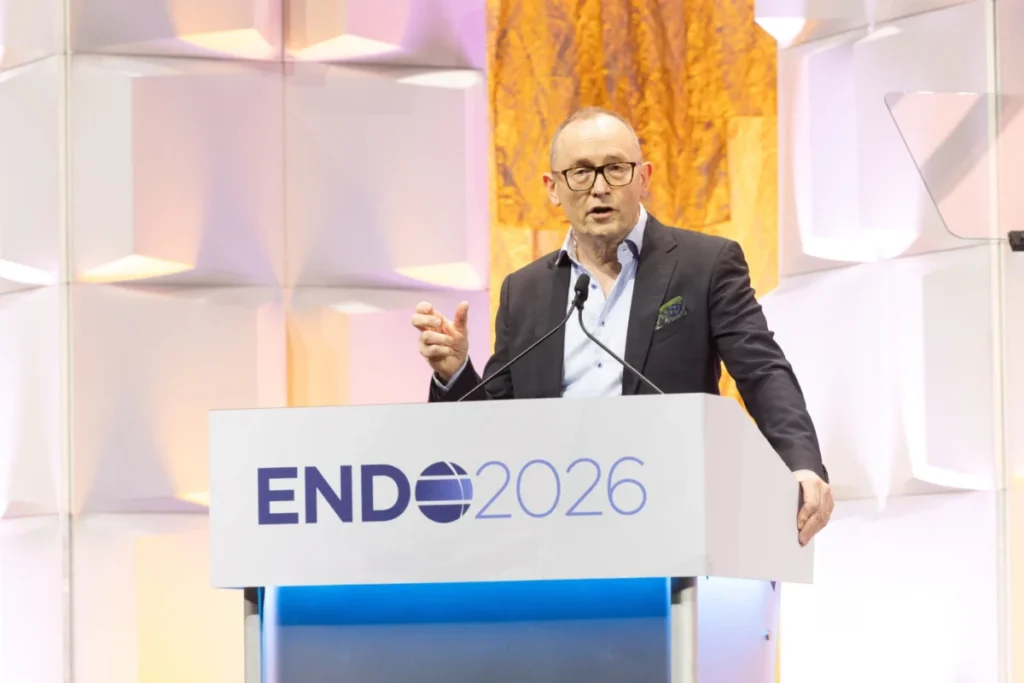
The selection of Martin Reincke, MD, as the recipient of the 2026 Outstanding Scholarly Physician Award marks a significant milestone for the international endocrinology community, highlighting a career defined by the seamless integration of high-level academic research and compassionate clinical practice. As a professor of endocrinology and the former chair of Medical Department IV at Ludwig-Maximilians University (LMU) Hospital in Munich, Germany, Dr. Reincke has spent decades unraveling the complexities of the adrenal and pituitary glands. His work has not only advanced the global understanding of hormonal disorders but has also established new standards for how physician-scientists bridge the gap between the laboratory bench and the patient’s bedside.
The Outstanding Scholarly Physician Award is one of the highest honors bestowed by the Endocrine Society, an organization representing over 18,000 physicians and scientists across 120 countries. The award specifically recognizes individuals who have made exceptional contributions to the practice of clinical endocrinology within an academic setting. For Dr. Reincke, the recognition is a testament to a career dedicated to large-scale international collaborations and the pursuit of better diagnostic and therapeutic outcomes for patients suffering from rare and complex endocrine conditions.
A Career Built on Clinical and Academic Excellence
Dr. Reincke’s tenure at LMU Munich has been characterized by a relentless focus on the adrenal and pituitary axes. Under his leadership, Medical Department IV became a global hub for endocrine research, particularly in the study of primary aldosteronism and Cushing’s syndrome. These conditions, while often difficult to diagnose, carry significant morbidity and mortality if left untreated.
Primary aldosteronism (PA), once thought to be a rare cause of hypertension, is now recognized as the most common form of secondary hypertension, affecting an estimated 5% to 10% of all hypertensive patients. Dr. Reincke’s research has been instrumental in shifting this paradigm. By spearheading the German Conn’s Registry and leading international research consortia, he has provided the clinical data necessary to advocate for more widespread screening of PA. His work has demonstrated that early detection and targeted treatment—whether through mineralocorticoid receptor antagonists or adrenalectomy—can significantly reduce cardiovascular risks, including stroke and heart failure.
Similarly, his contributions to the study of Cushing’s syndrome—a condition caused by an excess of cortisol—have focused on the molecular drivers of the disease. Cushing’s syndrome remains one of the most challenging diagnoses in endocrinology due to its diverse clinical presentation and the subtlety of biochemical testing. Dr. Reincke’s collaborative efforts have sought to identify genetic markers and improve imaging techniques to ensure that patients receive timely interventions, preventing the long-term metabolic and psychological damage associated with chronic hypercortisolism.
The Evolution of Endocrine Research: A Chronological Perspective
To understand the magnitude of Dr. Reincke’s impact, one must look at the timeline of his professional development. His journey began in an era when molecular biology was just beginning to intersect with clinical medicine.
In the early 1990s, Dr. Reincke held a pivotal fellowship at the National Institutes of Health (NIH) in the United States, where he worked under the mentorship of George Chrousos, MD. Dr. Chrousos, a titan in the field of stress biology and the hypothalamic-pituitary-adrenal (HPA) axis, introduced Reincke to the burgeoning field of molecular endocrinology. This period was transformative, instilling in Reincke a passion for the genetic underpinnings of endocrine diseases—a passion that would define his subsequent research in Munich.
Upon returning to Germany, Reincke found another influential mentor in the late Bruno Allolio, MD. From 1949 to 2015, Dr. Allolio was a leading figure in German endocrinology, known for his work on adrenal cancer and pituitary disorders. Working alongside Allolio for 12 years, Reincke refined his clinical acumen. This dual mentorship—Chrousos providing the scientific rigor and Allolio providing the clinical compassion—formed the bedrock of Reincke’s "scholarly physician" identity.
Throughout the 2000s and 2010s, Reincke emerged as a leader in European endocrinology. He played a central role in the European Network for the Study of Adrenal Tumors (ENSAT), fostering a culture of data sharing and multicenter trials that was previously rare in the study of orphan diseases. This collaborative spirit led to the development of standardized guidelines for the management of adrenal incidentalomas and the treatment of adrenocortical carcinoma.
Supporting Data and the Burden of Adrenal Disease
The importance of Dr. Reincke’s work is underscored by the epidemiological data surrounding adrenal disorders. Hypertension affects over 1 billion people worldwide. If 10% of these cases are rooted in primary aldosteronism, as recent studies suggest, then 100 million people globally are living with a potentially curable or specifically treatable form of high blood pressure.
Research published by Reincke and his colleagues has shown that patients with PA have a higher risk of target organ damage compared to those with essential hypertension of the same severity. Specifically, they face a:
- 4-fold higher risk of stroke.
- 6-fold higher risk of myocardial infarction.
- 12-fold higher risk of atrial fibrillation.
By improving the scholarly understanding of these statistics among general practitioners and cardiologists, Dr. Reincke has directly influenced clinical guidelines that now prioritize screening in high-risk populations.
In the realm of Cushing’s syndrome, the data is equally compelling. The diagnostic delay for Cushing’s can often exceed two to three years, during which time patients suffer from obesity, diabetes, osteoporosis, and severe depression. Dr. Reincke’s push for better biochemical assays and the use of AI-driven diagnostic algorithms aims to cut this delay in half, significantly improving the quality of life for these patients.
Reactions from the Global Scientific Community
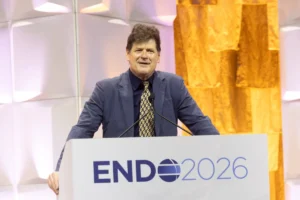
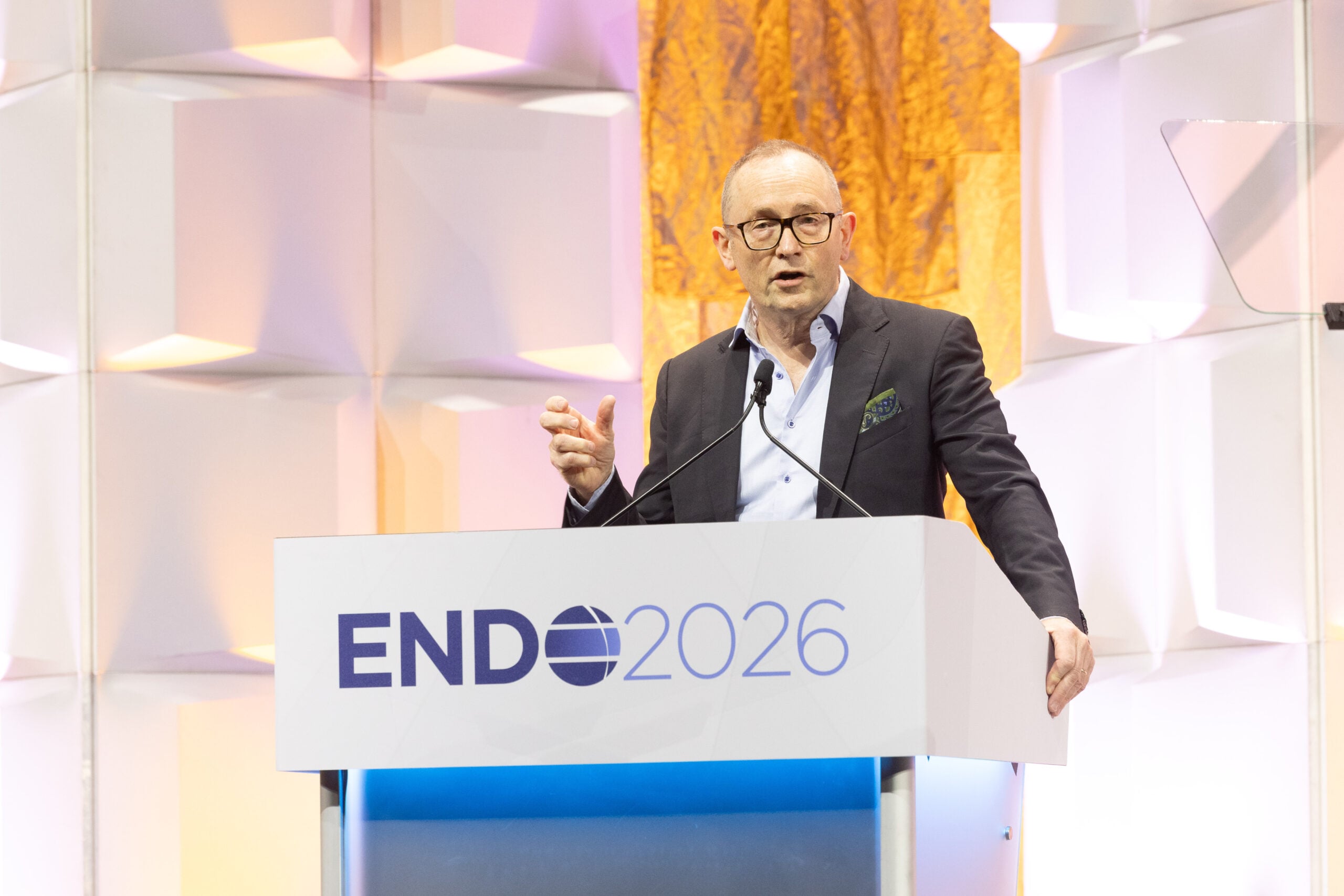
The announcement of Dr. Reincke’s 2026 Laureate Award was met with widespread acclaim from his peers. During the ENDO 2026 plenary session, fellow laureates and leaders of the Endocrine Society praised his ability to mentor the next generation.
Outgoing Endocrine Society President Carol Lange, PhD, noted that Dr. Reincke embodies the "ideal of the academic physician," someone who not only advances science but ensures that science remains human-centric. Nominators for the award described him as a "role model par excellence," particularly for his ability to navigate the complexities of modern healthcare systems while maintaining a prolific research output.
Colleagues from LMU Munich and the German Society of Endocrinology (DGE) highlighted his "fearless" approach to new technologies. In recent years, Dr. Reincke has been a vocal advocate for the integration of artificial intelligence and machine learning in endocrine imaging, arguing that these tools can help clinicians identify subtle adrenal abnormalities that the human eye might miss.
Broader Impact and the Future of Endocrinology
Looking toward the future, Dr. Reincke’s focus has shifted toward the "next generation." He observes that today’s young endocrinologists are entering a field that is fundamentally different from the one he joined in the 1980s. The convergence of genomics, big data, and advanced imaging has created a landscape where "precision endocrinology" is no longer a buzzword but a clinical reality.
Dr. Reincke’s hope is that the coming generation will utilize these technological advancements to ask "bigger questions." He emphasizes that while AI can process datasets at a speed impossible for humans, it cannot replace the clinical intuition and empathy required to treat a patient. This philosophy—that every data point represents a person—is perhaps his most enduring legacy.
The implications of his work extend into the burgeoning field of "theranostics," where diagnostic imaging and targeted therapy are combined. As research into the molecular pathways of the adrenal cortex continues to evolve, the groundwork laid by Dr. Reincke in identifying specific mutations (such as KCNJ5 in adrenal adenomas) will be the foundation for personalized pharmacological treatments that could one day replace invasive surgeries.
A Life Beyond the Laboratory
Despite the demanding nature of his roles, Dr. Reincke has often spoken about the necessity of maintaining a life outside of medicine to prevent burnout and maintain a fresh perspective. His passion for the violin is well-documented within the medical community. He frequently draws parallels between the discipline required for music and the precision required for science.
His recent performance of Dvořák’s Dumky Trio—a piece known for its emotional volatility, shifting from melancholy to exuberance—serves as a metaphor for the life of a physician. In his view, the "joy, longing, despair, and hope" found in music are the same emotions patients experience when facing chronic illness. By engaging with art, Dr. Reincke argues, physicians can better empathize with the human condition, ultimately making them better healers.
Conclusion
The 2026 Outstanding Scholarly Physician Award honors a man who has dedicated his life to the "master conductor" of the body—the pituitary—and the small but mighty adrenal glands. Martin Reincke’s career serves as a roadmap for future clinicians, demonstrating that the pinnacle of medical achievement is reached not just through individual discovery, but through collaboration, mentorship, and a steadfast commitment to the person behind the patient file. As the global medical community celebrates his contributions, the focus remains on the millions of patients whose lives have been, and will continue to be, improved by his scholarly pursuits.