







The 2026 edition of SupplySide Global, a premier trade show for the health and nutrition industry, was awash with creatine. From the vibrant displays of canned beverages and chewy supplements to the innovative formulations of "shielded" powders and convenient cap-release bottles, creatine was an undeniable focal point. Its presence dominated trend slides and became the ubiquitous topic of conversation among attendees. However, beneath the surface of pervasive marketing, deeper discussions revealed a nuanced industry landscape, with experts questioning the true extent of recent advancements and their long-term viability. This report delves into the key takeaways from the show floor and educational sessions, providing essential insights for brands navigating the evolving creatine market.
Creatine Remains the Undisputed "Golden Child" of Performance Nutrition
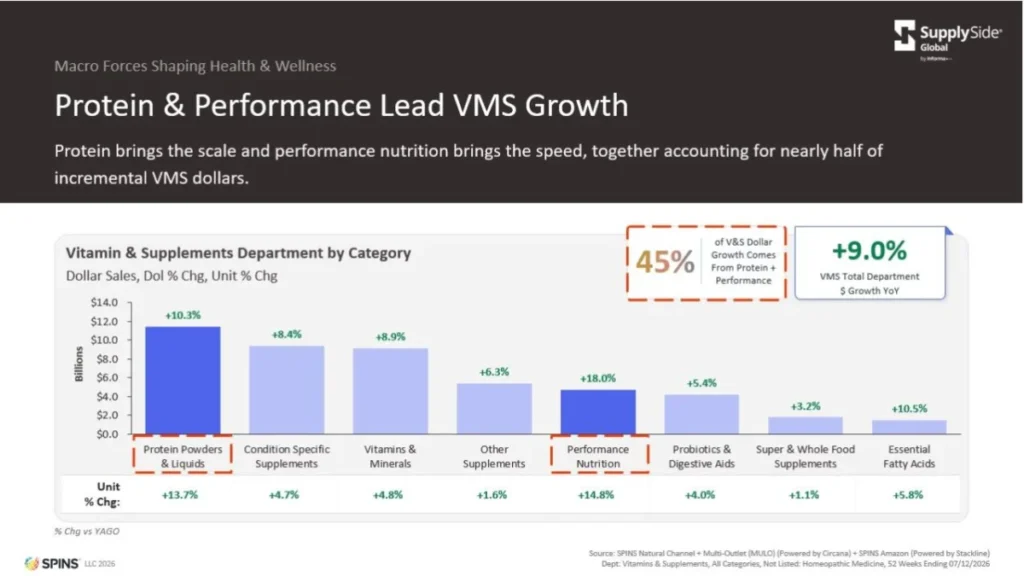
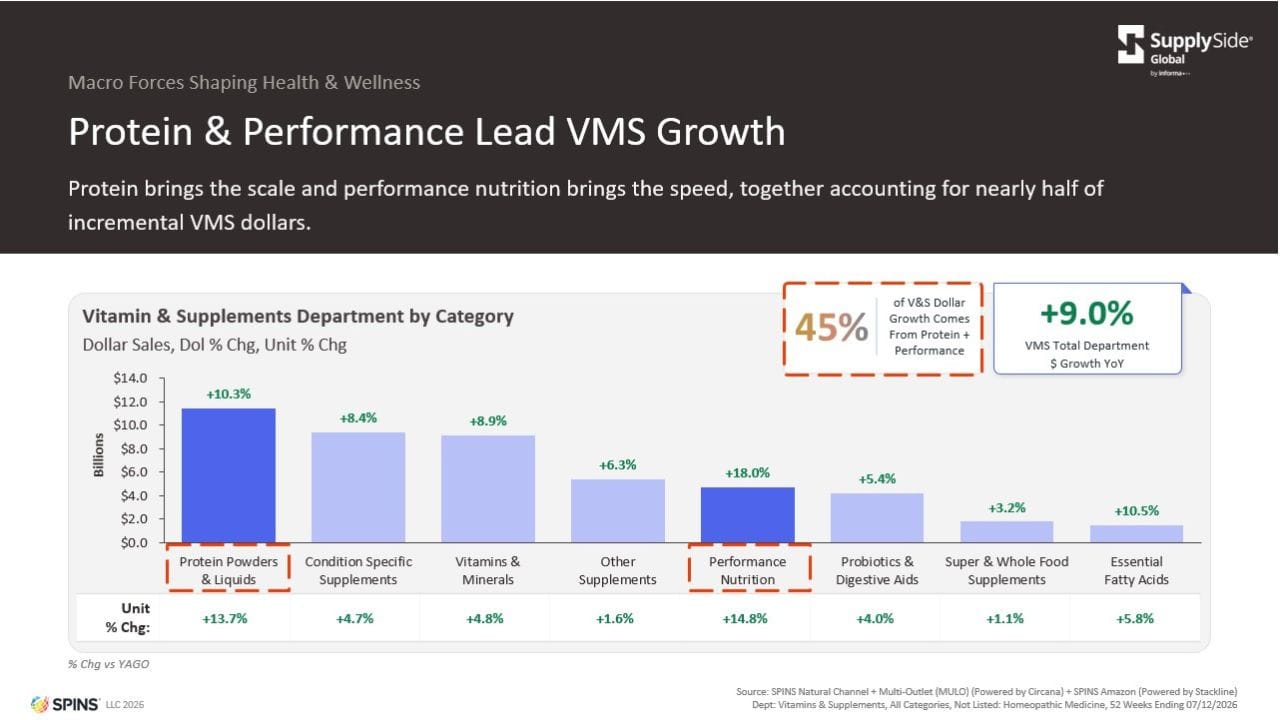
Erika Craft, a prominent analyst from Nutrition Business Journal, highlighted the burgeoning market of "optimizers" – a segment of the population intensely focused on the precise details of their health and fitness. This group, representing approximately 48% of consumers, exhibits a particular affinity for ingredients like creatine, fiber, and collagen, with "younger optimizers" showing a pronounced interest. This trend has propelled creatine into what SPINS’ Rahul Roy describes as one of the "golden children categories" of protein and performance nutrition. These categories collectively accounted for a significant 45% of the total dollar growth in the vitamins and supplements sector over the past year. Roy confidently predicted creatine’s continued dominance, forecasting it to be "the star of the show again" in the upcoming year.

The sheer volume of creatine products showcased at SupplySide Global underscores its enduring appeal. Major ingredient suppliers and finished product manufacturers alike featured extensive lines of creatine-based offerings, reflecting a robust demand driven by both established athletes and a growing cohort of health-conscious individuals. The visual saturation of creatine at the event served as a powerful testament to its market penetration and its perceived value in enhancing physical performance and overall well-being.
A Vast Untapped Market: The Creatine Awareness Gap
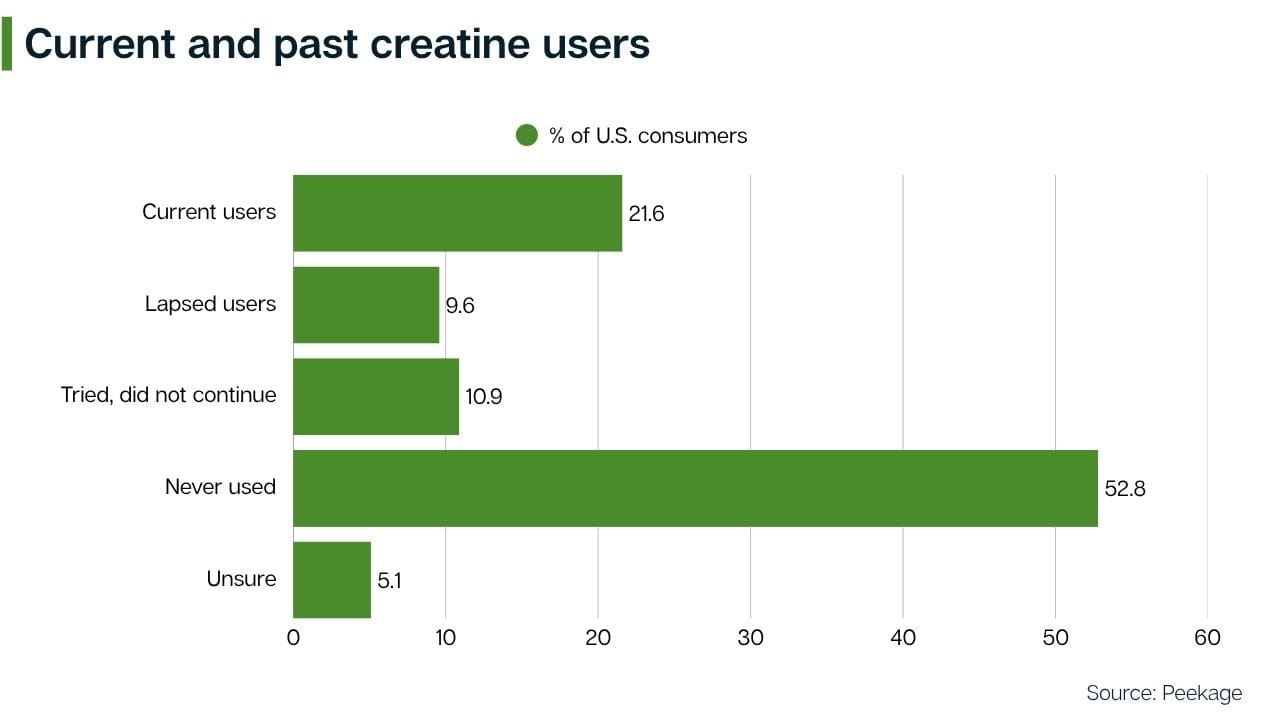
Despite its overwhelming presence at industry events, a significant portion of the general population remains largely unaware of or has yet to incorporate creatine into their supplement regimens. Rachael Jennings, co-founder of Jenerise, observed, "It feels almost like it’s overdone from within where we are. But when you’re out in the real world, it’s really not." She cited industry data suggesting that fewer than 5% of U.S. households currently stock creatine. While consumer surveys, such as one conducted by Peekage in August 2026, indicate that approximately 21% of individuals are actively taking creatine, this figure still represents a substantial gap when compared to the reported 82.5% of people expressing interest in the ingredient. This substantial awareness gap presents a clear opportunity for brands to educate and convert a broader consumer base, emphasizing the established benefits and safety profile of creatine. The challenge for the industry, therefore, lies not in the absence of potential, but in the effective communication and accessibility of this well-researched compound.
Regulatory Hurdles and the "Gains Tax" Emerge
The escalating popularity of creatine has inevitably attracted the attention of regulatory bodies. New York’s recent legislation targeting muscle-building and weight-loss supplements has placed creatine among a select group of ingredients subject to age restrictions. This necessitates "lock and key" storage at retail points of sale, adding a layer of operational complexity for distributors and retailers.
More significantly, several major retailers have opted to cease shipping creatine to New York altogether, a preemptive measure that could signal broader industry shifts. This development is particularly pertinent given the impending implementation of California’s age law, AB 2030, scheduled to take effect on January 1st. Notably, California’s law does not exempt protein or fiber, unlike New York’s.
Rahul Roy, a New York resident and long-time creatine user, shared his personal experience, noting an approximate $6 "NYC health surcharge" on his online orders to cover the required delivery signature. He remarked, "Great that it has more research injected into it, but now we have a lock and key, too." This "gains tax," as it is colloquially becoming known, represents an emerging cost associated with compliance and distribution, potentially impacting consumer pricing and accessibility in certain markets. The implications of these regulatory actions are far-reaching, suggesting a need for proactive engagement with lawmakers and a commitment to transparent product labeling and responsible marketing practices.
Branded Monohydrate Dominates, Signaling Purity as a Key Differentiator
The SupplySide Global show floor was replete with branded creatine products, each vying for market attention. However, a closer examination revealed that the vast majority of these offerings were, in essence, creatine monohydrate. The distinction lay in enhanced refinement and smoother textures, rather than fundamentally novel molecular structures. Alternative forms of creatine, which some analysts had anticipated would regain prominence, were conspicuously absent, suggesting a temporary lull in innovation within that specific niche.
Scott Dicker of SPINS explained the proliferation of branded monohydrate, stating that companies are "doing whatever they need to do to stand out." This branding strategy serves to "signal purity and quality," particularly in response to consumer concerns about the critical testing of German-sourced creatine. Purity has emerged as a paramount priority for consumers, and brands are leveraging their proprietary designations to address this demand. Dicker’s forecast indicates that these new branded monohydrate products are likely to capture market share from generic creatine rather than from established premium brands like Creapure, indicating a competitive dynamic focused on differentiation within a well-understood ingredient category.
Innovative Delivery Formats Beyond Ready-to-Drink Beverages
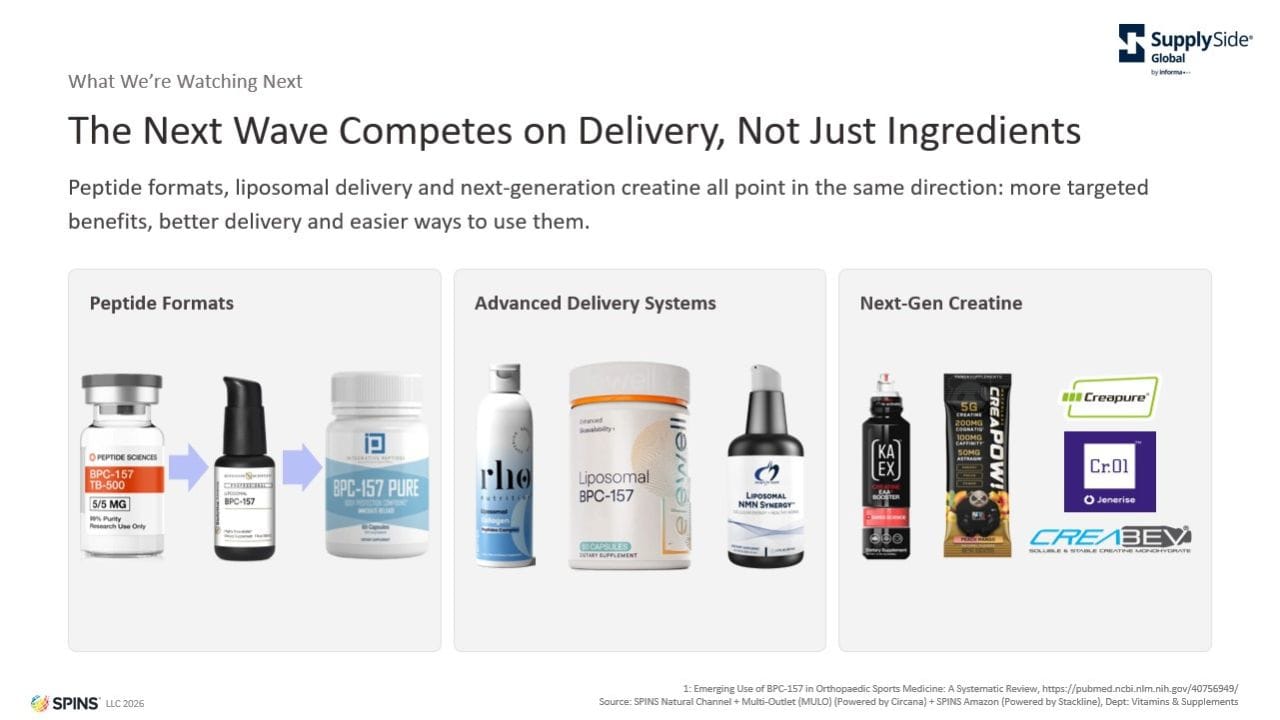
While the core creatine molecule may not be undergoing radical transformation, its delivery mechanisms are witnessing significant innovation. Rahul Roy highlighted several novel formats, including bottle caps designed to release creatine into a beverage upon activation and a waterless "dry-scoop" powder intended for direct oral consumption.
Kevin Kerr, director of strategic initiatives at CreaBoost, a monohydrate offshoot of Vireo Systems, announced that their U.S.-based creatine production facility will initially focus on soft chews, with plans to expand into bars. This strategy aims to appeal to consumers seeking higher daily doses in more palatable formats. Kerr noted, "You can make a creatine milkshake and put 20 grams in it, but that’s not enjoyable." This sentiment underscores the industry’s ongoing effort to balance efficacy with consumer experience.
Rachael Jennings anticipates the next wave of innovation to emerge in savory food applications, moving beyond the confectionery-like formats. However, the inherent challenges of heat, water, and time in baking processes, which can degrade creatine into inactive creatinine, remain a significant hurdle for product developers in this category.
The Elusive Shelf-Stable Creatine Beverage: A Work in Progress
The development of a shelf-stable creatine beverage continues to be a significant challenge for the industry. While several companies at SupplySide Global claimed to have achieved this breakthrough, skepticism remains. CoreFX, for instance, introduced its "shielded" creatine, CreaSHLD-IN, at the event, asserting that it demonstrated no detectable creatinine levels in 24-hour water tests.
However, not all industry professionals are convinced that coated creatines are readily adaptable to mainstream beverage applications. Andy Dratt of Imbibe, speaking on a functional beverage panel, expressed reservations, stating, "It’s very hard to make that go into a liquid, and it’s even harder to make that thermally stable." He differentiated between refrigerated, pH-neutral drinks and those undergoing high-heat processing or containing acidic ingredients, suggesting that "interest and enthusiasm is ahead of science" in this area.
Anthony Almada, a long-standing creatine researcher, echoed these concerns, cautioning against an industry fixation on "out-of-body chemistry and out-of-body stability." He questioned the in-vivo behavior of coated creatines, given that plain monohydrate powder already boasts near 100% bioavailability. The current scientific understanding of how coated creatine interacts within the human body remains incomplete. Reflecting this caution, Jenerise is deliberately delaying the launch of its ready-to-drink (RTD) creatine project, which has been in development for approximately two years. Jennings emphasized, "We’d rather get it right than be first," highlighting a prevailing sentiment of prioritizing scientific validation over premature market entry.
Creatine Dosage: A Shifting Landscape of Higher and Lower Recommendations
The established standard dose of 5 grams of creatine per day is undergoing a re-evaluation, with evidence suggesting a divergence towards both higher and lower intake recommendations. The Council for Responsible Nutrition (CRN) recently updated its guidance, raising the "highest observed intake" for adults from 5 to 10 grams per day, based on an extensive review of 162 clinical studies. This aligns with discussions from the previous year’s SupplySide Global, where researchers proposed 8-10 grams for bone health and up to 20 grams for cognitive support. While CRN’s standard serves as a safety benchmark rather than a prescriptive dosing recommendation, it represents a significant industry endorsement of higher creatine intake levels.
Concurrently, several manufacturers, including Kevin Kerr of CreaBoost, are exploring a more frequent, lower-dose approach, such as 3 grams twice daily. This strategy is supported by research presented by Dr. Darren Candow at last year’s SupplySide Global, which indicated that creatine accumulation can be achieved with doses as small as 1 gram. Kerr observed, "If you dose smaller amounts throughout the day, that absorption really does improve." Research also suggests that even 1 to 1.5 grams can be effective, particularly for specific populations like women who have lower dietary intake of creatine. These smaller doses are particularly amenable to gummy formats, offering a convenient alternative for daily supplementation.
Despite these emerging dosing strategies, when industry experts were polled about their personal creatine intake at the last two SupplySide Global events, the overwhelming consensus was a daily intake of at least 8-10 grams, with many reporting double that amount. This suggests that while research may be exploring more nuanced dosing protocols, current expert practice often leans towards higher, more established intake levels.
Gummy Format: Consumer Appeal Trumps Purity Concerns, For Now
Creatine gummies have emerged as the fastest-growing and most scrutinized format in the creatine market. Past testing has revealed significant discrepancies, with some products containing substantially less creatine than labeled. Despite these findings, Nutrition Business Journal’s Erika Craft noted that this has not deterred mass-market consumers. When informed about potential under-dosing, consumers frequently responded, "Every single one of them says, ‘I don’t care. I like the gummy. It’s fun, and it makes me consistent to take it every day.’" This indicates a consumer preference for convenience and palatability that, at present, outweighs concerns about precise dosage accuracy. The takeaway for brands is clear: while consumers may exhibit a degree of tolerance for less accurate gummy formulations, testing laboratories, retailers, and regulatory bodies are unlikely to share this leniency, suggesting a future where stringent quality control will become increasingly critical for this popular format.
Cognitive Benefits of Creatine: Hype Versus Scientific Reality
The application of creatine for cognitive enhancement, particularly for women in midlife experiencing "brain fog," is a significant area of marketing focus. Industry surveys indicate that cognitive health is a leading reason for consumers to consider creatine supplementation. However, a notable caveat is that less than a third of users report experiencing tangible cognitive benefits.
The scientific research into creatine and cognition is still in its nascent stages. Some experts at SupplySide Global expressed skepticism about the current claims. Anthony Almada voiced his reservations, stating, "I find it mythical. No one has ever shown that creatine goes into brain cells, into neurons." While imaging can detect creatine in the brain, he argued, it does not definitively prove intracellular accumulation. Furthermore, Almada questioned the robustness of existing studies, citing the difficulty of maintaining proper blinding when a gritty, high-dose powder is easily distinguishable from a placebo. He advocates for more rigorous research, proposing studies utilizing hypoxic air to induce brain energetic stress while conducting cognitive function tests within high-powered MRI machines. "Right now, the loop is wide open," he concluded, underscoring the need for further scientific validation to substantiate these claims. The current enthusiasm for creatine’s cognitive benefits appears to outpace the conclusive scientific evidence, presenting a challenge for brands aiming to market responsibly in this emerging area.