








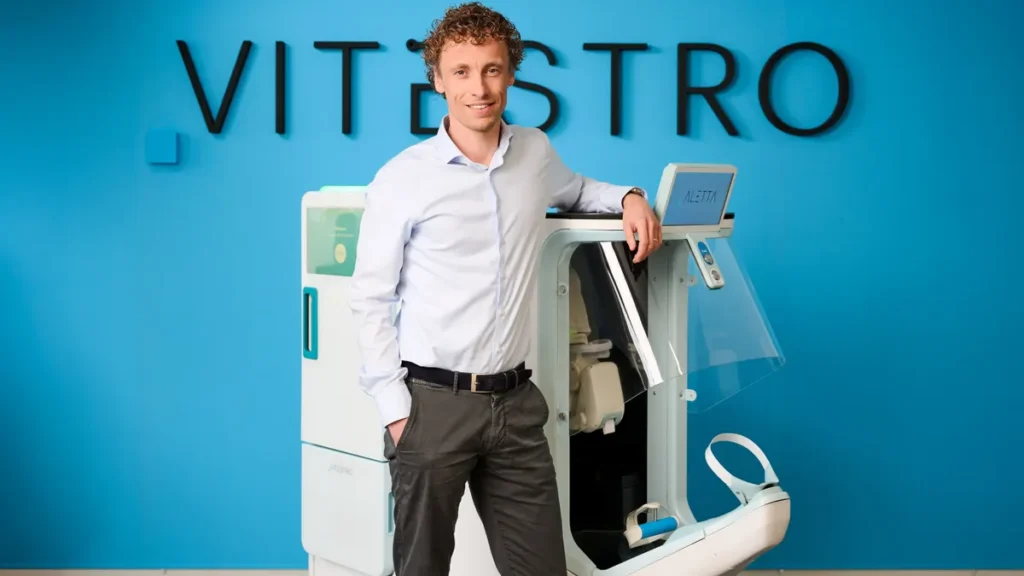
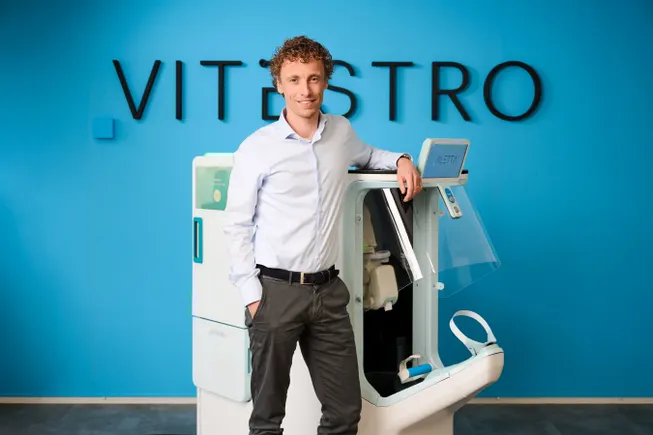
The U.S. Food and Drug Administration (FDA) has officially granted De Novo authorization to Vitestro, a Dutch medical robotics company, for its Aletta autonomous blood-drawing device. This landmark decision marks the first time the agency has cleared a robotic system designed to perform end-to-end venipuncture, a procedure that has remained largely manual since the inception of modern diagnostic medicine. By leveraging advanced artificial intelligence (AI), multi-modal ultrasound imaging, and high-precision robotics, the Aletta system aims to modernize the clinical laboratory workflow while providing a robust solution to the systemic shortage of phlebotomists currently plaguing the American healthcare system.
The De Novo authorization is a significant regulatory milestone, reserved for novel medical devices that have no existing "predicate" on the market but demonstrate a low-to-moderate risk profile. With this clearance, the FDA has not only approved a specific product but has also established a new regulatory classification for autonomous blood-drawing devices. This move includes the implementation of "special controls" that define the performance, clinical testing, and labeling requirements for future devices in this category, effectively creating a roadmap for the integration of robotics into routine diagnostic procedures.
Engineering the Future of Venipuncture
The Aletta device represents a convergence of several cutting-edge technologies. At its core, the system utilizes a proprietary AI-driven software stack to interpret real-time data from integrated ultrasound sensors. Unlike traditional manual venipuncture, which relies on the tactile skill and visual judgment of a human technician, Aletta employs multiple forms of ultrasound to create a three-dimensional map of the patient’s vasculature. This allows the device to distinguish with high precision between veins and arteries, identify the optimal depth and angle for needle insertion, and avoid nerves or valves that could cause patient discomfort or sample contamination.
The procedure is entirely automated. Once a patient is seated and their arm is positioned, the device applies a tourniquet, disinfects the skin, and performs the needle insertion. The robotic arm is designed for sub-millimeter accuracy, which Vitestro claims reduces the likelihood of "missed" veins and the subsequent need for multiple needle sticks—a common point of friction in patient satisfaction. After the blood is collected into standard vacuum tubes, the device retracts the needle, applies a bandage, and notifies the supervisor that the procedure is complete.
While the device is autonomous, it is designed to operate under the supervision of a trained healthcare professional. The role of the supervising phlebotomist is redirected from the manual task of needle insertion to a more managerial function. Responsibilities include verifying patient identity, ensuring collection tubes are processed in the correct order of draw, and responding to any system alerts. Crucially, the supervisor is also responsible for sanitizing the device between patients, ensuring that the high-throughput nature of the machine does not compromise hygiene standards.
Addressing the Critical Shortage of Phlebotomy Professionals
The timing of the FDA’s authorization is particularly relevant given the labor crisis facing U.S. healthcare providers. Phlebotomists are the backbone of diagnostic medicine; an estimated 70% of medical decisions are based on laboratory results, the vast majority of which require a blood sample. However, the industry is struggling to maintain an adequate workforce.
Data from the U.S. Bureau of Labor Statistics (BLS) indicates that while the demand for phlebotomists is projected to grow by roughly 8% through 2032—faster than the average for all occupations—the supply is failing to keep pace. High turnover rates, driven by burnout, relatively low wages in some regions, and the repetitive, physically demanding nature of the work, have left many hospitals and outpatient clinics understaffed. In many high-volume facilities, phlebotomy departments face vacancy rates as high as 20%, leading to longer patient wait times and delayed diagnostic results.
By automating the most repetitive and labor-intensive part of the process, Vitestro’s Aletta allows healthcare facilities to process more patients with fewer staff members. This "force multiplier" effect is intended to stabilize laboratory operations, reduce the stress on remaining staff, and ensure that diagnostic services remain accessible to the public.
Strategic Investment and Global Expansion
The path to FDA authorization was supported by a significant infusion of capital and strategic partnerships. In March 2024, Vitestro announced it had raised $70 million in a Series B funding round. The financing was led by a consortium of high-profile investors, reflecting the healthcare industry’s confidence in robotic automation.
Notably, the venture capital arm of Labcorp—one of the largest clinical laboratory networks in the world—participated in the round. Labcorp’s interest is strategic; as a company that employs thousands of phlebotomists and operates thousands of collection sites, the ability to integrate autonomous technology into their workflow could lead to massive gains in operational efficiency. Other prominent investors included the Mayo Clinic and Sutter Health, as well as Fred Moll, the co-founder of Intuitive Surgical and a pioneer in the field of medical robotics.
Before entering the U.S. market, Vitestro secured a CE mark under the European Medical Device Regulation (MDR) in early 2024. This allowed the company to begin a limited commercial rollout in Europe, gathering real-world data and refining the user interface. The $70 million in funding is currently being used to scale manufacturing capabilities, expand clinical research, and build the commercial infrastructure necessary for a full-scale launch in the United States.
Clinical Validation and Patient Safety
The FDA’s decision was informed by extensive clinical data, including results from the A.D.A.P.T. (Autonomous Blood Drawing Procedure Trial) study. This trial, one of the largest of its kind, involved over 1,500 patients and was designed to test the safety, efficacy, and patient acceptance of the robotic system.
The clinical data demonstrated that the Aletta device achieved a high success rate on the first attempt, comparable to or exceeding the performance of experienced human phlebotomists. Furthermore, patient surveys conducted during the trials indicated a high level of comfort with the robotic procedure. Many patients reported that the consistency of the robotic movement resulted in less pain than manual draws, and the novelty of the technology helped alleviate "needle phobia" for some.

To ensure safety, the FDA’s special controls require Vitestro to provide ongoing evidence of the device’s accuracy. This includes rigorous testing of the AI algorithms to ensure they can accurately identify veins across a diverse range of patient demographics, including variations in skin tone, age, and body mass index (BMI), all of which can affect the visibility and accessibility of veins.
Broader Implications for the Healthcare Ecosystem
The introduction of autonomous venipuncture is expected to have a ripple effect across the healthcare landscape. For hospital administrators, the primary draw is the potential for improved Return on Investment (ROI). While the initial capital expenditure for a robotic system is significant, the reduction in labor costs, the decrease in wasted supplies from failed draws, and the ability to operate 24/7 without fatigue provide a compelling economic case.
Furthermore, the Aletta system is a precursor to a broader trend of "hospital-at-home" and decentralized diagnostics. As the technology matures, Vitestro is reportedly developing next-generation devices that could enable even deeper integration into high-volume clinical workflows, potentially moving the device into retail pharmacy clinics or other community-based settings where skilled phlebotomists are even harder to find.
However, the transition to robotic blood draws is not without its challenges. Integration into existing Laboratory Information Systems (LIS) and Electronic Health Records (EHR) is essential for the seamless tracking of samples. Additionally, healthcare providers will need to invest in training programs to teach staff how to supervise and maintain these complex robotic systems.
Conclusion: A New Era of Diagnostic Efficiency
The FDA’s De Novo authorization of the Aletta device is more than just a win for Vitestro; it is a signal that the era of autonomous clinical procedures has arrived. By addressing the dual challenges of a shrinking workforce and the need for higher diagnostic precision, Vitestro is positioned to fundamentally alter how blood is collected globally.
As the company moves toward full commercialization in the U.S., the medical community will be watching closely to see how the technology performs in the diverse and high-pressure environment of American healthcare. If successful, Aletta may pave the way for a wide range of other autonomous vascular access procedures, from IV insertions to arterial line placements, further cementing the role of robotics in 21st-century medicine. For now, the "robotic phlebotomist" is no longer a concept of the future—it is a regulated reality, ready to meet the demands of a modern patient population.