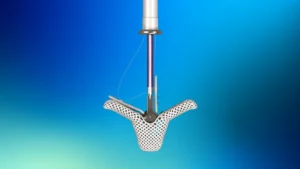










The landscape of urological oncology is undergoing a significant transformation as Francis Medical, a Minnesota-based medical technology firm, accelerates the development and commercialization of its proprietary Vanquish water vapor ablation system. Backed by a strategic investment from Johnson & Johnson Innovation, the corporate venture capital arm of the healthcare giant, Francis Medical is positioning its convective water vapor technology as a potential breakthrough in the treatment of localized prostate cancer. This move represents a pivotal shift in the application of thermal energy within the prostate, transitioning a technology previously utilized for benign conditions into the high-stakes arena of oncological intervention.
The Vanquish system is designed to provide a minimally invasive alternative to traditional radical treatments such as prostatectomy or radiation therapy. By utilizing the natural thermodynamic properties of water vapor, the system targets and destroys cancerous tissue while attempting to preserve the surrounding delicate structures, including the nerves and sphincters responsible for urinary and sexual function. The recent influx of capital from Johnson & Johnson, alongside the proceeds from a successful $80 million Series C financing round, provides the company with the necessary resources to scale its commercial infrastructure, expand market access, and complete the rigorous clinical pathways required for a specific cancer treatment indication from the U.S. Food and Drug Administration (FDA).
The Evolution of Convective Water Vapor Technology
To understand the significance of the Vanquish system, it is essential to examine its technological lineage. The concept of using water vapor for prostate tissue ablation was pioneered by Michael Hoey, the founder of Francis Medical, who previously developed the Rezūm system for Boston Scientific. While Rezūm has become a standard of care for treating Benign Prostatic Hyperplasia (BPH), the Vanquish system represents a sophisticated evolution of that core technology, specifically engineered to meet the precision requirements of oncology.

The fundamental mechanism involves the delivery of sterile water vapor, or steam, into the prostate gland. When the vapor is injected, it undergoes a phase change back into water, releasing 540 calories of stored thermal energy per gram. This energy disperses rapidly and uniformly through the tissue interstices via convection. Unlike conductive heating methods, such as lasers or radiofrequency, which can be inconsistent or limited by the "heat sink" effect of nearby blood flow, convective water vapor provides a predictable and circumferential ablation zone that respects natural anatomical barriers like the prostatic capsule.
For the treatment of prostate cancer, Francis Medical has introduced several critical enhancements to the platform. These include a deployable, variable-distance needle that allows physicians to customize the depth of the treatment zone based on the specific dimensions of the patient’s tumor. Furthermore, the integration of real-time ultrasound monitoring allows for precise needle placement and monitoring of the ablation process, ensuring that the thermal energy is contained within the targeted area of the prostate.
Clinical Validation: Results from the VAPOR 2 Trial
The clinical viability of the Vanquish system is currently being evaluated through the VAPOR 2 pivotal trial, a large-scale study involving 235 participants across the United States. The trial focuses on patients with intermediate-risk, localized prostate cancer—a demographic that often faces a difficult choice between "active surveillance," which may allow the cancer to progress, and "radical intervention," which carries a high risk of life-altering side effects.
In June, Francis Medical published interim data in the Journal of Urology, highlighting the outcomes of the first 110 patients enrolled in the trial. The results demonstrated a high level of efficacy in short-term oncological control. Six months following the procedure, follow-up biopsies revealed that 75% of the treated patients were entirely free of cancerous tissue. Perhaps more significantly, 91% of patients showed either completely benign tissue or only low-risk (Gleason 6) cancer that did not require immediate further intervention.
Beyond oncological success, the trial also monitored functional outcomes, which are a primary concern for men undergoing prostate treatment. The data indicated that while patients experienced a temporary decline in urinary and sexual function immediately following the procedure—a common occurrence in all forms of prostate intervention—these metrics generally returned to baseline levels within 12 months. This suggests that the Vanquish system successfully avoids the permanent damage to the neurovascular bundles and the urinary sphincter that frequently complicates radical surgery or high-dose radiation.
Chronology of Regulatory and Commercial Milestones
The trajectory of Francis Medical has been marked by a series of rapid regulatory and financial milestones over the past year. This timeline reflects both the maturity of the technology and the urgent market demand for more refined focal therapy options.
In August of last year, Francis Medical announced the successful closing of its $80 million Series C equity financing. The round was intended to transition the company from a research-and-development focus to a commercial-stage enterprise. This funding served as the bedrock for the subsequent commercial rollout of the Vanquish system.
In December, the FDA granted 510(k) clearance to the Vanquish system for the general indication of prostate tissue ablation. This clearance allowed the company to begin marketing the device to urologists for the destruction of prostate tissue, though it did not yet include a specific "on-label" claim for the treatment of prostate cancer.
The transition to clinical practice occurred rapidly following FDA clearance. In February, the first commercial procedure using the Vanquish system was performed, marking the official entry of the technology into the U.S. healthcare market. Since then, the company has focused on a controlled launch, prioritizing physician training and education to ensure optimal patient outcomes as the user base expands.
The next major regulatory hurdle for Francis Medical is the submission of a Premarket Approval (PMA) application. Unlike the 510(k) pathway, which relies on "substantial equivalence" to existing devices, the PMA process requires the company to provide definitive clinical evidence that the system is safe and effective specifically for the treatment of prostate cancer. The data generated by the VAPOR 2 trial will be the cornerstone of this submission.
Strategic Implications of Johnson and Johnson’s Investment
The involvement of Johnson & Johnson Innovation is a significant endorsement of the Vanquish platform. In the medical device industry, strategic investments from "Big MedTech" often signal a precursor to future acquisitions or deep-tier distribution partnerships. For Francis Medical, the funding provides more than just capital; it offers access to the vast expertise and global reach of the J&J ecosystem.
From J&J’s perspective, the investment aligns with a broader industry trend toward "focal therapy" in oncology. As diagnostic tools such as multi-parametric MRI and PSMA-PET scans become more adept at pinpointing the exact location of tumors within the prostate, the medical community is moving away from the "all or nothing" approach of removing the entire gland. J&J’s backing suggests a belief that convective water vapor will be a dominant modality in this emerging focal therapy market, competing alongside high-intensity focused ultrasound (HIFU), cryotherapy, and focal laser ablation.
Furthermore, the investment highlights the increasing importance of outpatient-compatible procedures. The Vanquish system is designed to be performed in a variety of settings, including ambulatory surgery centers (ASCs) and potentially office-based environments. As healthcare systems globally look to reduce costs and move procedures out of high-overhead hospital settings, technologies that offer "office-based" efficacy with minimal recovery times are highly attractive to payers and providers alike.
The Broader Context of Prostate Cancer Care
Prostate cancer remains one of the most prevalent malignancies among men worldwide. According to the American Cancer Society, approximately one in eight men will be diagnosed with prostate cancer during their lifetime. While the survival rates for localized disease are high, the morbidity associated with traditional treatments remains a significant public health challenge. Radical prostatectomy and radiation can lead to long-term complications, including erectile dysfunction in up to 50-80% of cases and varying degrees of urinary incontinence.
The "treatment gap" refers to the space between active surveillance (watchful waiting) and radical intervention. Many men with intermediate-risk disease feel uncomfortable doing nothing, yet they are hesitant to accept the side effects of surgery. Focal therapies like the Vanquish system aim to fill this gap. By treating only the tumor and a small margin of healthy tissue, these technologies offer a "middle ground" that seeks to control the cancer while maintaining the patient’s quality of life.
The entry of Vanquish into this market comes at a time when urologists are increasingly adopting the "male lumpectomy" mindset. Just as breast cancer treatment shifted from radical mastectomies to breast-conserving tumorectomies decades ago, prostate cancer treatment is following a similar path toward organ preservation.
Future Outlook and Patient Monitoring
As Francis Medical continues its commercial expansion, the focus remains on long-term data. While the 12-month functional results and 6-month biopsy data are encouraging, the gold standard in oncology is five-year disease-free survival. The company has committed to monitoring the VAPOR 2 trial participants for a full five years to ensure that the initial ablation leads to durable cancer control.
The ongoing physician training programs are also crucial. Because the Vanquish system relies on precise ultrasound guidance, the skill of the operator is a key variable in clinical success. By using the J&J investment to strengthen these educational initiatives, Francis Medical aims to standardize the procedure and minimize the learning curve for urologists transitioning from traditional surgical methods.
In conclusion, the strategic alignment between Francis Medical and Johnson & Johnson marks a significant milestone in the evolution of focal therapy for prostate cancer. By successfully adapting water vapor technology for oncological use, Francis Medical is offering a promising new tool in the fight against a disease that affects millions. As the company moves toward its PMA submission and continues to gather long-term clinical evidence, the Vanquish system stands as a testament to the potential of minimally invasive thermal energy to redefine the standards of modern urological care. The coming years will determine if this convective approach can truly become the primary choice for men seeking to balance the necessity of cancer treatment with the desire to maintain their quality of life.