




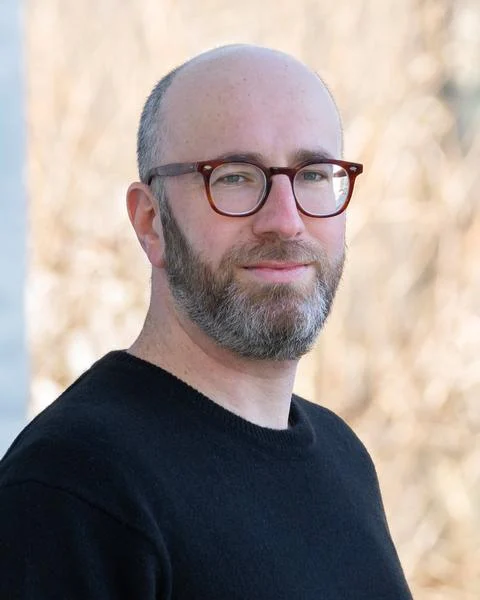
In a significant development for the field of neuroendocrinology, Daniel Hochbaum, MD, an assistant professor in the Program in Neuroscience at Harvard Medical School and Beth Israel Deaconess Medical Center, has been named a recipient of the Pershing Square Foundation’s Maximizing Innovation in Neuroscience Discovery (MIND) Prize. This accolade includes a $750,000 grant distributed over three years, intended to accelerate Hochbaum’s pioneering investigation into the link between thyroid hormone signaling and the progression of Alzheimer’s disease. As one of only eight researchers selected for this highly competitive cohort, Dr. Hochbaum’s work represents a potential paradigm shift in how the scientific community understands and treats age-related cognitive decline.
The MIND Prize was established by the Pershing Square Foundation to support "next-frontier" thinkers who are willing to take bold risks to uncover a deeper understanding of the brain and cognition. By providing substantial financial backing to early-to-mid-career investigators, the foundation aims to catalyze breakthroughs in basic and translational research that could lead to critical tools for managing neurodegenerative diseases, including Alzheimer’s and various forms of dementia.
The Intersection of Endocrinology and Neurodegeneration
Dr. Hochbaum’s research focuses on a historically overlooked aspect of brain health: the role of local thyroid hormone metabolism. While the thyroid gland’s influence on systemic metabolism is well-documented, its specific regulatory functions within the central nervous system during the aging process remain poorly understood. Hochbaum’s project specifically examines how age-related declines in thyroid hormone signaling in the brain may serve as a primary driver of cognitive impairment.
The central hypothesis of the study posits that chronic inflammation—a hallmark of aging and Alzheimer’s disease—disrupts the local production of Triiodothyronine (T3), the active form of the thyroid hormone. In the brain, T3 is essential for maintaining synaptic plasticity, which is the ability of neurons to strengthen or weaken their connections over time in response to activity. When T3 signaling is compromised, these connections may wither, leading to the behavioral and memory deficits characteristic of Alzheimer’s.
By utilizing advanced Alzheimer’s models, Dr. Hochbaum’s team will test whether restoring brain-specific T3 signaling can "rescue" these synaptic and behavioral deficits. If successful, this research could reveal a new endocrine-based therapeutic strategy, offering a biological pathway to slow or even reverse neurodegeneration that differs significantly from traditional amyloid-beta or tau-protein-focused treatments.
Chronology of Award and Upcoming Academic Engagements
The announcement of the 2026 MIND Prize winners marks the beginning of a three-year funding cycle. Starting in the 2025-2026 academic year, the $750,000 grant will be distributed in annual increments of $250,000. This multi-year commitment is designed to provide researchers with the stability needed to pursue complex, high-stakes longitudinal studies that often struggle to find support through traditional federal funding channels.
In addition to his research activities, Dr. Hochbaum is scheduled to present his findings to the global endocrine community at ENDO 2026. The conference, hosted by the Endocrine Society, will take place in Chicago, Illinois, in June 2026. Dr. Hochbaum is a featured speaker in a high-profile session titled “Thyroid Hormone on the Brain,” scheduled for Sunday, June 14, at 10:30 a.m.
His presentation, “Synchronizing Body and Brain: Coordination of Metabolism and Exploration by Thyroid Hormone,” is expected to bridge the gap between systemic physiology and behavioral neuroscience. This appearance underscores the Endocrine Society’s commitment to highlighting how hormonal regulation impacts every facet of human health, including complex cognitive behaviors and the biological basis of exploration and learning.
Supporting Data: The Growing Crisis of Alzheimer’s Disease
The urgency of Dr. Hochbaum’s research is underscored by the escalating global burden of neurodegenerative disorders. According to data from the Alzheimer’s Association, more than 6.7 million Americans aged 65 and older are currently living with Alzheimer’s dementia. This number is projected to rise to nearly 13 million by 2050 unless significant medical breakthroughs are achieved.
Current pharmaceutical interventions have largely focused on clearing amyloid plaques from the brain. While recent FDA approvals in this area represent progress, these treatments often come with significant side effects and modest clinical benefits. The shift toward exploring endocrine-based strategies, such as the restoration of T3 signaling, offers a complementary or alternative approach that targets the brain’s metabolic and regenerative capacity rather than just its waste products.
Financial data further highlights the necessity of the MIND Prize. In 2023, the total national cost of caring for people with Alzheimer’s and other dementias reached an estimated $345 billion. Private foundations like the Pershing Square Foundation play a crucial role in the research ecosystem by funding the "high-risk, high-reward" basic science that serves as the foundation for future clinical trials and eventual cost-saving therapies.
Official Responses and the Foundation’s Vision
The Pershing Square Foundation (PSF), led by co-trustees Bill Ackman and Neri Oxman, has become a major force in philanthropic venture capital since its inception in 2006. With over $930 million committed to health, medicine, and innovation, the foundation seeks to apply a business-minded rigor to charitable giving, prioritizing projects with scalable and sustainable global impact.
In a statement regarding the new cohort of prize winners, Neri Oxman, PhD, emphasized the transformative potential of modern technology in the fight against dementia. “Thanks to advanced technologies and human creativity, Alzheimer’s Disease and her siblings are finally being considered remediable disorders of the human condition,” Oxman said. She noted that the 2026 cohort reflects a "serendipity" of biological research, where molecular structures are being tied to behavioral patterns and genetic predispositions through the power of artificial intelligence.
The foundation’s leadership believes that by facilitating collaborations across academic departments and bridging the gap between the biomedical industry and philanthropy, they can "untangle the Eldredge knot" that Alzheimer’s represents. The MIND Prize specifically encourages interdisciplinary work, recognizing that the most complex problems of the human brain cannot be solved within the silos of a single department.
Broader Impact and Scientific Implications
The implications of Dr. Hochbaum’s research extend beyond Alzheimer’s disease. If the mechanisms of T3 signaling disruption are clearly defined, the findings could be applicable to other forms of dementia and age-related cognitive decline, such as vascular dementia or Parkinson’s-related cognitive impairment.
Furthermore, this research highlights the importance of "precision endocrinology." While many patients with age-related cognitive decline may have normal circulating levels of thyroid hormones in their blood, Dr. Hochbaum’s work suggests that the brain may be in a state of localized "hypothyroidism" due to inflammatory barriers. This distinction is vital; it suggests that traditional blood tests may not accurately reflect the hormonal environment of the brain, necessitating new diagnostic tools and targeted delivery systems for thyroid-based therapies.
The integration of Dr. Hochbaum’s work into the curriculum and research priorities at Harvard Medical School and Beth Israel Deaconess Medical Center also ensures that a new generation of neuroscientists will be trained to look at the brain not just as an electrical organ, but as an endocrine one.
Conclusion and Future Outlook
As Dr. Hochbaum begins his three-year tenure as a MIND Prize recipient, the scientific community will be watching closely. The combination of Harvard’s world-class research infrastructure and the Pershing Square Foundation’s financial catalyst creates an environment where a breakthrough is not just possible, but expected.
The upcoming presentation at ENDO 2026 will serve as a critical milestone for sharing early data and refining the therapeutic roadmap. By focusing on the fundamental coordination of metabolism and brain function, Dr. Hochbaum is moving the field closer to a future where the cognitive decline once thought to be an inevitable part of aging is viewed as a treatable metabolic deficiency.
In the broader landscape of medical research, the MIND Prize serves as a reminder of the power of private philanthropy to fill the gaps in public funding, ensuring that the most innovative—and perhaps most effective—ideas receive the resources they need to change the world. For the millions of families affected by Alzheimer’s, the work of researchers like Dr. Hochbaum represents more than just scientific progress; it represents the hope for a future where the "remediable disorders of the human condition" are finally cured.