

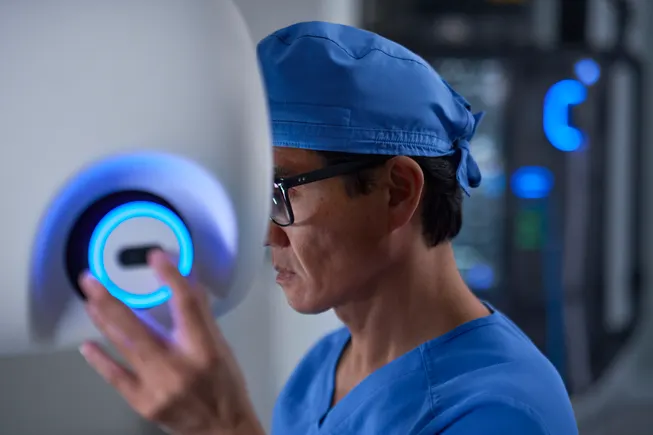
The European medical technology landscape has reached a significant turning point with Intuitive Surgical’s announcement that its latest robotic-assisted surgical system, the da Vinci 5, has received CE mark clearance for a range of cardiac procedures. This regulatory milestone grants the company the authority to market its most advanced platform for complex heart surgeries across the European Union and other regions recognizing the CE mark, effectively opening one of the most high-stakes segments of the healthcare market. The clearance encompasses nine specific cardiac indications, including mitral and tricuspid valve repair, mitral valve replacement, and left atrial appendage closure, positioning the da Vinci 5 as a primary tool for surgeons seeking to move away from traditional open-heart methods toward more refined, minimally invasive techniques.
The arrival of the da Vinci 5 in the European cardiac sector is not merely a product launch but a calculated strategic move by Intuitive to solidify its dominance in a global market where cardiovascular disease remains the leading cause of mortality. According to data from the World Health Organization (WHO), cardiovascular diseases (CVDs) take an estimated 17.9 million lives each year, representing 32% of all global deaths. Within this demographic, a significant portion of patients requires surgical intervention for valvular heart disease or structural defects. By securing clearance for its flagship system, Intuitive is tapping into a critical clinical need, offering a platform designed to reduce the physical trauma associated with cardiac intervention.
Technical Evolution and Clinical Indications
The da Vinci 5 represents a generational leap over its predecessor, the da Vinci Xi, which has been the workhorse of robotic surgery for the past decade. The fifth-generation system was designed with more than 150 enhancements, including significantly increased computing power and advanced imaging capabilities. However, its most lauded feature in the context of cardiac surgery is its "Force Feedback" technology. This system allows surgeons to feel the resistance of tissues during a procedure, a sensory input that was largely absent in previous robotic iterations. In the delicate environment of the human heart, where sutures are placed in thin, moving tissues, the ability to gauge tension and pressure is viewed by many clinicians as a transformative safety feature.
The specific indications cleared under the CE mark focus heavily on the heart’s valves and the prevention of stroke. Mitral and tricuspid valve repairs are notoriously difficult procedures that traditionally require a sternotomy—a process where the breastbone is cracked open to allow the surgeon access to the heart. The da Vinci 5 enables these same repairs to be performed through small "ports" or incisions between the ribs. Additionally, the clearance for left atrial appendage closure addresses a critical need for patients with atrial fibrillation who are at high risk for blood clots and strokes. By automating and refining these procedures, Intuitive aims to standardize outcomes that were previously highly dependent on the manual dexterity of a small number of elite surgeons.
Chronology of Regulatory Progress and Market Entry
The journey of the da Vinci 5 to the European market follows a rigorous timeline of development and regulatory scrutiny. Intuitive first unveiled the system in early 2024, following a multi-year development cycle aimed at addressing the limitations of fourth-generation robotics.
In March 2024, the U.S. Food and Drug Administration (FDA) granted 510(k) clearance for the da Vinci 5, marking its official debut in the American market. This initial clearance was broad, but the specific focus on cardiac indications was highlighted as a key growth driver for the company’s domestic operations. Following the U.S. rollout, Intuitive turned its attention to the European Medicines Agency (EMA) and the relevant notified bodies to secure the CE mark under the European Union’s Medical Device Regulation (MDR).
The MDR, which replaced the older Medical Device Directive, is known for its stringent requirements regarding clinical evidence and post-market surveillance. Securing the CE mark for cardiac procedures suggests that Intuitive provided robust data demonstrating the system’s safety and efficacy in the heart’s high-pressure environment. The company’s commercial president for Europe, Dirk Barten, noted that this clearance is the culmination of years of engineering and clinical collaboration, signaling a "firm commitment" to re-establishing robotic-assisted surgery as a standard of care in European cardiac departments.
Strategic Context: Offsetting U.S. Market Fluctuations
The expansion into the European cardiac market comes at a pivotal moment for Intuitive Surgical. During the company’s second-quarter earnings call in mid-2024, Chief Financial Officer Jamie Samath reported an unexpected softening in the growth of certain U.S. procedures. This slowdown was attributed to various factors, including the expiration of subsidies related to the Affordable Care Act (ACA), which affected patient volumes in some elective and semi-elective categories.
Despite this domestic headwinds, Intuitive’s overall financial health remained robust, largely due to the continued adoption of robotic systems globally. However, the Q2 softness underscored the necessity of diversifying both the geographic footprint and the clinical applications of the da Vinci platform. Cardiac surgery is viewed as a "long-term opportunity" because it is less susceptible to the economic fluctuations that might impact more elective procedures. Heart surgery is often life-saving and non-deferrable, providing a stable base of procedure volume.
Furthermore, the European market presents a unique growth landscape. While the U.S. has a high density of robotic systems, many European hospitals are still in the early stages of adopting robotic platforms for cardiac care. By introducing the da Vinci 5 with specific cardiac indications now, Intuitive is positioning itself ahead of competitors like Medtronic and CMR Surgical in the specialized niche of robotic cardiothoracic intervention.
Economic and Clinical Data Analysis
The shift toward robotic cardiac surgery is supported by a growing body of economic and clinical data. Traditional open-heart surgery involves significant hospital costs, including extended stays in the Intensive Care Unit (ICU) and long recovery periods that prevent patients from returning to work. A study published in the Journal of Thoracic and Cardiovascular Surgery indicated that while the upfront cost of a robotic system is high, the total "episode of care" cost can be lower due to reduced complications and shorter hospital stays.
For European healthcare systems, many of which are publicly funded and face mounting budgetary pressures, the promise of shorter recovery times is a compelling value proposition. Patients undergoing robotic mitral valve repair typically spend 50% less time in the hospital compared to those undergoing traditional sternotomy. This allows for higher patient turnover and a reduction in the "bed-blocking" that plagues many European hospital systems.
Intuitive has stated that it plans to support this economic transition by providing a "dedicated infrastructure." This includes not only the hardware but also specialized training for surgical teams and administrative support to help hospitals establish "Centers of Excellence." The company’s strategy involves partnering with a limited number of high-volume European centers initially to establish reproducible programs that can then be scaled across the continent.
Official Responses and Industry Reactions
The reaction from the medical community has been largely positive, though characterized by the cautious optimism typical of the surgical field. Dirk Barten’s statement emphasized that the CE mark is about "bringing back" robotic cardiac surgery. This phrasing acknowledges that while robotic heart surgery has existed for years, it has often been a niche practice due to the complexity of earlier systems. The da Vinci 5 aims to democratize these procedures.
Industry analysts have noted that Intuitive’s focus on clinical evidence generation is a strategic necessity. "The bar for cardiac surgery is incredibly high," said one medtech analyst following the announcement. "By focusing on reproducible programs and partnering with top-tier European institutions, Intuitive is trying to ensure that the clinical outcomes match the technological potential. They aren’t just selling a robot; they are selling a standardized surgical outcome."
CFO Jamie Samath’s previous comments to investors also highlight the internal confidence within Intuitive. He identified cardiac procedures as one of the company’s "most anticipated" opportunities, suggesting that the internal roadmap for the da Vinci 5 was always heavily weighted toward heart health.
Broader Implications for the Future of Surgery
The clearance of the da Vinci 5 in Europe is likely to trigger a ripple effect across the medical device industry. As Intuitive moves into the cardiac space with advanced force-sensing technology, competitors will be under pressure to accelerate their own R&D cycles. The integration of artificial intelligence and machine learning into the da Vinci 5’s data processing capabilities also hints at a future where the system could provide real-time guidance to surgeons, further reducing the margin for human error.
For patients, the implications are profound. The prospect of undergoing a major heart valve replacement and returning home within a few days—without the long-term pain and scarring of a cracked chest—is a significant advancement in patient autonomy and quality of life. As the da Vinci 5 begins its rollout in European hospitals, the focus will shift from regulatory approval to real-world performance.
In conclusion, Intuitive Surgical’s successful acquisition of the CE mark for the da Vinci 5 in cardiac procedures represents a major strategic victory. It addresses a massive global health burden, provides a hedge against regional market fluctuations, and sets a new technological benchmark for the medtech industry. As the company begins to implement its training and infrastructure programs across Europe, the medical community will be watching closely to see if this new era of robotic heart surgery can deliver on its promise of safer, faster, and more effective cardiac care.
