

The global agricultural sector currently stands at a critical crossroads, facing the dual challenge of ensuring food security for a growing population while simultaneously mitigating the environmental degradation caused by intensive farming practices. In a comprehensive study that addresses these competing interests, an international research team, led by scientists from the University of Göttingen and the HUN-REN Centre for Ecological Research, has provided new insights into the effectiveness of sustainable farming strategies. The study, published in the Journal of Applied Ecology, systematically compared the ecological and economic outcomes of three distinct management approaches in winter wheat cultivation: conventional farming, conventional farming supplemented with wildflower strips, and organic farming.
The findings reveal a significant shift in the traditional understanding of agricultural productivity. While conventional farming continues to dominate in terms of raw yield, the research demonstrates that both wildflower strips and organic management significantly enhance biodiversity, with organic farming emerging as the most economically viable option for producers. Specifically, the data indicates that while organic wheat yields are approximately 50% lower than those of conventional fields, the profit margins are 1.5 times higher. This economic advantage is driven by a combination of lower input costs, premium market prices for organic goods, and targeted financial support through European Union (EU) agricultural policies.
Methodology and Study Design
To reach these conclusions, the research team conducted a rigorous two-year field study across nine distinct landscapes in the Göttingen region of Germany. This area was selected for its representative variety of soil types and topographical features, providing a robust baseline for analyzing Central European agricultural trends. The study focused on winter wheat (Triticum aestivum), one of the most widely cultivated and economically significant crops in the world.
The researchers categorized the test plots into three specific management regimes:
- Conventional Management (Control): Fields managed with standard industrial practices, including the use of synthetic fertilizers, chemical pesticides, and herbicides, with no specific environmental interventions.
- Conventional with Wildflower Strips: Fields that utilized standard conventional practices but incorporated five-meter-wide strips of native wildflowers along the margins. These strips are designed to provide habitats and food sources for pollinators and beneficial insects.
- Organic Management: Fields managed according to certified organic standards, which prohibit synthetic chemicals and rely on crop rotation, mechanical weeding, and organic fertilizers.
Over the two-year observation period, the team monitored various ecological indicators, including plant species richness, pollinator density, and the presence of natural pest predators. Simultaneously, they tracked economic data, including the cost of seeds, fertilizers, labor, and machinery, alongside the final market value of the harvested grain and the impact of government subsidies.
Ecological Benefits: A Boost for Biodiversity
One of the primary objectives of the study was to quantify the "ecological lift" provided by agri-environmental schemes. The results were clear: both the inclusion of wildflower strips and the transition to organic farming resulted in a 20% to 30% increase in biodiversity compared to conventional control fields.
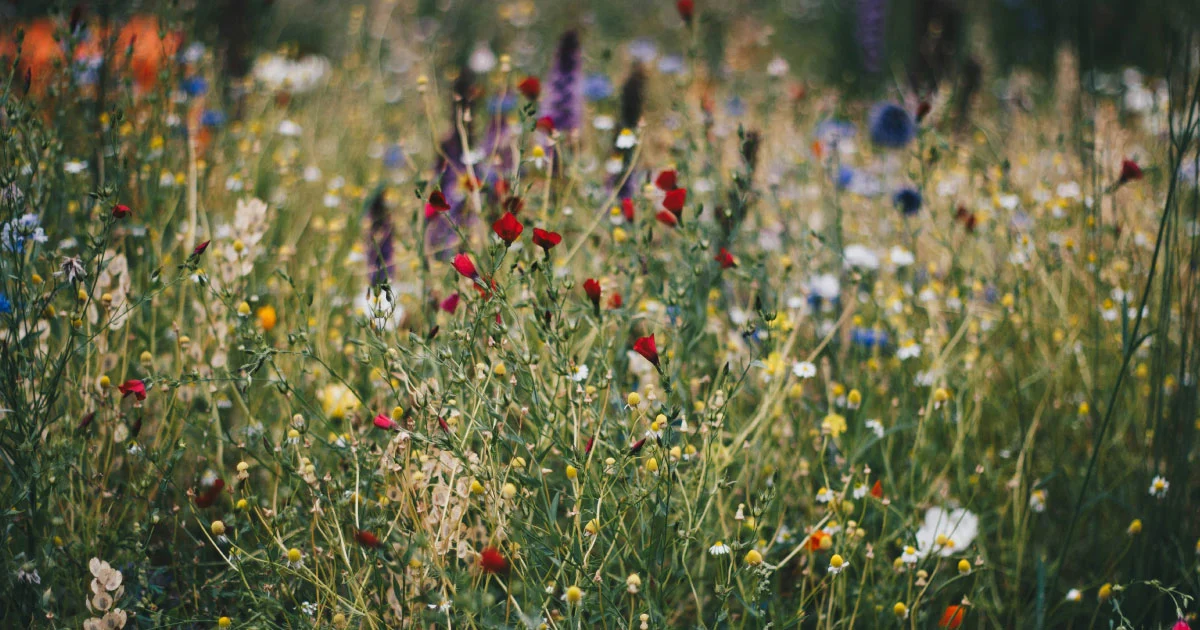
In fields with wildflower strips, the researchers observed a surge in pollinator activity. These strips act as "biological corridors," allowing bees, hoverflies, and butterflies to move through fragmented agricultural landscapes. The presence of diverse flowering plants provides a continuous nectar source, which is often missing in the monoculture environments of traditional wheat fields.
Organic fields, however, showed a more holistic improvement in biodiversity. Because organic farming avoids the use of synthetic herbicides, a wider variety of "arable weeds" or non-crop plants are allowed to grow within the wheat rows. While these plants are often viewed as competitors for resources, they play a vital role in the ecosystem by supporting diverse insect populations and improving soil health. The study noted that organic fields supported not only more species but also more complex food webs, which can lead to better natural pest control over the long term.
The Economic Paradox: Lower Yields, Higher Profits
Perhaps the most striking aspect of the research is the disconnect between crop yield and financial profitability. For decades, the success of a farm has been measured almost exclusively by "bushels per acre." However, this study suggests that this metric may be outdated in the context of modern economic and environmental realities.
The data showed that organic wheat fields produced only about half the grain volume of their conventional counterparts. In conventional systems, the heavy application of nitrogen-based fertilizers allows for dense growth and high caloric output. In contrast, organic systems are limited by the slower release of nutrients from organic matter and the increased competition from non-crop plants.
Despite this "yield gap," the organic fields were substantially more profitable. Several factors contribute to this 1.5-fold increase in profit:
- Market Premiums: Consumers are increasingly willing to pay a higher price for organic products, reflecting a growing demand for food produced without synthetic chemicals.
- Reduced Input Costs: Organic farmers do not spend money on expensive synthetic fertilizers, fungicides, or insecticides. While labor costs for mechanical weeding can be higher, they are often offset by the elimination of chemical inputs.
- EU Subsidies: The European Union’s Common Agricultural Policy (CAP) provides significant financial incentives for farmers who adopt "eco-schemes" or full organic certification. These payments are designed to compensate farmers for the public goods they provide, such as increased biodiversity and cleaner groundwater.
Chronology of Agricultural Policy and Research
The study arrives at a pivotal moment in European agricultural history. To understand the context of these findings, one must look at the timeline of policy shifts within the EU:
- 2019: The European Commission announces the "European Green Deal," aiming to make the continent climate-neutral by 2050.
- 2020: The "Farm to Fork" strategy is launched, setting a target for at least 25% of the EU’s agricultural land to be under organic farming by 2030.
- 2021-2022: The research team conducts the field studies in Göttingen, capturing the real-world performance of these policy goals.
- 2023: The new CAP (2023-2027) comes into effect, introducing "eco-schemes" that reward farmers for practices like wildflower strips and reduced chemical use.
- 2026: The findings are published, providing empirical evidence that the EU’s shift toward organic farming is not only ecologically sound but also economically beneficial for producers.
Stakeholder Reactions and Inferred Implications
While the study has been welcomed by environmental advocates, it has sparked a nuanced debate among various stakeholders in the agricultural industry.
Agricultural Economists: Experts in the field suggest that the high profitability of organic farming is currently dependent on the "organic premium." If the EU reaches its goal of 25% organic land, the increased supply of organic wheat could potentially drive prices down, narrowing the profit gap. However, they also point out that the rising cost of fossil-fuel-based fertilizers (a major expense for conventional farmers) may continue to make organic methods more attractive.
The Farming Community: Many farmers remain cautious. While the 1.5x profit margin is enticing, the 50% reduction in yield raises concerns about global food security. Some farmers argue that wildflower strips offer a "middle ground"—allowing them to maintain high yields in the center of the field while still qualifying for environmental subsidies and supporting local ecology.
Environmental Scientists: Researchers involved in the study emphasize that biodiversity is not just a "luxury" but a foundational component of resilient farming. They argue that the long-term costs of conventional farming—such as soil erosion, water pollution, and the loss of pollinators—are rarely accounted for in traditional economic models. By internalizing these environmental benefits through subsidies and premium pricing, the market is beginning to reflect the true value of sustainable land management.
Broader Impact on Global Agriculture
The implications of this research extend far beyond the borders of Germany or the European Union. As climate change leads to more volatile weather patterns, the resilience of agricultural systems is becoming a primary concern for policymakers worldwide.
Organic systems, with their emphasis on soil health and biodiversity, are often more resilient to extreme weather events such as droughts or heavy rainfall. The study suggests that by diversifying the landscape with wildflower strips or transitioning to organic practices, farmers can create a "biological insurance policy" against crop failure.
Furthermore, the study challenges the "land-sparing vs. land-sharing" debate. Land-sparing advocates for high-intensity farming on small plots to leave more room for wilderness, while land-sharing advocates for integrating nature into the farming process. The Göttingen study demonstrates that "land-sharing" through organic farming can be highly effective, provided the economic framework supports the farmer.
Analysis of Future Trends
As we look toward 2030 and beyond, several trends are likely to be influenced by these findings:
- Precision Agriculture Integration: We may see a hybrid approach where conventional farmers use "precision agriculture" to reduce chemical use while incorporating wildflower strips, attempting to capture the biodiversity benefits of organic farming without the full yield drop.
- Subsidy Refinement: Governments may use this data to refine subsidy structures. If organic farming is already 1.5 times more profitable, policymakers might shift some funding toward helping conventional farmers transition or supporting the creation of more wildflower corridors in intensive "breadbasket" regions.
- Consumer Awareness: This research provides clear data for "green" marketing, further empowering consumers to support farming systems that offer a proven 20-30% boost to local biodiversity.
The study from the University of Göttingen and the HUN-REN Centre for Ecological Research provides a definitive piece of evidence in the ongoing transformation of the global food system. It proves that the perceived conflict between "saving the planet" and "making a living" is a false dichotomy in the context of modern wheat farming. Through a combination of ecological wisdom and supportive policy, it is possible to cultivate a landscape that is both rich in life and financially robust for those who work the land.
