

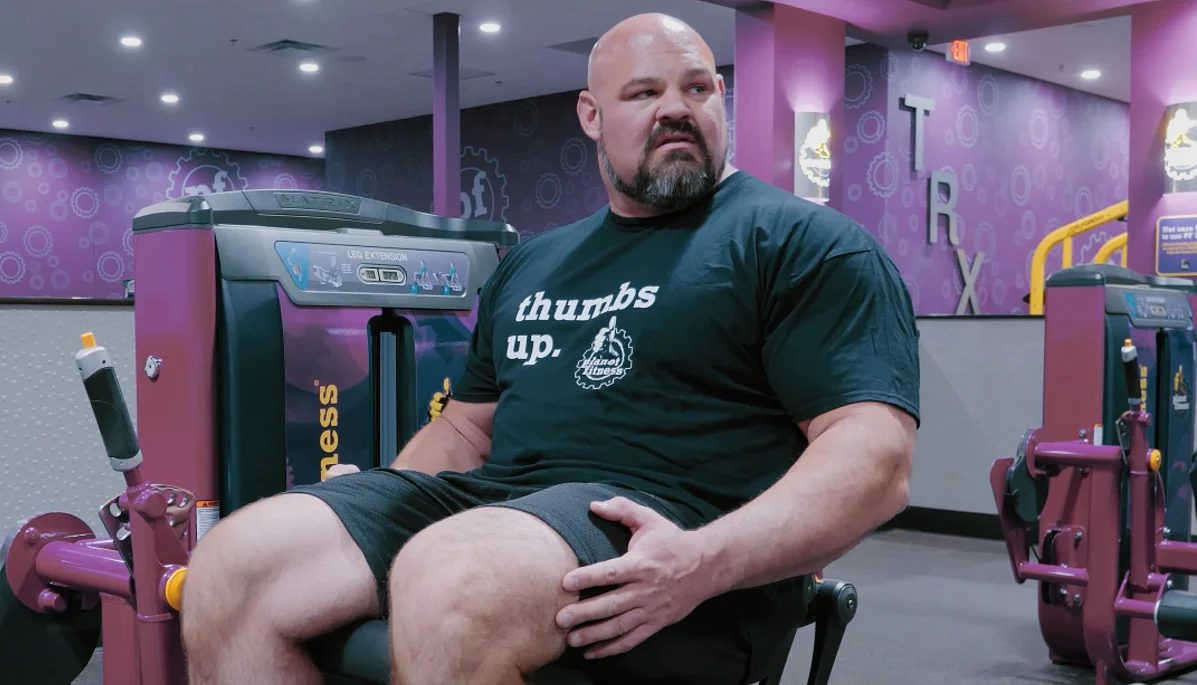
The encounter, documented on Shaw’s YouTube channel, serves as a case study in the adaptability of elite athletes and the physical limitations of commercial gym equipment when subjected to the demands of world-class strength. While commercial gyms are designed to accommodate the fitness needs of the average person, the sheer physical dimensions and power output of Hall and Shaw pushed the facility’s infrastructure to its functional limits.
The Profiles: A Convergence of Strength Royalty
To understand the logistical challenge of this training session, one must consider the physical profiles of the participants. Brian Shaw, standing 6 feet 8 inches tall and weighing approximately 400 pounds during his off-season, is widely regarded as one of the most consistent and powerful athletes in the history of the sport. His four titles (2011, 2013, 2015, and 2016) place him in an elite tier of competitors.
Eddie Hall, known as "The Beast," stands 6 feet 3 inches and has historically fluctuated between 360 and 440 pounds. Hall’s victory in 2017 cemented his legacy, though he transitioned away from competitive strongman shortly thereafter to pursue ventures in boxing and media. At the time of this training session, Hall was preparing for a return to the competitive arena, specifically as the captain of Team UK for the World’s Strongest Nation contest.
The training session in Colorado was not merely a casual workout but a promotional and experimental endeavor to see if athletes of their caliber could find utility in a gym environment that famously discourages "lunk" behavior—a term the franchise uses to describe loud grunting, dropping weights, and intense bodybuilding culture.
Chronology of the Training Session
The workout was structured to test the primary lower-body machines available at the facility, beginning with compound movements and ending with a high-intensity circuit challenge.
The Smith Machine Squat Challenge
Because Planet Fitness locations typically do not offer traditional squat racks or Olympic barbells for free-weight squats—primarily as a safety and liability measure—the duo began their session on the Smith machine. This piece of equipment utilizes a barbell fixed within steel rails, allowing only for vertical or near-vertical movement.
For athletes of Hall and Shaw’s size, the Smith machine presents immediate ergonomic difficulties. The fixed path of the bar does not always align with the natural bio-mechanical path of a 400-pound man’s squat. Furthermore, the width of their shoulders and the thickness of their torsos made positioning under the bar a complex task. Despite these hurdles, they proceeded to load the machine with five 45-pound plates on each side, totaling 450 pounds plus the resistance of the carriage. Shaw noted that he had to physically stabilize the machine’s frame to ensure it did not shift under the load.
Transition to Isolation and Resistance Machines
Following the squats, the pair moved to the seated abdominal crunch machine. This served more as a testament to the size disparity between the athletes and the equipment than a genuine strength test, as the machines are scaled for the average human frame.
The leg press followed, which is often a staple in strongman accessory training. In a traditional strength gym, these athletes might load a leg press with over 1,000 pounds. At Planet Fitness, they maximized the available space on the weight horns, loading six 45-pound plates per side and adding an additional plate on top of the sled. Observers noted that the athletes moved the weight with a tempo and ease that suggested the machine’s maximum capacity was still well within their warm-up thresholds.
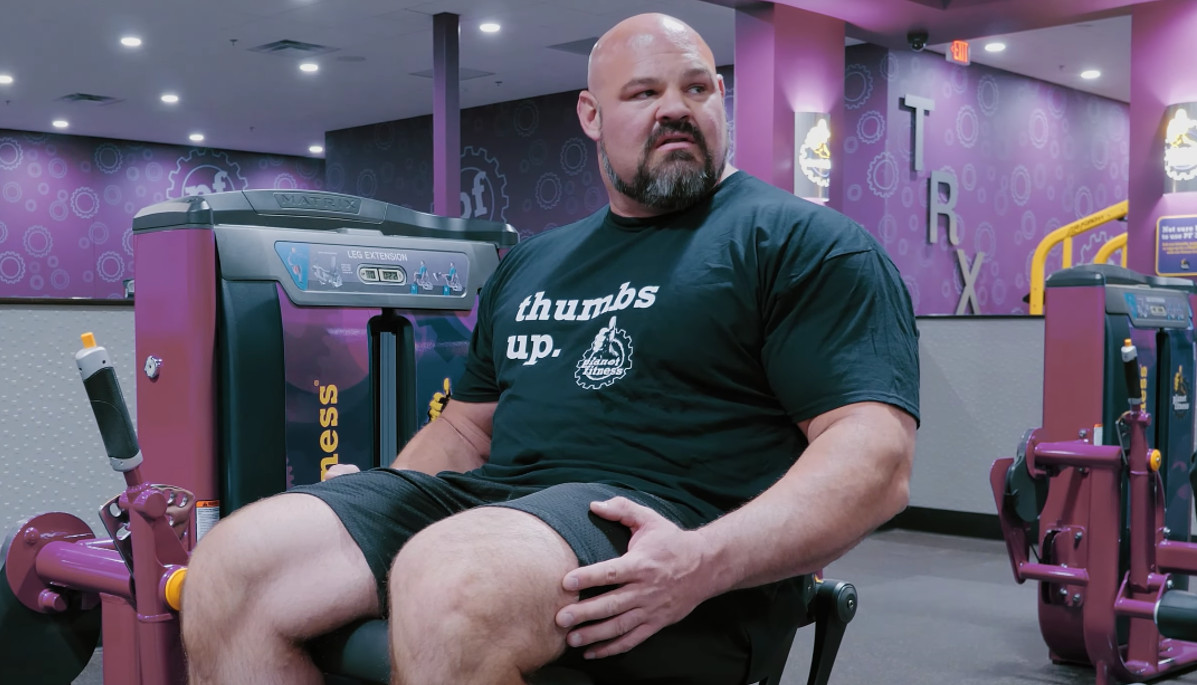
The session continued with a rotation through the leg extension, adductor, and abductor machines. While these are often viewed as "finishing" movements, Hall and Shaw utilized them to maintain blood flow and muscle tension, adapting their technique to the specific resistance curves of the cable-driven units.
The 20-Station Circuit Race: A Test of Conditioning
The climax of the visit was a head-to-head competitive challenge held in the gym’s designated 30-minute circuit training room. This area consists of a series of numbered stations designed for a full-body workout. The strongmen modified the intended use of the room, opting for a speed-based competition.
The rules were simple: each athlete had to perform one repetition at the maximum weight setting for all 20 stations in the fastest time possible. This shifted the focus from pure maximal strength to cardiovascular conditioning and transition speed—areas often overlooked in the "static" strength of strongman but vital for the "moving" events like the Medley or the Loading Race.
Eddie Hall, benefiting from the leaner physique he developed during his boxing training, completed the 20 stations in 1 minute and 15.09 seconds. Brian Shaw followed closely, finishing in 1 minute and 19 seconds. The four-second gap highlighted Hall’s current emphasis on explosive movement and agility as he prepared for his competitive return.
Technical Analysis of Equipment Limitations
From a journalistic and technical perspective, the session highlighted a significant gap in the fitness industry. Most commercial equipment is tested and rated for users up to 300 or 350 pounds. When individuals like Shaw and Hall—who can exert thousands of pounds of force—utilize these machines, the structural integrity and the cable systems are put under extreme stress.
The Smith machine, for instance, uses a series of bearings that can bind if the bar is not pushed perfectly evenly. For a strongman with a minor strength imbalance or a massive frame, this can cause the machine to "catch," creating a potential injury risk. Similarly, the weight stacks on selectorized machines at Planet Fitness often top out at 200 to 300 pounds. For an elite athlete’s leg extension or chest press, this weight is insufficient for hypertrophy or strength gains, forcing them to rely on high-repetition endurance sets or "iso-lateral" movements to find any level of difficulty.
Context and Broader Implications for the Sport
This event took place during a pivotal time for both athletes. Brian Shaw was in an off-season period, focusing on the growth of the "Shaw Classic," his own high-stakes strongman competition designed to provide better pay and conditions for athletes. Hall, conversely, was using the period to rebuild his "strongman base" after a significant weight loss for his 2022 boxing match against Hafthor Björnsson.
The timing was also significant due to the upcoming World’s Strongest Nation contest in Liverpool. This event, organized by Giants Live, pits a team from Great Britain against a team from the USA. By serving as the UK captain, Hall signaled his official return to the strength world, albeit in a different capacity than his previous individual pursuits. The USA team was slated to be led by Martins Licis, the 2019 World’s Strongest Man, ensuring that the rivalry between the two nations remained at the highest level of the sport.
Official Responses and Public Reception
While Planet Fitness corporate offices did not issue a formal statement regarding the visit, the video garnered millions of views, sparking a debate within the fitness community. On one hand, critics of the "commercial gym" model argued that the presence of Hall and Shaw exposed the inadequacy of "budget" gyms for serious lifters. On the other hand, proponents of the franchise noted that the athletes were able to complete a workout without being asked to leave, suggesting that the "Lunk Alarm" is perhaps more about behavior than the actual amount of weight being moved.
Inferred reactions from the gym-goers present at the time were largely positive, with many pausing their own workouts to witness the spectacle of two of the world’s strongest men navigating a space designed for beginners. This interaction highlights a softening of the divide between "hardcore" strength sports and "general" fitness, as social media continues to demystify the training habits of elite giants.
Conclusion: The Versatility of Elite Strength
The training session of Eddie Hall and Brian Shaw at Planet Fitness serves as a reminder that the essence of strength training lies in the effort and the adaptation of the athlete, rather than the prestige of the facility. While the equipment was not optimized for 400-pound world champions, the duo demonstrated that a professional mindset can extract value from almost any environment.
As Hall moves toward his leadership role at the World’s Strongest Nation and Shaw continues to expand his influence as a promoter and ambassador, this Colorado workout remains a unique moment in strength sports history. it underscored the physical reality of being a "strongman" in a world built for the average person, proving that while a gym might be a "Judgment Free Zone," it is not necessarily a "limit-free zone" for the strongest men on earth.
