







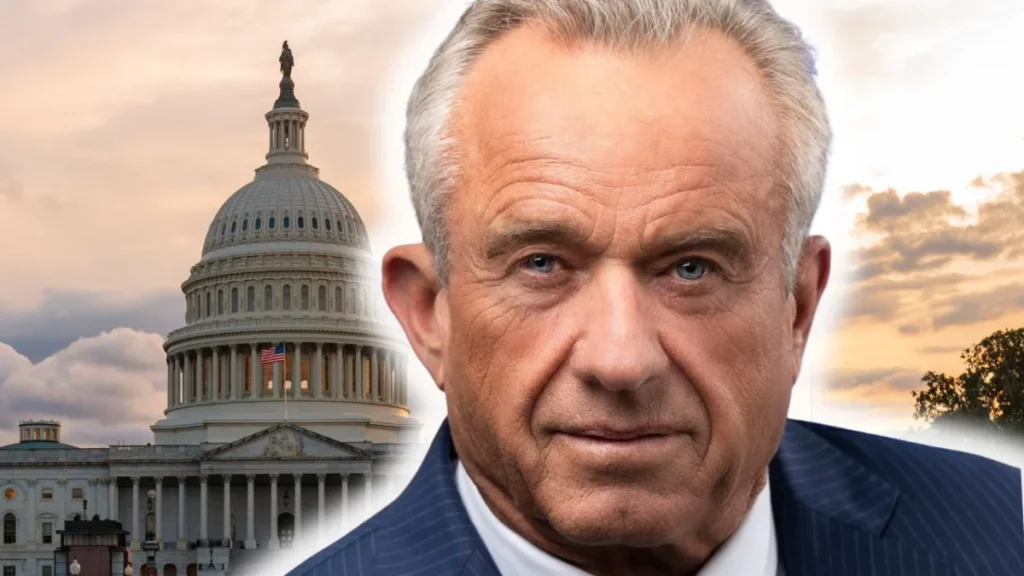
The "Make America Healthy Again" (MAHA) movement, with U.S. Department of Health and Human Services (HHS) Secretary Robert F. Kennedy Jr. as its prominent figurehead, is demonstrating significant growth and evolving influence in its second year of shaping public health policy. What began as an ambitious initiative is now exhibiting the confidence and capabilities of a developing entity, analogous to a toddler gaining independence. This progression is notably impacting the realms of nutrition and supplement regulation, prompting a re-evaluation of established scientific and medical paradigms.
A recent analysis published in Scientific American highlighted MAHA’s ascendance, suggesting its impact has been substantial enough to "upend science and medicine." This assertion stems from the movement’s overt skepticism towards conventional scientific consensus and its questioning of established medical practices. This critical stance has, however, catalyzed tangible shifts.
Ivan Wasserman, managing partner at Amin Wasserman Gurnani LLP, observes that MAHA’s focus on the profound impact of food on health has already yielded significant changes in nutrition and supplement regulations. "In addition to actual changes," Wasserman noted, "including at the state level with regulations on ultra-processed food, school lunch programs, artificial dyes and other chemicals added to foods – the political force that is MAHA voters has spurred politicians to show they are doing something to address their concerns." These state-level interventions, targeting specific food components and labeling requirements, demonstrate a decentralized yet impactful approach to regulatory reform.

The growing political traction of the MAHA agenda is particularly salient as the nation approaches the midterm elections in 2026. Republican strategists are reportedly paying close attention to the "MAHA Moms," a demographic that appears to be a crucial voting bloc. Polling data suggests that approximately 40% of parents express support for the MAHA agenda, making this constituency a vital component for driving voter turnout in an election cycle often characterized by challenges for incumbent administrations. This demographic’s engagement is seen as essential for galvanizing support and ensuring robust participation at the ballot box.
The political landscape has also seen notable developments that intersect with MAHA’s objectives. The Trump administration’s recent endorsement of glyphosate, a substance heavily scrutinized by MAHA proponents, including a former stance by RFK Jr. himself, illustrates a point of contention. Industry analysts are observing a deliberate alignment between MAHA and the broader Make America Great Again (MAGA) platform. This alignment is manifesting through protective measures that appear to favor large multinational corporations, often referred to as "Big Ag," "Big Chem," and "Big Food." The reintroduction of meat as a prominent element in a revised food pyramid and the defense of glyphosate on national security grounds represent instances where MAHA’s priorities appear to be moderated by Trump’s overarching political agenda, revealing the current limitations of MAHA’s independent influence when it directly conflicts with established MAGA tenets.
As MAHA solidifies its position and becomes more closely integrated with the broader Trump agenda, legal experts in the food and supplement industries are closely monitoring its trajectory. Their insights provide a crucial lens through which to understand the movement’s evolving impact.
Setting the MAHA Stage in 2025: Laying the Groundwork for Change
Claudia Lewis of Venable LLP characterized MAHA’s first year as primarily focused on establishing a foundation for future policy rather than immediate, sweeping overhauls of nutrition and supplement regulations. This strategic approach allowed for the careful introduction of new concepts and priorities.
Key indicators of this preparatory phase include announcements from the Food and Drug Administration (FDA) regarding the phased elimination of certain petroleum-derived synthetic color additives in food products. Additionally, there has been a renewed emphasis on the safety of infant formula and toddler milk, reflecting a heightened awareness of vulnerabilities in these critical supply chains.
Ivan Wasserman echoed this sentiment, noting that while 2025 saw a "flurry of pronouncements and promises," significant regulatory changes, beyond the symbolic shift in the food pyramid, were not immediately forthcoming. He attributed this to the inherent temporal nature of regulatory reform, which requires extensive deliberation and procedural steps. This period was thus characterized by the signaling of future intentions rather than the immediate implementation of new rules.
A discernible strategy has emerged where federal pronouncements serve as a prelude to more concrete actions taken at the state level. This approach appears designed to mitigate direct confrontation with powerful industry lobbying groups. By allowing states, such as Texas, to enact pioneering legislation, MAHA can foster regulatory innovation without triggering immediate, large-scale opposition at the federal level. This allows for a more incremental and potentially less disruptive path to change.
Lewis highlighted the significant legislative activity occurring across the nation, with approximately three dozen states introducing bills aimed at restricting specific synthetic additives and high-sugar products in school environments and other child-centric settings. Furthermore, there’s a push to strengthen on-pack or menu labeling requirements for both foods and supplements. "At the state level, legislatures are expected to keep advancing bills that limit food additives in school meals, require new disclosures or mandate on-pack warnings," Lewis stated. This indicates a robust and decentralized movement towards enhanced consumer information and healthier food options for vulnerable populations.
New Jersey has emerged as a recent example of this state-led regulatory innovation. Proposed legislation in the state would mandate annual reporting of new Generally Recognized As Safe (GRAS) determinations, including details on the intended use, supporting safety data, and the rationale behind the GRAS conclusion. This move towards greater transparency in the GRAS notification process could set a precedent for other states and potentially influence federal policy.
Two significant developments in 2025 for the MAHA movement were progress on the issue of synthetic dyes and discussions surrounding self-affirmed GRAS. Justin Prochnow of Greenberg Traurig LLP believes that the initiative to phase out synthetic dyes has considerable momentum. "It really is the least controversial of all of the MAHA items," Prochnow commented, "as most people don’t likely believe that synthetic color dyes are a good thing." This broad public consensus provides a strong foundation for regulatory action.
The GRAS system, however, presents a more complex regulatory challenge. Prochnow pointed to a critical historical detail: "The FDA used to require submissions of GRAS notifications until such a backlog developed that it became voluntary at the end of 1997, beginning of 1998. Now, all of a sudden, FDA will have more ability to review mandatory notifications? That seems unlikely." This observation underscores the practical hurdles in potentially reinstating mandatory GRAS submissions and the industry’s anticipation of how the FDA will navigate this complex issue. The industry will be closely observing the implications for innovation and the potential for delays in bringing new products to market.
The MAHA Watchlist for 2026: Emerging Priorities and Potential Flashpoints
Looking ahead to 2026, legal experts anticipate a potentially intense period of regulatory activity. Ivan Wasserman forecasts, "The next two years could be very busy on the regulatory front – perhaps the busiest in my 30-plus years of practice." His predictions include a proposed rule to eliminate the self-affirmed GRAS pathway, the long-awaited final guidance on new dietary ingredient notifications (NDINs), and new restrictions on caffeine labeling.
Ultra-processed foods (UPFs) are emerging as a significant battleground in the evolving regulatory landscape. In 2025, the FDA and USDA jointly issued a request for information to aid in defining UPFs, a move that has garnered support from unexpected quarters. A segment on 60 Minutes featuring both RFK Jr. and former FDA Commissioner David Kessler, a known critic of the supplement industry, underscored the administration’s commitment to addressing UPFs. This broad coalition of governmental interest and public advocacy is creating a fertile ground for potential regulatory action.
Justin Prochnow observed the converging interests, stating, "UPFs are turning into a combined effort and focus of the administration and class-action plaintiff lawyers. The more that RFK Jr. and the administration talk about UPFs and how bad they are, the more the plaintiff lawyers latch onto it." This synergy between regulatory initiatives and litigation strategies suggests a heightened risk for manufacturers of UPFs.
The FDA’s Human Foods Program issued a priority list for 2026 that placed a renewed focus on modernizing the oversight of dietary supplements. This signals a potential shift in regulatory attention towards this sector, with legal experts preparing for significant MAHA-influenced developments.
Wasserman noted the FDA’s stated intention to "continue to support dietary supplement priorities with targeted enforcement strategies on violative products." While acknowledging the intentional vagueness of current plans, he expressed hope for a "smart, balanced approach to level the playing field against bad actors and keep safe, effective and compliant supplements available to consumers." This indicates a desire for regulatory clarity that fosters innovation while ensuring consumer protection.
The MAHA movement’s emphasis on longevity and mitochondrial health brings peptides into sharp focus for Prochnow. "I think FDA will need to weigh in on the regulation and sale of peptides in a non-drug context," he stated. "There are many companies out there marketing peptides like BPC-157 and others as non-drug products labeled as ‘For Research Purposes Only’ when that is not the case. With the popularity of GLP-1 drugs and other peptides, the FDA is likely going to need to opine on this growing category." The current practice of marketing potent compounds for research purposes while facilitating their use as supplements or performance enhancers presents a regulatory dilemma that the FDA is likely to address.
Will MAHA End Up a Net Positive for Supplements?
Predicting the long-term impact of the MAHA movement on the supplement industry remains a complex endeavor, akin to forecasting the behavior of a toddler. However, by examining the ongoing regulatory discussions and potential outcomes concerning synthetic dyes, UPFs, GRAS, and supplement oversight, there are reasons to cautiously view MAHA’s influence as potentially beneficial for the supplement sector.
Prochnow suggests that "As a general rule, supplements would seem to be a category that is looked upon favorably by MAHA and RFK Jr. as alternatives to prescription drugs, but the regulatory and enforcement focus continues to be on synthetic colors, added sugars and UPFs." This implies that while the immediate regulatory pressures are directed at other food components, supplements may eventually benefit from a narrative that positions them as viable alternatives to pharmaceuticals.
This perspective is a recurring theme, as MAHA’s initial focus has been on identifying and addressing perceived villains in the food supply. Supplements, while subject to ongoing scrutiny, appear to be awaiting a more definitive stance from federal agencies.
Ivan Wasserman concurred, stating, "I haven’t seen evidence yet of RFK or the MAHA movement in general being big champions of the supplement industry, with the main focus seemingly on encouraging more consumption of whole foods." This highlights that the immediate advocacy is geared towards a foundational shift towards unprocessed foods, with supplements occupying a secondary, albeit potentially supportive, role.
From a broader vantage point, MAHA can be viewed as a catalyst for necessary improvements to the regulatory framework that has governed the dietary supplement industry under the Dietary Supplement Health and Education Act (DSHEA) for over three decades. DSHEA, enacted in 1994, has faced increasing criticism for its perceived inadequacies in the face of evolving scientific understanding and market practices.
Claudia Lewis articulated this need for re-evaluation: "DSHEA was passed long ago, so it’s time for it to be re-evaluated and updated so that it aligns more directly with how consumers understand and use supplements. This administration has several initiatives, which is a good start. Whether it proves to be a net positive or negative will largely depend on how the framework and the specific proposals are implemented in practice. It certainly has the potential to be positive." The MAHA movement’s focus on modernizing these regulations, even if indirectly, could ultimately lead to a more robust and consumer-centric framework for the supplement industry. The coming years will be critical in determining whether this potential is realized.