







A new analysis released on March 23, 2026, has revealed a significant hollow-out of the United States Department of Agriculture (USDA), reporting that 144 county offices across the nation lost their entire conservation staff over the course of 2025. This development has triggered urgent questions from agricultural stakeholders and rural advocates regarding the future of federal support for farmers. The data suggests that the very infrastructure designed to help producers build climate resilience and manage environmental stewardship is facing an unprecedented collapse at the local level.
The analysis, conducted by Prospect Partners and shared initially with Civil Eats, utilizes updated personnel figures released in early March by the Office of Personnel Management (OPM). This granular data provides the first comprehensive look at how a nearly 25 percent reduction in the USDA’s Natural Resources Conservation Service (NRCS) workforce has manifested geographically. While previous reports highlighted broad agency-wide losses, the new findings underscore a total absence of "boots on the ground" in over a hundred agricultural hubs, leaving farmers without the technical expertise required to access federal conservation programs.
The Role of NRCS: A Critical Link in the Agricultural Supply Chain
To understand the impact of these vacancies, it is necessary to define the role of the Natural Resources Conservation Service. Established in the wake of the Dust Bowl, the NRCS is the primary federal agency tasked with helping private landowners conserve soil, water, and other natural resources. Unlike many federal agencies that operate primarily out of regional hubs or Washington, D.C., the NRCS has historically maintained a presence in nearly every county in the United States.
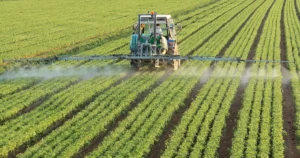
NRCS staff members, including soil scientists, agronomists, and engineers, provide free technical assistance to farmers and ranchers. This assistance is essential for enrolling in popular and often competitive federal programs, such as the Environmental Quality Incentives Program (EQIP) and the Conservation Stewardship Program (CSP). These initiatives provide financial incentives for farmers to implement practices like cover cropping, precision nutrient management, and restorative grazing.
However, the application process for these programs is notoriously complex, requiring detailed conservation plans and rigorous environmental assessments. Without local staff to walk farmers through the paperwork and conduct on-site farm visits, many producers—particularly small-scale and underserved farmers—find the programs inaccessible.
A Chronology of Decline: 2025 to Present
The current staffing crisis is the culmination of a rapid series of policy shifts and personnel departures that began in early 2025. Following the inauguration of President Donald Trump for a second term, the administration prioritized a reduction in the federal workforce and a decentralization of federal agencies.
- January 2025: The administration announced a series of executive orders aimed at "streamlining" the USDA, citing the need for fiscal responsibility and the elimination of "unnecessary" bureaucratic layers.
- June 2025: Reports began to emerge from the Midwest and the Southeast of local USDA offices operating with skeleton crews. NRCS employees reported increased workloads and a lack of clarity regarding long-term funding for conservation technical assistance.
- September 2025: Budget reallocations shifted funds away from permanent staffing toward private-sector third-party service providers. This move was intended to modernize the agency but led to a significant "brain drain" as veteran conservationists retired or moved to the private sector.
- January 2026: Initial OPM data confirmed that the NRCS had lost nearly a quarter of its total workforce since the start of the new administration.
- March 2026: The Prospect Partners analysis identified the 144 counties that have now been left with zero conservation staff, marking a new low in the agency’s capacity to provide local service.
Analyzing the Data: A Regional and Structural Breakdown
The loss of staff is not distributed evenly across the country. The Prospect Partners analysis suggests that the hardest-hit areas are often those where farming is the primary economic driver but where federal recruitment has struggled to keep pace with attrition.
The 144 counties identified represent a diverse cross-section of American agriculture, ranging from the intensive row-crop regions of the Great Plains to the specialized vegetable and fruit-growing regions of the West and the timber-heavy counties of the Southeast. In many of these locations, the local USDA Service Center serves as a vital community hub. When the "conservation side" of the office closes, the remaining staff—often focused on farm loans or crop insurance—are frequently unqualified to provide the specialized ecological advice that the NRCS is known for.
Furthermore, the 25 percent reduction in overall NRCS staff represents the loss of thousands of years of collective institutional knowledge. Soil health and water management are highly localized fields; a conservationist who has worked in a specific county for twenty years understands the unique drainage patterns, soil types, and climate risks of that specific landscape. Replacing such expertise with remote consultants or automated digital tools is a transition that many in the agricultural community view with skepticism.
Reactions from Stakeholders and Policy Experts
The reaction to the Prospect Partners analysis has been swift, reflecting a growing divide in how federal agricultural policy should be managed.
Farmer Advocacy Groups: Organizations representing small and mid-sized farmers have expressed alarm. "The NRCS staff are more than just government employees; they are partners in our success," said one representative from a major Midwestern sustainable agriculture coalition. "Without them, the paperwork for EQIP becomes an insurmountable barrier. We are seeing federal funds that were intended for conservation go unspent because there is no one at the local level to help us apply."
Environmental Organizations: Conservation groups warn that the staffing cuts will lead to a regression in soil health and water quality. "We are in an era of increasing climate volatility," noted a senior scientist at an environmental think tank. "Farmers need more support, not less, to deal with extreme droughts and flooding. Removing the experts who help them build resilience is a short-sighted move that could have long-term consequences for the American food supply."
Administration Officials: Proponents of the staffing reductions argue that the move is a necessary correction to an oversized federal government. Sources within the administration have suggested that the goal is to shift conservation technical assistance to the private sector, allowing for-profit agronomists and non-profit organizations to take the lead. They argue this will eventually result in a more efficient and market-driven approach to environmental stewardship.
Implications for Farm Resilience and Food Security
The total absence of conservation staff in 144 counties carries significant implications for the long-term stability of U.S. agriculture. These implications extend beyond simple administrative delays and touch upon broader issues of national security and economic health.
1. Reduced Resilience to Extreme Weather
Conservation programs are the first line of defense against weather-related crop failure. Practices such as no-till farming and the installation of windbreaks or riparian buffers help mitigate the effects of drought and heavy rainfall. Without NRCS guidance, fewer farmers will implement these practices, potentially leading to higher rates of crop insurance claims and increased volatility in food prices.
2. The Widening Gap Between Large and Small Producers
Large-scale industrial farming operations often have the capital to hire private consultants to manage their conservation planning. Small-scale family farms, however, rely almost exclusively on the free services provided by the USDA. The removal of local staff effectively creates a "pay-to-play" system for conservation, further marginalizing small producers and accelerating the consolidation of American farmland.
3. Impact on Local Economies
USDA offices provide stable, professional jobs in rural areas. The closure or hollowing out of these offices contributes to the ongoing economic decline of rural communities. Furthermore, because conservation programs often involve cost-sharing for local infrastructure projects—such as irrigation improvements or manure management systems—the lack of staff to facilitate these projects means less federal money is circulating in local rural economies.
4. Soil Degradation and Water Quality
The primary mission of the NRCS is to prevent another Dust Bowl. Soil erosion remains a persistent threat, and without constant monitoring and technical intervention, the progress made in soil health over the last several decades could be reversed. Similarly, the loss of staff who oversee nutrient management plans could lead to increased runoff, negatively impacting water quality in major watersheds like the Mississippi River and the Chesapeake Bay.
Looking Ahead: The Future of the USDA Service Model
As the USDA continues to grapple with these personnel losses, the focus shifts to the upcoming Farm Bill cycle and whether Congress will intervene to mandate minimum staffing levels at the county level. Some lawmakers have already proposed "Rural Service Guarantees" that would require the USDA to maintain at least one conservation professional in every agricultural county.
However, in the current political climate, such measures face significant hurdles. The administration’s preference for "virtual" service centers and third-party contractors suggests a fundamental shift in how the government interacts with the agricultural sector.
For the farmers in those 144 counties, the reality is already stark. As the 2026 planting season approaches, many will find the doors to their local conservation offices locked or the desks empty. The success of the nation’s conservation efforts—once built on face-to-face handshakes and on-farm visits—now hangs on the ability of a diminished federal agency to provide support from a distance, a transition that remains unproven and highly controversial.
The Prospect Partners analysis serves as a data-driven warning: the "boots on the ground" that have protected American soil for nearly a century are being pulled back, leaving the future of the nation’s agricultural resilience in a state of profound uncertainty.