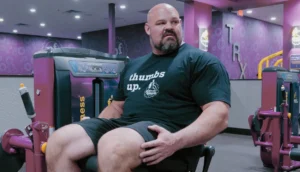








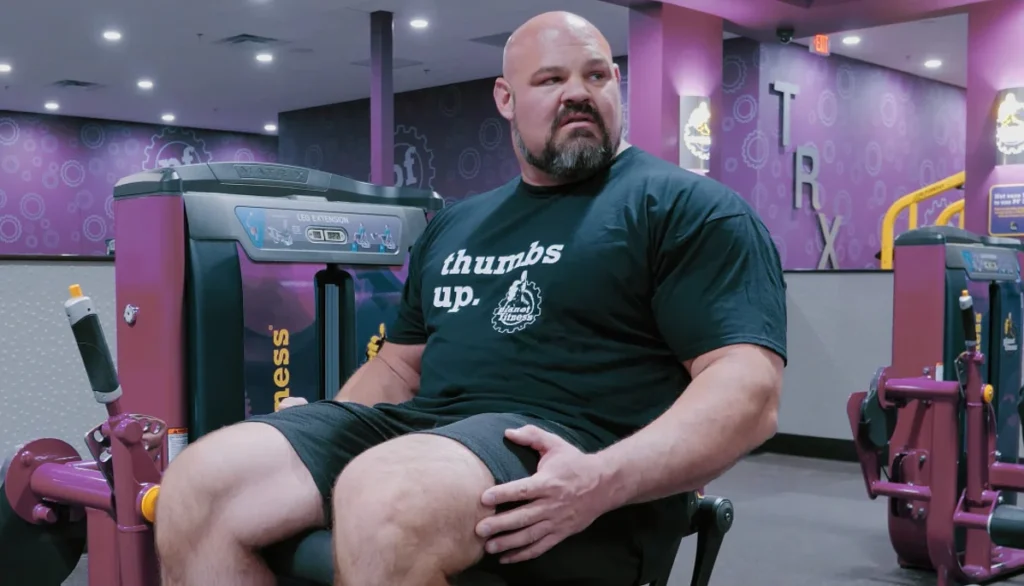
The encounter, captured for Shaw’s digital audience, highlights a significant juxtaposition between the requirements of professional strongmen and the "Judgement Free Zone" philosophy championed by Planet Fitness. While commercial gyms are ubiquitous and accessible, they often lack the specialized implements—such as Atlas stones, heavy-duty yokes, and log press bars—that define the sport of strongman. The resulting session served as both a logistical challenge for the athletes and a study in the adaptability of professional-grade strength training.
The Profiles: Brian Shaw and Eddie Hall
To understand the scale of the challenge, one must consider the physical dimensions and career trajectories of the participants. Brian Shaw, standing 6 feet 8 inches tall and weighing well over 400 pounds during his competitive peaks, is renowned for his technical proficiency and massive frame. His four WSM titles (2011, 2013, 2015, and 2016) place him in an elite echelon of strength history. At the time of this training session, Shaw was navigating his off-season, focusing on maintaining his foundational strength while managing his own promotion, the Shaw Classic.
Eddie Hall, known as "The Beast," stands 6 feet 3 inches tall and has undergone various physical transformations, moving from a peak competitive weight of nearly 430 pounds to a leaner, more mobile frame following a foray into professional boxing. Hall’s 2017 WSM victory and his legendary 500-kilogram (1,102-pound) deadlift in 2016 solidified his status as a global icon of the sport. Hall’s presence in Colorado was part of his preparation for a return to competitive strongman, specifically as the captain of Team UK for the World’s Strongest Nation contest.

The Environment: The "Judgement Free" Limitation
Planet Fitness is categorized in the industry as a "high-volume, low-price" (HVLP) gym. Its business model centers on creating a non-intimidating environment for casual gym-goers. A cornerstone of this approach is the "Lunk Alarm," a siren intended to discourage loud grunting, the dropping of weights, or "intimidating" behavior. For athletes like Shaw and Hall, whose training involves extreme physiological strain and often necessitates vocal exertion, the setting presented an immediate cultural and mechanical mismatch.
Furthermore, Planet Fitness locations typically do not feature traditional squat racks or deadlift platforms, opting instead for Smith machines and fixed-weight dumbbells. For athletes who routinely squat over 700 pounds and deadlift even more, the lack of free-weight barbells necessitates a complete overhaul of their standard programming.
Chronology of the Workout
The training session was structured to maximize the available equipment while attempting to reach a level of intensity that would provide some stimulus for the two giants.
The Smith Machine Squat
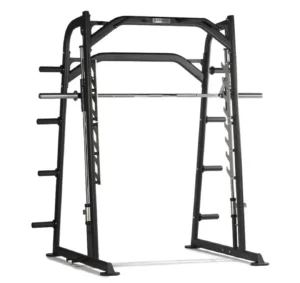
The duo began their session at the Smith machine, a piece of equipment where the barbell is fixed within steel rails, allowing only for vertical or near-vertical movement. For Shaw and Hall, the primary obstacle was not the weight, but their physical width. Fitting their shoulders and traps under the bar within the narrow confines of the Smith machine frame required significant maneuvering.
Despite these constraints, they proceeded to load the machine with five 45-pound plates on each side. While this total—approximately 495 pounds—is a significant load for a standard gym member, it represents a moderate working weight for these athletes. Shaw noted that he had to stabilize himself by holding onto the outer frame of the machine to maintain balance, a testament to how the fixed path of the Smith machine can interfere with the natural biomechanics of an athlete of his size.
Leg Press and Accessory Movements
Following the squats, the pair moved to the seated leg press. This machine is often a favorite for strongmen in commercial settings because it allows for a high degree of mechanical advantage and safety when pushing heavy loads. They eventually maxed out the machine’s capacity, loading six 45-pound plates per side, plus an additional plate placed on top of the sled. Observers noted that the athletes moved the weight with a cadence that suggested the machine’s maximum resistance was still well within their "warm-up" thresholds.
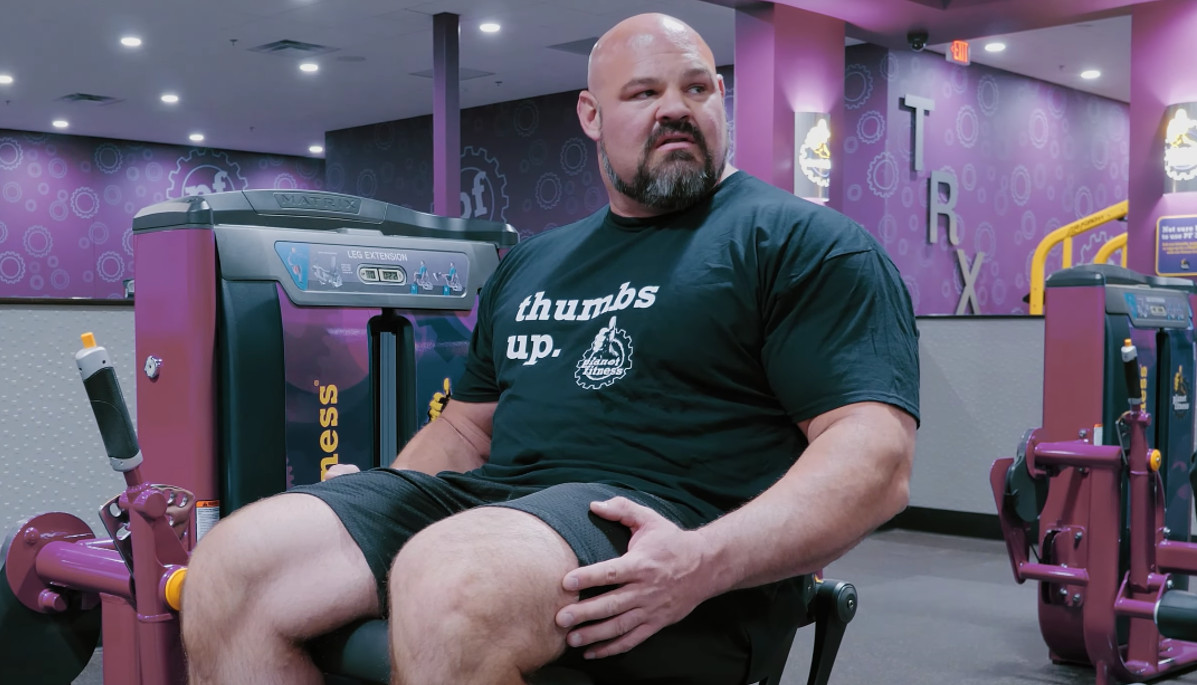
The session continued with a series of isolation movements, including:
- Abdominal Crunch Machine: An attempt to utilize the selectorized equipment for core stability.
- Leg Extensions: Focused on quadriceps isolation, though the range of motion was limited by the size of their limbs relative to the machine’s padding.
- Adductor and Abductor Machines: Used primarily for hip health and mobility, these machines provided a moment of levity as the athletes’ massive frames nearly overwhelmed the small seats.
The 20-Station Circuit Challenge
The climax of the visit was an improvised competition held in the gym’s designated circuit training room. This area is designed for general fitness enthusiasts to perform a full-body workout by moving through 20 different stations in sequence. Hall and Shaw decided to turn this into a timed race, performing one repetition at the maximum available weight for every machine in the room.
This challenge shifted the focus from absolute strength to anaerobic capacity and transitions. The results were remarkably close:
- Eddie Hall: Completed the 20-station circuit in 1 minute and 15.09 seconds.
- Brian Shaw: Completed the circuit in 1 minute and 19 seconds.
Hall’s slightly faster time was attributed to his recent cardiovascular conditioning during his boxing training, which allowed for faster movement between stations.
Technical Analysis: The Engineering of Strength
The presence of Shaw and Hall at a Planet Fitness underscores a technical reality in the fitness industry: most commercial equipment is engineered for the 5th to 95th percentile of the human population. Athletes of Shaw and Hall’s caliber fall well outside these parameters.
From a biomechanical perspective, the use of the Smith machine by elite squatters is often criticized because it forces the spine into a fixed plane, preventing the natural "S-curve" movement of a free-weight squat. However, for a single session, it provided a safe alternative to nothing. The leg press encounter also highlighted the "weight-stack" limitation; most commercial machines use a pulley system that caps out at 200–300 pounds. For a professional strongman, whose "assistance work" often exceeds these numbers, the only way to achieve hypertrophy is through extreme repetition ranges or, as seen in the video, adding external plates to the sled.
Broader Impact and Competitive Implications
This event occurred during a pivotal time for both athletes. For Eddie Hall, the session was a public-facing component of his return to the strongman stage. On November 26, 2022, shortly after this video was released, Hall captained Team UK at the World’s Strongest Nation event in Liverpool. His preparation involved transitioning back from "boxing shape" to "strongman shape," a process that requires regaining significant muscle mass while maintaining the agility he developed in the ring.
For the sport of strongman, videos of this nature serve as a bridge between the niche world of elite strength and the mainstream public. By placing these "titans" in a relatable environment like Planet Fitness, the sport gains visibility. It also serves as a subtle critique of the "Lunk Alarm" culture, demonstrating that even the world’s strongest men can navigate a "judgement-free" space with professionalism, provided the equipment can hold their weight.
Conclusion
While the session at Planet Fitness was not a replacement for the specialized training found at Shaw’s home gym or Hall’s training base in the UK, it demonstrated the versatility required of professional athletes. The ability to adapt to a limited environment is a hallmark of the competitive mindset.
Ultimately, the session concluded without any reported triggers of the "Lunk Alarm," despite the massive loads being moved. The event remains a unique moment in the chronology of both athletes’ careers—a brief intersection between the world of elite, record-breaking strength and the everyday fitness culture of the general public. As Hall moved forward toward his captaincy against Team USA’s Martins Licis, and Shaw continued to build his legacy through the Shaw Classic, their Colorado "leg day" stands as a testament to the fact that for the world’s strongest, any gym can be a proving ground, however unconventional.