

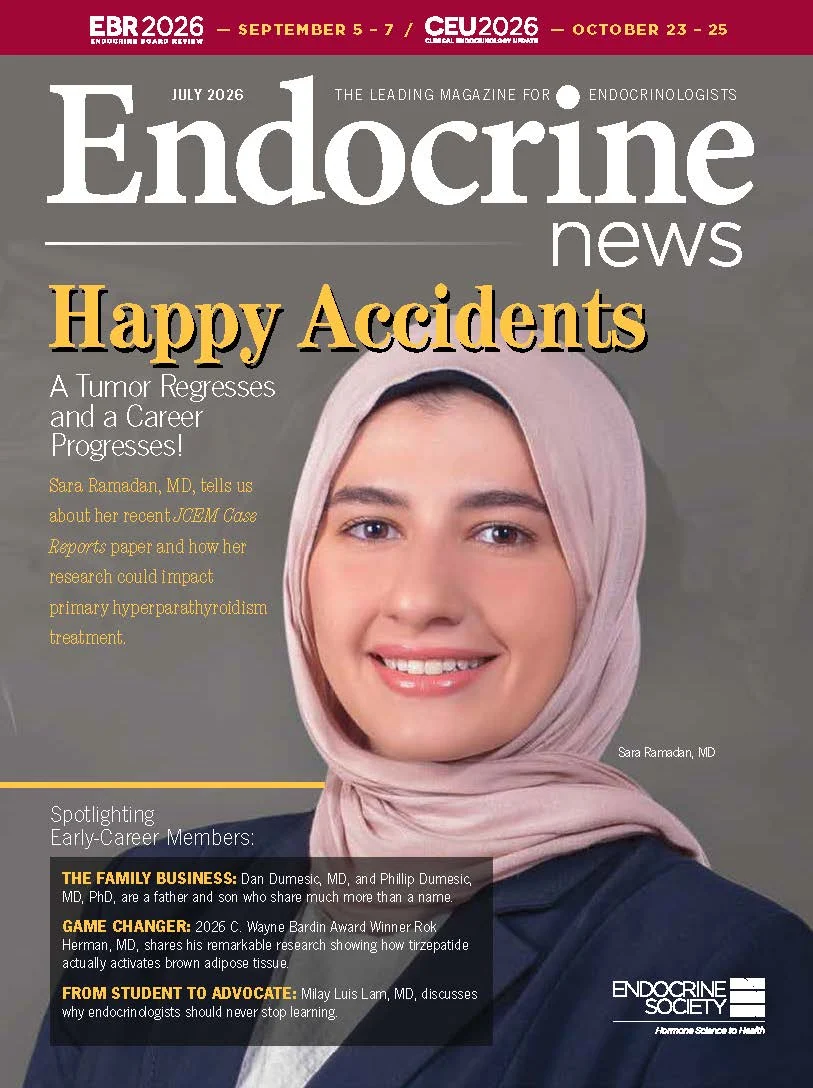
The field of endocrinology is currently undergoing a period of rapid transformation, driven by a new generation of researchers and clinicians who are redefining the boundaries of metabolic science. As the Endocrine Society transitions from its flagship annual meeting, ENDO 2026, held in Chicago, the focus has shifted to the emerging voices within the community. The July issue of Endocrine News serves as a dedicated platform for these early-career professionals, highlighting a diverse array of advancements ranging from the molecular mechanisms of fat metabolism to the integration of humanistic advocacy in clinical practice. This annual spotlight underscores the critical importance of mentorship and the convergence of traditional clinical wisdom with cutting-edge genomic research.
The Evolution of Metabolic Pharmacotherapy: Tirzepatide and Brown Fat Activation
One of the most significant highlights of the current endocrine landscape is the work of Dr. Rok Herman, the 2026 Bardin Award winner. His research, presented at ENDO 2026, addresses the burgeoning global obesity crisis through a novel lens. While the current generation of anti-obesity medications (AOMs), such as GLP-1 (glucagon-like peptide-1) and GIP (glucose-dependent insulinotropic polypeptide) receptor agonists, have gained widespread acclaim for their appetite-suppressant qualities, Dr. Herman’s work suggests a more complex physiological impact.
The study focuses on tirzepatide, a dual GLP-1 and GIP receptor agonist. Data from Dr. Herman’s abstract indicates that tirzepatide does more than modulate satiety in the hypothalamus; it appears to actively stimulate brown adipose tissue (BAT). Unlike white adipose tissue, which serves primarily as energy storage, brown fat is thermogenic, meaning it burns calories to produce heat.
The implications of this finding are substantial. If tirzepatide can successfully activate BAT in human subjects, it opens a "watershed moment" in obesity research. This suggests a dual-action mechanism: the reduction of caloric intake coupled with a simultaneous increase in energy expenditure at the cellular level. As obesity rates continue to climb globally—with the World Health Organization reporting that over 1 billion people are now living with obesity—the transition from simple appetite suppression to "thermogenic activation" represents a vital shift in therapeutic strategy.
Intergenerational Research: The Convergence of Adipocyte Science and Gene Expression
The trajectory of endocrine research is often shaped by mentorship, and in some cases, familial legacy. The professional relationship between Dr. Dan Dumesic and Dr. Phillip Dumesic illustrates how foundational research in Polycystic Ovary Syndrome (PCOS)—recently increasingly referred to as Polycystic Metabolic Overwhelming Syndrome (PMOS) to reflect its systemic nature—is being expanded by modern genomic tools.
Dr. Dan Dumesic, a veteran expert at UCLA, has spent decades investigating the hormonal imbalances and reproductive challenges associated with PCOS. His son, Dr. Phillip Dumesic, now leads a lab at the University of California – San Francisco, focusing on the molecular drivers of fat metabolism and gene expression. Despite their different institutional affiliations, their work converges at the adipocyte, or fat cell.
The Dumesics’ research highlights the critical role of stem cell differentiation. Their collaborative insights suggest that the way stem cells choose to become either muscle cells or fat cells is a primary factor in both metabolic health and aging. This is particularly relevant in the study of sarcopenia—the involuntary loss of skeletal muscle mass and strength. By understanding the molecular "switches" that govern these processes, the Dumesics aim to develop interventions that can preserve muscle function and optimize fat metabolism, addressing two of the most significant health challenges in an aging population.
Clinical Anomalies and the Role of Professional Societies
In clinical practice, the "happy accident" often leads to significant breakthroughs. Dr. Sara Ramadan, an early-career member of the Endocrine Society, recently documented a rare occurrence in the treatment of primary hyperparathyroidism (PHPT). Her study, "Unanticipated remission of primary hyperparathyroidism following cinacalcet," published in JCEM Case Reports, challenges the standard understanding of PHPT management.
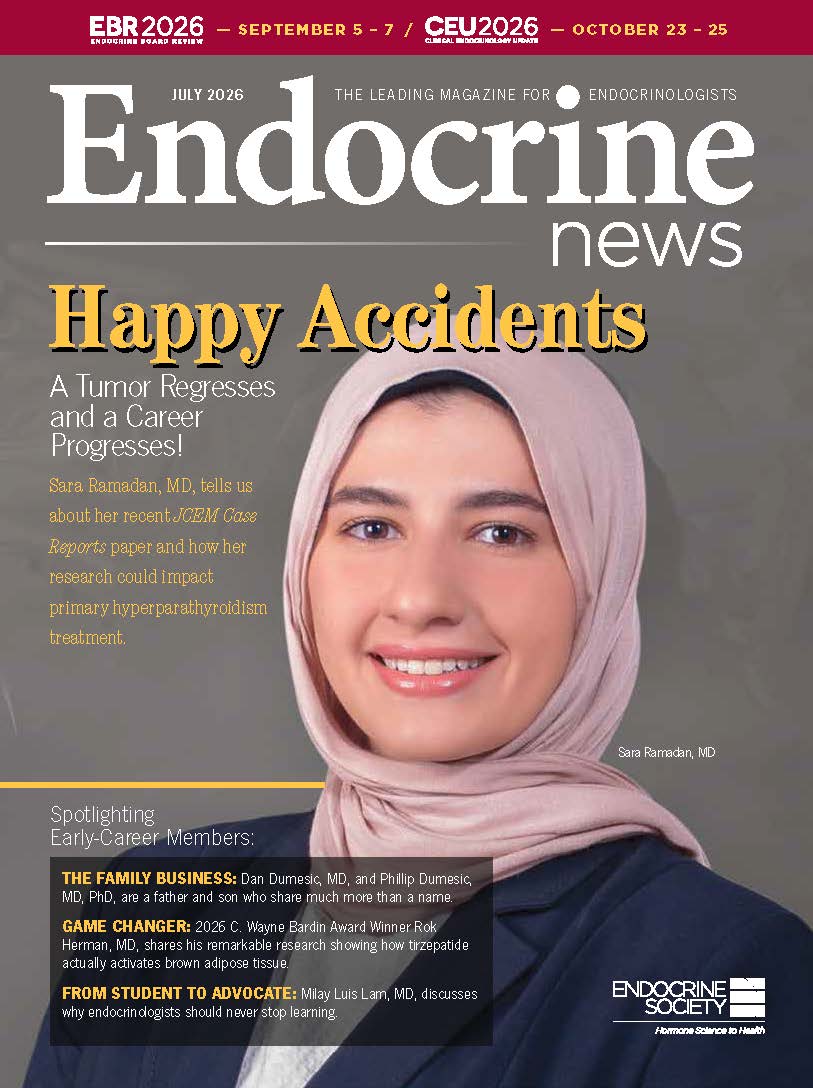
PHPT is characterized by the overactivity of one or more of the parathyroid glands, leading to excessive production of parathyroid hormone (PTH) and subsequent hypercalcemia. While cinacalcet is a calcimimetic typically used to lower calcium levels in patients who are not candidates for surgery, it is rarely associated with long-term remission of the underlying tumor or hyperplasia. Dr. Ramadan’s research into this "unanticipated remission" provides a new perspective on the potential long-term pharmacological effects of calcimimetics.
Beyond the clinical data, Dr. Ramadan’s experience underscores the structural importance of professional organizations like the Endocrine Society. For early-career physicians, these societies provide more than just access to journals; they offer a roadmap for career development. Dr. Ramadan noted that the transition from a first-year resident to a specialized endocrinologist was facilitated by the ability to observe how established experts "define their niches" and build sustainable research programs. This highlights a broader trend in medical education: the shift toward a "community of practice" model where peer-to-peer and mentor-to-mentee networking are as vital as clinical training.
The Humanistic Element: Advocacy and the Patient-Physician Relationship
While much of the July issue focuses on molecular biology and pharmacology, Dr. Milay Luis Lam brings attention to the "human side" of the discipline. Following a recent EXCEL (Excellence in Clinical Endocrinology Leadership) meeting at the Endocrine Society’s Washington, D.C. headquarters, Dr. Lam raised concerns about the "quiet dehumanization" that can occur in high-pressure clinical environments.
The modern healthcare system, often characterized by short appointment times and heavy administrative burdens, can inadvertently lead physicians to view patients as a collection of laboratory values and diagnoses rather than individuals with complex lives. Conversely, patients may perceive physicians as detached or inaccessible. Dr. Lam argues that for endocrinology to be effective—particularly in managing chronic conditions like diabetes or thyroid disorders—physicians must actively maintain their humanity and act as advocates for their patients.
This focus on advocacy is particularly relevant in the current socio-political climate, where access to endocrine care, including insulin affordability and gender-affirming hormone therapy, has become a subject of intense public debate. The Endocrine Society’s EXCEL program aims to equip the next generation of leaders with the skills necessary to navigate these systemic pressures while maintaining a patient-centered approach.
Chronology and Context: The Significance of ENDO 2026
The research and perspectives highlighted in this issue are inextricably linked to the events of ENDO 2026. Held from June 13 to 16 in Chicago, the conference served as the primary staging ground for the data discussed by Dr. Herman and others. The annual meeting is the world’s largest gathering of endocrinologists, attracting thousands of participants from across the globe.
The timeline of these breakthroughs suggests a rigorous process of peer review and presentation. The abstracts presented in June often represent years of laboratory work and clinical trials. For early-career members, the month of July serves as a reflective period, where the high-intensity environment of the annual meeting is distilled into actionable insights for the broader medical community.
Broader Impact and Future Implications
The collective work of these early-career endocrinologists suggests several key trends that will likely dominate the field over the next decade:
- Precision Metabolism: The convergence of gene expression studies (as seen in the Dumesics’ work) and new pharmacotherapies (like tirzepatide) indicates a move toward "precision metabolism." Future treatments may be tailored to an individual’s specific adipocyte function or genetic predisposition toward thermogenesis.
- Pharmacological Expansion: The discovery that existing drugs like cinacalcet or tirzepatide may have "off-target" beneficial effects (such as tumor remission or BAT activation) will likely lead to more longitudinal studies exploring the secondary benefits of common endocrine medications.
- The Rise of the Physician-Advocate: As healthcare systems become more complex, the role of the endocrinologist is expanding from a purely clinical role to one of advocacy and systemic navigation. The emphasis on "humanity" in medicine is no longer seen as a "soft skill" but as a core competency necessary for patient adherence and positive outcomes.
- Mentorship as Infrastructure: The Endocrine Society’s focus on its early-career members demonstrates that the future of the field depends on robust mentorship structures. By highlighting these individuals, the society ensures a pipeline of talent that is prepared to tackle the metabolic challenges of the 21st century.
As the global medical community looks forward to the full wrap-up of ENDO 2026, the July issue of Endocrine News serves as a reminder that the field is in capable hands. The integration of advanced molecular tools with a renewed focus on the human experience of illness marks a promising new chapter in endocrine science. The ongoing dialogue between established experts and the "next generation" ensures that the discipline remains dynamic, responsive, and, above all, dedicated to improving patient lives through scientific excellence.
