

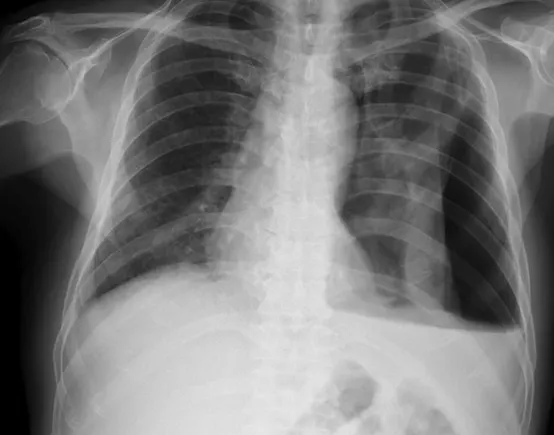
The United States Food and Drug Administration (FDA) has officially granted a breakthrough device designation to Aidoc, a leading provider of clinical artificial intelligence, for its pioneering "First Read" technology. This decision marks a significant milestone in the integration of generative artificial intelligence (AI) within the medical imaging sector, specifically targeting the interpretation and reporting of chest X-rays. As the healthcare industry grapples with a global shortage of radiologists and an ever-increasing volume of diagnostic imaging, Aidoc’s First Read aims to bridge the gap by utilizing a sophisticated chain of AI models to detect over 100 distinct pathologies and automatically draft comprehensive clinical reports for physician review.
The breakthrough designation is a specialized program intended to expedite the development and regulatory review of medical devices that provide for more effective treatment or diagnosis of life-threatening or irreversibly debilitating diseases or conditions. By granting this status, the FDA acknowledges the potential of First Read to offer a significant clinical advantage over existing standard-of-care methods. This development comes at a time when regulatory bodies are under intense pressure to establish robust frameworks for generative AI, a technology that offers immense promise but also presents unique challenges regarding validation, safety, and the prevention of "hallucinations" or inaccuracies.
Technical Architecture of the First Read System
The First Read system represents a shift from narrow AI—which typically focuses on a single condition like a pulmonary embolism or a fracture—to a comprehensive, end-to-end diagnostic platform. According to Aidoc CEO Elad Walach, the system does not rely on a single monolithic model but rather a complex "chain of models" designed to mirror the cognitive process of a radiologist.
The workflow begins with a high-performance detection model that scans chest X-rays for a wide array of abnormalities. Once potential issues are identified, the system utilizes generative AI to synthesize these findings into a structured report format. This architectural approach is designed to ensure that the generative aspect of the tool is grounded in the objective data identified by the detection models, thereby mitigating the risks often associated with general-purpose large language models (LLMs) like ChatGPT when applied to specialized medical tasks.
"It detects over 100 diseases on the detection side, and then drafts a complete report," Walach noted, emphasizing that this is the first time an AI diagnostic tool has achieved this level of end-to-end integration. The complexity of this task is immense; while a standard LLM can process text or general images, a medical-grade generative AI must maintain a near-human level of accuracy across a vast spectrum of clinical possibilities to be considered useful in a high-stakes hospital environment.
The Evolution of Aidoc and the AI Imaging Market
Founded in 2016 and headquartered in Tel Aviv, Israel, Aidoc has rapidly ascended to the forefront of the MedTech sector. The company has secured over $300 million in venture capital funding to date, reflecting investor confidence in its ability to scale AI solutions across health systems. Aidoc already holds a significant number of FDA clearances for specific AI algorithms, but the First Read project represents its most ambitious undertaking yet.
The development of First Read is a direct response to the "point solution" fatigue currently felt by many hospital IT departments. Historically, medical AI has been fragmented, with different algorithms required for different body parts or conditions. Aidoc’s move toward a holistic system that covers practically every disease detectable on a chest X-ray or CT scan within the next 18 months signals a new era of "platform-based" AI. This strategy aims to provide a single, unified interface for radiologists, reducing the cognitive load of switching between multiple software tools.
The broader medical imaging market is currently valued at billions of dollars, with AI expected to be the primary driver of growth over the next decade. Competitors in the space, including Viz.ai, Gleamer, and Riverain Technologies, are also racing to expand their diagnostic capabilities. However, the integration of generative reporting gives Aidoc a unique positioning, moving the technology beyond simple "triage and notification" into the realm of active clinical documentation.
Regulatory Challenges and the Breakthrough Designation Program
The FDA’s Breakthrough Devices Program provides Aidoc with several advantages, most notably priority review and the opportunity for "interactive and timely communication" with FDA experts during the pre-market review phase. For a technology as novel as generative AI reporting, this collaboration is essential.
The FDA is currently navigating a complex regulatory landscape regarding Artificial Intelligence and Machine Learning (AI/ML)-enabled medical devices. In recent years, the agency has issued several discussion papers and white papers focusing on the "Total Product Lifecycle" approach, which emphasizes the need for continuous monitoring of AI performance after it has been deployed in a clinical setting.
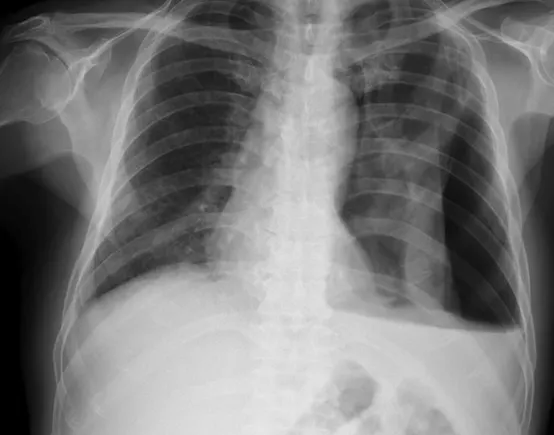
A primary concern for regulators is the "black box" nature of deep learning models. Validating a model that detects a single condition is straightforward; however, validating a generative model that can produce an infinite variety of text based on over 100 different disease detections is a monumental task. Walach acknowledged these hurdles, stating that training these models is "very intense" and requires massive, high-quality datasets to ensure that safety and quality guardrails are maintained.
Enhancing Clinical Workflow and Addressing Physician Burnout
The primary value proposition of First Read lies in its potential to alleviate the burden on radiologists. According to data from the Medscape Radiologist Lifestyle, Happiness & Burnout Report, nearly 49% of radiologists report feeling burned out, often cited as a result of the sheer volume of imaging studies and the administrative burden of reporting.
By providing a "first pass" or a draft report, Aidoc’s system allows the radiologist to act as an editor rather than an author from scratch. In a typical workflow, the AI processes the image the moment it is captured. By the time the radiologist opens the study, a drafted report is already waiting for them. The physician then reviews the images, verifies the AI’s findings, makes necessary adjustments, and signs off.
"What do we want from AI? Improved safety and accuracy of reads, reduced time to diagnosis, and improved capacity," Walach explained. He emphasized that for the tool to be successful, it must be "really good" the majority of the time. If the AI-generated drafts are inaccurate or require extensive correction, clinicians will lose trust and revert to manual reporting, rendering the technology obsolete.
Mitigating Risks: Automation Bias and the "Human-in-the-Loop"
As AI becomes more integrated into healthcare, medical ethicists and professional organizations, such as the American College of Radiology (ACR), have raised concerns about "automation bias"—the tendency for humans to over-rely on automated suggestions, potentially overlooking errors. There is also the long-term risk of "deskilling," where future generations of physicians may become less proficient in manual interpretation because of their reliance on AI.
Aidoc’s leadership is cognizant of these risks. The company advocates for a "human-in-the-loop" philosophy, where the AI serves as a co-pilot rather than an autonomous agent. Walach noted that the mitigation of automation bias must be built into the workflow itself. This includes ensuring that radiologists are forced to perform a manual action to confirm or reject AI findings and maintaining transparency regarding the model’s strengths and weaknesses.
"You need to know the model is really good at some types of cases, and less in other types of cases," Walach said. This transparency allows the clinician to apply a higher level of scrutiny to areas where the AI may be less reliable, such as rare pathologies or complex multi-morbidity cases.
Future Outlook: The Path to Universal AI Diagnostics
The breakthrough designation for First Read is a significant step, but it is not a final clearance for commercial sale. Over the next 18 months, Aidoc will be focused on completing clinical trials and gathering the rigorous evidence required for a formal 510(k) or De Novo clearance.
The company’s roadmap involves expanding the First Read capabilities beyond chest X-rays to include Computed Tomography (CT) scans, eventually aiming to cover nearly every detectable disease in these modalities. If successful, this could transform the standard of care in emergency departments and radiology suites worldwide, providing a safety net that ensures critical findings are never missed and that reports are delivered with unprecedented speed.
The implications for the healthcare system are profound. Faster, more accurate diagnostic reporting can lead to shorter hospital stays, more timely interventions for life-threatening conditions like pneumothorax or aortic dissection, and a more efficient allocation of medical resources. As the FDA and companies like Aidoc work together to define the "safety and quality threshold" for generative AI, the medical community watches closely, anticipating a future where AI and human expertise are inextricably linked in the pursuit of better patient outcomes.
In conclusion, Aidoc’s First Read represents a bold leap into the next generation of medical technology. By combining the precision of detection algorithms with the communicative power of generative AI, the company is attempting to solve some of the most persistent challenges in modern medicine. While the road to full regulatory clearance and widespread adoption remains complex, the breakthrough designation serves as a powerful validation of the technology’s potential to redefine the diagnostic landscape.
