

The medical technology sector witnessed a significant shift last week as Johnson & Johnson announced that its Ottava surgical robotic system has received de novo authorization from the U.S. Food and Drug Administration. This regulatory milestone, which arrived earlier than many industry analysts had projected, positions the healthcare giant to directly challenge the long-standing dominance of Intuitive Surgical in the soft-tissue robotics market. The authorization covers a variety of general surgical procedures within the abdomen, providing a new technological framework for minimally invasive surgery that departs significantly from existing hardware architectures.
The timing of the announcement coincided with a major industry conference, amplifying the impact of the news across the medtech community. For Johnson & Johnson, Ottava represents the culmination of a decade-long investment strategy aimed at integrating its massive portfolio of surgical instrumentation with advanced robotics and digital connectivity. By securing a de novo classification, the company has established that Ottava represents a novel category of device without a direct predicate in the current marketplace, primarily due to its unique "table-integrated" design.
A Departure from Conventional Robotic Architecture
Since the inception of robotic-assisted surgery approximately 25 years ago, the industry has been defined by cart-based systems. Market leader Intuitive Surgical’s da Vinci system and Medtronic’s more recent Hugo platform rely on large, external carts that house robotic arms. These carts must be wheeled into position and docked with the operating table, often requiring significant floor space and complex setup routines.
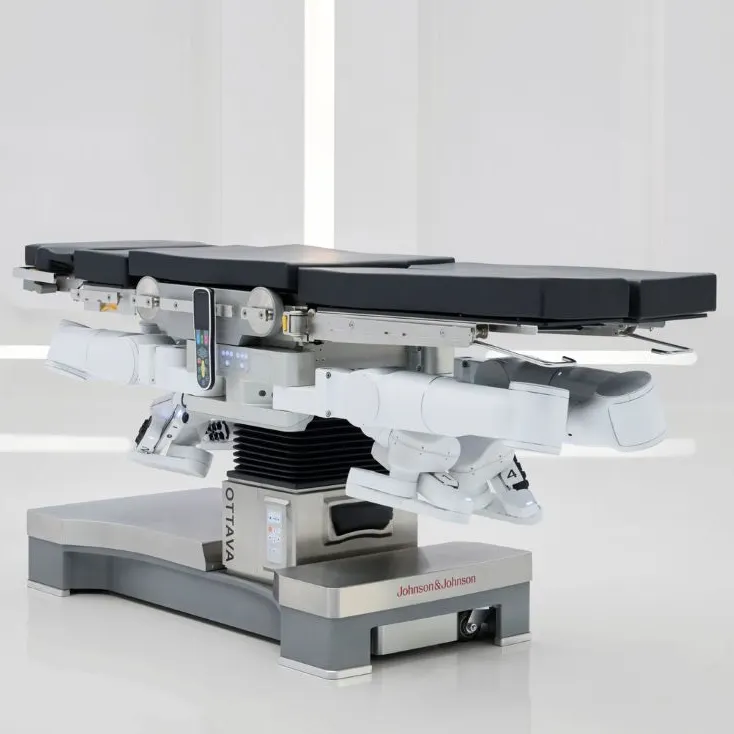
In contrast, the Ottava system integrates four "intelligent" robotic arms directly into a standard-size surgical table. According to Rocco De Bernardis, Global President of Ottava at Johnson & Johnson, this design was intentional to address the physical constraints of modern operating rooms. The arms are designed to stow beneath the table when not in use, effectively "disappearing" to allow the surgical team to perform traditional open or laparoscopic procedures on the same platform without moving heavy equipment.
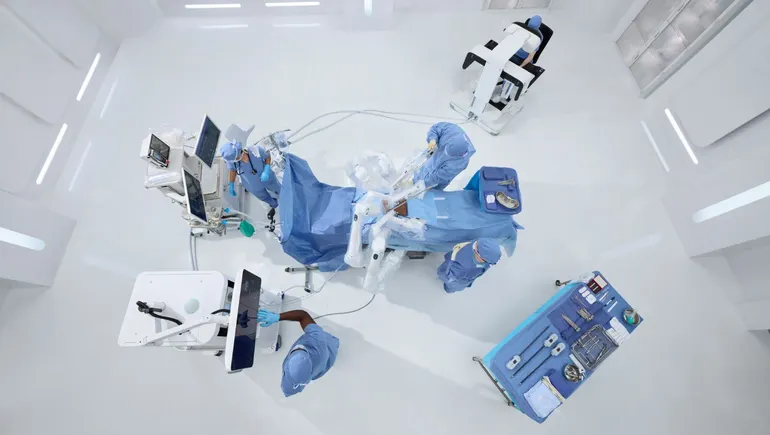
Engineering-wise, this integration reduces the system’s overall footprint by 30% to 50% compared to leading competitors. This spatial efficiency is a critical factor for hospitals, particularly older facilities with smaller operating suites that were not originally designed to accommodate large robotic footprints. By making the robot part of the table, J&J aims to transform any standard operating room into a robotic-capable suite without the need for expensive renovations or facility expansion.
Chronology of Development: A Decade of Strategic Evolution
The path to FDA authorization for Ottava has been marked by significant acquisitions, strategic pivots, and technical refinements. Understanding the timeline of Ottava’s development provides context for J&J’s current position in the market:
- 2015: Johnson & Johnson entered a joint venture with Verily (formerly Google Life Sciences) to form Verb Surgical. The goal was to create a "digital surgery" platform that combined robotics, advanced visualization, and data analytics.
- 2019: J&J moved to take full control of Verb Surgical, signaling a shift toward a more unified internal development strategy. During the same year, J&J acquired Auris Health for approximately $3.4 billion. Auris, founded by robotic surgery pioneer Dr. Fred Moll, brought the Monarch platform (used for bronchoscopy) and a wealth of engineering talent to J&J.
- 2020-2021: The company officially unveiled the "Ottava" name. However, in late 2021, J&J announced a delay in the development timeline, citing technical challenges and a desire to refine the system’s integration. This delay led to skepticism among some analysts regarding the company’s ability to catch up to Intuitive.
- 2023-2024: J&J intensified its focus on the "Polyphonic" digital ecosystem, ensuring the robot would launch with a robust software backbone. The 2024 FDA de novo authorization serves as the final green light for the system’s entry into the U.S. clinical environment.
Technical Innovations and Surgeon Workflow
A primary focus of the Ottava design is the preservation of surgical "intuition" and the flexibility of the operating room staff. One of the most significant technical hurdles in robotic surgery has been the inability to move the patient once the robot is docked. Traditional systems require the surgeon to undock the robot if the table needs to be tilted to use gravity for organ displacement—a common technique in abdominal surgery.
Ottava introduces "synchronized table motion," allowing the robotic arms to move in tandem with the table. This enables surgeons to reposition the patient in real-time to gain better exposure of anatomical structures without interrupting the procedure. This feature was developed directly from surgeon feedback, aiming to replicate the fluid movements of traditional laparoscopy while maintaining the precision and tremor-filtration of a robotic interface.
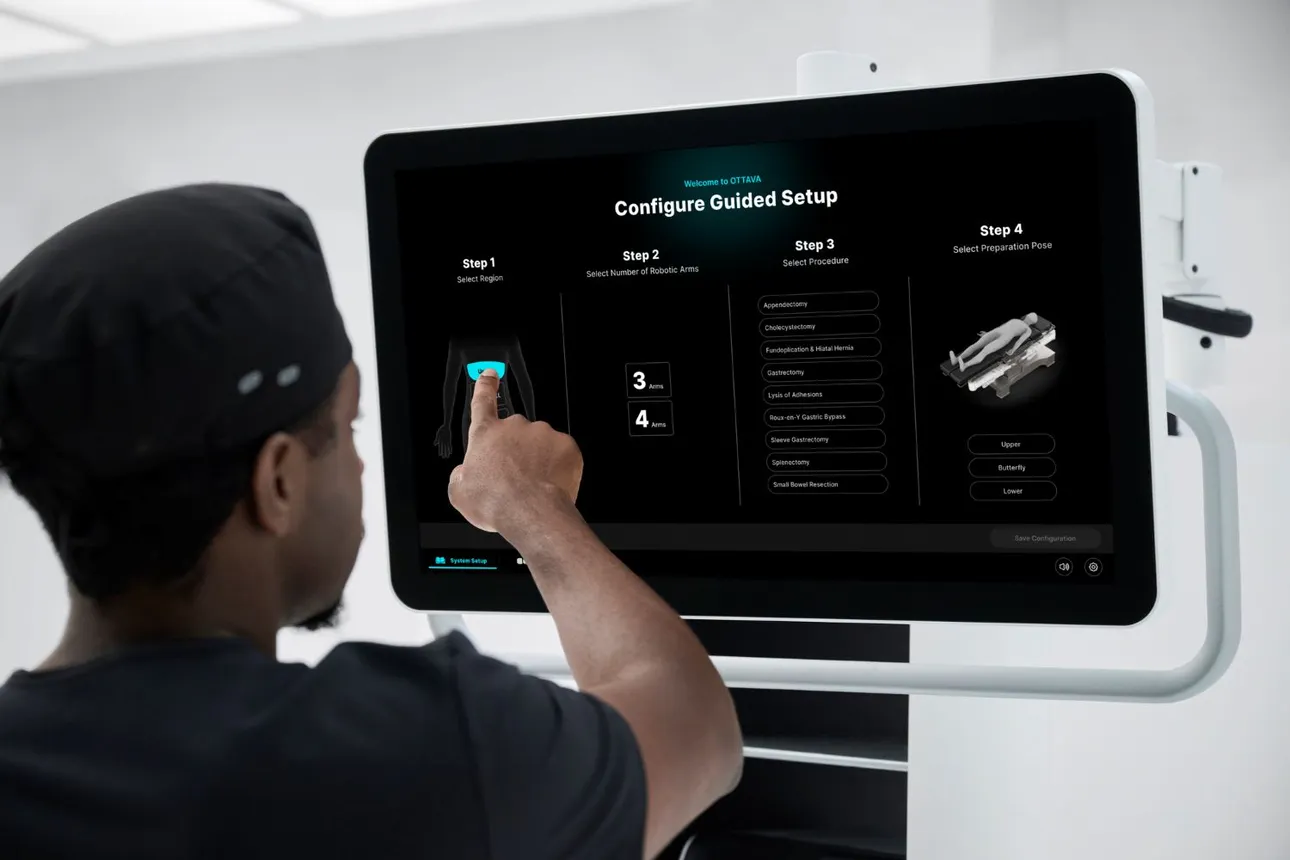
Furthermore, the system incorporates "automated procedure poses." By selecting a specific surgery on the touchscreen—such as a cholecystectomy (gallbladder removal) or a gastric bypass—the system automatically maneuvers the four arms into the optimal starting position. This automation is designed to reduce the "onboarding" time for nursing staff and surgical technicians, potentially increasing the number of cases a hospital can perform in a single day.

Integration with the Ethicon Heritage
While the robotic hardware is the centerpiece, J&J is leveraging its century-long history in surgical tools through its Ethicon subsidiary. Ethicon is a global leader in sutures, staplers, and energy devices. A recurring criticism of newer robotic platforms has been the lack of sophisticated instrumentation compared to traditional manual tools.
J&J has addressed this by porting its trusted Ethicon instrumentation directly to the Ottava platform. This strategy serves two purposes: it provides surgeons with familiar tactile feedback and performance characteristics, and it addresses the clinical reality that 50% of surgical complications are related to tissue management, such as leakages or bleeding. By using the same "tissue-sensing" technology found in their manual staplers, J&J hopes to prove that Ottava offers superior clinical outcomes in complex abdominal reconstructions.
The system also connects to "Polyphonic," J&J’s open digital ecosystem. This platform is designed to store video data for surgical education, use AI to provide real-time insights during procedures, and offer a secure environment for future software-based innovations.
Market Implications and Competitive Analysis
The entry of Ottava into the U.S. market comes at a time of rapid growth for robotic-assisted surgery. Analysts estimate the global market for soft-tissue robotics will continue to grow at a double-digit compound annual growth rate (CAGR) through the end of the decade.
Intuitive Surgical currently maintains a dominant market share, with over 8,000 da Vinci systems installed worldwide. However, the market is no longer a monopoly. Medtronic’s Hugo system is gaining traction in international markets, and CMR Surgical’s Versius system has found a niche in the United Kingdom and Europe.
J&J’s entry is expected to pressure pricing and accelerate innovation. The "table-integrated" model specifically targets the "utilization" bottleneck in hospitals. If a hospital can use the same room for a robotic prostatectomy in the morning and a manual appendectomy in the afternoon without moving a 1,000-pound robot cart, the return on investment (ROI) for the facility improves significantly. This economic argument is expected to be a cornerstone of J&J’s sales strategy as they target not only large academic centers but also smaller community hospitals and Ambulatory Surgery Centers (ASCs).
Future Outlook and Global Expansion
Following the FDA authorization, J&J plans a disciplined rollout. The company will initially partner with select "leading institutions" in the United States to gather real-world clinical evidence and refine training protocols. This phased approach is standard for complex medical devices to ensure patient safety and high-quality outcomes during the initial launch phase.
Looking ahead, J&J has indicated that the next 12 to 18 months will involve:
- Clinical Trials: Expanding the evidence base for Ottava across a wider range of specialties beyond general surgery, including urology and gynecology.
- Software Updates: Integrating more advanced AI and automation features into the Polyphonic platform to assist in surgical decision-making.
- Regulatory Filings: Pursuing CE Mark in Europe and approvals in other major markets like Japan and China to fulfill the company’s ambition of a global program.
The authorization of Ottava marks the end of the "development" chapter for Johnson & Johnson and the beginning of a high-stakes commercial battle. With its massive balance sheet, deep relationships with hospital procurement departments, and a novel architectural approach, J&J is positioned to be more than just another competitor; it aims to redefine the standard of care in the digital operating room. As Rocco De Bernardis noted, the de novo approval is not the finish line, but rather the "starting point" for a new era in surgical intervention.
