

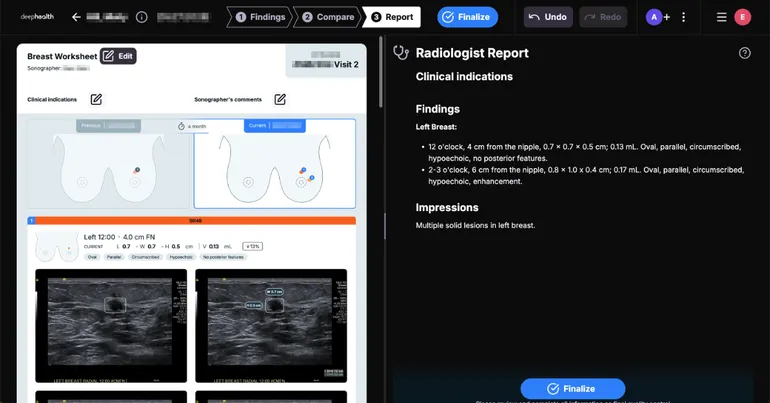
DeepHealth, a prominent subsidiary of RadNet, Inc., has reached a significant regulatory milestone with the U.S. Food and Drug Administration (FDA) clearance of its latest artificial intelligence-driven clinical tool designed for breast ultrasound analysis. This technological advancement is engineered to assist radiologists in the identification and characterization of potential malignancies, addressing two of the most persistent challenges in modern diagnostic imaging: diagnostic accuracy and the increasing administrative burden on medical professionals. By integrating sophisticated machine learning algorithms into the ultrasound workflow, DeepHealth aims to refine the standard of care for supplemental breast cancer screening, particularly for patients with dense breast tissue or those requiring follow-up on suspicious mammographic findings.
Clinical Performance and Validated Outcomes
The FDA clearance was predicated on a comprehensive clinical study involving 16 radiologists operating across a diverse array of imaging centers and hospital environments. The data submitted to the regulatory body demonstrated a measurable impact on both clinical efficacy and operational throughput. According to DeepHealth, the implementation of the AI tool resulted in an 8% improvement in sensitivity for breast cancer detection. In the context of oncology, an 8% increase in sensitivity represents a significant leap in the ability to identify early-stage lesions that might otherwise be overlooked by the human eye alone.
Beyond diagnostic accuracy, the tool addresses the critical issue of radiologist burnout and the global shortage of imaging specialists. The study findings revealed that the AI feature can reduce radiologist interpretation times by as much as 37%. In a high-volume clinical setting, this efficiency gain allows for a more streamlined workflow, enabling practitioners to dedicate more time to complex cases or patient consultations while maintaining a high standard of diagnostic rigor. While the full results of the multi-reader, multi-case study are currently awaiting formal publication in peer-reviewed journals, the preliminary data suggests a transformative potential for the integration of AI in sonography.
The Role of Ultrasound in Modern Breast Cancer Screening
To understand the impact of DeepHealth’s new tool, it is essential to consider the current landscape of breast cancer diagnostics. Mammography remains the gold standard for primary screening; however, it is not without limitations. For women with dense breast tissue—a demographic that comprises nearly half of the female population over the age of 40—mammograms can be less effective. Dense tissue appears white on a mammogram, as do many tumors, which can lead to "masking" and a higher rate of false negatives.
Consequently, breast ultrasound is frequently employed as a critical secondary screening modality. It is used to investigate palpable lumps, provide further detail on areas of concern identified during a mammogram, and serve as an primary screening tool for patients where mammography is less conclusive. DeepHealth’s new AI tool is designed to function within this secondary tier, providing a digital "second pair of eyes" that analyzes ultrasound images in real-time. By utilizing quantitative analysis, the tool helps distinguish between benign and malignant tissue with greater precision, thereby reducing the frequency of unnecessary biopsies and the associated patient anxiety.
Strategic Acquisition and Technological Integration
The technology behind this FDA-cleared feature originated from See-Mode Technologies, an AI-focused ultrasound firm that RadNet acquired in early 2025. This acquisition was a strategic move by RadNet to bolster its digital health portfolio and consolidate its position as a leader in AI-enhanced radiology. Following the acquisition, See-Mode’s proprietary algorithms were integrated into DeepHealth’s existing breast suite, which already included a robust set of reporting and analysis tools for mammography.
DeepHealth’s ecosystem is built on the philosophy of "Informatics-as-a-Service," where AI is not a standalone product but a deeply integrated component of the clinical workstation. By unifying mammography and ultrasound tools under a single interface, DeepHealth provides a holistic view of the patient’s diagnostic journey. This integration ensures that data flows seamlessly between different imaging modalities, allowing for better-informed clinical decisions and a more cohesive reporting structure.
Economic Viability and Market Reach
The commercial strategy for the new breast ultrasound tool is closely tied to existing healthcare reimbursement frameworks. With the FDA clearance in hand, DeepHealth and RadNet plan to market the tool to healthcare providers who can seek reimbursement under Current Procedural Terminology (CPT) codes for quantitative ultrasound tissue characterization. This financial pathway is crucial for the widespread adoption of AI in healthcare, as it allows imaging centers to recoup their investment through standardized billing practices.
RadNet, as the parent company, is uniquely positioned to deploy this technology at scale. With a network of more than 400 outpatient imaging centers across the United States, RadNet estimates that over 700,000 breast ultrasound studies performed annually within its own facilities may be eligible for reimbursement using the new AI-enhanced protocols. This internal scale provides a powerful proof-of-concept for other independent imaging groups and hospital systems considering the adoption of the DeepHealth suite. The ability to demonstrate both clinical improvement and financial sustainability is expected to drive significant market interest in the coming fiscal quarters.
The Broader Landscape of AI in Medical Imaging
The FDA’s clearance of DeepHealth’s tool occurs amidst a broader regulatory trend where the agency is increasingly evaluating and approving devices that combine advanced image analysis with automated report drafting. The field is shifting from simple computer-aided detection (CAD), which merely flagged areas of interest, to more sophisticated "generative" and "interpretive" AI models.
For example, companies such as Aidoc and Cognita have recently received the FDA’s breakthrough device designation for AI tools designed to interpret chest X-rays and generate preliminary diagnostic reports for radiologist review. This indicates a growing appetite within the regulatory framework for technologies that do more than just "see"—they synthesize data into actionable medical insights. DeepHealth’s ultrasound tool fits into this trajectory, moving beyond simple image enhancement to provide quantitative characterization that directly informs the final diagnostic report.
Addressing Radiologist Burnout and Quality of Care
The integration of AI into radiology is often framed as a battle between human expertise and machine efficiency, but industry experts suggest the reality is far more collaborative. The 37% reduction in interpretation time cited by DeepHealth is not merely a matter of speed; it is a matter of quality. By automating the more rote, quantitative aspects of ultrasound analysis, the AI allows radiologists to focus their cognitive resources on the most nuanced aspects of a case.
Furthermore, the 8% increase in sensitivity is a critical metric for patient outcomes. In oncology, the timing of a diagnosis is often the single most important factor in determining the success of treatment. Early detection through enhanced supplemental screening can lead to less invasive treatment options and significantly higher survival rates. For the patient, the presence of AI-validated findings can also provide an additional layer of confidence in their diagnostic results.
Timeline of Innovation and Future Outlook
The trajectory of DeepHealth and RadNet over the last several years reflects a focused commitment to the "AI-first" radiology clinic. Starting with the acquisition of DeepHealth in 2020 and continuing through the 2025 integration of See-Mode Technologies, RadNet has consistently invested in the digital transformation of imaging.
Looking ahead, the industry can expect DeepHealth to continue expanding its AI suite to cover other high-volume imaging modalities, such as prostate MRI and lung CT screenings. The success of the breast ultrasound tool serves as a blueprint for how AI can be successfully navigated through the FDA’s 510(k) clearance process and integrated into a commercial reimbursement model.
As the full clinical data from the 16-radiologist study becomes available for public review, the medical community will be watching closely to see how these results translate into real-world clinical settings. If the 8% sensitivity gain and the 37% efficiency increase hold true across broader populations, DeepHealth’s technology could set a new benchmark for supplemental breast cancer screening.
In conclusion, the FDA clearance of DeepHealth’s AI-powered breast ultrasound tool represents a pivotal moment in the intersection of technology and women’s health. By providing a solution that simultaneously improves the accuracy of cancer detection and the efficiency of the diagnostic process, DeepHealth is addressing the dual imperatives of modern healthcare: better clinical outcomes and a more sustainable delivery model. As this technology rolls out across RadNet’s extensive network and beyond, it promises to redefine the role of ultrasound in the early detection of breast cancer, offering a more precise and efficient pathway to diagnosis for hundreds of thousands of patients.
