

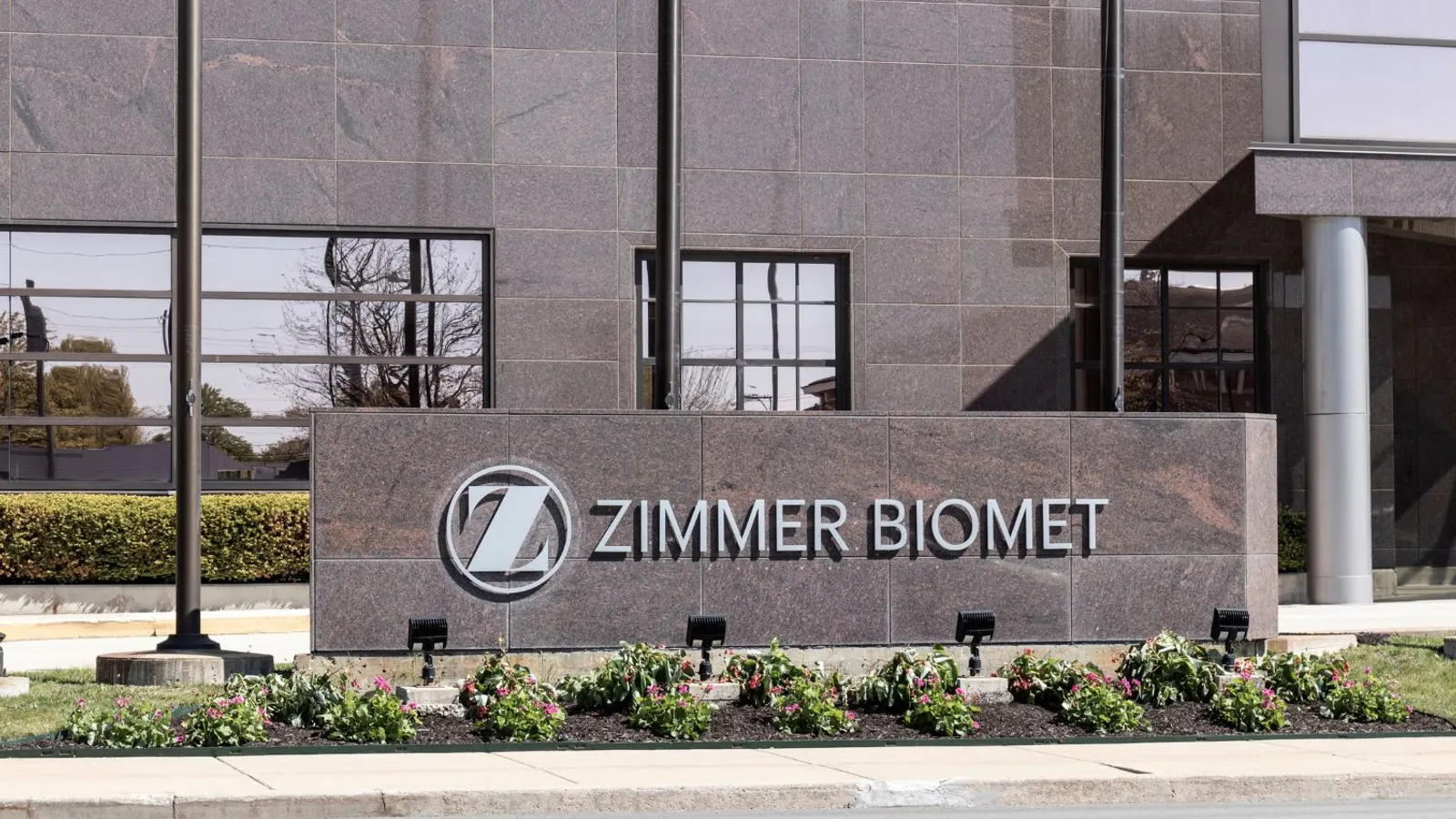
Zimmer Biomet Holdings, Inc., a global leader in medical technology and musculoskeletal healthcare, announced a significant upward revision to its full-year 2026 financial guidance following a robust second-quarter performance that exceeded analyst expectations. The Warsaw, Indiana-based company reported a 4.8% year-over-year increase in quarterly sales, reaching $2.18 billion, while net earnings surged to $198.3 million, a marked improvement from the $152.8 million recorded during the same period in 2025. Central to this financial momentum is a large-scale organizational restructuring aimed at transitioning the company’s U.S. sales operations from a model reliant on independent distributors to a fully dedicated, captive sales force.
The restructuring, which was initially unveiled in February, represents one of the most ambitious operational shifts in the company’s history. CEO Ivan Tornos, speaking to investors and analysts during a Wednesday morning earnings call, expressed high confidence in the trajectory of this transition. According to Tornos, the move to a fully dedicated sales force is progressing more smoothly than internal models had predicted, characterized by lower-than-anticipated customer disruption and minimal turnover among high-performing sales personnel. This operational stability has allowed Zimmer Biomet to raise its revenue growth expectations for 2026 to a range of 3.9% to 4.9%, up from the previously forecast range of 2.5% to 4.5%.
Strategic Shift in Sales Force Dynamics
The cornerstone of Zimmer Biomet’s long-term growth strategy involves the reorganization of its 2,500-person U.S. sales force. Historically, like many large-scale orthopedic firms, Zimmer Biomet utilized a hybrid model that included a significant number of independent contractors and third-party distributors. While this model offers flexibility and lower fixed costs, it can lead to fragmented brand representation and less direct control over specialized product launches.
The transition to a "fully dedicated" model means that sales representatives will be direct employees of Zimmer Biomet, focused exclusively on the company’s portfolio. This shift is designed to align the sales force more closely with the company’s high-growth segments, particularly in the realms of robotic-assisted surgery and digital health solutions. As part of this initiative, Tornos confirmed that the company is in the process of hiring 200 specialized "tech sales representatives." These roles are specifically designed to support the adoption of the ROSA Robotics platform and the Omni Suite, providing technical expertise in the operating room that traditional generalist sales reps may lack.
"This is a growth strategy," Tornos emphasized during the call. "We are not just changing contracts; we are building what we believe will be the best sales force in orthopedics. By locking in our top six independent distributors and bringing them into the fold, we have secured the talent necessary to drive market share gains in a highly competitive environment."
Financial Performance and Comparative Market Analysis
The second-quarter financial data suggests that Zimmer Biomet is successfully navigating the complexities of its internal reorganization while maintaining its competitive edge. The reported $2.18 billion in sales reflects steady demand for orthopedic procedures, which have seen a sustained recovery following the disruptions of the early 2020s.
A granular look at the company’s product segments reveals a mixed but generally positive competitive landscape:
- U.S. Hip Segment: Zimmer Biomet outperformed its primary rivals in the hip replacement category, posting a 5.9% growth rate for the quarter. This performance placed the company ahead of both Stryker and Johnson & Johnson’s DePuy Synthes division, suggesting that Zimmer’s latest implant technologies and surgical protocols are resonating with orthopedic surgeons.
- U.S. Knee Segment: The company’s knee business grew by 1.4% during the quarter. While this surpassed the 1% growth reported by Johnson & Johnson, it trailed significantly behind Stryker, which posted a robust 6.1% growth in its knee segment. Analysts suggest that Stryker’s continued dominance in the robotic-assisted knee replacement market remains a challenge that Zimmer Biomet intends to address through its tech-heavy sales force expansion.
Despite the gap in knee growth compared to Stryker, J.P. Morgan analyst Robbie Marcus characterized the results as "incrementally positive." In a research note to investors, Marcus observed that Zimmer Biomet appears to be capturing market share from other smaller players, particularly as competitors navigate their own supply chain or product transition issues. Marcus noted that the company’s ability to raise guidance despite having approximately 50% of the sales force restructuring still ahead of it suggests a high level of operational execution.
Timeline and Implementation Milestones
The restructuring process is not an overnight endeavor. Zimmer Biomet has established a clear timeline, with the goal of completing the full transition by the end of 2027. This multi-year approach is intended to mitigate the risks associated with such a large-scale change, such as the potential for disgruntled independent distributors to move their business to competing firms.

The chronology of the restructuring includes several key phases:
- Phase I (Q1 2026): Identification of key territories and negotiation with the "Top Six" independent distributors to integrate them into the direct corporate structure.
- Phase II (Q2 2026 – Q4 2026): Aggressive recruitment of the 200 tech sales representatives and the commencement of specialized training programs focused on the ROSA Robotics ecosystem.
- Phase III (2027): Final integration of remaining regional territories and the standardization of sales incentives across the national organization.
By the end of 2027, the company expects to have a streamlined, data-driven sales organization that can react more quickly to market shifts and product innovations.
Broader Industry Implications and the "Warsaw Hub"
Zimmer Biomet’s headquarters in Warsaw, Indiana, sits at the heart of what is often referred to as the "Orthopedic Capital of the World." The region is home to a dense cluster of medical device manufacturers, including major operations for competitors like Medtronic and DePuy Synthes. Zimmer’s decision to move toward a direct sales model is being watched closely by the entire industry as a potential bellwether for how large medtech firms manage their go-to-market strategies.
Industry experts point to the increasing complexity of orthopedic surgery as the primary driver for this shift. Modern procedures are no longer just about the physical implant; they involve sophisticated software, pre-operative planning tools, and intra-operative robotic guidance. Independent distributors, who may represent multiple companies or lack the resources for deep technical training, are increasingly viewed as less effective in selling these integrated technology stacks.
Furthermore, the shift toward Ambulatory Surgery Centers (ASCs) is changing how sales reps interact with healthcare providers. ASCs often require more efficient, high-volume support and specialized pricing models. A dedicated sales force allows Zimmer Biomet to negotiate more comprehensive, long-term contracts with these facilities, offering a "one-stop-shop" for implants, robotics, and digital management tools.

Risk Assessment and Future Outlook
While the current sentiment surrounding Zimmer Biomet is positive, the company still faces several hurdles. As J.P. Morgan’s Robbie Marcus pointed out, half of the restructuring is still in progress. The latter stages of such a transition are often the most difficult, as they involve smaller, more fragmented territories where the transition to a direct model may be less economically straightforward.
Additionally, the company must contend with broader macroeconomic factors, including fluctuating hospital capital budgets and the potential for pricing pressure from government and private payers. Stifel analyst Rick Wise noted that while Zimmer’s hip performance was a standout, the company must find ways to accelerate its knee segment growth to keep pace with Stryker’s aggressive expansion in the robotic space.
In response to these challenges, Zimmer Biomet has also adjusted its adjusted earnings per share (EPS) forecast, raising it by several cents to reflect both the higher revenue expectations and the anticipated efficiencies of the new sales model. The company’s net earnings growth from $152.8 million to $198.3 million provides a solid financial cushion as it enters the second half of the year.
The transition to a dedicated sales force is a high-stakes gamble on the future of orthopedic sales. If successful, it could provide Zimmer Biomet with a more loyal, highly skilled, and data-aligned team capable of defending and expanding its market share. As the restructuring continues through 2027, the medical technology industry will likely see this move as a test case for whether the traditional independent distributor model remains viable in an era of high-tech, robotic-assisted surgery.
For now, the company’s leadership remains steadfast. CEO Ivan Tornos concluded the earnings call by reiterating that the current momentum is proof that the strategy is working. With the "top six" distributors already secured and a new wave of tech-focused representatives entering the field, Zimmer Biomet is positioning itself to be a more agile and technologically integrated player in the global musculoskeletal market.
