

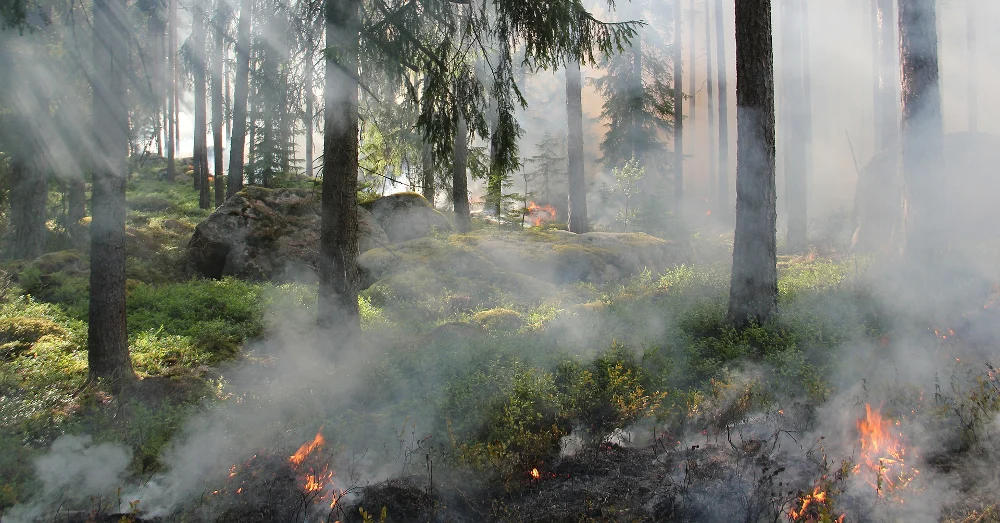
A thousand kilometres from the infernos gorging on northern Ontario’s boreal forests, Erin O’Connor watched the sky above Canada’s biggest city turn an almost post-apocalyptic orange as it filled with light-scattering particles of soot and ash. Stepping outside the halls of Toronto General Hospital, where sophisticated air filters were working at peak capacity to keep patients safe from the worst of the fumes, she was struck by an olfactory sensation so pervasive it felt like standing directly beside a campfire. As the medical director of the University Health Network’s emergency department, O’Connor was on the front lines of a burgeoning public health crisis that extended far beyond the reach of the flames. She observed a marked rise in patients presenting with acute respiratory distress, severe allergies, and cardiovascular strain. The smell of burning wood and chemical accelerants did not dissipate at the hospital doors; as the days progressed, the pervasive scent of combustion seemed to penetrate indoor spaces, serving as a constant reminder of the environmental catastrophe unfolding to the north.
While the visual spectacle of towering flames often dominates news cycles and emergency response priorities, a landmark 2024 study published in The Lancet has revealed a much more insidious reality. The smoke generated by landscape fires—a category encompassing wildfires, peat fires, and prescribed burns—is responsible for an estimated 1.5 million deaths annually. This figure staggering exceeds the combined death toll of floods, direct fire contact, storms, and extreme heatwaves. The findings suggest that the global community has fundamentally underestimated the lethality of "combusting nature," focusing on the immediate destruction of property and local life while overlooking the silent, transboundary killer drifting in the atmosphere.
The Global Burden of Landscape Fire Smoke
The 2024 Lancet study, which synthesized decades of epidemiological data and atmospheric modeling, highlights a shift in how scientists understand the mortality associated with wildfires. Traditionally, fire-related deaths were counted in the dozens or hundreds—those caught in the path of the blaze. However, by expanding the scope to include the long-range transport of fine particulate matter (PM2.5) and toxic gases, the true scale of the crisis becomes apparent.
Of the 1.5 million annual deaths, approximately 90% occur in low-to-middle-income countries. This disparity is driven by a combination of factors, including higher baseline rates of respiratory and cardiovascular disease, limited access to high-quality indoor air filtration, and the prevalence of peatland fires in Southeast Asia and the Amazon. In these regions, smoke can linger for months, creating a "permanent season" of toxic air that stunts lung development in children and accelerates chronic illnesses in the elderly.
In North America and Europe, the 2023 and 2024 fire seasons served as a wake-up call for urban centers previously thought to be insulated from the effects of rural forest fires. The smoke that blanketed Toronto, New York, and Chicago in June 2023 was not merely a nuisance; it was a concentrated cocktail of carbon monoxide, nitrogen oxides, and volatile organic compounds.
The Physiological Path of Destruction
To understand why wildfire smoke is more lethal than the fires themselves, one must look at the microscopic level. The primary culprit is PM2.5—particulate matter that is 2.5 microns or less in diameter, roughly 1/30th the width of a human hair. Because of their diminutive size, these particles bypass the body’s natural defenses in the nose and throat.
Upon inhalation, PM2.5 travels deep into the alveolar sacs of the lungs. From there, the particles are small enough to cross the blood-air barrier and enter the bloodstream. Once in the circulatory system, they trigger a systemic inflammatory response. This inflammation can lead to:
- Cardiovascular Events: The irritation of the blood vessels can cause arterial plaque to rupture, leading to heart attacks and strokes.
- Respiratory Failure: For individuals with asthma or chronic obstructive pulmonary disease (COPD), the smoke acts as a massive trigger, causing the airways to constrict and fill with fluid.
- Neurological Impacts: Emerging research suggests that these particles can even reach the brain via the olfactory nerve, potentially contributing to cognitive decline and neurodegenerative diseases.
- Metabolic Disruption: Long-term exposure has been linked to increased insulin resistance and the exacerbation of type 2 diabetes.
Dr. O’Connor’s observations at Toronto General reflect these clinical realities. The patients she treated were not just coughing; they were experiencing systemic shocks that their bodies, already compromised by existing conditions, could not easily manage.
Chronology of a Crisis: The 2023 Canadian Wildfire Season
The events that led to the "post-apocalyptic" skies in Toronto were the result of an unprecedented convergence of climatic factors. A timeline of the 2023 season illustrates how a localized environmental event transformed into a continental health emergency:
- May 2023: Record-breaking heat and drought conditions across Western Canada and Quebec created a "tinderbox" effect. Early ignitions in Alberta forced the evacuation of tens of thousands.
- Early June 2023: A series of lightning-triggered fires in Northern Quebec exploded in size. A stagnant low-pressure system over the Atlantic began funneling the smoke southward along the Eastern Seaboard.
- June 7-9, 2023: The "Orange Sky" event. New York City recorded the worst air quality of any major city on Earth, with Air Quality Index (AQI) levels exceeding 400—a level considered "hazardous" for all humans, regardless of health status.
- July 2023: Smoke plumes crossed the Atlantic Ocean, reaching as far as Norway and Greece. While the particulate matter diluted over the ocean, it contributed to a global haze and impacted high-altitude air quality.
- August 2023: The fire in Yellowknife necessitated the evacuation of an entire capital city, while the smoke continued to cycle through the Midwest and Northeastern United States.
- Early 2024: The publication of the Lancet study provided the first comprehensive global death toll, linking the events of the previous year to a broader, deadlier trend.
Economic and Social Implications
The impact of wildfire smoke extends into the realm of macroeconomics. When air quality reaches hazardous levels, outdoor labor productivity plummets. Construction, agriculture, and logistics industries face significant delays as safety protocols mandate the suspension of work. Furthermore, the strain on healthcare systems is immense. Emergency rooms, like the one managed by O’Connor, must staff up to handle the influx of patients, while elective surgeries are often cancelled to clear bed space for respiratory emergencies.
A 2023 report by the United States Congress Joint Economic Committee estimated that the economic cost of wildfire smoke in the U.S. alone ranges from $147 billion to $394 billion annually. These costs account for lost wages, healthcare expenditures, and the "value of a statistical life" lost to premature mortality.
Official Responses and Policy Gaps
Public health officials have struggled to keep pace with the changing nature of wildfire smoke. For decades, advice was limited to "staying indoors." However, modern research shows that in many older buildings, indoor air quality can reach 70% of outdoor pollution levels within hours if proper filtration is not in place.
In response to the 2023 season, several North American cities have begun implementing "Clean Air Centers"—public buildings equipped with high-efficiency particulate air (HEPA) filters where vulnerable populations can seek refuge. However, critics argue that these are reactive measures.
"We are treating the symptoms rather than the disease," says Dr. Sarah Henderson, a senior scientist in environmental health. "The disease is a combination of climate change-induced aridity and a century of fire suppression policies that have left our forests overstocked with fuel."
There is a growing call for international cooperation in air quality monitoring. Because smoke does not respect national borders, the pollution generated in the Canadian boreal forest becomes a domestic health crisis for the United States, and smoke from the Amazon becomes a crisis for all of South America.
Fact-Based Analysis: The New Normal?
The data suggests that the 1.5 million annual deaths reported by The Lancet may be a conservative baseline for the future. As global temperatures continue to rise, the "fire weather" window is expanding. Forests are drying out faster and staying dry longer, leading to fires that burn hotter and produce more smoke.
Furthermore, the nature of what is burning is changing. As wildfires encroach upon the "wildland-urban interface," they are no longer just burning wood. They are consuming homes, cars, plastics, and industrial chemicals. This "urban smoke" is significantly more toxic than pure forest fire smoke, containing high concentrations of lead, arsenic, and synthetic polymers.
The 2024 Lancet findings demand a paradigm shift in how we categorize natural disasters. If smoke is killing more people than the fires, floods, and storms combined, then air quality management must be elevated to a primary pillar of national security and public health policy.
Conclusion: A Call for Resilience
As Erin O’Connor and her colleagues at Toronto General Hospital prepare for future seasons, the focus has shifted toward resilience and adaptation. This includes upgrading hospital HVAC systems, stockpiling N95 masks—which are effective at filtering PM2.5—and developing early warning systems that track smoke plumes with the same precision as hurricane paths.
The "post-apocalyptic" orange sky of 2023 was a visual warning. The Lancet study provided the statistical evidence. The challenge now lies in whether global policy can evolve quickly enough to protect the millions of people living in the shadow of a warming, burning world. The smoke is no longer a distant problem for forest dwellers; it is a pervasive, life-threatening reality for the global urban population, demanding a response that matches the scale of its 1.5-million-person annual toll.
