







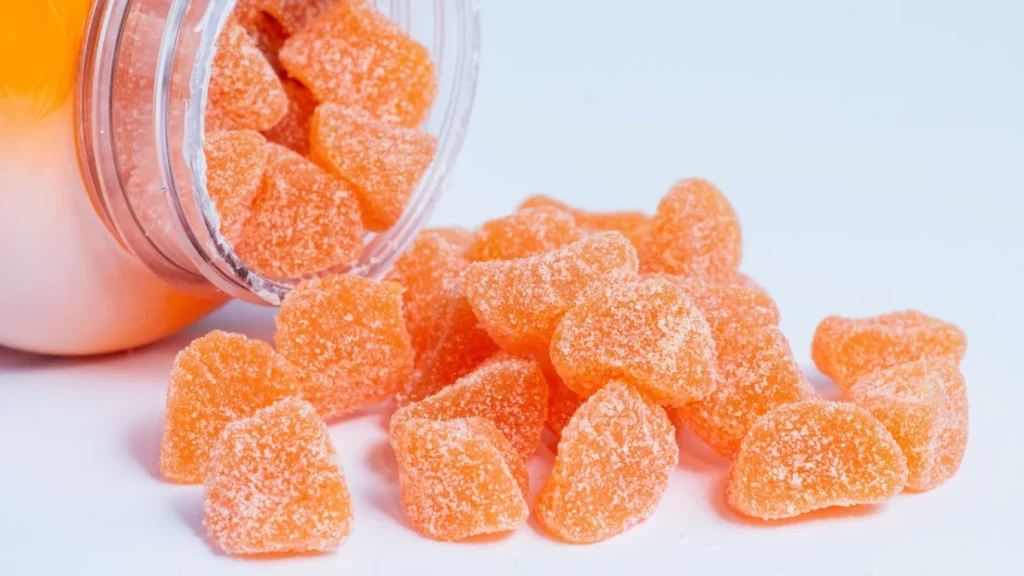
The dietary supplement industry, particularly the burgeoning gummy segment, is confronting a critical challenge to consumer trust following recent findings that highlight significant discrepancies between product labels and actual content. A comprehensive analysis conducted by NOW Foods, a prominent player in the health and wellness sector, has revealed that a substantial portion of vitamin C gummy supplements available on the market fail to meet their declared label claims. This revelation carries profound implications for the rapidly expanding gummy market, which, according to Nutrition Business Journal, commanded nearly a quarter of the overall market share in 2025, underscoring the urgent need for enhanced transparency and rigorous quality control measures.
The allure of gummies, often referred to as "candyceuticals," lies in their palatable format, making them an attractive delivery system for a wide array of active ingredients. However, this very characteristic presents unique formulation and manufacturing hurdles. The NOW Foods investigation, which meticulously tested 30 different brands of vitamin C gummies sourced from Amazon.com, found that 12 of these brands did not contain the amount of vitamin C indicated on their packaging. This suggests a widespread issue that extends beyond isolated incidents, potentially impacting countless consumers who rely on these supplements for their health and well-being.
Background Context of the NOW Foods Investigation

The impetus for NOW Foods’ investigation stemmed from ongoing concerns within the industry regarding product authenticity and efficacy, particularly within the rapidly growing gummy supplement category. With the increasing consumer demand for convenient and enjoyable supplement options, the market has seen an explosion of new products. However, this rapid expansion has, in some instances, outpaced the development of robust quality assurance protocols and regulatory oversight.
NOW Foods, known for its commitment to quality and transparency, undertook this independent testing initiative to shed light on the realities of the vitamin C gummy market. The company’s press release detailed that their testing focused on products readily available to consumers, aiming to provide an objective assessment of product integrity. The testing protocol involved rigorous laboratory analysis to quantify the actual vitamin C content in each sample. The results, which indicated that nearly 40% of the tested brands fell short of their label claims, painted a concerning picture of the state of quality control in this popular supplement format.
Chronology of Events and Findings
While a precise start date for the NOW Foods investigation was not publicly disclosed, the announcement of their findings marked a pivotal moment in the ongoing conversation about supplement quality. The testing process involved purchasing 30 different vitamin C gummy brands from Amazon.com, a platform known for its vast selection and direct-to-consumer sales model. This sourcing strategy aimed to capture a representative sample of the products consumers are most likely to encounter.
The laboratory analysis, conducted by NOW Foods and independently validated by Alkemist Labs, employed High-Performance Liquid Chromatography (HPLC), a scientifically recognized method for accurately measuring vitamin C content. The results were stark: 12 out of the 30 tested brands exhibited significantly lower vitamin C levels than what was declared on their labels. Alarmingly, some of these brands contained "negligible amounts" of the vitamin, suggesting either gross misformulation, degradation, or potentially deliberate misrepresentation.
In addition to the consumer-purchased brands, NOW Foods also tested five "legacy brands" that were expected to meet label claims. These established brands, presumably with a history of quality adherence, were found to contain the declared amount of vitamin C, reinforcing the idea that quality control is achievable but not universally implemented.
The findings also included a prediction by NOW Foods that four of the tested brands would likely not meet their label claims even by their expiration dates. This projection was based on prior experience and industry knowledge, indicating that vitamin C can degrade by approximately 20% per year under typical storage conditions. This highlights the critical importance of shelf-life testing, a practice that NOW Foods claims to conduct diligently, but which appears to be neglected by many other manufacturers.
Understanding the Physicochemical Properties of Raw Ingredients
The challenges inherent in gummy supplement formulation are rooted in the fundamental physicochemical properties of the raw ingredients. Manufacturers must carefully select ingredients that can withstand the rigors of the gummy production process. This process is often heat-intensive, with temperatures frequently exceeding 100 degrees Celsius, the boiling point of water. Furthermore, pectin-based gummies, a common formulation, typically operate within a highly acidic pH range of 3.0 to 4.5.
Crystal Webber, founder and chief innovation officer at Formulation Innovations Group, a nutraceutical gummy manufacturer, emphasizes the critical nature of ingredient stability. "Generally speaking, manufacturers should use supplement ingredients in gummies that are heat- and acid-stable," she advises. Ingredients that are sensitive to heat, oxygen, or light, such as vitamin C (ascorbic acid), require special consideration.
While vitamin C’s susceptibility to degradation is well-documented, it is not an insurmountable obstacle for gummy formulation. The key lies in incorporating an "overage" – an extra amount of the active ingredient added to the formulation to compensate for anticipated losses during processing and throughout the product’s shelf life. Webber notes that these overages can range from 20% to 60%, depending on processing conditions, pH, and the presence of other ingredients.
Beyond heat and acid stability, solubility and the physical form of the ingredient (powder, liquid, oil, or emulsion) also play a crucial role. Webber points out that even minor adjustments to formulation can significantly impact suitability and feasibility. "Soluble is not necessarily a dealbreaker with some nutrient forms, and soluble is not always the best option with others," she explains. "The same nutrient added as a high oil load that fails at higher, standard gummy temperatures might work perfectly in a custom-built low temperature base with high shear."
Despite these complexities, Webber maintains an optimistic outlook on ingredient inclusivity in gummy formats. "I believe any ingredient can be gelled with the right scientific approach and a good measure of patience," she asserts, underscoring the potential for innovation and tailored solutions within the industry.
Selecting the Appropriate Gummy Base
The choice of gummy base is another pivotal decision in the development process, directly influencing texture, stability, and compatibility with active ingredients. The two most prevalent gummy bases are pectin and gelatin. Pectin, a plant-derived gelling agent, requires specific pH and brix (sugar content) levels to achieve proper gelation. Gelatin, derived from animal collagen, offers greater flexibility in terms of pH but is more sensitive to heat.
"Gelatin systems are much more forgiving than pectin," states Webber. She elaborates that gelatin maintains its gel form effectively unless exposed to extreme heat, though gelatin-based gummies tend to melt at lower temperatures compared to their pectin counterparts.
When formulating with vitamin C, formulators can opt for either pectin or gelatin bases, but a cautious approach is recommended for pectin formulations. Webber highlights a particular challenge: "Vitamin C gummy formulations can be challenging because most manufacturers are using a pectin that gels at a set pH range. Since Vitamin C in the ascorbic form is an acid by nature, adding vitamin C can cause the gummy base to set too firmly, or at the wrong time." This interaction necessitates careful pH management and formulation expertise to ensure consistent texture and optimal vitamin C stability.
Determining Appropriate Testing Methods for Active Ingredients
The inherent complexity of gummy matrices introduces significant challenges for accurate laboratory testing compared to simpler formulations like liquids or powders. Celine Decasiano, analytical operations manager at Alkemist Labs, explains that the various components within a gummy can interfere with standard testing methodologies. "The other ingredients in gummies, like gelatin/pectin base, colorants, flavor compounds and the high sugar load don’t disperse cleanly into the organic solvent, or co-extract and cause interference," she notes.
To overcome these analytical hurdles, laboratories must employ specialized sample preparation techniques. Alkemist Labs, for instance, utilizes a cryo-grinding process, where gummies are frozen with dry ice and then ground into a fine, homogenous powder. This powder is subsequently extracted into a solvent for precise analysis.
For vitamin C, High-Performance Liquid Chromatography (HPLC) remains the most widely accepted and accurate method for quantification. The integrity of the NOW Foods testing was further bolstered by the external validation of their HPLC method by Alkemist Labs, ensuring a high degree of confidence in the reported results. This rigorous analytical approach is fundamental to verifying that products indeed deliver the advertised nutritional benefits.
Testing Samples to Ensure Gummy Contents Meet Label Claims
The paramount importance of comprehensive testing cannot be overstated in the gummy supplement industry. Whether conducted internally by the manufacturer or outsourced to a third-party laboratory, rigorous testing is the cornerstone of product integrity. This testing serves multiple crucial functions: verifying the stability of active ingredients through processing, confirming their presence at the end of the product’s shelf life, and ultimately ensuring that the final product aligns with label claims.
Decasiano points out that ingredients sensitive to heat or oxidation during manufacturing and storage are particularly prone to degradation. "In general, actives that are sensitive to heat or oxidation during the manufacturing process and storage conditions can show degradation," she states. However, she also acknowledges that some active ingredients exhibit remarkable stability within gummy products.
The implications of inadequate testing are far-reaching. Low results against label claims can stem from a multitude of factors, including processing inefficiencies, formulation errors, or premature degradation during storage, rather than solely from analytical challenges. This underscores the need for a holistic approach to quality control, encompassing every stage from ingredient sourcing to final product release.
The NOW Foods investigation specifically highlighted the plight of vitamin C gummies, where a significant number of products were found to contain "negligible amounts" of the vitamin. This directly contradicts the purpose of purchasing such supplements, potentially leading consumers to believe they are receiving a beneficial nutrient when, in reality, they are not. The contrast with the five legacy brands, which did meet their label claims, serves as a potent reminder that adherence to quality standards is achievable and expected.
Conducting Shelf-Life Testing for Accurate Expiration Dates
Finished product testing extends beyond initial quality assurance to encompass the entire lifespan of the product. Shelf-life testing is indispensable for determining accurate expiration dates, ensuring that consumers receive products that are not only compliant at the point of sale but also remain so throughout their intended use period.
Dan Richard, vice president of global sales and marketing at NOW Foods, notes that most gummies typically have a shelf life of two years. However, achieving this longevity with accurate potency requires dedicated stability studies. "Stability studies are time-consuming and expensive, but they show when increases in overage, or the extra amount of active ingredient, are required in a formula," the NOW Foods press release stated.
The NOW Foods team’s prediction that four of the tested brands would fail to meet label claims by their expiration dates, based on an estimated 20% annual decrease in vitamin C potency, underscores the critical nature of these studies. Richard candidly admits, "We are aware that most brands do not do (shelf-life testing)." This admission, from a company that actively engages in both accelerated and real-time stability testing, highlights a significant gap in industry practices. The absence of robust shelf-life testing leaves consumers vulnerable to consuming products that have lost their potency, rendering them ineffective and potentially misleading.
Broader Impact and Implications for the Dietary Supplement Industry
The findings from the NOW Foods investigation send a clear and urgent message to the entire dietary supplement industry. The prevalence of vitamin C gummies failing to meet label claims is not merely an isolated incident but a symptom of systemic issues that could erode consumer confidence across the board.
The dietary supplement market, valued in the tens of billions of dollars globally, relies heavily on consumer trust. When consumers purchase supplements, they do so with the expectation that the products are safe, accurately labeled, and efficacious. The revelation that a substantial percentage of popular gummy supplements may not deliver on their promises directly undermines this trust. This can lead to a ripple effect, discouraging consumers from purchasing supplements altogether, impacting legitimate brands, and potentially leading to increased regulatory scrutiny.
The "candyceutical" trend, while offering a welcome alternative for many consumers, has inadvertently created a landscape where the line between confectionery and functional health products can become blurred. This necessitates a stronger emphasis on scientific integrity and manufacturing excellence, ensuring that the primary purpose of a supplement—to provide health benefits—remains paramount.
For manufacturers, the implications are clear: investing in robust quality control systems, adhering to Good Manufacturing Practices (GMPs), and conducting thorough testing—including ingredient verification, in-process controls, and finished product stability studies—is not merely a recommendation but a fundamental requirement for ethical business conduct and long-term sustainability. The proactive approach taken by companies like NOW Foods, involving independent testing and transparent reporting, sets a benchmark for the industry and encourages greater accountability.
Regulatory bodies also play a crucial role in ensuring market integrity. While the FDA oversees dietary supplements, its regulatory framework differs from that of pharmaceuticals, placing a greater onus on manufacturers to ensure product safety and accurate labeling. Events like the NOW Foods investigation can serve as catalysts for increased oversight and the potential development of more stringent guidelines for product testing and quality assurance, particularly within rapidly evolving market segments like gummies.
Ultimately, the future of the gummy supplement market, and indeed the broader dietary supplement industry, hinges on a collective commitment to transparency, scientific rigor, and unwavering quality. The findings from NOW Foods serve as a critical wake-up call, urging all stakeholders—manufacturers, regulators, and consumers alike—to demand and deliver products that are not only palatable but also demonstrably effective and accurately represented. The health and well-being of consumers depend on it.