








Wendell Berry, the prolific American novelist, poet, environmental activist, and cultural critic who spent more than half a century advocating for the preservation of rural communities and the health of the natural world, died on Monday at the age of 92. His passing occurred at his longtime home in Port Royal, Kentucky, the same community where he was born and which served as the spiritual and geographical anchor for his vast body of work. For decades, Berry occupied a singular space in American letters, blending the rigorous labor of a working farmer with the philosophical depth of a public intellectual. His death marks the conclusion of a life dedicated to what he termed "the unsettling of America," a critique of the industrialization of agriculture and the subsequent erosion of local cultures and ecosystems.
A Life Rooted in the Kentucky Soil
Born on August 5, 1934, in Henry County, Kentucky, Wendell Erdman Berry was the eldest of four children. His family had farmed in the region for five generations, providing him with a deep-seated connection to the land that would define his professional and personal identity. After receiving his Bachelor of Arts and Master of Arts in English from the University of Kentucky, Berry moved to California to participate in the prestigious Wallace Stegner Fellowship program at Stanford University. There, he studied alongside literary luminaries such as Larry McMurtry and Ken Kesey.
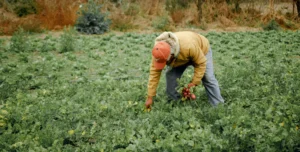
Despite the allure of a burgeoning literary career in New York or the academic circles of the West Coast, Berry made the pivotal decision in 1964 to return to his roots. He purchased a small farm known as Lane’s Landing in Port Royal, Kentucky, and began a dual life as a professor of English at the University of Kentucky and a practitioner of traditional, small-scale agriculture. This return to the land was not merely a personal preference but a foundational act of his philosophy. He believed that to write meaningfully about the world, one had to be responsible for a specific part of it.

The Literary Architect of Port William
Berry’s literary output was staggering, encompassing more than 50 books of poetry, fiction, and essays. His fiction was primarily set in the fictional town of Port William, a community modeled after his own home in Henry County. Through novels such as The Memory of Old Jack (1974), Jayber Crow (2000), and Hannah Coulter (2004), Berry explored the "membership" of a community—the intricate web of relationships, debts, and responsibilities that bind people to one another and to their environment across generations.
His poetry often reflected the quiet observations of a man working the earth. Works like The Mad Farmer poems challenged the logic of industrial efficiency, urging readers to "practice resurrection" and to value the slow, cyclical nature of the seasons over the linear demands of corporate growth. However, it was perhaps his non-fiction that had the most significant impact on public policy and environmental thought.
The Unsettling of America and the Critique of Industrial Agriculture
In 1977, Berry published The Unsettling of America: Culture and Agriculture, a book that is now considered a foundational text of the modern environmental and sustainable farming movements. In it, Berry argued that the transition from traditional husbandry to industrial "agribusiness" was a cultural catastrophe. He famously wrote that "the true measure of agriculture is not the sophistication of its equipment, the size of its income, or even the statistics of its productivity, but the good health of the land."
Berry was a vocal critic of the "Get big or get out" policy championed by Earl Butz, the U.S. Secretary of Agriculture under Presidents Richard Nixon and Gerald Ford. Berry argued that this philosophy led to the destruction of the family farm and the degradation of rural life. He contended that when farming is treated purely as an industry, the farmer becomes a consumer of technology rather than a steward of the land. This shift, he argued, resulted in soil erosion, water pollution, and the hollowing out of small towns.
Supporting Data: The Decline of the American Family Farm
The trends Berry spent his life warning against are starkly reflected in historical agricultural data. According to the United States Department of Agriculture (USDA), the number of farms in the U.S. peaked at 6.8 million in 1935. By the time Berry was writing The Unsettling of America in the late 1970s, that number had plummeted to roughly 2.3 million. As of the most recent 2022 Census of Agriculture, the number of farms has continued to decline to approximately 1.9 million.
Furthermore, the concentration of land ownership has intensified. While the total number of farms has decreased, the average farm size has nearly tripled since the 1930s. Today, just 4% of the largest farms (those with $1 million or more in sales) account for more than two-thirds of total agricultural production. This consolidation of "farmland into larger and larger holdings and fewer and fewer hands" was exactly the phenomenon Berry identified as a threat to democratic stability and ecological health.
A Legacy of Activism and Moral Clarity
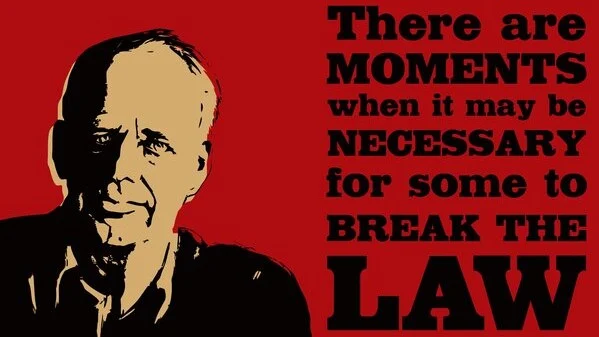
Berry’s commitment to his principles extended beyond the page. He was a lifelong pacifist and a frequent participant in acts of civil disobedience. In 1979, he engaged in a protest against the construction of a nuclear power plant in Marble Hill, Indiana. Decades later, in 2011, at the age of 76, he joined a group of activists in a weekend-long sit-in at the Kentucky governor’s office to protest mountain-top removal coal mining.
His activism was rooted in a belief that environmental issues could not be separated from moral and spiritual ones. He often spoke of the "economy of grace," where human activity is aligned with the natural limits of the earth. He famously refused to use a computer, writing his manuscripts by hand or on a manual typewriter, an act he defended in his 1987 essay "Why I Am Not Going to Buy a Computer." He argued that technological "progress" often comes at the cost of human skill, community connection, and environmental integrity.
Reactions from the Community and Public Figures
The news of Berry’s death prompted a wave of tributes from across the political and cultural spectrum. Labor organizers, environmentalists, and fellow writers characterized his passing as a profound loss for the American conscience. Helen Brosnan, a prominent labor organizer, described his death as "a loss of morality and clarity and compassion," noting that Berry provided a voice for the dignity of manual labor in an increasingly automated world.
Environmental organizations, including the Sierra Club and the Natural Resources Defense Council (NRDC), issued statements honoring Berry’s role as a pioneer of the conservation movement. "Wendell Berry taught us that we cannot protect the wild places of the world if we do not also care for the places where we live and work," said a spokesperson for the Land Institute, an organization where Berry served on the board for many years.
In his home state of Kentucky, political leaders recognized him as a "titan of literature." Governor Andy Beshear remarked on Berry’s unwavering commitment to the Commonwealth, stating that he "reminded us all of the sacred duty we have to protect our land and our neighbors."
Analysis: Implications for the Future of Agrarianism
Berry’s death comes at a time when his ideas are seeing a resurgence in relevance. The rise of the farm-to-table movement, the increasing interest in regenerative agriculture, and the growing awareness of the climate crisis have brought many of Berry’s decades-old arguments into the mainstream. His critique of "the dependence on machines" and the "increase in overhead and debt" resonates with a new generation of small-scale farmers seeking to build resilient local food systems.
However, the challenges Berry identified remain formidable. Global supply chains, the dominance of multinational agricultural corporations, and the accelerating effects of climate change present existential threats to the small-scale agrarianism he championed. His work leaves behind a fundamental question for the 21st century: Can a modern society sustain itself without destroying the rural cultures and natural systems upon which it depends?
The Enduring Voice of Port Royal
Wendell Berry is survived by his wife of 67 years, Tanya Berry, their two children, and several grandchildren and great-grandchildren. The Berry Center, established in New Castle, Kentucky, continues his work by advocating for small farmers and promoting the study of agrarianism.
As scholars and readers look back on his career, Berry is likely to be remembered not just as a writer, but as a prophet of the local. He spent 92 years arguing that the most important work a person can do is to stay in one place, learn its history, protect its soil, and love its people. In an era of global displacement and digital abstraction, Berry’s life and work stand as a testament to the power of presence and the necessity of stewardship. His final "unsettling" is not a departure, but a return to the Kentucky earth he spent a lifetime defending.