

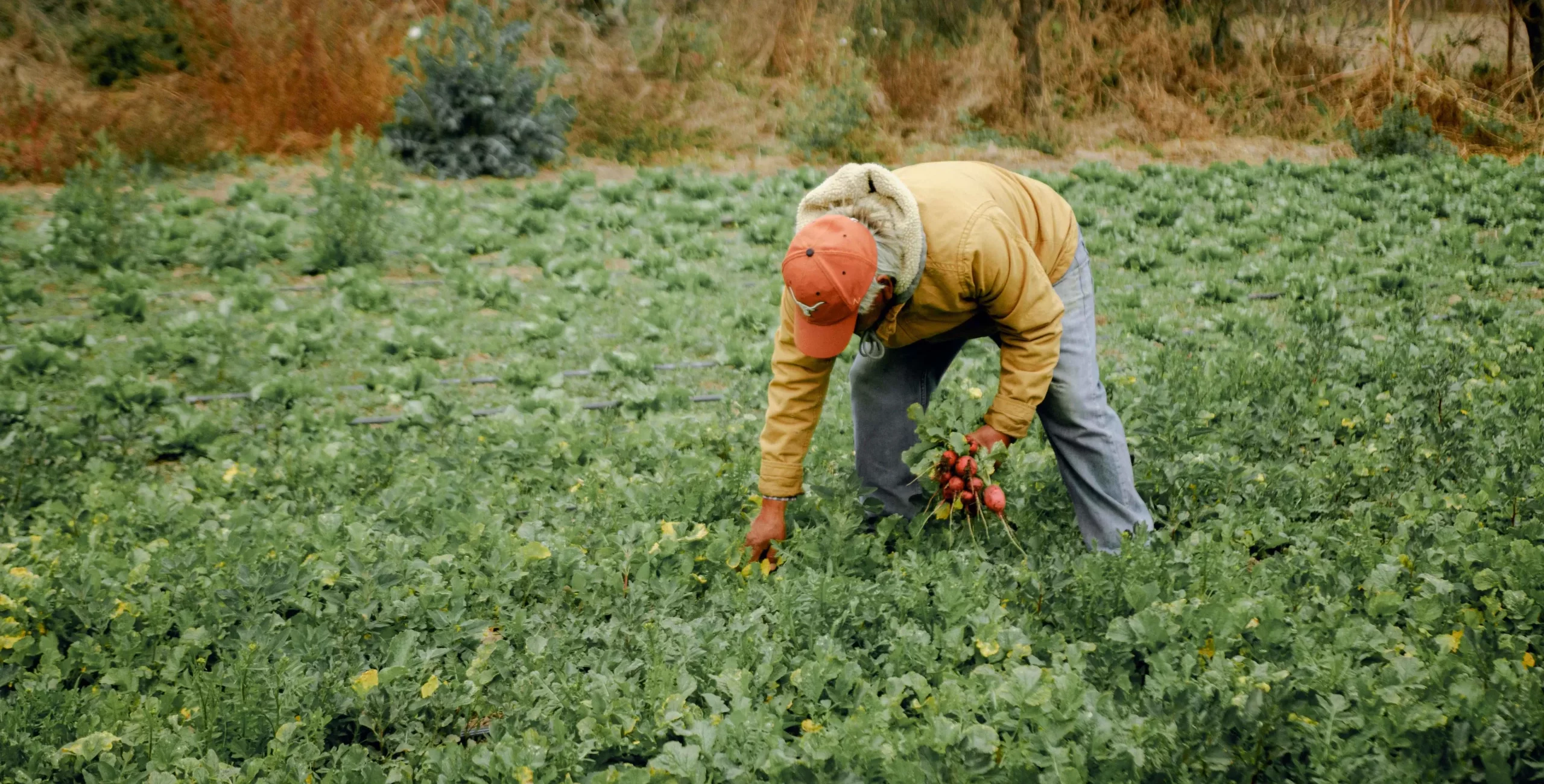
Wendell Berry, the venerable American farmer, novelist, and poet whose literary and philosophical contributions reshaped the modern understanding of agrarianism and environmental stewardship, died on August 31, 2026, at the age of 92. Residing and working in Port Royal, Kentucky, for more than six decades, Berry became a singular voice in American letters, bridging the gap between practical agriculture and high-minded social critique. His death marks the conclusion of a career that spanned over 50 books of poetry, fiction, and essays, all unified by a central thesis: the health of the land is inextricably linked to the health of the human community.
Berry’s life was a testament to the "ethic of care" he championed. Unlike many of his literary contemporaries who sought the cosmopolitan centers of New York or San Francisco, Berry returned to his native Henry County in 1965 to farm a small hillside plot known as Lane’s Landing. This decision was not merely a lifestyle choice but a political and philosophical act. By rooting himself in a specific place, Berry argued that true sustainability—both ecological and social—could only be achieved through local knowledge, manual labor, and a rejection of the industrial-capitalist model of "growth at any cost."
The Agrarian Philosophy and the Critique of Industrialism
Berry’s most influential work, The Unsettling of America: Culture and Agriculture (1977), remains a foundational text for the modern environmental and local food movements. In it, he argued that the transformation of farming into "agribusiness" was a cultural catastrophe. He criticized the United States Department of Agriculture’s (USDA) mid-20th-century mantra—famously articulated by Secretary of Agriculture Earl Butz—to "get big or get out." Berry contended that this shift replaced the "nurturer" (the farmer who cares for the land) with the "exploiter" (the specialist who views the land as a resource to be mined).
Throughout his career, Berry maintained that industrial agriculture leads to the erosion of both soil and soul. He provided extensive critiques of the use of chemical fertilizers, pesticides, and heavy machinery, which he viewed as temporary fixes for a system that was fundamentally out of balance with nature. Data from the USDA and the National Agricultural Statistics Service over the decades have often reflected the trends Berry warned against: the consolidation of farms into fewer, larger entities and the subsequent decline of rural populations. In 1935, the U.S. had approximately 6.8 million farms; by the early 21st century, that number had dropped to roughly 2 million, even as the total acreage remained relatively high, illustrating the shift toward industrial-scale operations Berry spent his life opposing.
A Chronology of a Life Rooted in the Land
The trajectory of Wendell Berry’s life followed a path of intentional return and steadfast commitment.
- 1934: Born on August 5 in Henry County, Kentucky, to a family of tobacco farmers.
- 1956–1957: Earned his B.A. and M.A. in English from the University of Kentucky.
- 1958: Awarded a Wallace Stegner Fellowship at Stanford University, where he studied alongside Larry McMurtry and Ken Kesey.
- 1962–1964: Taught at New York University’s University College in the Bronx, seemingly destined for a prestigious academic career in the Northeast.
- 1965: Resigned from his position in New York to return to Henry County, Kentucky. He purchased Lane’s Landing, a 12-acre farm that he eventually expanded to roughly 125 acres.
- 1977: Published The Unsettling of America, which established him as a major social critic.
- 1987: Published the essay "Why I Am Not Going to Buy a Computer," sparking a national debate about the role of technology in human life.
- 2010: Awarded the National Humanities Medal by President Barack Obama.
- 2013: Elected to the American Academy of Arts and Sciences.
- 2026: Passed away at his home in Port Royal, Kentucky, surrounded by the land he spent 60 years cultivating.
The Literary Body of Work: Fiction, Poetry, and Essays
Berry’s literary output was as prolific as it was diverse. His fiction centered on the "Port William Membership," a fictionalized version of his own community. Through novels like Nathan Coulter (1960) and Jayber Crow (2000), Berry explored the intricate webs of interdependence that sustain small towns. These stories served as a narrative laboratory for his agrarian ideals, illustrating how characters deal with loss, change, and the persistent duty to the land.
In poetry, Berry found a medium to express the spiritual dimensions of nature. The Mad Farmer Poems (2008) introduced a persona that became a folk hero for environmentalists. The "Mad Farmer" was "mad" only by the standards of a society obsessed with profit and speed. In his famous "Manifesto: The Mad Farmer Liberation Front," Berry urged readers to "practice resurrection" and to "say that your main crop is the forests / that you did not plant / that you will not live to harvest." This long-term thinking was a hallmark of his worldview.
His essays were perhaps his most direct tool for social change. In "Why I Am Not Going to Buy a Computer," Berry outlined a set of standards for adopting new technology, insisting that any new tool must be cheaper than the one it replaces, at least as small as the one it replaces, and must not disrupt the "community of the living." While often labeled a Luddite, Berry clarified that his resistance was not to technology itself, but to the uncritical adoption of tools that alienate humans from their work and each other.
Institutional Impact and Global Recognition
The influence of Wendell Berry extended far beyond the literary world. He was a primary inspiration for the "Farm-to-Table" movement and the rise of Community Supported Agriculture (CSA). Figures like Michael Pollan and Alice Waters have frequently cited Berry as a mentor and a foundational influence on their work in food reform.
In 2011, the Berry Center was established in New Castle, Kentucky. Led by his daughter, Mary Berry, the center was created to archive his work and to promote agrarian education. The center’s mission—to foster a culture that uses its land well—serves as the practical application of Berry’s writings. It focuses on issues such as small-farm viability, local food economies, and the protection of rural heritage, ensuring that his theories are tested and implemented in the real world.
Berry’s activism was not limited to the page. In 2011, at the age of 76, he participated in a sit-in at the Kentucky Governor’s office to protest mountain-top removal coal mining. His commitment to non-violent civil disobedience highlighted his belief that one’s local environment is worth defending at personal cost.
Reactions and Global Legacy
Following the announcement of his passing, tributes arrived from across the globe, reflecting the breadth of his influence. Environmental organizations praised him as the "conscience of the land," while literary circles noted that he was one of the few remaining writers whose work was inseparable from his way of life.
Scholarship on Berry’s work has grown significantly in recent decades. Universities across the United States and Europe have integrated his essays into curricula ranging from environmental science to theology. His work resonated particularly well within faith communities, as he often used biblical language to argue for the "stewardship" of creation, suggesting that the destruction of the natural world was a form of sacrilege.
Economists who study "Steady State" and "Degrowth" models have also looked to Berry’s work as a roadmap for a post-industrial economy. His insistence that "limit" is a creative and necessary force challenged the prevailing economic orthodoxy that views infinite growth as the only measure of success.
Analysis of Implications: The Future of Agrarianism
The death of Wendell Berry arrives at a critical juncture for the movements he helped build. As the world grapples with climate change, soil depletion, and the increasing automation of labor, Berry’s calls for "scale," "place," and "affection" have moved from the margins of discourse to the center of global policy discussions.
The implications of his legacy are two-fold. First, in the realm of agriculture, there is a growing recognition of the need for regenerative practices that mimic the natural ecosystems Berry admired. The "ethic of care" is being translated into carbon sequestration projects and soil health initiatives that mirror his long-standing advice. Second, in the social realm, the "loneliness epidemic" and the fracturing of rural communities have led to a renewed interest in Berry’s "membership"—the idea that individuals are part of a local community to which they owe their loyalty and their labor.
However, the challenges Berry identified remain formidable. Industrial consolidation continues, and the economic pressures on small-scale farmers are higher than ever. Without Berry’s living voice to advocate for the "marginal" and the "small," the responsibility for maintaining the agrarian tradition shifts to the institutions he inspired and the readers who find in his work a "quiet, persistent hope."
Wendell Berry’s life was an argument for the value of the specific over the general, the local over the global, and the permanent over the temporary. By living a life that was consistent with his writing, he provided a rare example of integrity in an age of fragmentation. He leaves behind a world that is more aware of its fragility and a movement that is better equipped to care for it, provided it heeds his advice to "love the world" and "work for nothing" in the service of generations yet to come.
