









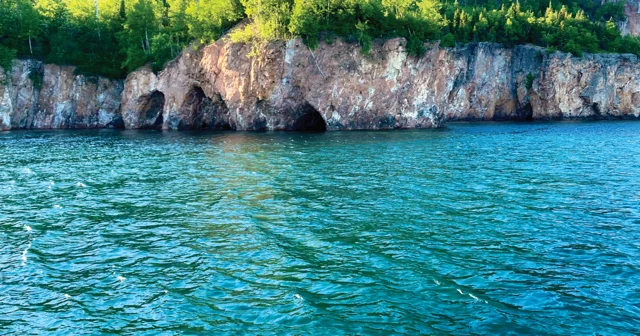
The United States Senate is advancing a high-stakes resolution aimed at rescinding a 20-year moratorium on mineral leasing within the Superior National Forest, a move that would clear a significant regulatory path for copper and nickel mining near the Boundary Waters Canoe Area Wilderness (BWCAW) in northeast Minnesota. The legislative effort has sparked intense debate among lawmakers and triggered widespread protests from environmental advocacy groups, who argue that opening the region to sulfide-ore mining poses an existential threat to one of the nation’s most pristine aquatic ecosystems. If passed and signed into law by President Trump, the resolution would effectively nullify a 2023 administrative order issued by the Biden administration, which had sought to protect approximately 225,000 acres of federal land from industrial development for two decades.
The resolution represents a pivotal moment in the ongoing struggle over the management of public lands and the extraction of critical minerals. While proponents argue that the project is essential for national security and the domestic transition to renewable energy, opponents contend that the ecological risks to the Rainy River Watershed—which flows directly into the heart of the Boundary Waters—are too great to ignore. The move is also being viewed as a cornerstone of a broader executive strategy to utilize the Congressional Review Act (CRA) to dismantle environmental safeguards and accelerate the development of coal, oil, timber, and minerals on public lands across the United States.
The Legislative Mechanism: Understanding the Congressional Review Act
The primary tool being utilized by the Senate is the Congressional Review Act (CRA), a 1996 oversight law that allows Congress to review and overrule federal agency regulations within a specific timeframe after they are issued. When a resolution of disapproval is passed by both chambers of Congress and signed by the president, the targeted rule is not only overturned but the issuing agency is also prohibited from creating any "substantially similar" rule in the future without specific legislative authorization.

Historically, the CRA was rarely used. In the two decades following its enactment, it was successfully deployed only once. However, the law became a frequent instrument of policy reversal during the first Trump administration and is now being positioned as a primary vehicle for the current administration’s "energy dominance" agenda. By targeting the 2023 mining ban via the CRA, the Senate aims to create a permanent pathway for extraction in the Superior National Forest, effectively stripping future administrations of the executive authority to reinstate similar protections through the Department of the Interior.
Chronology of a Decades-Long Dispute
The conflict over mining in the Superior National Forest dates back more than a decade, involving multiple administrations, international mining conglomerates, and local communities.
2012–2016: Twin Metals Minnesota, a subsidiary of the Chilean mining giant Antofagasta, applied to renew federal mineral leases that it had held for decades. During the final months of the Obama administration, the Bureau of Land Management (BLM) and the U.S. Forest Service denied the lease renewals, citing the potential for "irreparable harm" to the Boundary Waters.
2017–2020: The first Trump administration reversed the previous decision, reinstating the leases and narrowing the scope of environmental reviews. This period saw a significant push to fast-track the project, leading to a series of lawsuits from environmental groups and local businesses that rely on the wilderness economy.
2021–2023: Upon taking office, the Biden administration launched a comprehensive scientific and environmental study of the watershed. In January 2023, Secretary of the Interior Deb Haaland signed Public Land Order 7917, which withdrew 225,504 acres of the Superior National Forest from mineral leasing for 20 years. This withdrawal was based on findings that sulfide-ore mining could lead to acid mine drainage, contaminating the region’s interconnected lakes and rivers.
2024–Present: Following the shift in political control, the current administration and its allies in the Senate moved to utilize the CRA to nullify the 2023 withdrawal. This legislative action seeks to restore the legal status of the area to its pre-2023 state, allowing lease applications to proceed once more.
Environmental Risks and the Science of Sulfide-Ore Mining
The central scientific controversy involves the nature of the minerals found in northeast Minnesota. Unlike the region’s historic iron ore mines, which extract minerals from oxide-based rock, the proposed Twin Metals project seeks to extract copper, nickel, and platinum-group metals from sulfide-bearing ore.
When sulfide ore is exposed to air and water during the mining process, it creates sulfuric acid—a phenomenon known as acid mine drainage (AMD). This acid can leach heavy metals such as mercury, arsenic, and lead into the surrounding groundwater. Environmentalists emphasize that the Boundary Waters region is uniquely vulnerable to this process because of its hydrology. The landscape is characterized by thin soils, fractured bedrock, and a high density of interconnected waterways. Contamination at a single site could theoretically spread throughout the 1.1 million-acre wilderness area, which contains over 1,100 lakes and hundreds of miles of streams.
Data from the U.S. Forest Service’s 2022 environmental assessment suggested that even with modern mitigation technology, the risk of "accidental releases" or "unforeseen seepage" remained a significant concern. The assessment noted that the Boundary Waters is one of the few places in the lower 48 states with "extraordinary water quality," and that even minor changes in pH levels could disrupt the delicate aquatic food chain.
Economic Arguments and National Security
Proponents of the mining resolution, including many lawmakers from Minnesota’s "Iron Range," argue that the ban has stifled economic growth and undermined American interests. They point to the growing global demand for copper and nickel, which are essential components for electric vehicle batteries, wind turbines, and telecommunications infrastructure.
Currently, the global supply chain for these minerals is heavily dominated by China and other foreign nations. Supporters of the Twin Metals project argue that developing domestic sources is a matter of national security. According to industry data, the proposed mine could provide up to 750 direct jobs and 1,500 indirect jobs in a region that has historically relied on the boom-and-bust cycles of the extractive industries.
"We cannot have a green energy transition while simultaneously locking up the very minerals required to build it," stated one proponent during a recent Senate subcommittee hearing. "This resolution is about restoring the right to explore and develop our own natural resources under the world’s strictest environmental standards."
Responses from Stakeholders and Local Communities
The Senate’s move has drawn a polarized response. The "Save the Boundary Waters" campaign, a coalition of conservationists, outfitters, and local business owners, has organized protests and lobbied extensively against the resolution. They argue that the wilderness area supports a robust $2.4 billion outdoor recreation economy in northeast Minnesota, which sustains over 17,000 jobs. For these stakeholders, the risk of a mining-related disaster outweighs the potential short-term economic gains from extraction.
Conversely, labor unions and local municipal leaders in towns like Ely and Babbitt have expressed support for the resolution. For these communities, mining is not just an industry but a cultural identity. They argue that modern mining techniques are vastly superior to those of the past and that the project can coexist with the wilderness.
The National Mining Association (NMA) has also lauded the Senate’s efforts, characterizing the 2023 ban as an "overreach of executive authority" that ignored the rigorous permitting processes already in place. The NMA asserts that federal and state regulators have the tools to evaluate individual projects on their merits without resorting to broad, landscape-level withdrawals.
Broader Implications for Federal Land Management
The Senate’s focus on the Boundary Waters is seen by many analysts as a "test case" for a new era of federal land management. By successfully using the CRA to overturn a mineral withdrawal, the administration sets a precedent that could be applied to other disputed territories.
Potential targets for similar actions include:
- The Arctic National Wildlife Refuge (ANWR) in Alaska, where disputes over oil and gas drilling have persisted for decades.
- The Chaco Canyon region in New Mexico, where protections against oil and gas leasing near sacred Indigenous sites were recently implemented.
- The Pacific Northwest, where timber harvesting restrictions on old-growth forests have been a point of contention.
The use of the CRA in this manner signals a shift away from the "permanent protection" model of land management toward a "multiple-use" model that prioritizes industrial development. Critics argue this creates a "regulatory see-saw," where federal land protections are subject to the whims of changing political administrations, creating instability for both conservationists and investors.
Fact-Based Analysis of the Path Forward
If the resolution passes the Senate, it will move to the President’s desk for an expected signature. Once signed, the 20-year withdrawal will be voided, and the Bureau of Land Management will be required to resume processing lease applications for the 225,000-acre tract. However, this does not mean mining will begin immediately.
Any proposed project, including the Twin Metals mine, would still be subject to the National Environmental Policy Act (NEPA), which requires extensive environmental impact statements (EIS). These reviews often take years to complete and are frequently challenged in federal court. Furthermore, state-level permits from the Minnesota Department of Natural Resources and the Minnesota Pollution Control Agency would still be required.
While the Senate resolution removes a major federal roadblock, the legal and regulatory battle over the Boundary Waters is likely to continue for years to come. The decision marks a significant victory for the extractive industries and a major setback for the environmental movement, highlighting the deep-seated tensions between the pursuit of mineral independence and the preservation of America’s last remaining wild places. As the Senate prepares for the final vote, the eyes of the nation remain on northeast Minnesota, where the future of the nation’s cleanest waters hangs in the balance.