

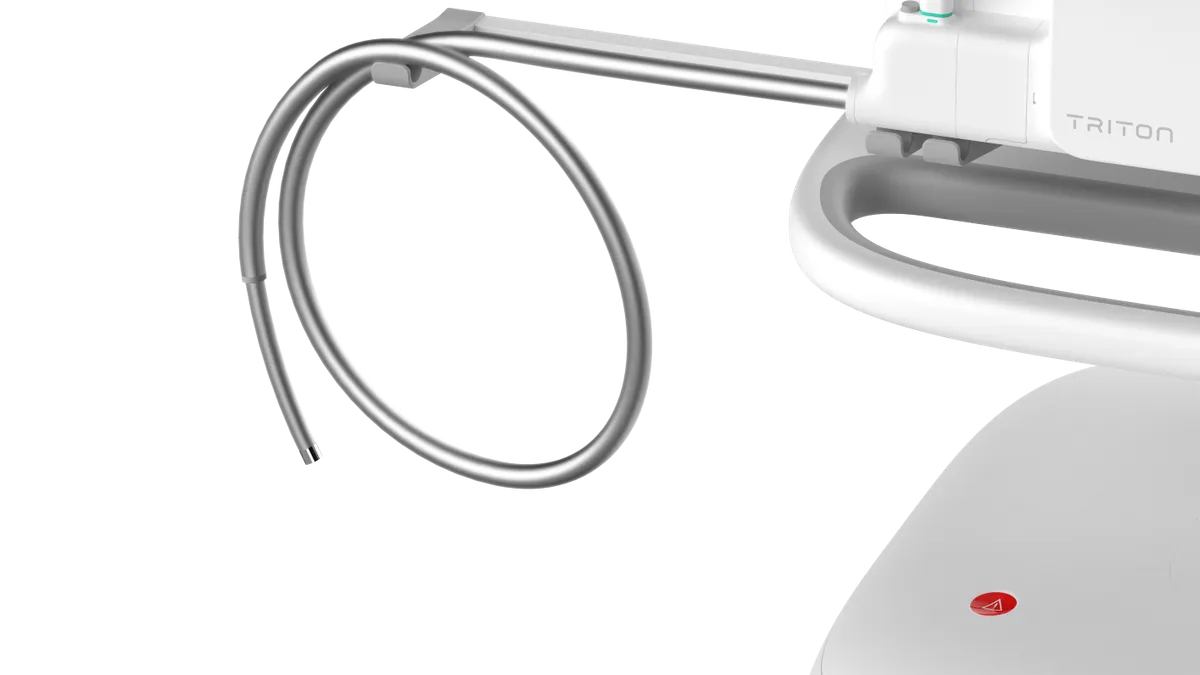
The United States Food and Drug Administration (FDA) has granted 510(k) clearance to Neptune Medical’s Triton robotic system, marking a significant milestone in the evolution of gastrointestinal (GI) diagnostics and therapeutic intervention. This regulatory approval clears the path for the commercial introduction of a technology designed to provide gastroenterologists with unprecedented control over endoscopes during colonoscopy procedures. By addressing the long-standing challenges of endoscope instability and "looping," the Triton system aims to enhance the visualization of the colon, thereby improving the detection and removal of pre-cancerous lesions. The clearance comes at a critical juncture in public health, as the medical community grapples with a concerning rise in colorectal cancer (CRC) diagnoses among younger populations.
The Rising Challenge of Colorectal Cancer and the Screening Gap
Colorectal cancer has long been a primary focus of preventative medicine, but recent data suggests a shifting and more aggressive landscape for the disease. According to research from the American Cancer Society (ACS), colorectal cancer has ascended to become the leading cause of cancer-related mortality among adults under the age of 50. This demographic shift has prompted a reevaluation of screening guidelines and a heightened demand for more effective diagnostic tools.
While the ACS and other health organizations have recently updated their guidelines to include non-invasive screening options—such as Abbott’s Exact Sciences at-home stool tests, Geneoscopy’s diagnostic kits, and Guardant Health’s Shield blood-based test—the colonoscopy remains the "gold standard" for colorectal health. The primary advantage of a colonoscopy over stool or blood-based tests is its dual-action capability: it is both diagnostic and therapeutic. During a single session, a physician can not only identify a lesion but also remove it, effectively preventing the progression of cancer. In contrast, a positive result from a non-invasive test necessitates a follow-up colonoscopy to confirm findings and perform necessary interventions.
Despite its status as the gold standard, the efficacy of a manual colonoscopy is highly dependent on the skill of the operator and the mechanical limitations of traditional endoscopes. Issues such as "looping"—where the flexible scope coils within the colon rather than advancing—can cause patient discomfort and, more importantly, lead to incomplete examinations where sections of the colon wall are not fully visualized. These "blind spots" are often where adenomas, or pre-cancerous lesions, are missed.
Technical Innovation: How the Triton System Operates
Neptune Medical developed the Triton robotic system specifically to mitigate the mechanical shortcomings of manual endoscopy. The system is designed to provide "active stabilization," a feature that allows the physician to lock sections of the endoscope in place once they have navigated past difficult anatomical turns. This stabilization prevents the scope from shifting or looping as the physician advances further into the colon or maneuvers tools to biopsy or remove a polyp.
The Triton system integrates with existing endoscopic technology but adds a layer of robotic precision. By providing a more stable platform, the system allows for more meticulous inspection of the colonic mucosa. This is particularly vital in the right side of the colon (the proximal colon), where flat or sessile lesions are often more difficult to detect than the more prominent pediculated polyps found in the distal colon.
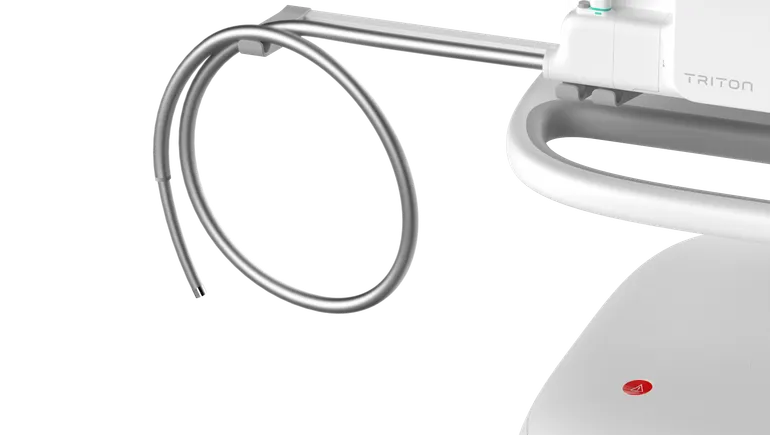
Furthermore, the robotic interface is intended to improve the ergonomics of the procedure for gastroenterologists. Manual colonoscopy is physically demanding, often requiring repetitive movements and significant thumb and wrist strain over the course of a day’s schedule. By delegating the mechanical stabilization to a robotic system, Neptune Medical aims to reduce physician fatigue, which is a known factor in diagnostic accuracy over the course of a workday.
Clinical Evidence: The CARE 1 Study Results
The FDA clearance was supported by data from Neptune Medical’s CARE 1 clinical study, a 50-patient trial designed to evaluate the safety and efficacy of the Triton system in a real-world clinical setting. The results of the study, released in May, demonstrated that the system met all primary safety and performance endpoints with no reported adverse events.
One of the most compelling metrics from the CARE 1 study was the Adenoma Detection Rate (ADR). The ADR is widely considered the most important quality metric in colonoscopy; for every 1% increase in a physician’s ADR, there is a corresponding 3% decrease in the risk of a patient developing interval colorectal cancer. The Triton system demonstrated an ADR of 54.2%. To put this in perspective, the current industry benchmark for a high-quality colonoscopy is an ADR of 35%.
The significantly higher ADR achieved during the Triton study suggests that the robotic system’s stability and control allow physicians to find lesions that might otherwise be overlooked during a standard manual procedure. This data provides a strong clinical argument for the adoption of robotic assistance in routine screenings, potentially moving the needle on cancer prevention statistics.
Strategic Financial Backing and Leadership
The development and regulatory success of the Triton system have been fueled by substantial venture capital interest and the guidance of industry veterans. In 2024, Neptune Medical closed a $97 million Series D financing round, which also facilitated the spin-out of Jupiter Endovascular.
The investment round saw participation from major strategic and financial players, including Olympus Corporation and Sonder Capital. The involvement of Sonder Capital is particularly noteworthy, as it was co-founded by Dr. Fred Moll, who serves as the Chairman of Neptune Medical. Dr. Moll is a legendary figure in the field of medical robotics, having previously founded Intuitive Surgical (the maker of the Da Vinci system) and Auris Health (acquired by Johnson & Johnson). His involvement signals a high degree of confidence in Neptune’s approach to endoluminal robotics.
Olympus, a global leader in endoscopic technology, has also taken a dual-track approach to the GI robotics market. While investing in Neptune Medical, Olympus co-founded Swan EndoSurgical in 2025 to develop its own endoluminal robot. Additionally, Olympus recently entered into a distribution agreement with EndoRobotics. This flurry of activity underscores a broader industry consensus: the future of gastroenterology is increasingly robotic.

Market Implications and the Future of GI Care
The entry of the Triton system into the U.S. market is expected to catalyze a shift in how GI departments manage their procedural workflows. Alex Tilson, Founder and CEO of Neptune Medical, has emphasized that this initial commercial version of Triton is just the beginning. The company intends to use the first wave of clinical adoption to gather data on how robotics integrates into the fast-paced environment of a GI suite.
"Triton has the potential to fundamentally transform colonoscopy, creating a better experience for both physicians and their patients," Tilson stated following the FDA clearance. "Achieving regulatory clearance in the U.S. brings us one step closer to that reality."
The insights gained from the current Triton platform will be instrumental in developing Neptune’s next-generation systems, which are expected to further automate aspects of the procedure and perhaps integrate artificial intelligence (AI) for real-time lesion characterization.
From a broader healthcare perspective, the introduction of robotic colonoscopy could help address the "screening gap." As the recommended age for initial screening has dropped to 45, the volume of patients requiring colonoscopies has surged. If robotic systems can make procedures more efficient and accurate, they may help healthcare systems manage this increased volume without sacrificing the quality of care.
Conclusion
Neptune Medical’s Triton system represents a pivotal advancement in the fight against colorectal cancer. By merging the proven diagnostic value of the colonoscopy with the precision and stability of modern robotics, the system addresses the inherent mechanical limitations of traditional methods. With a clinical track record showing a 54.2% ADR and the backing of the most prominent names in surgical robotics, Neptune Medical is well-positioned to redefine the standards of gastrointestinal care. As the medical community continues to face the challenge of rising cancer rates in younger adults, technologies like Triton provide a vital tool for early detection, effective intervention, and ultimately, improved patient outcomes.
