








Sauna bathing, a time-honored Nordic tradition, offers a wealth of potential benefits for overall well-being, ranging from enhanced cardiovascular health to stress reduction and improved muscle recovery. As the wellness industry continues to embrace ancient practices with modern innovation, the outdoor sauna market has seen a significant surge in popularity, providing individuals with a dedicated space for heat therapy and relaxation within their own homes. These structures, once a niche luxury, are becoming increasingly accessible, catering to a growing demand for holistic health solutions.
The variety of outdoor saunas available today reflects this expanding market. Traditional barrel saunas, evoking a rustic charm, sit alongside contemporary cube designs. Heating mechanisms also vary, offering choices between efficient electric heaters, the intense dry heat of wood-burning stoves, or the nuanced warmth of infrared technology. Emerging models are further enhancing the experience with high-tech integrations, such as surround-sound audio systems, customizable LED chromotherapy, and convenient charging stations for personal electronics. However, experts emphasize that regardless of advanced features, the fundamental requirement for reaping sauna’s benefits is a high-quality product that users will consistently engage with.
To navigate this evolving landscape, a comprehensive review of leading outdoor sauna models has been conducted, accompanied by expert insights to guide potential buyers. This analysis delves into the specific features, benefits, and considerations for selecting the right outdoor sauna for individual needs, particularly highlighting their utility for athletes during training and recovery.

Expert Perspectives on Sauna Benefits
Saloni Sharma, M.D., a physician specializing in physical medicine and rehabilitation, along with Medhat Mikhael, M.D., a pain management specialist, and Earric Lee, a postdoctoral researcher focused on exercise science and a faculty member at the University of Jyväskylä in Finland – a globally recognized hub for sauna research – have contributed to understanding the multifaceted advantages of sauna use. Their collective expertise underscores the significant impact regular sauna sessions can have on physical and mental health.
Dr. Mikhael highlights the scientifically supported benefits of sauna bathing, stating, "Researchers have found several possible health benefits from sauna use; most importantly, they have shown to help cardiovascular diseases—particularly high blood pressure and heart diseases—as well as acute and chronic pain and neurological diseases." This aligns with a growing body of research indicating that regular heat exposure can improve endothelial function, reduce arterial stiffness, and lower the risk of cardiovascular events. Studies published in journals like the American Journal of Hypertension have demonstrated that frequent sauna use can lead to significant reductions in blood pressure, comparable in some cases to moderate-intensity exercise.
Earric Lee’s research, conducted in the heart of Finland’s sauna culture, provides a unique perspective on athletic performance and recovery. "We found not only is a combination of exercise and sauna bathing stronger in its effects, but many cardiovascular benefits, like lower blood pressure, were sustained for a longer period afterward," Lee notes. This suggests that sauna therapy can act as an effective adjunct to training regimens, potentially accelerating muscle repair, reducing inflammation, and mitigating delayed onset muscle soreness (DOMS). The elevated body temperature during a sauna session can mimic some effects of exercise, leading to increased blood flow and nutrient delivery to muscles, thereby promoting faster recovery.
Dr. Sharma further emphasizes the holistic benefits, particularly in addressing modern lifestyle challenges. "There is a problem in our society labeled Nature Deficit Disorder, which means we aren’t spending enough time outside. There are many proven benefits of being outdoors, and these saunas allow you to combine them with the potential benefits of heat therapy," she explains. This integration of nature and therapeutic heat therapy addresses both physical recovery and the psychological well-being derived from spending time outdoors, a factor increasingly recognized for its positive impact on mental health.
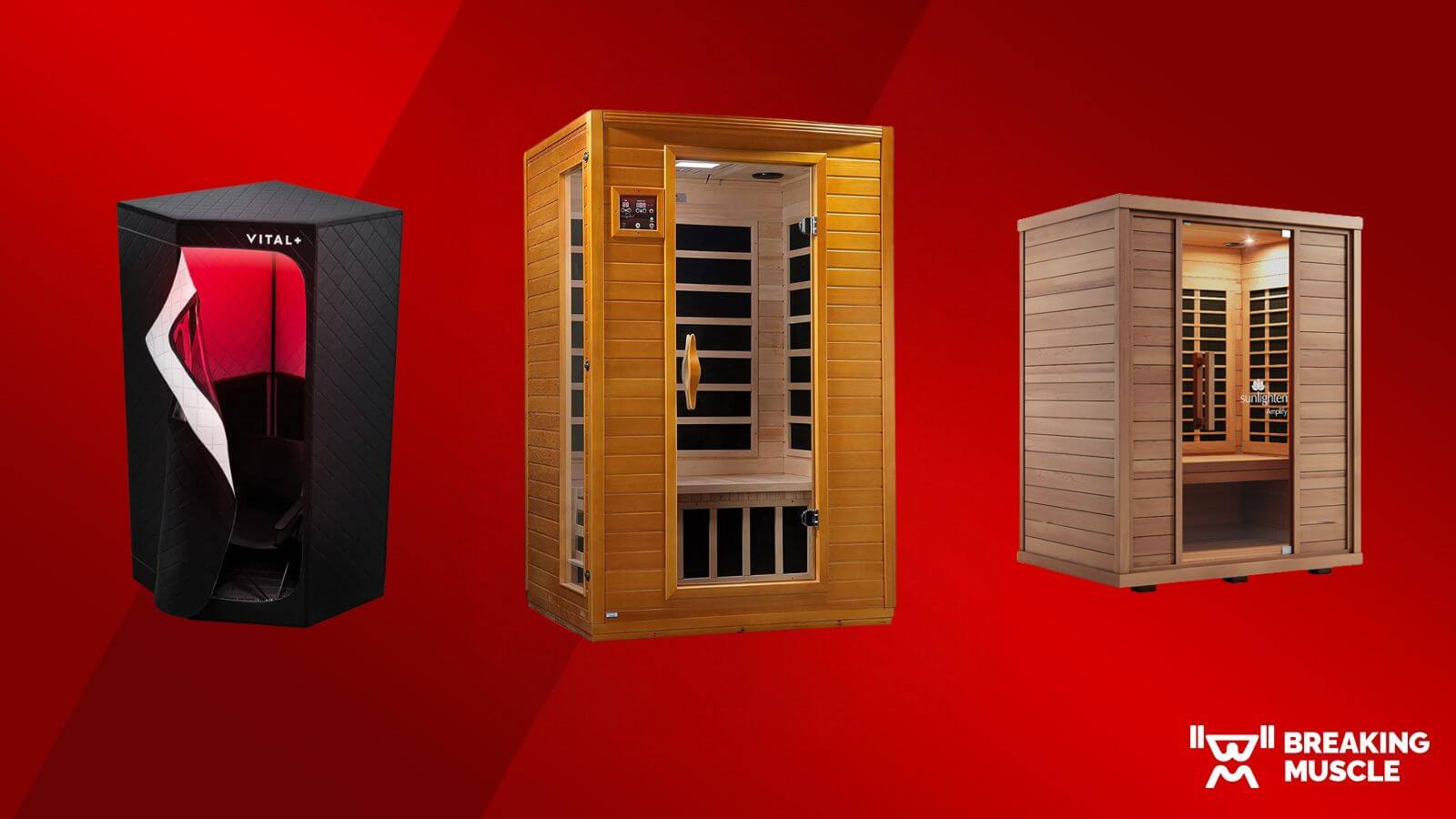
Our Top Picks for the Best Outdoor Saunas of 2025
The selection of top-tier outdoor saunas for 2025 considers a range of user needs, from those seeking cutting-edge technology to individuals prioritizing traditional craftsmanship and simplicity. Each model is evaluated based on its heating system, capacity, durability, ease of use, and overall value proposition.
It is important to note that this content is intended for informational purposes and should not be construed as medical advice. Always consult with a healthcare professional before initiating any new health regimen, including sauna use, especially if you have pre-existing health conditions.
Best Overall Outdoor Sauna: Sun Home Luminar Outdoor 5-Person Full-Spectrum Infrared Sauna
The Sun Home Luminar Outdoor 5-Person Full-Spectrum Infrared Sauna represents a sophisticated fusion of modern technology and therapeutic heat. This model is particularly appealing to those who appreciate a tech-forward approach to wellness. Its infrared heating system is controllable via a mobile application, allowing users to pre-heat the sauna remotely and customize their experience. Sun Home claims a significant power output for its infrared heaters, positioning this model as a high-performance option within the market.
Beyond its heating capabilities, the Luminar sauna integrates features designed to enhance user comfort and enjoyment. Bluetooth-enabled speakers provide an auditory dimension to the relaxation experience, while LED chromotherapy offers customizable mood lighting. These additions can make the sauna experience more accessible and appealing, especially for individuals new to heat therapy. The design also incorporates floor-to-ceiling windows, offering panoramic views of the surrounding environment, further amplifying the connection with nature. While this model represents a significant investment, its comprehensive feature set and premium construction justify its position as a top-tier choice for those seeking an advanced outdoor sauna solution.
- Pros: Advanced app control, integrated sound and light therapy, spacious design with panoramic views, powerful infrared heating.
- Cons: High price point, requires electrical access.
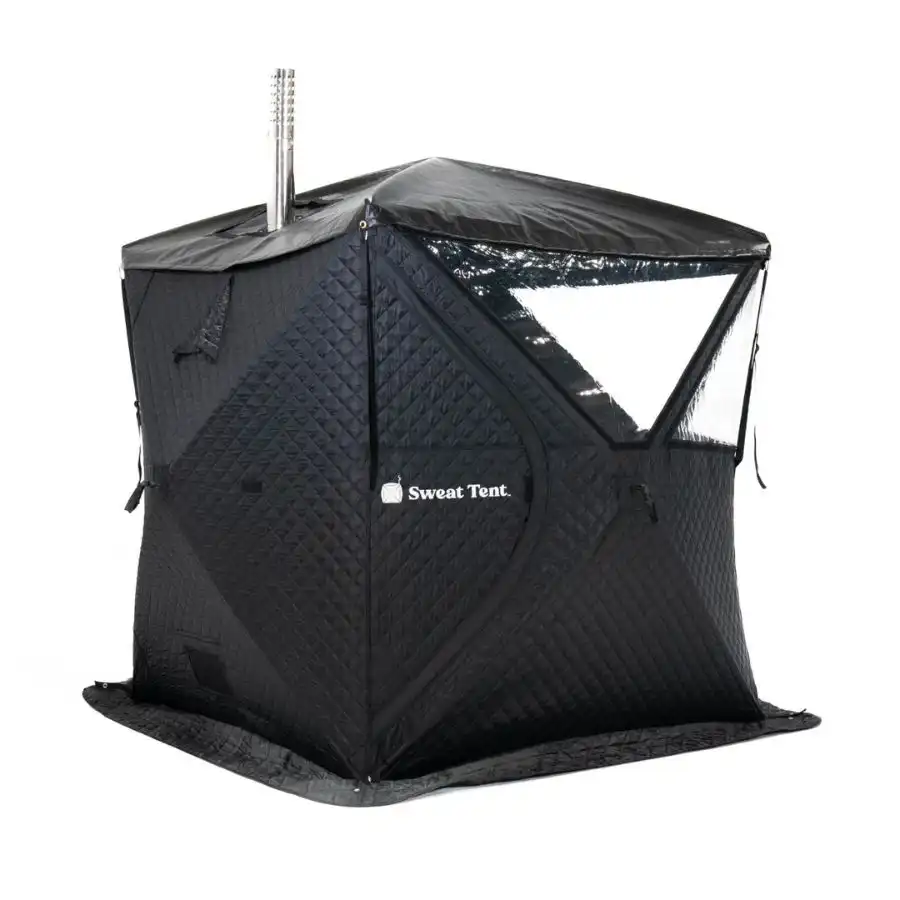
Best Outdoor Sauna Kit: SweatTent Outdoor Sauna
For individuals seeking an accessible and versatile entry into outdoor sauna bathing, the SweatTent Outdoor Sauna stands out as an exceptional kit. Its primary advantage lies in its remarkably quick setup time, reportedly achievable in approximately three minutes. This ease of assembly and disassembly also lends itself to a degree of portability, making it a practical option for those who may need to relocate the sauna. The materials used are noted for their durability, insulation properties, and weather-resistance, suggesting it can withstand various environmental conditions when left outdoors.
The SweatTent operates using a wood-fired stove, providing a traditional and robust heating method. The kit typically includes essential accessories such as sauna rocks, a fire poker, and heat-resistant gloves, ensuring safe operation. This model is highly regarded for its completeness as a sauna kit, offering a straightforward yet effective solution. Its affordability, relative portability, and user-friendly design make it an attractive option for those who want to experience the benefits of a wood-fired sauna without a substantial commitment to a permanent structure.
- Pros: Extremely fast setup, portable and easy to dismantle, durable and weather-resistant, wood-fired heat source, cost-effective.
- Cons: Requires manual wood feeding for heat, potentially less insulated than permanent structures, limited capacity.
Best Two-Person Outdoor Sauna: Sun Home Luminar 2-Person Infrared Sauna
Building on the technological prowess of its larger counterpart, the Sun Home Luminar 2-Person Infrared Sauna offers a compact yet feature-rich experience for couples or individuals. This cube-style sauna is constructed with carbonized wood exteriors and dura-glass windows, engineered for resilience against diverse climatic conditions. Its footprint is notably efficient, making it suitable for smaller outdoor spaces.
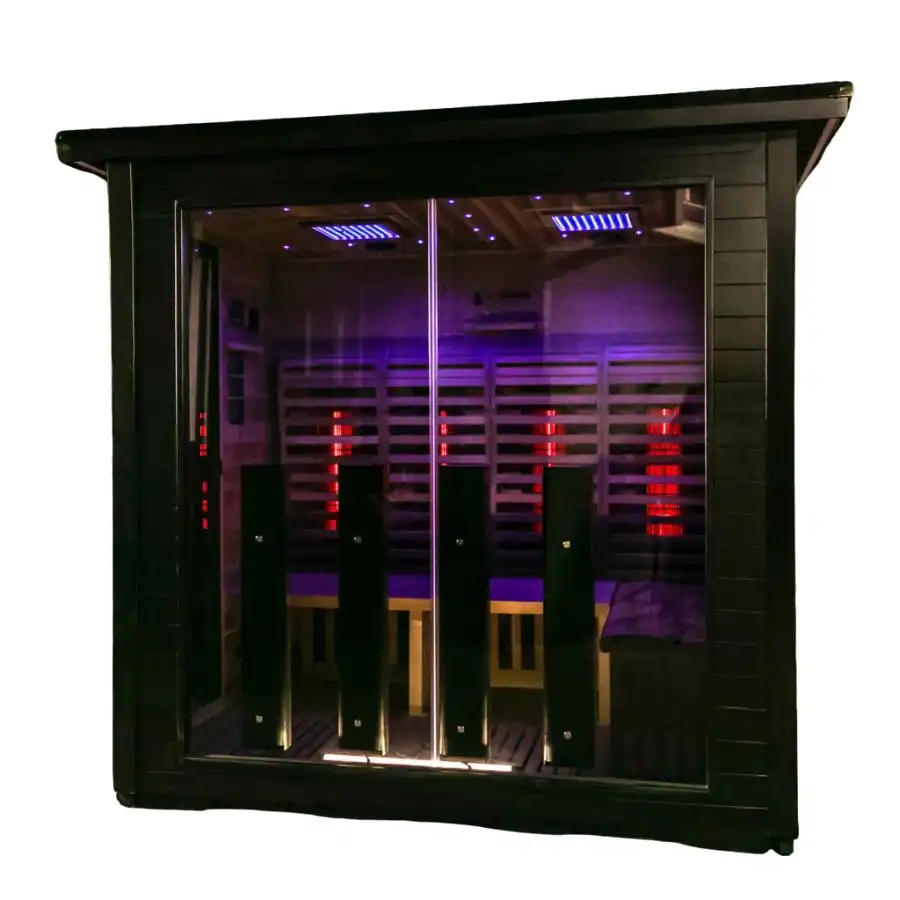
The heating technology employed in the Luminar 2-Person model combines infrared and full-spectrum heaters, strategically positioned to ensure consistent and optimal heat distribution, irrespective of external temperatures. The use of grade-A carbonized red cedar wood and thick double-pane glass contributes significantly to the sauna’s durability and thermal insulation. With a total of nine heaters – three far-infrared heaters located beneath the bench and six full-spectrum heaters surrounding the cabin – this sauna promises an immersive and effective heat therapy session. The strategic placement of these heaters is designed to envelop users in 3D healing wavelengths. Like the 5-person model, it offers app-controlled temperature settings, Bluetooth surround-sound speakers, and expansive dura-glass windows for a visually engaging experience.
- Pros: Advanced app control, high-quality materials, efficient heating system, compact design, integrated audio features.
- Cons: Higher cost for a two-person unit, requires electrical access.
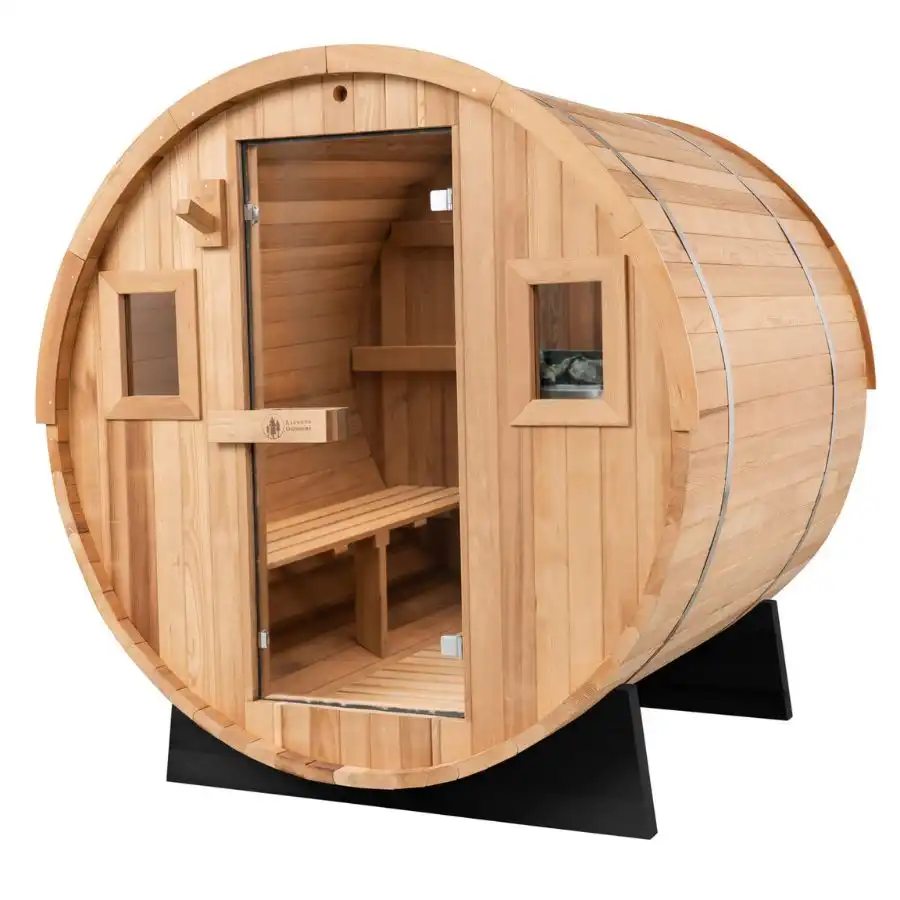
Best Outdoor Barrel Sauna: Redwood Outdoors Thermowood Barrel Sauna
The Redwood Outdoors Thermowood Barrel Sauna embodies the classic aesthetic of traditional barrel saunas, constructed with Thermowood, a material known for its enhanced durability and stability. This model focuses on delivering essential sauna functionality without unnecessary embellishments. A key feature is its customizability, allowing users to select their preferred heating mechanism, choosing between a Harvia electric heater for convenience or a wood-burning stove for a more traditional Finnish sauna experience.
Additional customization options include a weather-resistant shingled roof for added protection and the potential integration of a cold plunge tub, offering a complete thermal contrast therapy experience. The Thermowood construction contributes to a pleasant, dry heat and a characteristic spa-like aroma. With a capacity to comfortably accommodate four to six people, it is suitable for small gatherings or families. Redwood Outdoors estimates that with proper maintenance, this sauna can maintain its structural integrity and functionality outdoors for up to 20 years, highlighting its long-term value and robust construction.
- Pros: Traditional barrel design, customizable heating options, durable Thermowood construction, potential for add-ons like cold plunge, large capacity.
- Cons: Requires assembly, wood-burning option needs fuel and maintenance.
Best Outdoor Sauna for Cold Climates: Redwood Outdoors Thermowood Cabin
Designed to withstand the rigors of harsh winter conditions, the Redwood Outdoors Thermowood Cabin Sauna excels in providing superior insulation and durability. Its design draws inspiration from traditional Scandinavian architecture, utilizing Scandinavian softwood that has undergone intense heat treatment. This process not only enhances the wood’s resistance to decay and warping but also significantly improves its thermal insulation properties, making it an ideal choice for colder climates.
The cabin design ensures efficient heat retention, contributing to its energy efficiency and consistent temperature distribution throughout the interior. The package typically includes a Harvia electric heater, a protective wooden heater guard, essential accessories such as a water bucket and ladle, sauna rocks, and interior seating benches, providing a complete and authentic sauna experience right out of the box. The robust construction and specialized wood treatment make this sauna a reliable investment for those living in regions with prolonged cold seasons, ensuring a warm and inviting retreat regardless of the external temperature.
- Pros: Excellent insulation for cold climates, durable and weather-resistant construction, traditional Scandinavian design, includes all necessary components for immediate use.
- Cons: Higher price point, requires assembly, electrical access needed for the heater.
Why Invest in an Outdoor Sauna?
The decision to purchase an outdoor sauna is often driven by a commitment to wellness and the availability of personal outdoor space. For individuals who have experienced the benefits of communal saunas, such as those found in gyms or spas, and wish to integrate this practice more consistently into their lifestyle, an outdoor sauna offers unparalleled convenience and privacy.
The health advantages are well-documented. Beyond the cardiovascular benefits cited by Dr. Mikhael, regular sauna use can contribute to improved sleep quality, reduced stress levels, and enhanced mental clarity. The release of endorphins during a sauna session can act as natural mood enhancers and pain relievers. For athletes, the recovery benefits are particularly significant, aiding in muscle relaxation, reducing joint stiffness, and potentially improving flexibility.
The practical advantages of an outdoor sauna over an indoor installation are also considerable. Installing a sauna indoors can present logistical challenges related to ventilation, moisture management, and structural modifications. Outdoor saunas, by contrast, are often easier to install, requiring less disruption to the home’s interior. Furthermore, they offer a direct connection to the natural environment, enhancing the overall sensory experience. As Dr. Sharma notes, the outdoor setting directly combats "Nature Deficit Disorder," allowing users to combine the therapeutic benefits of heat with the restorative power of being outdoors. This integration can lead to a more profound sense of well-being, blending physical detoxification with mental rejuvenation.
How to Maximize Your Outdoor Sauna Experience
The operational aspects of an outdoor sauna are designed for user-friendliness, with control mechanisms varying by model. Users can typically adjust temperature settings via manual dials, smartphone applications, or touchscreen interfaces, depending on the sauna’s technological sophistication. The heat source, whether an electric heater or a wood-burning stove, is central to the experience. Some advanced models even offer timer functions that can be programmed up to 36 hours in advance, allowing for a perfectly heated sauna upon arrival.
Regarding optimal usage, experts recommend a consistent routine. Dr. Mikhael suggests, "Two to three 15- to 25-minute sessions per week are ideal. After 15 to 25 minutes, people can benefit the most without feeling like they’re getting dehydrated or dizzy." This duration allows the body to experience the therapeutic effects of heat exposure without undue stress. During a session, engaging in activities like reading, listening to music, or sharing the experience with a companion can enhance enjoyment.
Staying hydrated is paramount. "You want to ensure you’re hydrated before and after," advises Dr. Sharma. "A sauna induces a lot of sweating, so you can get dehydrated very easily." The use of electrolyte powders post-sauna can be beneficial for those who experience significant fluid loss through perspiration, helping to replenish essential minerals and maintain hydration balance.
The Tangible Benefits of an Outdoor Sauna
The integration of sauna bathing into a post-workout routine is strongly advocated by experts like Earric Lee. His research indicates that the synergy between exercise and sauna use amplifies therapeutic outcomes. "We found not only is a combination of exercise and sauna bathing stronger in its effects, but many cardiovascular benefits, like lower blood pressure, were sustained for a longer period afterward," Lee states. This sustained effect suggests that regular sauna use can contribute to long-term cardiovascular health improvements, making it a valuable component of an active lifestyle.
The benefits extend beyond cardiovascular health and athletic recovery. Studies have linked regular sauna use to reduced risks of respiratory diseases, improved skin health through detoxification, and enhanced immune function. The relaxation induced by sauna bathing can also play a crucial role in managing chronic stress and improving mental resilience, offering a sanctuary for unwinding and decompressing from daily pressures.
Key Considerations When Purchasing an Outdoor Sauna
When evaluating outdoor saunas, several factors warrant careful consideration to ensure the chosen model aligns with individual needs and preferences.

Power Requirements
The operational power needs of an outdoor sauna vary significantly. Electric heaters and integrated lighting systems require a consistent electrical supply. For those seeking a more minimalist approach, wood-burning stoves offer an alternative that may not require external power, provided there are no integrated electronic features. Some manufacturers are exploring solar-powered options, which offer environmental benefits and potential cost savings on electricity bills, though battery backup systems are often necessary for consistent operation. Understanding the wattage and voltage requirements is crucial for ensuring compatibility with existing electrical infrastructure and for estimating ongoing operational costs.
Portability and Installation
Due to their size and construction, most permanent outdoor saunas are not easily portable. They are typically designed for permanent installation in a backyard or garden. Prospective buyers are advised to consider their long-term residency plans before investing in a substantial structure. While constructed saunas can be moved, this process usually requires professional equipment and considerable effort. For those prioritizing mobility, more affordable, tent-like portable sauna options exist, offering a less permanent but still effective heat therapy solution.
Cost and Value
The investment in an outdoor sauna can range significantly, from approximately $1,599 for more basic models to upwards of $9,799 for premium units. Generally, lower-priced saunas provide effective heating and essential features, while higher-end models offer increased capacity, more advanced temperature control systems, enhanced comfort amenities, and superior construction materials. The "value" of a sauna is subjective and depends on individual priorities, such as desired features, aesthetic preferences, and anticipated frequency of use.
Optional Accessories
Many outdoor sauna manufacturers offer a range of optional accessories that can enhance the user experience. These can include outdoor showers for a refreshing post-sauna rinse, cold plunge tubs for contrast therapy, and ergonomic wooden recliners for added comfort. While these accessories are not essential for the core sauna function, they can elevate the spa-like quality of the personal sauna experience. It is also worth noting that many of these accessories can be sourced independently or even DIY-ed, offering further customization and cost-saving opportunities.
Final Thoughts on Investing in Your Well-being
While the wellness landscape is often characterized by fleeting trends, the practice of sauna bathing has endured for centuries, particularly within Scandinavian cultures, demonstrating a consistent and profound impact on well-being. The evidence supporting its health benefits, including improvements in muscle soreness and chronic pain management, continues to grow. For individuals who have embraced heat therapy and are looking to establish a long-term wellness ritual, and possess the necessary budget and space, an outdoor sauna represents a valuable and potentially life-enhancing investment.
As with any significant health-related purchase, expert advice is crucial. Consulting with a physician before acquiring an outdoor sauna or commencing a regular sauna routine is highly recommended, particularly for individuals with pre-existing cardiovascular or pulmonary conditions. This due diligence ensures that the practice is safe and appropriate for one’s individual health profile.
Frequently Asked Questions
How much does an outdoor sauna cost?
The price of an outdoor sauna is influenced by several factors, including its capacity, the type of heat source (electric, wood-burning, infrared), additional features, integrated technology, and the quality of materials used. Prices can range from around $1,599 for more basic models to as high as $9,799 for premium, feature-rich options, catering to a wide spectrum of budgets and needs.
Can you use an outdoor sauna in the winter?
Yes, outdoor saunas are typically designed with features and accessories that enhance their weatherproofing, such as specialized roofing materials and ventilation systems, enabling them to be used effectively and comfortably even during winter months. Their insulated construction helps retain heat, ensuring a warm and inviting environment regardless of external temperatures.
Are outdoor saunas expensive to run?
The operational cost of an outdoor sauna depends on its power source and usage. Electric heaters, lighting, and any integrated electronic features contribute to electricity consumption. When considering a purchase, it is advisable to review the wattage requirements of the sauna model and estimate potential increases in electricity bills. Wood-burning saunas, while avoiding electricity costs for heating, require fuel and ongoing maintenance.