







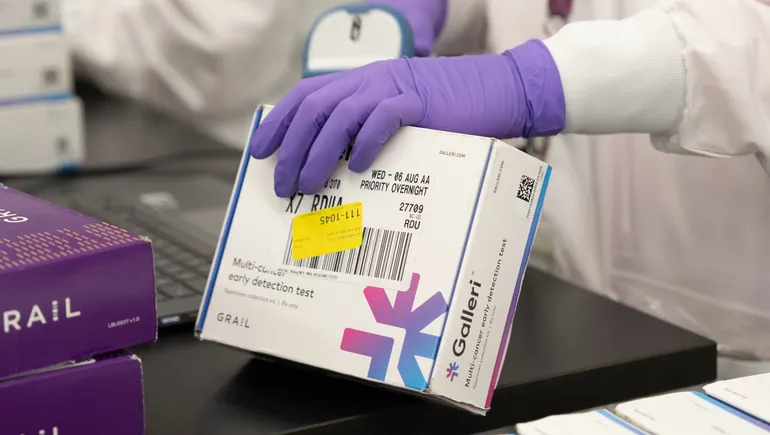
The landscape of oncology and preventative medicine is standing on the precipice of a significant shift as the U.S. Food and Drug Administration (FDA) prepares to decide the fate of Grail’s Galleri test. As the first multicancer early detection (MCED) blood test to seek formal FDA approval, Galleri represents a technological leap that could redefine how clinicians approach cancer screening. However, a recent narrow endorsement from an FDA advisory committee has highlighted a deep-seated tension between the excitement over innovative technology and the rigorous demands for clinical evidence regarding long-term patient outcomes.
In a pivotal meeting held last month, the FDA’s Medical Devices Advisory Committee reviewed clinical data for the Galleri test and ultimately voted 6-4 in favor of its effectiveness. While the majority backing provides a tailwind for Grail, the split vote reflects significant caution among experts. The primary concern among the dissenting voices was not the technology’s ability to find cancer, but rather the uncertainty regarding whether detecting these cancers via a blood test translates to a meaningful reduction in mortality or a decrease in the incidence of late-stage disease.
The Science of Signal Detection
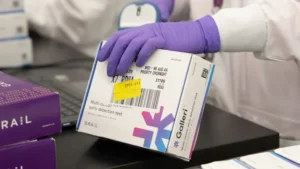
The Galleri test operates on the frontier of liquid biopsy technology. It utilizes a single draw of blood to screen for over 50 types of cancer, many of which currently have no standard screening protocols, such as pancreatic, esophageal, and ovarian cancers. The test works by analyzing cell-free DNA (cfDNA) fragments that are shed into the bloodstream by tumors. By examining specific methylation patterns—chemical changes to the DNA that do not alter the genetic code but influence gene expression—the test can identify a shared cancer signal.

If a signal is detected, the test provides a "cancer signal origin" (CSO) prediction, directing clinicians toward the specific organ or tissue where the malignancy is likely located. This allows for targeted follow-up diagnostic procedures, such as imaging (CT or PET scans) or biopsies, to confirm the presence of cancer. Because the test targets methylation patterns common to many cancers, it is designed to be highly specific, meaning it aims to minimize the number of false-positive results that could lead to unnecessary and invasive medical interventions.
A Chronology of Development and Regulatory Hurdles
The journey of the Galleri test is intertwined with the corporate history of its parent company, Grail. Spun out of the sequencing giant Illumina in 2016, Grail was re-acquired by Illumina in 2021 in a controversial $7.1 billion deal that faced intense antitrust scrutiny from both U.S. and European regulators. After years of legal battles, Illumina completed a second spinoff of Grail in mid-2024, allowing the company to operate once again as an independent, publicly traded entity focused solely on the commercialization of Galleri.
While the corporate maneuvering made headlines, the clinical development of Galleri proceeded through a series of large-scale trials. The PATHFINDER 1 study initially demonstrated the feasibility of using MCED tests in a clinical setting, showing a positive predictive value (PPV)—the probability that those with a positive test result actually have cancer—of approximately 40%.
The subsequent PATHFINDER 2 study, which included over 35,000 participants, showed marked improvements, with the PPV rising to 62%. More recently, the NHS-Galleri trial in the United Kingdom, the largest randomized controlled trial of its kind involving 140,000 volunteers, provided a more complex picture. While the test successfully identified many cancers, it did not meet its primary endpoint of significantly reducing the incidence of Stage 3 and 4 cancers compared to a control group within the study’s initial timeframe. This result has become a focal point for critics who argue that more longitudinal data is required before widespread adoption.
Clinical Expert Perspectives: The Promise and the Pitfalls
To understand the practical implications of this technology, medical experts across various disciplines have weighed in on the test’s clinical utility. The consensus among specialists is that while Galleri is a powerful tool, it must be viewed as a "complementary" screening rather than a "replacement" for established methods.
Dr. Elizabeth O’Donnell, Director of the Multi-Cancer Early Detection Clinic at Dana-Farber Cancer Institute, emphasizes the importance of specificity. "One of the concerns about introducing a novel screening test is that you’re going to have all of these false positives to work up," she noted. O’Donnell pointed out that in clinical trials, less than 1% of participants received a positive result, suggesting that the test is highly specific and unlikely to overwhelm the healthcare system with "false alarms." However, she acknowledged that the "episode sensitivity"—the ability to find all cancers present—remains relatively low, at approximately 30% to 40%.
Dr. Parijatham Thomas of MD Anderson Cancer Center highlighted a critical limitation: the test’s variable performance across different cancer types. "Its actual sensitivity for breast cancer and prostate cancer is very low," Thomas explained. "It is still very important you go and have your annual screening mammogram or discuss PSA screening." This sentiment is echoed by Dr. Karthik Giridhar of the Mayo Clinic, who noted that the test is "best at the cancers we’re worst at finding, and worst at the cancers we’re already good at finding."
The potential for "false reassurance" is perhaps the most significant risk identified by the medical community. If a patient receives a negative Galleri result and subsequently decides to skip a colonoscopy or mammogram, the test could inadvertently lead to late-stage diagnoses that would have otherwise been caught by traditional, high-sensitivity screenings.
Economic and Policy Implications
Beyond the clinical debate lies a complex economic landscape. Currently, the Galleri test is available as a laboratory-developed test (LDT) with a list price of $949. Because it lacks full FDA approval, most private insurance companies do not cover the cost, leaving it accessible primarily to those who can pay out of pocket or whose employers offer it as a benefit.
FDA approval is the "gold key" that could unlock broader insurance coverage. Furthermore, legislative efforts are already underway to ensure that Medicare can cover MCED tests once they are approved. The Multi-Cancer Early Detection Screening Coverage Act aims to create a pathway for Medicare reimbursement starting as early as 2028.
The financial impact of the test is a subject of debate. While the test itself is expensive, proponents like Dr. Charles Atwood of VA Pittsburgh Healthcare System argue that the cost is comparable to other screenings like colonoscopies or chest CTs. Moreover, detecting a cancer at Stage 2 or 3, rather than Stage 4, can save hundreds of thousands of dollars in treatment costs and, more importantly, significantly improve the patient’s quality of life and survival odds.
The "Diagnostic Odyssey" and Ethical Considerations
A positive result from a Galleri test triggers what clinicians call a "diagnostic workup." While Grail reports that 90% of its predictions for the site of origin are correct, the remaining 10% could lead to a "diagnostic odyssey"—a series of scans and tests as doctors search for a cancer that the blood test detected but imaging cannot yet find.
Dr. Arthur Burnett of Johns Hopkins Hospital raised concerns about the psychological and ethical impact of these results. "Is it picking up things that we’re not sure exactly what their true threat would be?" he asked. There is also the concern of "overdiagnosis"—finding slow-growing cancers that might never have caused symptoms or death during a patient’s lifetime. Furthermore, a positive test result on a medical record could have implications for life or long-term care insurance, similar to the challenges faced by individuals with known genetic predispositions.
Future Outlook and Industry Impact
As of mid-2024, Grail has sold over 595,000 Galleri tests commercially. The company continues to gather real-world evidence to bolster its case for FDA approval and eventual inclusion in standard-of-care guidelines. The outcome of the FDA’s decision will likely set the tone for the entire MCED industry, which includes competitors like Exact Sciences, Freenome, and Shield (by Guardant Health).
If approved, Galleri would likely be recommended for adults aged 50 and older, particularly those with a higher risk of cancer. The medical community remains cautiously optimistic that this technology will eventually bridge the gap in cancer screening, particularly for the 70% of cancers that currently lack any validated screening method.
The path forward for multicancer detection is one of iterative science. As the algorithms for analyzing DNA methylation improve and the database of known cancer signals grows, the sensitivity and accuracy of these tests are expected to rise. For now, the medical world remains in a holding pattern, waiting to see if the FDA will prioritize the potential for early detection or require more definitive proof that these "liquid biopsies" can truly save lives on a population-wide scale. The decision will not only impact Grail’s bottom line but will signal the beginning of a new era in the global fight against cancer.