







EndoQuest Robotics, a developer of innovative endoluminal robotic technologies, has announced the appointment of Jared Eben as Chief Commercial Officer, a strategic move designed to accelerate the company’s transition from a clinical-stage entity to a commercial powerhouse. Eben joins the organization at a pivotal moment as it prepares for the anticipated 2025 United States market launch of its proprietary flexible robotic surgery system. This platform is designed to enable scar-free, organ-sparing procedures through natural orifices, representing a significant leap forward in the field of minimally invasive surgery. Eben’s appointment is viewed by industry analysts as a clear signal of EndoQuest’s intent to bridge the gap between high-tech medical innovation and the practical, operational requirements of modern healthcare systems.
A Strategic Leader for a New Era of Robotic Surgery
Jared Eben brings a wealth of experience to EndoQuest, having navigated the complex intersection of medical technology development and large-scale healthcare operations. Prior to joining EndoQuest, Eben served as the Vice President of Robotics, AI, and Neuroscience at HCA Healthcare, one of the nation’s largest for-profit operators of healthcare facilities. During his tenure at HCA, Eben was responsible for overseeing the integration of advanced technologies across a vast network of hospitals, giving him a unique "provider-side" perspective on how medical devices are evaluated, purchased, and implemented.
Eben’s resume also includes significant roles at Auris Health and Proximie. At Auris Health—the company behind the Monarch platform, which was later acquired by Johnson & Johnson for $3.4 billion—Eben gained firsthand experience in the rapid scaling of robotic platforms. At Proximie, a software platform focused on digitizing the operating room, he focused on the intersection of connectivity and surgical precision. This multifaceted background was a primary driver behind EndoQuest’s recruitment efforts.
Eduardo Fonseca, CEO of EndoQuest Robotics, emphasized that Eben’s dual-sector expertise is critical for the company’s next phase. According to Fonseca, the company’s objective extends beyond the mere placement of robotic units; the goal is to assist clinical teams in building sustainable, high-volume robotic endoluminal surgery programs. This requires a leader who understands both the engineering marvels of the device and the economic and logistical realities of the hospital board room.

Technical Innovation: The Shift Toward Endoluminal Surgery
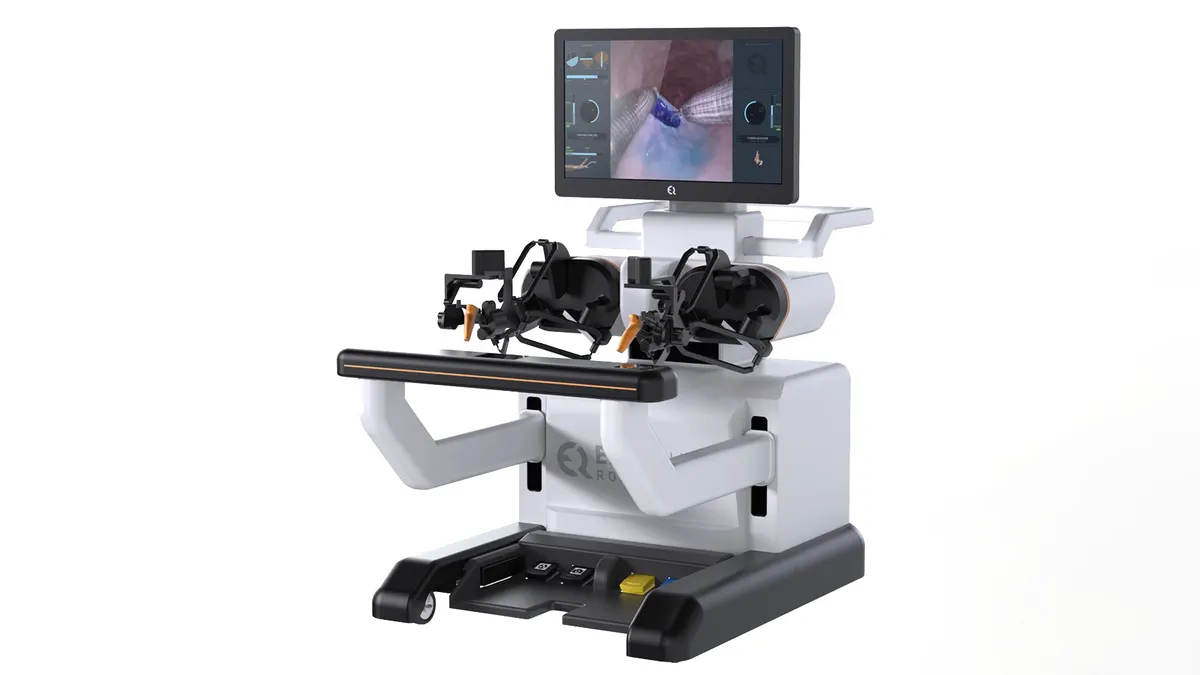
The core of EndoQuest’s value proposition lies in its flexible robotic system, which is engineered to address the limitations of current rigid and semi-rigid robotic platforms. While traditional robotic surgery—most notably popularized by systems like Intuitive Surgical’s Da Vinci—has revolutionized laparoscopic procedures, it still requires small incisions in the abdominal wall. EndoQuest’s technology, by contrast, is designed for endoluminal surgery, where the robot enters the body through natural openings, such as the mouth or the rectum.
This "natural orifice" approach eliminates the need for external incisions, which theoretically reduces the risk of wound-site infections, minimizes post-operative pain, and eliminates visible scarring. For healthcare systems, the potential benefits include shorter hospital stays, faster patient recovery times, and a reduction in the overall cost of care. The EndoQuest system features a flexible scope and miniaturized surgical instruments that provide the surgeon with the dexterity and visualization necessary to perform complex dissections and reconstructions from within the organ.
The PARADIGM Trial: Validating Clinical Efficacy
The momentum behind Eben’s appointment is bolstered by the successful completion of the PARADIGM clinical trial. In July 2024, EndoQuest announced that it had completed enrollment for the study, which focused on robotic endoscopic submucosal dissection (ESD) procedures. ESD is a highly technical procedure used to remove deep-seated lesions or early-stage cancers from the gastrointestinal tract without the need for traditional open surgery.
Preliminary data from 50 procedures performed during the trial yielded impressive results. The company reported a 100% en-bloc resection rate, meaning that in every case, the lesion was removed in a single, intact piece—a critical metric for ensuring clear margins in oncological procedures. Furthermore, there were no reported cases of device-related bleeding or perforation, demonstrating a high safety profile.
These results are currently being finalized as the company undergoes follow-up assessments and database reviews. The data from the PARADIGM trial will serve as the cornerstone of EndoQuest’s De Novo classification request to the U.S. Food and Drug Administration (FDA). The De Novo pathway is reserved for novel medical devices for which there is no legally marketed predicate device, but which are deemed to be low-to-moderate risk.

Navigating the Regulatory and Reimbursement Landscape
The appointment of a Chief Commercial Officer ahead of FDA authorization is a common strategy for medtech firms aiming for a "hot start" upon clearance. Eben’s primary focus will be on preparing the market for the system’s arrival. This involves not only marketing but also the rigorous task of establishing training protocols, workflow optimizations, and health system partnerships.
A significant tailwind for EndoQuest is the evolving reimbursement landscape. New Current Procedural Terminology (CPT) codes for certain endoscopic procedures are scheduled to take effect on January 1, 2025. These codes are essential because they provide a standardized language for healthcare providers to bill insurance companies for specific medical services. If EndoQuest receives FDA authorization in alignment with these changes, it could significantly lower the barrier to adoption for hospitals concerned about the financial viability of new robotic programs.
Eben has stated that his immediate priority is engaging with physician leaders and hospital administrators to align the clinical and economic value of the technology. By ensuring that the system is not only a clinical success but also an operational asset, EndoQuest aims to avoid the "shelf-ware" trap—where expensive medical equipment is purchased but underutilized due to complex workflows or lack of training.
Broader Industry Implications and Competitive Context
EndoQuest’s move occurs within a broader context of intense competition and innovation in the surgical robotics market. For decades, the industry was dominated by a single player, but the last five years have seen an explosion of specialized platforms. Companies like Medtronic, Johnson & Johnson, and Vicarious Surgical are all vying for market share, yet many remain focused on traditional laparoscopic or orthopedic applications.
EndoQuest is positioning itself in a specialized niche: flexible endoluminal robotics. This field is particularly relevant for gastroenterology and endoluminal oncology, areas where traditional surgical methods are often either too invasive or technically limited. By focusing on "scarless" surgery, EndoQuest is tapping into a growing patient demand for less invasive options and a provider demand for procedures that can be performed in outpatient or ambulatory surgery centers.
The transition from a clinical trial phase to a commercial phase is often the most difficult period for a medtech startup. It requires a shift in company culture from research and development toward sales, service, and support. Eben’s experience at HCA Healthcare—where he likely sat on the other side of the table from hundreds of medical device salespeople—gives him a "secret weapon" in understanding the true pain points of hospital systems. He knows that a hospital’s decision to adopt a new platform is rarely based on technology alone; it is based on how that technology affects the bottom line, surgeon satisfaction, and patient outcomes.
Chronology of EndoQuest’s Recent Milestones
To understand the significance of this leadership change, it is helpful to look at the company’s trajectory over the past year:
- Late 2023 – Early 2024: EndoQuest refined its flexible robotic prototype and finalized the protocol for the PARADIGM trial, focusing on gastrointestinal applications.
- July 2024: The company announced the completion of enrollment for the PARADIGM trial, reporting a 100% en-bloc resection rate and zero device-related complications across 50 procedures.
- August – September 2024: Verification and validation of trial data continued as the company prepared its formal submission to the FDA.
- October 2024: Jared Eben is appointed as Chief Commercial Officer, marking the beginning of the "pre-launch" phase.
- January 2025 (Anticipated): New CPT codes for endoscopic procedures take effect, potentially easing the path for reimbursement.
- 2025 (Target): Anticipated FDA De Novo authorization and subsequent commercial launch in the United States.
Conclusion: The Road to 2025
The hiring of Jared Eben is more than just a personnel change; it is a declaration of commercial readiness. As EndoQuest Robotics moves toward its goal of a 2025 launch, the company is betting that a combination of superior clinical data and a sophisticated commercial strategy will allow it to disrupt the established surgical robotics market.
The success of the EndoQuest system will ultimately depend on its ability to prove that endoluminal robotics is not just a technological novelty, but a necessary evolution in patient care. With Eben at the commercial helm, the company is well-positioned to navigate the complex hurdles of the U.S. healthcare system, from regulatory clearance to wide-scale clinical adoption. As the medical community keeps a close eye on the FDA’s response to the PARADIGM data, EndoQuest is already building the infrastructure to ensure that when the green light is given, the technology is ready to reach the patients who need it most.