








Stryker Corporation, a global leader in the medical technology sector, reported its third-quarter financial results for 2026, revealing a complex landscape of steady revenue growth contrasted against a significant dip in net earnings and a cautious revision of its full-year guidance. The Kalamazoo, Michigan-based company announced Q3 revenue of $6.5 billion, representing a 7.7% increase compared to the same period in the previous year. However, net earnings for the quarter fell to $753 million, a 12.3% year-over-year decline that has sparked discussions regarding the broader health of the orthopedic surgery market and the impact of macroeconomic pressures on elective healthcare procedures.
The financial performance comes at a pivotal moment for Stryker as it navigates a transition in its executive suite and seeks to pivot its long-term strategy toward soft tissue robotics. Despite the overall revenue growth, the underlying data suggests that the company’s core orthopedic business—specifically hip and knee replacements—is facing unprecedented headwinds. This deceleration prompted Chief Executive Officer Kevin Lobo to lower the company’s organic sales growth guidance for the remainder of 2026, a move that reflects shifting patient behaviors and tightening insurance protocols in the United States.
Analyzing the Slowdown in Joint Replacement Procedures
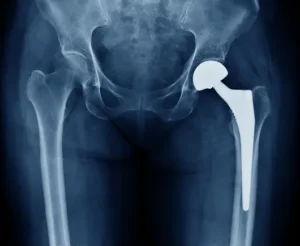
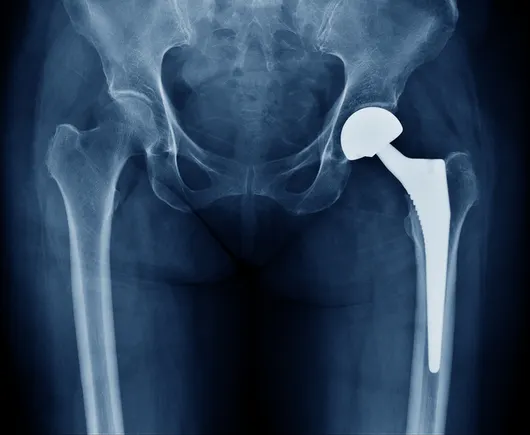
For years, Stryker has relied on the steady volume of hip and knee replacements as a primary engine for its growth. However, the third-quarter data indicates a sharp cooling in these segments. Knee sales grew by a modest 1.1% during the quarter, while hip sales experienced a contraction of 1.0%. These figures fell short of internal expectations and analyst projections, signaling a shift in a market that has historically been viewed as resilient.

During a Thursday conference call with investors and analysts, Kevin Lobo addressed these challenges directly, attributing the performance to a "market slowdown" rather than a loss of market share to competitors like Zimmer Biomet or Johnson & Johnson. Lobo emphasized that the deceleration is rooted in the economic realities facing American patients. Specifically, he pointed toward the rising costs of healthcare premiums and the increasing prevalence of high-deductible insurance plans.
"In the U.S., we are seeing slower procedural growth amid affordability concerns from higher insurance premiums and deductibles," Lobo stated. He further explained that many patients are finding it difficult to meet their financial obligations before their insurance coverage kicks in, leading them to postpone surgeries. "They’re actually living with pain a little bit longer than they would like to," Lobo added, noting that joint replacement demand has historically correlated with broader economic cycles and consumer confidence.
Insurance Barriers and Pre-Authorization Denials
Beyond the direct cost to patients, Stryker’s leadership highlighted the increasing difficulty of navigating the administrative hurdles of the U.S. healthcare system. The company noted a rise in pre-authorization denials from insurance providers, a trend that adds friction to the surgical pipeline. These denials often require surgeons and hospital administrative staff to engage in lengthy appeals processes, further delaying procedures and impacting the quarterly throughput for medical device manufacturers.
CFO Preston Wells had previously flagged these concerns during an industry event last month, but the Q3 results provided the first comprehensive look at the scale of the impact. While Stryker has also dealt with internal operational challenges this year—including the lingering effects of a cyberattack and the complexities of a major new software implementation within its orthopedics division—the executive team maintained that the primary driver of the current slump is the external economic environment and the evolving landscape of payer-provider relations.
Leadership Transition and the End of the Lobo Era
The third-quarter earnings report marks one of the final major acts for Kevin Lobo, who has served as Stryker’s CEO for 15 years. Under Lobo’s tenure, Stryker underwent a massive transformation, growing through aggressive acquisitions and the successful integration of robotic technology into the orthopedic operating room. Lobo announced his intention to step down at the end of the year, with Chief Operating Officer Spencer Stiles slated to take over the role in January 2027.
Lobo expressed a sense of disappointment regarding the timing of the market slowdown, noting that he would have preferred to exit on a higher note. However, analysts point out that Lobo’s legacy is defined more by the company’s decade-long expansion than by a single quarter of macroeconomic volatility. During his leadership, Stryker’s market capitalization surged, and the company established itself as a pioneer in robotic-assisted surgery through the 2013 acquisition of Mako Surgical.
Spencer Stiles, the incoming CEO, will inherit a company that is currently recalibrating its expectations. Stryker has officially lowered its full-year sales guidance for 2026 to a range of 6.5% to 7.0%, a significant reduction from the previously forecasted range of 8.3% to 9.3%. Stiles will be tasked with navigating these near-term headwinds while executing the company’s next major strategic pivot: the entry into soft tissue robotics.
The $400 Million Investment in CMR Surgical
While the orthopedic segment showed signs of fatigue, Stryker is moving aggressively to diversify its portfolio. Earlier this month, the company announced a $400 million investment in CMR Surgical, a UK-based firm specializing in soft tissue robotics. This move marks Stryker’s formal entry into a market currently dominated by Intuitive Surgical’s Da Vinci system.
As part of the agreement, Stryker will serve as the exclusive U.S. distributor for CMR Surgical’s Versius Plus robot. The Versius system is designed to be modular and portable, making it highly adaptable for different hospital settings and, crucially, for Ambulatory Surgery Centers (ASCs). The shift of surgical procedures from traditional hospitals to ASCs is a major trend in U.S. healthcare, as these centers often offer lower costs and higher efficiency for elective procedures.
Lobo described the Versius Plus as a "pure adjacency" to Stryker’s current offerings. Unlike the Mako robot, which is inextricably linked to Stryker’s orthopedic implants, the CMR robot is a standalone platform used for general surgery, gynecology, and urology. "We feel it is the best robot on the market to be able to succeed in multiple sites of care," Lobo said. He also hinted at a long-term goal of total ownership, stating, "Our hope and our plan is that we will eventually purchase this," though no specific timeline for a full acquisition was provided.
Strategic Comparison: Mako vs. CMR Surgical
The decision to partner with CMR Surgical rather than acquire it outright reflects a more cautious approach to capital allocation in the current economic climate. Lobo explained that a full acquisition at this stage would carry significant risk and high development costs. By acting as the exclusive distributor first, Stryker can validate the commercial success of the Versius Plus in the critical U.S. market before committing to a multi-billion dollar buyout.
When comparing this move to the 2013 acquisition of Mako Surgical, Lobo noted that CMR is further along in its commercial development than Mako was at the time of its purchase. However, the integration of Mako was driven by the synergy between the robot and Stryker’s proprietary implants. The CMR partnership represents a different strategy—expanding Stryker’s footprint in the operating room through high-tech equipment that does not necessarily require the use of Stryker-branded consumables in the same way.
Broader Market Implications and Future Outlook
Stryker’s Q3 performance serves as a bellwether for the broader medical device industry. The slowdown in joint replacements suggests that even "non-elective" elective surgeries—those that patients eventually must have but can temporarily delay—are susceptible to inflationary pressures and changes in insurance design. This could signal a period of more modest growth for the orthopedic sector as a whole until economic conditions stabilize or insurance policies become more favorable to procedural volume.
Despite the downward revision in guidance, Stryker remains a highly profitable enterprise with a robust pipeline of innovation. The company’s focus on the ASC market and its entry into soft tissue robotics provide clear pathways for future growth. Furthermore, the transition to Spencer Stiles’ leadership is expected to be seamless, given his long history within the company and his role in shaping its current operational strategy.
As the 2026 fiscal year draws to a close, investors will be watching closely to see if the market deceleration persists into the first half of 2027. For now, Stryker is positioning itself to weather the storm by tightening its financial forecasts and betting on the next generation of surgical robotics to drive its next chapter of expansion. The coming months will determine whether the current slump is a temporary correction or a sign of a more structural shift in how healthcare is consumed and financed in the United States.