








The clinical laboratory industry is currently navigating a period of significant legislative and financial uncertainty as the two largest providers in the United States, Labcorp and Quest Diagnostics, ramp up their efforts to reform federal payment structures. During their respective third-quarter earnings calls, the leadership of both organizations issued stark warnings regarding a projected "reimbursement cliff" scheduled to take effect in 2027. This fiscal challenge stems from the looming implementation of the Protecting Access to Medicare Act (PAMA) of 2014, a piece of legislation that has been a point of contention for clinical labs for nearly a decade. To mitigate the impact of these cuts, the industry is coalescing around the Reforming and Enhancing Sustainable Updates to Laboratory Testing Services (RESULTS) Act, urging Congress to pass the measure during the upcoming year-end legislative session.
The financial stakes are considerable. Labcorp, a global leader in innovative and comprehensive laboratory services, has projected a $125 million reduction in revenue specifically tied to government payment cuts in 2027. Meanwhile, Quest Diagnostics, another titan of the diagnostic sector, has quantified the potential damage as approximately 1% of its total 2026 revenue. These figures underscore a broader industry-wide concern that the current methodology used by the Centers for Medicare and Medicaid Services (CMS) to determine reimbursement rates is fundamentally flawed and unrepresentative of the actual costs of providing diagnostic services across a diverse market.
The Legislative Evolution: From PAMA to the RESULTS Act
To understand the current urgency, one must look back to the passage of PAMA in 2014. The original intent of the law was to modernize the Clinical Laboratory Fee Schedule (CLFS) by transitioning from a cost-based system to a market-based system. Under PAMA, laboratories are required to report private payer rates to CMS, which then uses that data to calculate a weighted median for Medicare reimbursement. However, the implementation of this system has been fraught with controversy. Industry advocates argue that the data collection process has consistently failed to capture a representative sample of the market. Specifically, the reporting requirements initially excluded many hospital-based laboratories and physician office laboratories, which typically negotiate higher rates with private insurers than large independent laboratories.

By over-sampling large independent labs like Labcorp and Quest—which benefit from economies of scale and thus often have lower per-test rates—the CMS-calculated "market median" has been skewed significantly lower than the true national average. This has led to a cycle of reimbursement cuts that the industry claims threaten the sustainability of laboratory operations, particularly for smaller facilities and those serving rural or underserved populations.
In response to these systemic issues, the RESULTS Act has been proposed as a permanent solution. Unlike PAMA, which relies on a complex and often burdensome reporting process for laboratories, the RESULTS Act would mandate that CMS contract with an independent, not-for-profit commercial claims database. This database would be used to gather a more comprehensive and statistically valid set of private payer data, ensuring that reimbursement rates reflect the full spectrum of the laboratory market, including hospitals and smaller independent providers.
A Decade of Delays and the 2027 Deadline
The history of PAMA has been defined by a series of temporary reprieves. Recognizing the potential for catastrophic disruptions to the healthcare system, Congress has intervened six times to delay the implementation of the most severe PAMA-related cuts. These delays were often included in broader year-end spending packages, providing the industry with short-term stability but leaving the underlying structural problems unaddressed.
The most recent delay occurred in 2023, which pushed the next round of significant cuts to January 1, 2025, and subsequently affected the 2027 fiscal outlook. However, as Quest Diagnostics CEO Jim Davis noted in his recent earnings call, the data collection requirements have not been entirely paused. In 2024, laboratories were once again required to submit their private payer data. Davis expressed deep concern that the flaws present in previous data cycles have persisted, leading to a preliminary fee schedule for 2027 that the industry views as excessive and unsustainable.
The preliminary CLFS released by CMS last month confirms these fears. According to an analysis by the American Clinical Laboratory Association (ACLA), the proposed schedule would result in a 15% reduction in payments for 775 different diagnostic tests starting in 2027. Further reductions are anticipated for 2028 and 2029. These tests include routine screenings and critical diagnostic tools used for managing chronic conditions such as diabetes, heart disease, and cancer.
Quantifying the Impact on Healthcare Infrastructure
The projected $125 million hit to Labcorp and the 1% revenue impact for Quest are not merely balance-sheet concerns; they represent a potential reduction in the capacity of the U.S. healthcare system to provide essential diagnostic services. Laboratory testing influences approximately 70% of all medical decisions, yet it accounts for less than 3% of total healthcare spending. Executives argue that further squeezing this sector could lead to "laboratory deserts," where residents in remote areas lose access to local testing facilities.
Adam Schechter, CEO of Labcorp, emphasized during the third-quarter call that the impact extends beyond immediate access. "In our view, these payment cuts will threaten patient access to laboratory services, they will negatively impact patient care and innovation, and they will impact the viability of laboratories across the United States," Schechter stated. He noted that the preliminary fee schedule does not reflect the broader commercial laboratory market, as it continues to rely on a skewed data set.
The data recently released by CMS supports the industry’s claim of sampling bias. Jim Davis of Quest pointed out that independent laboratories represented about three-quarters of the volume reported in the most recent cycle. Given that independent labs do not make up 75% of the total diagnostic market when hospital and physician office labs are included, the resulting data is mathematically guaranteed to drive reimbursement rates downward in an artificial manner.
The Role of the Congressional Budget Office
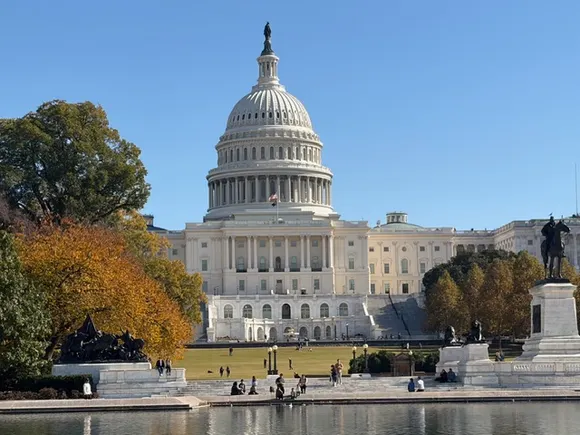
The path forward for the RESULTS Act currently hinges on a critical evaluation by the Congressional Budget Office (CBO). The CBO is tasked with "scoring" the legislation—estimating its impact on federal spending over a ten-year period. This score is essential for lawmakers as they determine whether the bill can be included in a larger legislative package.
The industry expects the CBO score to be released in November. Davis indicated that once the score is public, he anticipates the primary committees in the House of Representatives and the Senate will convene to discuss the bill’s inclusion in an end-of-year spending package. The timing is tight, as the U.S. Congress will return for a "lame-duck" session following the midterm elections. This period is often a flurry of legislative activity where various stalled bills are bundled into "omnibus" spending measures to keep the government funded.
If the RESULTS Act receives a favorable score—meaning its cost is viewed as manageable or offset by the stability it provides to the Medicare program—it has a strong chance of passing. If it fails to gain traction, the industry will be forced to seek yet another temporary delay of PAMA cuts or prepare for the financial impact in 2027.
Implications for Innovation and Public Health
Beyond the financial metrics, the debate over the RESULTS Act touches on the future of medical innovation. The diagnostic industry is currently in a transformative phase, with advancements in genomics, liquid biopsies for early cancer detection, and personalized medicine requiring significant research and development (R&D) investment. Continuous reimbursement cuts create an environment of capital scarcity, which can stifle the development of next-generation tests.
Furthermore, the stability of the laboratory sector is a matter of national security and public health preparedness. The COVID-19 pandemic highlighted the critical role that commercial labs play in scaling up testing during a crisis. Industry leaders argue that a weakened laboratory infrastructure would be less capable of responding to future pandemics or emerging health threats.
The American Clinical Laboratory Association has been vocal in its support for the RESULTS Act, framing it as a necessary step to ensure the "long-term clinical and financial health" of the industry. The association argues that the current PAMA system creates "perverse incentives" that reward volume over value and penalize labs that serve high-cost, low-volume patient populations.
Future Outlook: Preparing for Multiple Scenarios
Despite the uncertainty, both Labcorp and Quest are preparing contingency plans. If the RESULTS Act does not pass this year, both companies have indicated they will look for operational efficiencies to offset the impact of the 2027 cuts. This could involve further automation, consolidating laboratory footprints, or adjusting service levels.
However, the preference remains a legislative fix. "We’re still cautiously optimistic about RESULTS," Schechter said, reinforcing that the company will continue to fight for the bill’s passage. The push for the RESULTS Act represents a rare moment of unified advocacy among the "Big Two" and the broader laboratory community, reflecting the severity of the perceived threat.
As the November deadline for the CBO score approaches, the healthcare industry will be watching closely. The outcome will determine whether 2027 becomes a year of managed transition for American laboratories or a year of significant financial disruption with potential ripple effects across the entire patient care continuum. For now, Labcorp and Quest remain "fast and furious" in their lobbying efforts, hoping that Congress will finally move past temporary fixes and provide the long-term legislative stability the diagnostic sector is demanding.