








A comprehensive report released by the advocacy group Friends of the Earth has ignited a national debate regarding the safety and economic viability of genetically modified organisms (GMOs) in the United States food supply. The report specifically targets the recent regulatory approval of HB4 wheat, a genetically engineered variety developed by the Argentine biotechnology firm Bioceres Crop Solutions. According to the findings, the introduction of this transgenic crop poses significant risks to public health, threatens the integrity of the environment, and jeopardizes the economic stability of American wheat farmers who rely heavily on international export markets.
The approval of HB4 wheat represents a historic shift in the agricultural landscape. For decades, wheat remained one of the few major commodity crops in the U.S. that had not been transitioned to genetically modified varieties, largely due to sustained opposition from consumer groups and the wheat industry itself, which feared the loss of sensitive foreign markets. The new report suggests that the decision to permit HB4 wheat overlooks critical safety data and fails to account for the long-term ecological consequences of increased herbicide use.
Technical Profile of HB4 Genetically Engineered Wheat
HB4 wheat is distinguished from conventional wheat through its genetic modification intended to provide two primary traits: drought tolerance and herbicide resistance. The drought-tolerance trait is derived from a gene found in sunflowers (HaHB4), which allows the plant to maintain productivity under water-stressed conditions. However, the report from Friends of the Earth emphasizes that the crop is also engineered to be tolerant to glufosinate-ammonium, a potent broad-spectrum herbicide.
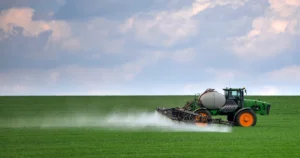
While Bioceres Crop Solutions has marketed the variety primarily as a solution to climate change-induced water scarcity, critics argue that the herbicide-tolerant aspect is the more significant feature for industrial farming operations. Glufosinate-ammonium is used to control weeds that have developed resistance to glyphosate, the active ingredient in Roundup. The report posits that the adoption of HB4 wheat will inevitably lead to an increase in the application of glufosinate, a chemical that has faced increasing scrutiny and regulatory restrictions globally.
Chronology of GMO Wheat Development and Regulation
The journey of GMO wheat in the United States has been marked by decades of controversy and regulatory hurdles. Understanding the current crisis requires a look back at the timeline of its development:
- 2004: The biotechnology giant Monsanto withdrew its application for the commercialization of Roundup Ready wheat following intense pressure from U.S. and Canadian wheat farmers. The primary concern at the time was the potential loss of export markets in Europe and Asia, where consumers remained staunchly opposed to GMO staples.
- 2013: Unapproved GMO wheat plants were discovered growing in a field in Oregon. The incident led to several major importing nations, including Japan and South Korea, temporarily suspending imports of U.S. white wheat, causing significant financial losses for American growers.
- 2020: Argentina became the first country in the world to provide regulatory approval for the growth and consumption of HB4 wheat, though the approval was initially contingent on acceptance by Brazil, Argentina’s largest wheat customer.
- 2022: The U.S. Food and Drug Administration (FDA) completed its safety evaluation of HB4 wheat, concluding that it did not raise further questions regarding safety compared to conventional wheat.
- 2024: The U.S. Department of Agriculture (USDA) officially authorized the cultivation of HB4 wheat, making the United States one of the few nations to permit the environmental release of genetically engineered wheat.
- 2026: Friends of the Earth releases its updated report, warning that the commercial rollout of HB4 wheat is imminent and could have irreversible effects on the U.S. agricultural system.
Public Health and Environmental Risks
The central pillar of the Friends of the Earth report is the potential impact on human health. Glufosinate-ammonium, the herbicide to which HB4 wheat is resistant, is classified as a reproductive toxicant in several jurisdictions. The European Union banned the use of glufosinate in 2018 due to its potential to cause developmental damage in humans and its toxicity to mammals and birds.
The report highlights that wheat is a primary staple of the American diet, consumed in the form of bread, pasta, and cereals. Unlike corn and soy, which are largely used for animal feed or industrial biofuels, wheat is consumed directly by humans in high quantities. The introduction of HB4 wheat could lead to increased residues of glufosinate in common food products, a prospect that the report argues has not been sufficiently studied by U.S. regulatory agencies.
Environmentally, the report warns of the "treadmill of chemical dependency." As weeds become resistant to glufosinate through repeated exposure, farmers may turn to even more toxic chemical cocktails, further degrading soil health and contaminating local waterways. Furthermore, the risk of cross-contamination—where GMO wheat pollen travels to neighboring non-GMO or organic fields—poses a threat to biodiversity and the purity of the organic wheat supply chain.
Economic Implications for U.S. Farmers
Beyond health and environmental concerns, the report outlines a dire economic forecast for U.S. wheat producers. The United States is one of the world’s leading wheat exporters, with roughly half of the annual crop sold to international buyers. Many of these buyers, particularly in the European Union, East Asia, and parts of Latin America, have strict labeling laws or outright bans on GMO food products.
The report notes that the presence of HB4 wheat in the U.S. grain elevator system could lead to widespread rejection of U.S. wheat shipments. Even if a farmer chooses not to grow GMO wheat, the risk of "adventitious presence"—accidental mixing during transport, storage, or processing—could result in the entire U.S. wheat supply being stigmatized.
The cost of implementing "Identity Preservation" (IP) systems to keep GMO and non-GMO wheat separate is substantial. According to industry analysts cited in the report, these costs would likely be passed down to the farmers, further thinning the already narrow profit margins of family-owned agricultural operations.
Industry and Regulatory Responses
In response to the concerns raised by the report, proponents of HB4 wheat emphasize its role in food security. Bioceres Crop Solutions has stated that their technology is essential for maintaining wheat yields in the face of increasingly frequent and severe droughts. They argue that the sunflower gene allows the wheat to "wait" for rain, preventing crop failure and stabilizing the food supply.
The USDA and FDA have maintained that their approval processes are rigorous and based on the best available science. In previous statements, the USDA Animal and Plant Health Inspection Service (APHIS) asserted that HB4 wheat is unlikely to pose a plant pest risk and that its environmental release does not significantly impact the human environment.
However, industry groups representing wheat growers have expressed a range of opinions. While some organizations acknowledge the potential benefits of drought-tolerance technology, others, such as the National Association of Wheat Growers (NAWG), have historically emphasized that any GMO wheat variety must have broad international acceptance before commercialization to avoid market disruptions.
Fact-Based Analysis of Implications
The conflict over HB4 wheat underscores a fundamental tension in modern agriculture: the drive for technological solutions to climate change versus the demand for transparency and chemical-free food systems.
The Friends of the Earth report suggests that the "drought-tolerant" branding of HB4 wheat may serve as a "Trojan horse" for the expansion of herbicide-tolerant cropping systems. Data from previous GMO rollouts in corn and soy show a clear correlation between the adoption of GE seeds and a net increase in total herbicide volume used per acre. If this pattern repeats in wheat, the environmental footprint of the Great Plains could change dramatically.
Furthermore, the global market for wheat is highly competitive. With emerging exporters like Russia and Ukraine (historically non-GMO producers) vying for market share, any perceived compromise in the quality or "natural" status of U.S. wheat could provide a competitive advantage to international rivals. The report concludes that the U.S. government’s approval of HB4 wheat may prioritize the profits of biotechnology firms over the long-term viability of the American agricultural sector.
Conclusion and Future Outlook
As of March 2026, HB4 wheat is not yet being grown on a widespread commercial scale in the United States, but the regulatory pathways are clear. Friends of the Earth is calling for an immediate moratorium on the commercialization of HB4 wheat and is urging food manufacturers and retailers to commit to sourcing only non-GMO wheat.
The report serves as a call to action for consumers and policymakers to reconsider the direction of the U.S. food system. As the debate continues, the focus will likely remain on whether the promised benefits of drought resistance outweigh the potential for economic loss, environmental degradation, and public health risks. For now, the future of the "staff of life" remains a central battleground in the ongoing struggle over the role of genetic engineering in our global food supply.