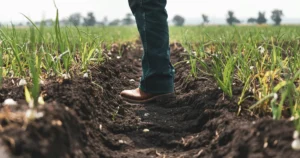









Spring has arrived on the Oklahoma plains, and for Leo Staples, a third-generation farmer, the change in season brings a renewed sense of purpose to his family’s agricultural operations. On his farm in rural Oklahoma, the Berkshire pigs—a heritage breed known for their dark, marbled meat and hardy disposition—are beginning to forage through the fresh growth of the season. Among them is Woody, a 550-pound hog named by Staples’ grandson after the iconic "Toy Story" character. Woody’s behavior, described by Staples as akin to a playful puppy, involves roaming freely through a paddock and consuming a nutrient-rich diet of knee-high rye, clovers, and winter peas. This pastoral scene, while reminiscent of a bygone era of American agriculture, has become the focal point of a massive, multi-billion-dollar legal and economic shift within the United States pork industry.
The lifestyle of the swine on Staples’ sustainable family farm stands in stark contrast to the standard operating procedures of America’s "intensive" corporate-owned mega-farms. In the industrial model, which dominates the majority of the U.S. pork supply, pregnant sows are frequently confined to gestation crates—metal enclosures measuring approximately 2 feet by 7 feet. In these crates, many sows spend nearly their entire lives unable to turn around, groom themselves, or engage in the natural foraging behaviors exhibited by Woody and his peers in Oklahoma. This divide between high-welfare, sustainable practices and intensive industrial confinement has transitioned from a matter of ethics to a matter of law, driven largely by California’s landmark Proposition 12.
The Evolution of Regulatory Standards: From Ballot Box to Supreme Court
The journey toward the current state of the American pork market began in November 2018, when California voters overwhelmingly approved Proposition 12, the Farm Animal Confinement Initiative. The law established specific minimum space requirements for three types of farm animals: egg-laying hens, calves raised for veal, and breeding pigs. For the pork industry, the mandate required that sows be provided at least 24 square feet of floor space, allowing them to lie down, stand up, fully extend their limbs, and turn around freely.

While California produces a negligible amount of pork itself, it consumes approximately 13% to 15% of the total United States pork supply. Because of this market dominance, the law effectively dictated production standards for any farmer in Iowa, North Carolina, or Oklahoma—like Leo Staples—who wished to sell their products into the lucrative California market. This led to a protracted legal battle that reached the highest court in the land.
In May 2023, the United States Supreme Court issued its ruling in National Pork Producers Council (NPPC) v. Ross. The industry had argued that Proposition 12 violated the "dormant Commerce Clause" by unfairly burdening out-of-state producers. However, the Court upheld California’s right to regulate the products sold within its borders based on the moral and health concerns of its citizens. This decision catalyzed a massive restructuring of the swine industry, the effects of which are reaching their full maturity in 2026.
Chronology of the Pork Industry Transition
The timeline of the shift toward high-welfare pork production highlights the complexity of modernizing a global supply chain:
- November 2018: Proposition 12 is passed by California voters with 63% of the vote.
- 2019–2021: Industry groups, led by the NPPC and the American Farm Bureau Federation, file multiple lawsuits to block the implementation, citing "irreparable harm" to farmers.
- January 1, 2022: The initial implementation date for the pork provisions of Prop 12 is delayed due to legal challenges and the COVID-19 pandemic’s impact on supply chains.
- May 2023: The Supreme Court upholds Prop 12, signaling to producers that compliance is no longer optional for those wishing to access the California market.
- January 1, 2024: Full enforcement of Prop 12 begins, requiring all pork sold in California to come from compliant facilities.
- 2025–2026: A two-tiered market emerges in the U.S., with "Prop 12-compliant" pork commanding a premium price while non-compliant producers pivot to exports or states without similar regulations.
Supporting Data: The Cost of Compliance and Market Shifts
The transition from intensive confinement to group housing or free-range paddocks involves significant capital investment. According to data from agricultural economists at Rabobank and various land-grant universities, the cost of retrofitting an existing sow barn to meet the 24-square-foot requirement can range from $500 to $2,500 per sow. For a large-scale operation with thousands of breeding animals, these costs can quickly escalate into the millions.
Furthermore, the industry has seen a notable shift in consumer pricing. Since the full implementation of Prop 12, retail pork prices in California have seen fluctuations. Initial reports indicated a price increase of 7% to 20% for certain cuts like pork loins and bacon, though these prices have begun to stabilize as the supply chain adapts.
For farmers like Leo Staples, the economics are different. By focusing on heritage breeds like Berkshires and utilizing sustainable, pasture-based systems, Staples is able to tap into a high-end market that values animal welfare and flavor over low-cost mass production. Berkshire pork is often referred to as the "Kobe beef of pork" due to its higher fat content and superior taste, allowing small-scale farmers to maintain profitability despite the higher labor and land costs associated with non-intensive farming.
Official Responses and Stakeholder Perspectives
The debate over pig confinement has created a sharp divide among industry stakeholders, ranging from animal welfare advocates to large-scale agricultural lobbyists.
Animal Welfare Organizations:
Groups such as the Humane Society of the United States (HSUS) have hailed the shift as a historic victory. "Pigs are highly intelligent, social animals," said a representative for the HSUS in a recent statement. "The end of gestation crates is not just about animal welfare; it is about public health and moving away from a broken industrial system that prioritizes corporate profits over basic biological needs."
The National Pork Producers Council (NPPC):
In contrast, the NPPC continues to express concerns regarding the long-term viability of small and medium-sized farms under these regulations. "We remain concerned that one state can dictate the production practices of farmers thousands of miles away," the Council stated. "While many producers have made the transition, the financial burden has forced some multi-generational farms out of the business entirely, leading to further consolidation in the industry."
Independent Farmers:
For Leo Staples, the conversation is less about politics and more about the quality of life for his animals. He notes that when pigs are allowed to engage in natural behaviors—rooting in the soil, socializing in groups, and enjoying the sun—they are healthier and require fewer antibiotics. This perspective aligns with a growing segment of "regenerative agriculture" proponents who argue that sustainable farming is the only way to ensure long-term food security.
Broader Impact and Implications for the Future
The "Prop 12 effect" is not limited to California. Several other states, including Massachusetts, have passed similar legislation, and many major food retailers and restaurant chains—including McDonald’s, Chipotle, and Costco—have pledged to source only crate-free pork. This suggests a permanent shift in the American agricultural landscape.
One of the most significant implications is the potential for a "bifurcated" food system. As more states adopt welfare standards, the U.S. may see a clear division between high-standard domestic production and lower-standard production intended for international markets where such regulations do not exist. This raises questions about trade equity and the global competitiveness of American pork.
Additionally, the environmental benefits of the Staples model are gaining attention. Intensive "mega-farms" often struggle with waste management, as thousands of animals concentrated in a small area produce massive amounts of manure that can leach into groundwater. In contrast, Staples’ method of rotating pigs through paddocks where they eat rye and clovers helps naturally fertilize the soil and sequester carbon, presenting a more environmentally resilient model for the future of farming.
As the sun continues to shine on Woody and the Berkshire pigs in Oklahoma, their lives serve as a living testament to a shifting paradigm. The American pork industry is at a crossroads, balancing the efficiency of industrialization with a growing societal demand for transparency, sustainability, and compassion in the food supply chain. While the legal battles may have cooled since the 2023 Supreme Court ruling, the economic and cultural transformation of the American farm is only just beginning. For Leo Staples, the reward is seen in the health of his land and the vitality of his herd—a "puppy-like" joy that, until recently, was absent from the industrial swine landscape.