

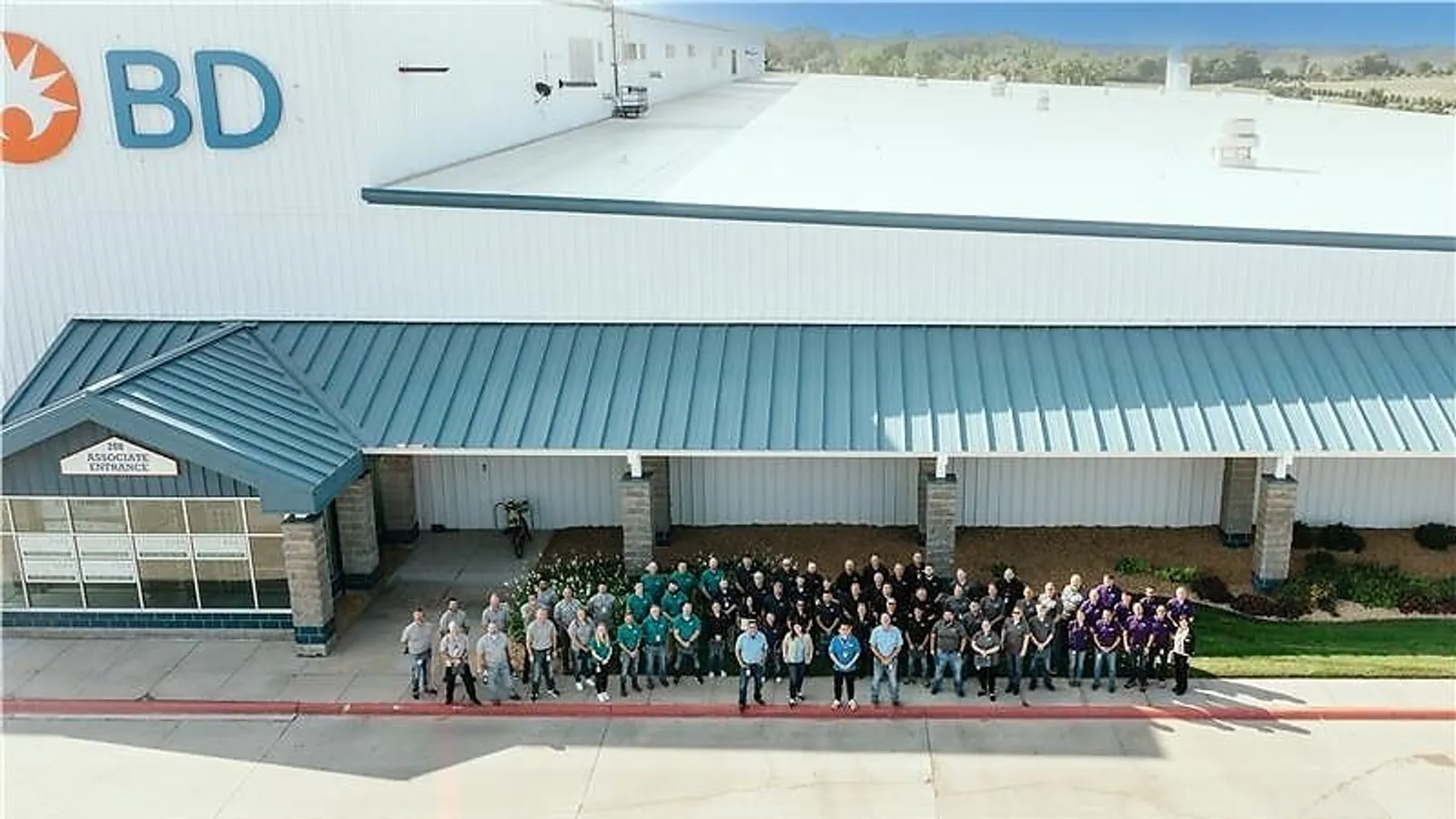
Becton, Dickinson and Company, commonly known as BD, has announced a landmark strategic agreement with the Trump administration to significantly expand its domestic manufacturing capabilities. Under the terms of the deal, the global medical technology leader will invest $3 billion into its United States operations to increase the production of essential medical consumables. In exchange for this massive capital infusion into the American industrial base, the federal government has signaled it will provide BD with relief from future tariffs that are expected to be levied against the broader medical device industry.
This partnership represents a pivotal shift in the relationship between the federal government and the healthcare manufacturing sector. It marks a departure from traditional trade friction, moving toward a "quid pro quo" model where domestic investment is used as a lever to bypass protectionist trade barriers. BD, which identifies as the nation’s largest manufacturer of essential medical consumables, stated that the move is designed to ensure a more resilient healthcare infrastructure while insulating the company from the volatility of international trade policy.
A Massive Capital Infusion into the American Industrial Heartland
The $3 billion investment is one of the largest single commitments to domestic medical manufacturing in recent history. BD plans to utilize these funds to modernize and expand its "strategic production sites" across the country. The primary objective is to increase the company’s annual U.S. output by approximately 5 billion essential medical consumables. These items include a wide array of high-volume products such as syringes, needles, catheters, and various fluid delivery systems that are fundamental to daily hospital operations and patient care.
By scaling up these facilities, BD expects to transition its supply chain so that approximately 80% of its essential medical technology provided to the U.S. market is manufactured domestically. Currently, like many medtech giants, BD relies on a global network of factories, many of which are located in regions that could be subject to aggressive new tariffs. By moving the "center of gravity" for its production back to the United States, the company is effectively de-risking its operations against geopolitical instability and shipping disruptions.
The Geography of the Expansion
The expansion will touch several key states, revitalizing industrial corridors that have long been the backbone of BD’s American presence. The company’s U.S. manufacturing network is geographically diverse, and the new investment will be distributed across several critical nodes:
- Nebraska: The facilities in Columbus and Broken Bow are central to BD’s syringe and needle production. These sites are expected to see significant upgrades in automation and high-speed manufacturing technology.
- Connecticut: The Canaan plant, which has historically been a major producer of plastic medical components, will receive capacity enhancements.
- Puerto Rico: The Añasco facility remains a vital part of the U.S. healthcare ecosystem, particularly for specialized medical devices.
- Texas and Utah: Sites in El Paso and Sandy will likely see expansions related to infusion therapy and vascular access products.
- The Southeast: Facilities in Covington, Georgia, and Sumter, South Carolina, will be bolstered to support the increased demand for diagnostic and specimen collection tools.
This distributed manufacturing model is intended to provide redundancy. By having multiple high-capacity sites across different time zones and power grids, BD aims to ensure that a localized disaster—such as a hurricane in the Southeast or a blizzard in the Midwest—does not result in a national shortage of critical medical supplies.
The Strategic Significance of American-Made Steel
One of the most notable components of the agreement is BD’s commitment to sourcing. The company has pledged that all needles manufactured for use in the United States will be produced using American-made steel. This is a significant win for the domestic steel industry, which has faced stiff competition from lower-cost imports for decades.
Medical-grade steel requires high precision and strict adherence to purity standards. By mandating the use of U.S. steel, the agreement creates a direct link between the success of the American medtech sector and the domestic metals industry. This "vertical" approach to domestic sourcing is a core tenet of the current administration’s economic policy, which seeks to rebuild entire supply chains from raw materials to finished products within the borders of the United States.
Navigating the Section 232 Inquiry
The backdrop for this deal is a high-stakes regulatory environment. In September 2025, the Trump administration initiated a Section 232 inquiry into the medical technology sector. Section 232 of the Trade Expansion Act of 1962 allows the President to impose tariffs or quotas on imports if the Department of Commerce finds that those imports threaten to impair national security.
The administration’s argument is that a reliance on foreign-made medical supplies—particularly from adversarial nations or volatile regions—constitutes a national security vulnerability. This lesson was underscored during the global supply chain collapses of the early 2020s, where shortages of personal protective equipment (PPE) and basic medical disposables hampered the U.S. healthcare response.
While no specific tariffs on medical devices have been finalized as of late 2025, the threat has loomed large over the industry. By reaching this $3 billion agreement, BD has effectively secured a "first-mover advantage." While other medtech companies may face 10%, 25%, or even higher tariffs on components or finished goods imported from overseas, BD’s agreement provides a roadmap for exemption.
Official Responses and Corporate Strategy
BD Chairman and CEO Tom Polen emphasized that the company’s goals align with the national interest. “The administration recognizes the importance of investing in a stronger, more secure healthcare supply chain, and BD is uniquely positioned to help bring that vision to life through our scale, innovation expertise and longstanding U.S. manufacturing footprint,” Polen said in a formal statement.
Polen’s strategy appears to be one of proactive cooperation rather than reactive litigation. By embracing the administration’s "America First" manufacturing goals, BD is positioning itself as a "national champion" in the medtech space. This status could lead to further government contracts, preferential procurement policies from federal healthcare agencies like the Veterans Affairs (VA) system, and a more stable regulatory environment.

However, the company remains cautious regarding the immediate financial reporting of this deal. Because the final Section 232 tariff rates and the specific list of affected products have not been set in stone, BD has not yet quantified the exact financial impact on its earnings guidance. The company stated it would provide detailed updates to investors once the federal government finalizes the tariff structures.
Broader Implications for the Medtech Industry
The BD-White House agreement is likely to send shockwaves through the medical device industry. Competitors such as Medtronic, Abbott Laboratories, and Baxter International will now face intense pressure to match BD’s domestic investment levels or risk being disadvantaged by the upcoming tariff regime.
Industry analysts suggest this could trigger a wave of "onshoring" across the sector. For years, the medtech industry has chased lower labor costs in Asia and Latin America. However, the rising costs of logistics, coupled with the political risk of tariffs, are shifting the total cost of ownership (TCO) calculations. If a 25% tariff is applied to imported syringes, a domestic factory—even one with higher labor costs—becomes economically viable, especially when bolstered by high-level automation.
Furthermore, this deal highlights the "essential" nature of medical consumables. While high-tech MRI machines and robotic surgical systems often get the headlines, the healthcare system cannot function without the "low-tech" essentials: the billions of needles, tubes, and bags that BD produces. By securing the supply of these items, the government is addressing a fundamental weak point in national preparedness.
Timeline of Recent Developments
- Early 2024: BD begins internal review of supply chain vulnerabilities amid rising geopolitical tensions.
- September 2025: The Trump administration officially opens the Section 232 investigation into the medical technology sector, citing national security concerns.
- Late 2025: BD enters high-level negotiations with the Department of Commerce and the White House.
- Current Announcement: BD commits to the $3 billion expansion and 80% domestic production target.
- Looking Ahead: Finalization of Section 232 tariffs is expected in the coming months, at which point BD will receive its formal exemptions.
Conclusion
The agreement between BD and the Trump administration represents a landmark moment in industrial policy. It serves as a blueprint for how large multinational corporations might navigate an era of increased protectionism by trading capital investment for market access and regulatory relief. For the American public, the deal promises a more stable supply of the medical tools necessary for everyday health, while for the residents of Nebraska, Connecticut, and South Carolina, it promises the continued vitality of the local manufacturing economy. As the Section 232 investigation nears its conclusion, the rest of the medtech world will be watching closely to see if they can—or must—follow in BD’s footsteps.
