

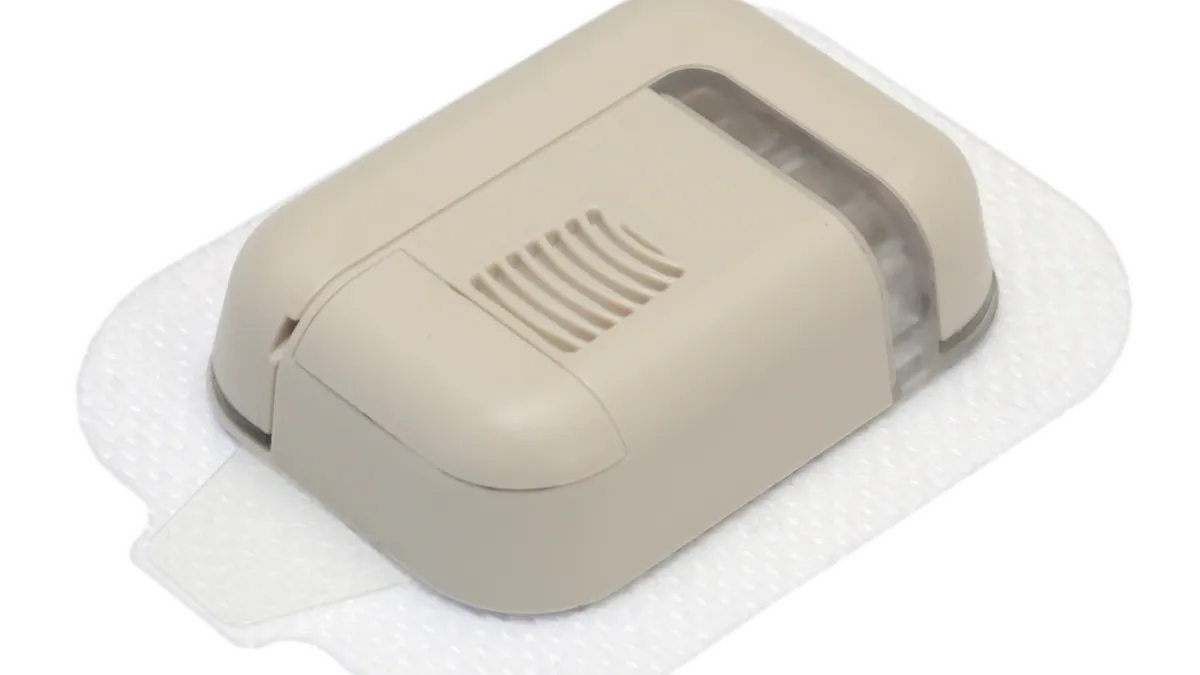
Beta Bionics, a medical technology leader in the field of automated insulin delivery (AID) systems, announced on Monday that it has received 510(k) clearance from the U.S. Food and Drug Administration (FDA) for its first tubeless insulin delivery device, the Mint patch pump. This regulatory milestone marks a significant shift in the competitive landscape of diabetes management, positioning Beta Bionics as the first direct competitor to Insulet’s long-standing dominance in the patch pump market. The company plans to initiate a full-scale commercial rollout in the United States during the first quarter of 2027, focusing exclusively on the pharmacy distribution channel to streamline patient access.
The authorization of the Mint patch pump comes as the medical device industry experiences a rapid transition away from traditional tubed insulin pumps toward more discreet, wearable technologies. For years, Insulet’s Omnipod system has remained the primary option for patients seeking a tubeless experience. The entry of Beta Bionics into this sub-sector is expected to accelerate innovation and provide patients with more choices regarding form factor and automated dosing logic.
Technical Specifications and Design Innovations
The Mint patch pump is designed to be a fully disposable, tubeless wearable that adheres directly to the skin. According to Beta Bionics, the device is significantly smaller than the current industry-leading patch pump, a factor that is often a primary consideration for patients when selecting a delivery system. By eliminating the infusion set tubing that characterizes traditional pumps, the Mint system reduces the risk of "snagging" on clothing or furniture and offers a more discreet profile for users who prefer to keep their condition private.
A critical component of the Mint system is its integration with Beta Bionics’ advanced dosing logic. Alongside the pump clearance, the company has submitted a new dosing algorithm, dubbed "3D Intelligence," for FDA 510(k) clearance. This algorithm is designed to offer three distinct settings tailored to individual insulin requirements:
- Legacy iLet Integration: This setting allows users to utilize the algorithm currently found in the iLet Bionic Pancreas, which is known for its "weight-only" setup that eliminates the need for users to input complex carb-to-insulin ratios or basal rates.
- Real-World Optimization: An updated version of the algorithm that incorporates data and learnings from Beta Bionics’ extensive real-world experience with its tubed iLet device.
- Conservative Correction: A new setting designed to provide a more measured, gradual response when correcting high glucose levels, catering to patients who are more sensitive to insulin or who prefer a less aggressive automated response.
The Mint patch pump will maintain compatibility with major continuous glucose monitors (CGMs), including those manufactured by Abbott and Dexcom. This interoperability is essential for the creation of a "closed-loop" system, where the CGM data informs the pump’s insulin delivery in real-time.
Strategic Shift to the Pharmacy Channel
Beta Bionics has confirmed that the Mint system will be available exclusively through the pharmacy channel. This strategic decision aligns with broader trends in the medtech industry, where manufacturers are moving away from the traditional Durable Medical Equipment (DME) model. The DME model often involves extensive paperwork, longer wait times for patient approval, and higher upfront costs for clinics.
In contrast, the pharmacy channel allows for a more standardized "pay-as-you-go" model, often resulting in lower out-of-pocket costs for patients and a more efficient procurement process for healthcare providers. By targeting this channel, Beta Bionics aims to lower the barrier to entry for new users and compete directly with Insulet’s established pharmacy presence. To support this launch, the company has set an ambitious production target, expecting to manufacture at least 1.5 million disposable units in 2027.
Financial Outlook and Market Impact
While the FDA clearance is a long-term positive for the company, Beta Bionics has adjusted its short-term financial guidance. The company lowered its revenue forecast for 2026 by $10 million, now projecting a range of $121 million to $126 million for the year. This adjustment is attributed to a "waiting period" effect, where potential customers for the currently available tubed iLet device may choose to delay their purchase until the Mint patch pump becomes available in 2027.
Financial analysts, including those from investment firms such as Kratky, have noted that the early clearance is a significant win for Beta Bionics. The authorization came well ahead of the company’s internal projections, which had previously targeted a late 2027 launch. This accelerated timeline provides the company with more time to finalize manufacturing scale-up and marketing strategies.

"The availability of a commercial patch pump represents a major product enhancement," noted one industry analyst. "The form factor remains a key consideration for patients when deciding between pumps. By offering both a tubed and a tubeless option, Beta Bionics can now address a much larger percentage of the insulin-dependent population."
Expanding the CGM Ecosystem
The integration of CGM technology is the cornerstone of modern automated insulin delivery. Beta Bionics continues to expand its ecosystem through partnerships with leading sensor manufacturers. While the Mint pump will work with Dexcom and Abbott sensors, the company is also looking toward long-term implantable options.
Senseonics, the developer of the Eversense CGM—the only long-term implantable sensor that can be worn for up to a year—recently announced a partnership to integrate its technology with the current tubed iLet Bionic Pancreas. While Beta Bionics has not yet confirmed if this integration will extend to the Mint patch pump, the collaboration suggests a future where users could pair a long-term sensor with a tubeless pump, further reducing the daily burden of diabetes management.
Historical Context: From the iLet to Mint
The journey to the Mint patch pump began with the vision of Beta Bionics’ founder, Dr. Ed Damiano, who sought to create a "bionic pancreas" to simplify the life of his son, who was diagnosed with Type 1 diabetes. The original iLet Bionic Pancreas was revolutionary because it removed the need for patients to count carbohydrates or manage basal rates—tasks that are often the source of significant stress and error.
The iLet system required only the user’s body weight to begin dosing, using its internal algorithm to learn the user’s needs over time. The Mint patch pump is the next evolution of this philosophy, combining the simplicity of the iLet algorithm with the physical freedom of a tubeless design. This transition is seen as a necessary step for Beta Bionics to maintain its growth trajectory in an increasingly competitive market.

The Competitive Landscape in 2027
As Beta Bionics prepares for its 2027 launch, it enters a market that is more crowded than ever. Insulet remains the incumbent leader with its Omnipod 5, which also features pharmacy-channel availability and CGM integration. Meanwhile, Tandem Diabetes Care has recently introduced its "Mobi" pump, which, while technically tubed, is small enough to be worn as a wearable. Medtronic also remains a major player with its 780G system, though it has traditionally focused on tubed delivery.
The entry of Mint is expected to pressure competitors to further miniaturize their hardware and refine their algorithms. For Beta Bionics, the challenge will be scaling its manufacturing to meet the 1.5-million-unit goal while ensuring the "3D Intelligence" algorithm delivers on its promise of superior glycemic control with minimal user input.
Broader Implications for Diabetes Care
The clearance of the Mint patch pump is more than just a win for one company; it reflects a broader shift toward "discreet technology" in chronic disease management. Patients with Type 1 diabetes often face "diabetes burnout," a state of exhaustion caused by the constant mental and physical demands of the condition. Devices like Mint, which require less user interaction and offer a more comfortable physical experience, are designed specifically to mitigate this burnout.
Furthermore, the move toward pharmacy-based distribution for insulin pumps could signal a permanent change in how medical devices are covered and accessed in the United States. If Beta Bionics is successful in its rollout, it may encourage other manufacturers to abandon the DME model entirely, leading to a more consumer-friendly marketplace for medical technology.
As the first quarter of 2027 approaches, the industry will be watching Beta Bionics closely to see if the Mint patch pump can successfully challenge the status quo and provide a new standard of care for the millions of people living with insulin-dependent diabetes. With FDA clearance now in hand, the company’s focus shifts from regulatory hurdles to the logistical and commercial challenges of a national launch.
