

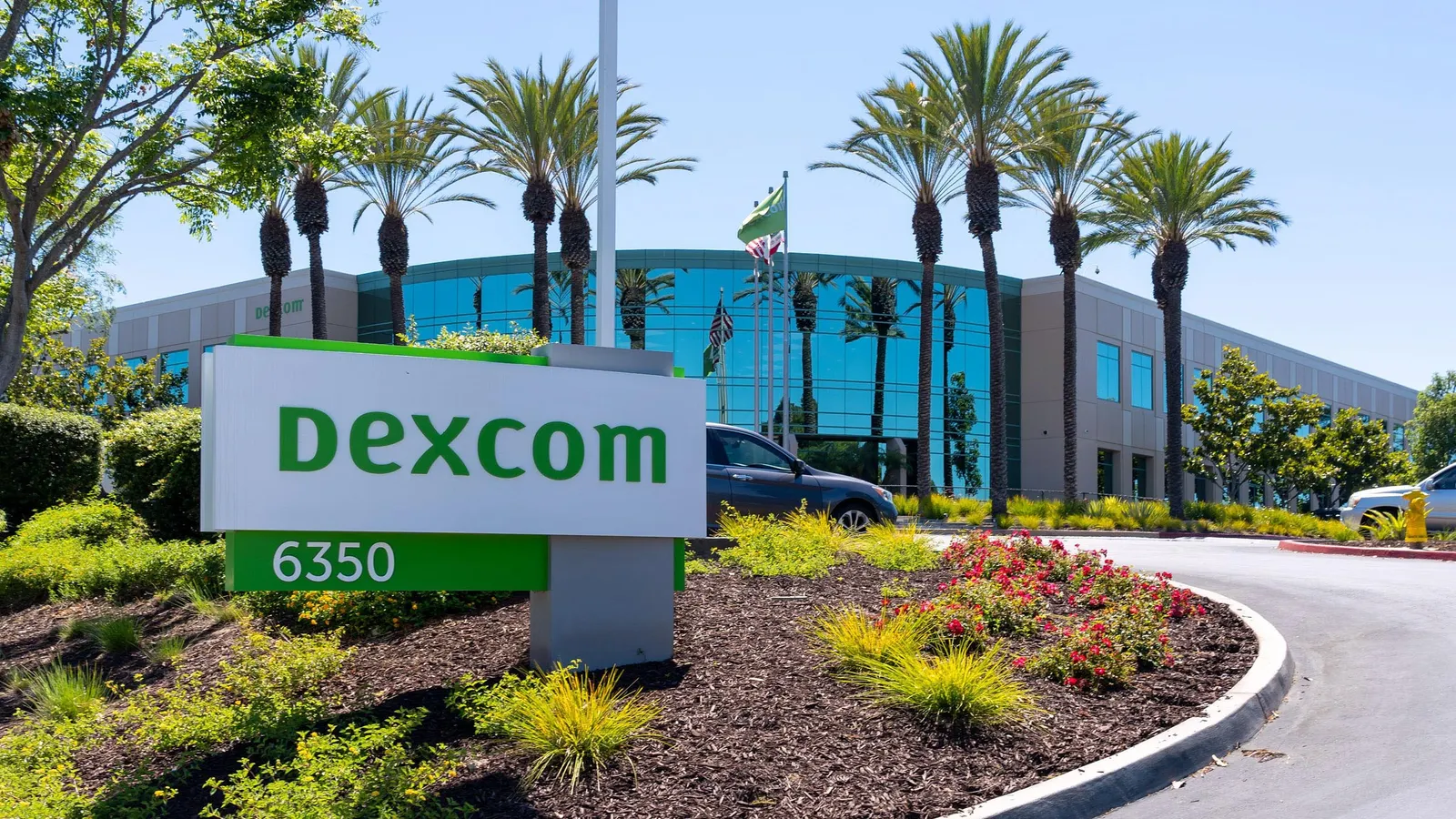
In a strategic move designed to streamline leadership and accelerate international growth, Dexcom Inc. has officially appointed Jereme Sylvain as its new Chief Operating Officer. Sylvain, who has served as the company’s Chief Financial Officer since 2021, will retain his responsibilities as the head of finance while taking on this expanded operational mandate. The appointment, announced on Monday, represents a significant consolidation of power within the executive suite of the San Diego-based diabetes technology giant and signals a period of intensified focus on operational discipline and global scaling.
The promotion of Sylvain fills a leadership vacuum created by the internal ascent of Jake Leach, who transitioned from his role as President and Chief Operating Officer to become Dexcom’s Chief Executive Officer at the start of 2026. By placing Sylvain in the COO role, Dexcom continues a long-standing corporate tradition of utilizing the position as a central hub for organizational strategy and a proven training ground for top-tier leadership.
A Proven Leadership Pipeline
The transition of Jereme Sylvain into the COO role is consistent with a leadership architecture that has defined Dexcom for over a decade. The company has historically viewed the Chief Operating Officer position as the primary architect of its global strategy, often serving as a direct precursor to the CEO office.
The lineage of this leadership model began prominently with Kevin Sayer, who was named COO in 2013 before being promoted to President and CEO in 2015. Sayer’s tenure was marked by the explosive growth of the G5 and G6 Continuous Glucose Monitoring (CGM) systems, which transformed Dexcom from a niche medical device firm into a global powerhouse in chronic disease management.
Following Sayer, Jake Leach—a veteran who joined the company in 2004 and was instrumental in the technical development of Dexcom’s sensor technology—assumed the COO role in 2022. Leach’s promotion to CEO at the beginning of 2026 underscored the company’s commitment to technical excellence and operational continuity. By appointing Sylvain to succeed him as COO, Leach is positioning a trusted financial strategist to oversee the complex logistics of a company that is no longer just a manufacturer, but a global data and health technology provider.
Jereme Sylvain’s Rise and the Dual Mandate
Jereme Sylvain joined Dexcom in 2018, initially serving in senior financial leadership roles before being elevated to CFO in 2021. During his tenure as CFO, Sylvain has been credited with maintaining a rigorous focus on margins and capital allocation during a period of rapid expansion and macroeconomic volatility.
The decision to have Sylvain serve as both COO and CFO is a notable departure from traditional corporate structures, where these roles are often separated to provide checks and balances between operational spending and financial reporting. However, in the fast-moving medical technology sector, Dexcom’s board appears to be prioritizing "alignment, speed, and accountability"—three pillars that Leach highlighted in his statement regarding the promotion.
"His deep understanding of our business, operational discipline, and customer focus make him the right leader for this expanded role," Leach stated. "I am confident that Jereme will help us scale more effectively as we advance our goal to empower millions more people to take control of health."
As COO, Sylvain will now oversee the entirety of Dexcom’s global operations. This includes manufacturing, supply chain management, and the integration of cross-functional teams that span R&D, commercialization, and regulatory affairs. His primary objective is to translate Dexcom’s financial objectives into operational realities, ensuring that the company’s manufacturing capacity can keep pace with the surging global demand for CGM technology.
Financial Momentum and the International Growth Engine
The timing of Sylvain’s promotion coincides with a pivotal moment in Dexcom’s financial trajectory. According to the company’s Second Quarter 2026 financial results, international sales have become the primary engine of growth. While the U.S. remains Dexcom’s largest market, international revenues grew by 19% in the second quarter of 2026, significantly outpacing domestic expansion.
This acceleration in global markets is a sharp contrast to the same period in 2025, suggesting that Dexcom’s efforts to penetrate European, Asian, and Canadian markets are yielding substantial returns. For Sylvain, the challenge will be to manage the "multiyear tailwind" he recently described during an industry event hosted by Wells Fargo.
Central to this international strategy is the Dexcom G7 15-day glucose sensor. The shift from a 10-day wear cycle to a 15-day wear cycle is a critical component of Dexcom’s competitive strategy against rivals such as Abbott and Medtronic. By extending the life of the sensor, Dexcom can offer a lower cost-per-day to payers and consumers, which is essential for gaining traction in price-sensitive international markets and securing broader reimbursement coverage.
The G7 15-day sensor received FDA clearance in the United States in 2025 and secured Health Canada authorization in July 2026. Sylvain has indicated that the company is aggressively pursuing regulatory approvals in several other key markets. The operational complexity of transitioning manufacturing lines to the 15-day format while maintaining the supply of existing products will fall directly under Sylvain’s new purview.
Strategic Implications for the CGM Market
The medical technology landscape for diabetes is currently undergoing a period of intense disruption. The rise of GLP-1 receptor agonists—a class of drugs used for weight loss and type 2 diabetes management—has sparked debate regarding the future demand for CGM devices. However, Dexcom’s leadership, including Sylvain and Leach, has consistently maintained that CGMs and GLP-1s are complementary rather than competitive.
Data suggested by Dexcom indicates that patients on GLP-1 therapy often see better outcomes when using a CGM to track their metabolic response to the medication. This has opened a new market segment for Dexcom: non-insulin-using type 2 diabetics. To capture this demographic, Dexcom recently launched Stelo, its first over-the-counter (OTC) glucose biosensor designed specifically for people with type 2 diabetes who do not use insulin.

Sylvain’s role as COO will be vital in managing the distinct supply chains for the G-series (prescription) and Stelo (OTC) product lines. The ability to scale manufacturing for a mass-market consumer product like Stelo requires a different operational approach than the high-touch, clinical requirements of the G7 system.
Expanding the Global Footprint
Beyond product innovation, Dexcom is heavily investing in its physical infrastructure to support Sylvain’s operational goals. The company has been expanding its manufacturing presence in Malaysia and Ireland to provide more localized support for the EMEA (Europe, Middle East, and Africa) and APAC (Asia-Pacific) regions.
These facilities are designed to mitigate the risks associated with centralized manufacturing and to reduce shipping costs and tariffs. As COO, Sylvain will be responsible for ensuring these global sites meet Dexcom’s rigorous quality standards while achieving the throughput necessary to meet the 19% and higher growth rates seen in international markets.
Industry analysts have noted that Sylvain’s promotion likely signals a "maturation phase" for Dexcom. Having a CFO-trained COO suggests that the company is moving away from the "growth at all costs" mentality of its early years and toward a model of "profitable, sustainable scaling." This is particularly important as the company faces increased pricing pressure from government health systems and private insurers who are demanding more clinical evidence and better cost-efficiency.
Looking Ahead: 2027 and Beyond
As Jereme Sylvain steps into his dual role, the immediate focus will be on the execution of the 2026 year-end targets and the preparation for the 2027 fiscal year. The market will be watching closely to see if Sylvain can maintain Dexcom’s industry-leading gross margins while navigating the capital expenditures required for global expansion.
The "multiyear tailwind" Sylvain referenced is not guaranteed. It requires the seamless integration of hardware, software (via the Dexcom app ecosystem), and data analytics. Dexcom is increasingly positioning itself as a data company, using the billions of glucose data points collected from its users to provide personalized health insights. This digital transformation adds another layer of responsibility to the COO role, requiring oversight of cybersecurity, data privacy, and cloud infrastructure.
The appointment of Jereme Sylvain is a clear message to investors and competitors alike: Dexcom is doubling down on operational efficiency as the foundation for its next decade of growth. With a leadership team led by CEO Jake Leach and COO/CFO Jereme Sylvain, Dexcom is betting that a blend of deep technical expertise and rigorous financial discipline will be the winning formula in the increasingly crowded and complex global diabetes technology market.
As the company continues to advance its mission to empower millions more people to take control of their health, the success of this dual-leadership model will be measured not just in revenue growth, but in the company’s ability to turn technological innovation into a sustainable, global standard of care.
