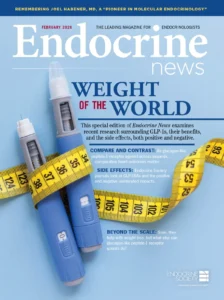







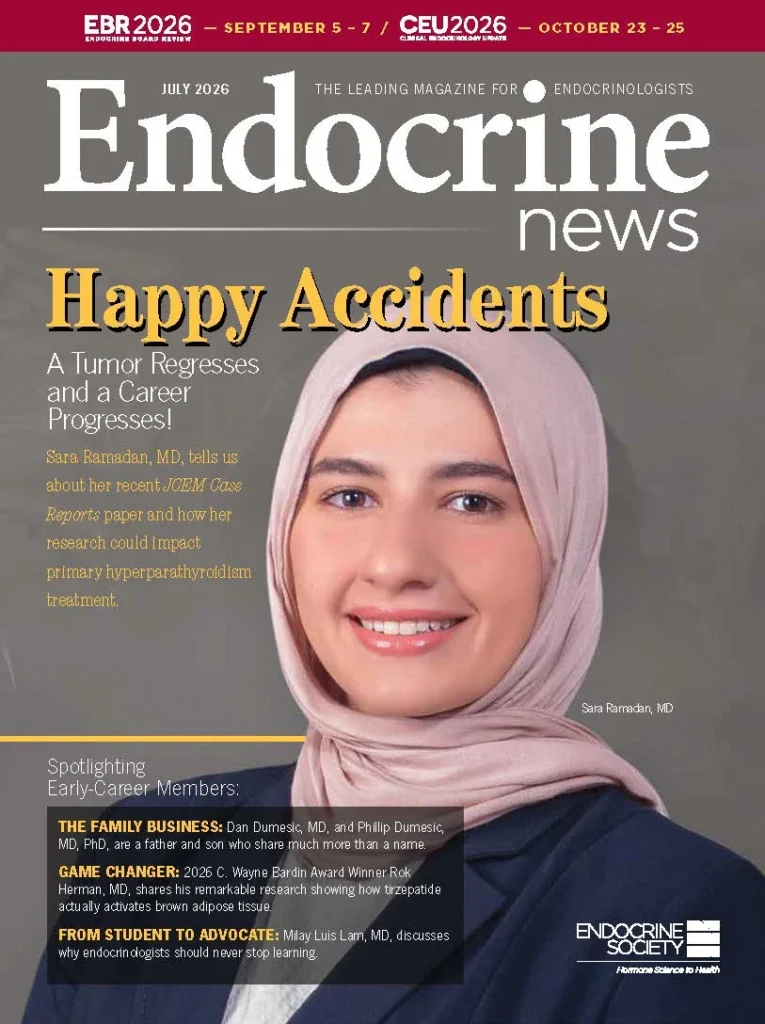
The July edition of Endocrine News marks the return of its highly anticipated Early-Career issue, a dedicated publication that shines a spotlight on the emerging voices and transformative research within the global endocrinology community. As the field of hormone research and clinical practice undergoes rapid evolution—driven by breakthroughs in metabolic medicine, genetic sequencing, and patient-centered advocacy—this annual tradition serves as a critical barometer for the future of the discipline. The issue arrives at a pivotal moment, bridging the gap between the foundational work of established experts and the innovative methodologies of the next generation of physicians and scientists. By focusing on the intersection of familial mentorship, groundbreaking obesity treatments, and the humanistic side of medicine, the July issue underscores a period of profound transition within the Endocrine Society.
A Generational Shift in Metabolic Research: The Dumesic Legacy
One of the cornerstone features of this year’s issue is the exploration of a unique familial connection within the field, as highlighted in Kelly Horvath’s "The Family Business: A Father and Son Who Share More than a Name." This profile documents the professional journey of Phillip Dumesic, MD, PhD, and his father, Dan Dumesic, MD. While the elder Dumesic is a recognized authority on Polycystic Ovary Syndrome (PCOS)—a condition recently being reframed in some academic circles as Polycystic Metabolic Ovarian Syndrome (PMOS)—the younger Dumesic has established his own niche at the University of California – San Francisco (UCSF).
The convergence of their work at the level of the adipocyte, or fat cell, represents a significant trend in modern endocrinology: the move toward understanding the molecular drivers of systemic metabolism. Phillip Dumesic’s research into gene expression and stem cell differentiation provides the microscopic evidence needed to support the clinical observations made by his father at UCLA. According to Dan Dumesic, the common denominator in their work involves the basic science driving fat metabolism and the differentiation of stem cells into muscle versus fat. This research is particularly relevant as the global medical community grapples with rising rates of sarcopenia—the age-related loss of muscle mass—and the complex interplay between obesity and muscle physiology. The Dumesic narrative illustrates a broader industry trend where legacy knowledge in reproductive endocrinology is being synthesized with cutting-edge molecular tools to address metabolic health across the lifespan.
Redefining Obesity Treatment: Tirzepatide and the Activation of Brown Fat
The Early-Career issue also provides an in-depth look at the work of Rok Herman, MD, the recipient of this year’s prestigious Bardin Award. In an interview with Senior Editor Derek Bagley titled "Game Changer," Herman discusses his research regarding tirzepatide, a dual glucose-dependent insulinotropic polypeptide (GIP) and glucagon-like peptide-1 (GLP-1) receptor agonist. While tirzepatide has already gained international acclaim for its efficacy in weight loss and glycemic control, Herman’s ENDO 2026 abstract introduces a revolutionary finding: the medication’s ability to activate brown adipose tissue (BAT).
Brown fat, unlike white adipose tissue which stores energy, is thermogenic, meaning it burns calories to produce heat. Herman’s findings suggest that tirzepatide does not merely suppress appetite through central nervous system pathways but also modulates energy expenditure at the tissue level. This "watershed moment" in obesity research shifts the narrative from simple caloric restriction to active metabolic enhancement. Data from recent clinical trials, such as the SURMOUNT program, have already demonstrated tirzepatide’s superior weight loss outcomes compared to single-agonist medications. However, Herman’s focus on thermogenic activation opens a plausible path toward future therapies that combine appetite regulation with the pharmacological "rekindling" of the body’s internal furnace. This research is expected to be a major talking point at the upcoming ENDO 2026 conference in Chicago, as clinicians look for ways to optimize long-term weight maintenance in patients with chronic obesity.
Clinical Anomalies and the Path to Remission in Hyperparathyroidism
The July issue further explores the clinical side of the field through the experiences of Sara Ramadan, MD. Her study, "Unanticipated remission of primary hyperparathyroidism following cinacalcet," published in JCEM Case Reports, challenges established protocols for Primary Hyperparathyroidism (PHPT). PHPT is characterized by the overactivity of the parathyroid glands, leading to elevated calcium levels, which can cause bone loss, kidney stones, and fatigue. While surgical removal of the offending gland is the standard of care, Ramadan’s research into the use of cinacalcet—a calcimimetic that lowers parathyroid hormone levels—showed an unexpected long-term remission in a patient case.
Beyond the clinical data, Ramadan’s story emphasizes the importance of professional networks like the Endocrine Society in fostering early-career growth. She notes that joining the society during her residency allowed her to move from "finding her voice" to defining a specific clinical niche. This highlights a critical component of the endocrine community: the role of mentorship in navigating the transition from a general learner to a specialized advocate. Ramadan’s work suggests that even "happy accidents" in clinical practice, when documented and analyzed through the lens of a supportive professional community, can lead to significant shifts in how chronic conditions are managed.

The Human Element: Addressing Dehumanization in Modern Medicine
A significant portion of the July issue is dedicated to the philosophical and ethical dimensions of endocrinology, as voiced by Milay Luis Lam, MD. Inspired by the EXCEL meeting held at the Endocrine Society offices in Washington, D.C., Lam’s piece, "The Human Side of Endocrinology: From Learner to Advocate," addresses the growing concern of "quiet dehumanization" in the patient-physician relationship.
In an era dominated by electronic health records, diagnostic codes, and systemic pressures to increase patient volume, Lam argues that both physicians and patients can become detached. Patients may view doctors as "less human" or purely clinical entities, while physicians may inadvertently reduce complex human lives to a series of laboratory values and diagnoses. This perspective is particularly poignant in endocrinology, a field where many conditions—such as diabetes, thyroid disorders, and hormonal imbalances—require lifelong management and a deep level of patient-provider trust. The EXCEL program, which focuses on leadership and advocacy for early-career members, provides a platform for these doctors to reclaim the "human side" of medicine, ensuring that the next generation of specialists is as skilled in empathy and advocacy as they are in molecular biology.
Supporting Data and Industry Context: The Growth of Endocrinology
The profiles featured in the Early-Career issue reflect broader statistical trends within the medical field. According to recent data from the Association of American Medical Colleges (AAMC), endocrinology remains a vital subspecialty, yet it faces a projected shortage of providers as the prevalence of metabolic diseases continues to rise. The focus on early-career members is a strategic response by the Endocrine Society to bolster the "pipeline" of new specialists.
The emphasis on tirzepatide and obesity research also aligns with the massive market shift in the pharmaceutical industry. The market for GLP-1 and dual-agonist medications is projected to reach over $100 billion by 2030. Research like that of Rok Herman is essential for ensuring that these medications are used safely and that their mechanisms are fully understood beyond their commercial appeal. Furthermore, the focus on PCOS and PMOS reflects an increasing awareness of women’s health issues, which have historically been underfunded and under-researched. By highlighting the Dumesics’ work, Endocrine News is signaling a commitment to addressing these long-standing gaps in medical knowledge.
Looking Ahead: ENDO 2026 and the Future of the Society
The July issue serves as a precursor to the grand gathering of the global endocrine community at ENDO 2026, scheduled for June 13–16 in Chicago, Illinois. This upcoming conference is expected to draw thousands of researchers, clinicians, and educators to share findings that will set the agenda for the following decade. The early-career members featured this month represent the vanguard of this movement.
The Endocrine Society’s transition to a more digital-centric and interactive presence is also a key theme of the issue. Editor Mark A. Newman’s invitation for feedback on the Society’s new website reflects a broader effort to modernize how scientific information is disseminated. As the field becomes more complex, the need for a centralized, accessible, and community-driven platform for research sharing becomes paramount.
Analysis of Implications: A Multi-Disciplinary Future
The collective narratives in the July Early-Career issue suggest that the future of endocrinology will be defined by three primary pillars: molecular precision, clinical flexibility, and humanistic advocacy. The work of Phillip Dumesic and Rok Herman points toward a future where treatments are tailored to the specific genetic and tissue-level responses of the individual. Sara Ramadan’s findings encourage a more flexible approach to traditional treatment paradigms, while Milay Luis Lam’s advocacy ensures that the patient remains at the center of these technological advancements.
As these early-career professionals continue to make strides, the implications for public health are significant. Enhanced understanding of brown fat activation could lead to more effective treatments for the global obesity epidemic, while a more nuanced approach to PCOS and PHPT could improve the quality of life for millions of patients. The Endocrine Society’s investment in these young professionals is not just a celebration of individual achievement but a strategic investment in the health of future generations. Through mentorship, rigorous research, and a commitment to the "human side" of the profession, these rising stars are poised to transform endocrinology from a field of diagnoses into a field of holistic, life-changing interventions.