

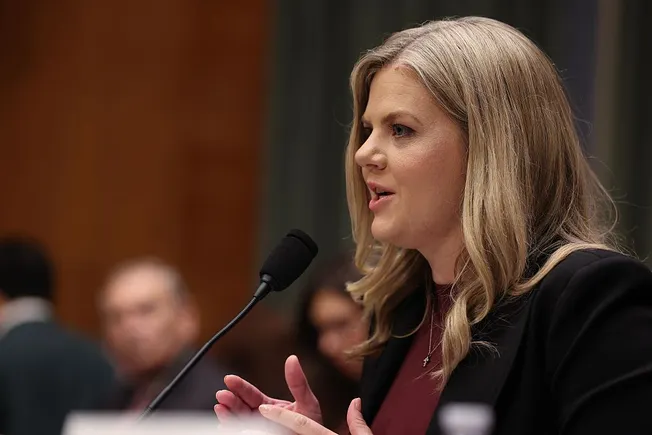
Dr. Heidi Overton, President Donald Trump’s nominee to lead the Food and Drug Administration (FDA), appeared before the Senate Health, Education, Labor, and Pensions (HELP) Committee on Thursday, signaling a commitment to scientific integrity and the rule of law. In a testimony that balanced her history as a White House policy adviser with the rigorous demands of the nation’s primary public health regulator, Overton addressed concerns regarding political interference in vaccine approvals and reproductive healthcare. Her appearance comes at a critical juncture for the agency, which has faced significant internal upheaval and shifting leadership over the past 18 months.
During the hearing, Overton vowed to "follow the law" regarding decisions on vaccines and the abortion drug mifepristone, even if pressured by the executive branch to deviate from established scientific protocols. Beyond navigating the immediate political tensions of the administration, she outlined a vision for the FDA that emphasizes American competitiveness in the global biotechnology sector, particularly in response to the rapid expansion of China’s pharmaceutical industry. If confirmed, Overton would become the permanent successor to a string of acting leaders and a previous commissioner whose short tenure was marked by controversy and staff attrition.
A Turbulent Period for the FDA
The nomination of Dr. Overton is seen by many industry analysts as an attempt to stabilize an agency that has been in a state of flux since the beginning of the current administration. The FDA’s recent history has been characterized by a lack of permanent leadership and significant internal friction. The agency was first led by Martin Makary, who resigned in May after a tenure defined by mass layoffs and the departure of several senior career scientists. Makary’s leadership was often criticized by both lawmakers and internal staff for what they described as politically influenced decision-making and the backtracking of previous agreements with pharmaceutical manufacturers.
Following Makary’s resignation, Kyle Diamantas took over as acting commissioner, serving as a placeholder while the White House searched for a permanent replacement. During this interim period, the FDA struggled to maintain its reputation for independence. The agency became a focal point for debates over COVID-19 booster frameworks and childhood immunization schedules, often finding itself at odds with other health entities like the Centers for Disease Control and Prevention (CDC).
The instability has had tangible effects on the pharmaceutical industry. Drugmakers have expressed concerns over the predictability of the regulatory environment, noting that shifting goalposts for drug approvals and clinical trial requirements have created a climate of uncertainty. Overton’s primary challenge, should she be confirmed, will be to restore confidence among both the scientific community and the private sector.
Addressing Vaccine Skepticism and Public Health
One of the most contentious moments of the hearing involved Overton’s stance on the Measles, Mumps, and Rubella (MMR) vaccine. The issue gained prominence following an August executive order from the White House aimed at restructuring the childhood immunization schedule. During the signing of that order, President Trump referred to the MMR vaccine as "potentially quite lethal," a statement that contradicts decades of clinical data and public health consensus.
Senator Bill Cassidy, R-La., the chair of the HELP Committee, pressed Overton on this specific point. Cassidy noted that Overton had previously praised the executive order as "historic" and was present when the President made his remarks. "Is the MMR vaccine safe and effective?" Cassidy asked directly.
Overton responded in the affirmative, stating that the MMR shot is "safe and effective" and remains the "best tool right now in the public health response to the measles outbreak." She further clarified that all vaccines currently marketed in the United States meet the FDA’s rigorous standards for safety and efficacy. This assertion was significant, as it placed her in alignment with career scientists and in subtle opposition to the more hyperbolic rhetoric used by some members of the administration.
The exchange highlighted the delicate balance Overton must strike. Senator Cassidy expressed skepticism, citing previous experiences with Health and Human Services (HHS) Secretary Robert F. Kennedy Jr., who Cassidy claimed had broken promises to follow scientific evidence in favor of presidential directives. The committee’s 12-11 Republican majority means that Overton cannot afford to lose the support of mainstream Republicans like Cassidy or moderate voices like Senator Lisa Murkowski, R-Alaska.
Reproductive Health and the Future of Mifepristone
The hearing also delved into the future of mifepristone, a drug used in more than half of all abortions in the United States. The FDA has historically authorized the drug for use through ten weeks of pregnancy and allowed it to be prescribed via telehealth and delivered by mail. However, the drug has become a legal and political lightning rod.
Overton’s past writings came under scrutiny during questioning from Senator Murkowski and Democratic members of the committee. While serving at the America First Policy Institute, a conservative think tank, Overton authored an article characterizing the use of mifepristone as "dangerous." When asked if she would move to restrict access to the drug, Overton acknowledged the FDA’s existing determination that the drug is safe and effective under its current Risk Evaluation and Mitigation Strategy (REMS).
However, she stopped short of guaranteeing that the current policies would remain unchanged, noting that she did not want to "prejudge" an ongoing safety review. The FDA launched this review following pressure from anti-abortion advocacy groups and Republican lawmakers. The outcome of this study could lead to new restrictions on how the drug is dispensed, a move that would likely spark significant legal challenges from reproductive rights organizations.
Global Competition and "Operation Trialblazer"
A central pillar of Overton’s testimony was the need for the United States to maintain its lead in biotechnological innovation. She specifically pointed to the "fast ascent" of China’s biotech industry as a primary concern for national security and economic health. In recent years, Chinese firms have seen an explosion in dealmaking, with many China-discovered medicines being licensed by Western pharmaceutical giants.
To counter this, Overton signaled her support for "Operation Trialblazer," an FDA initiative designed to modernize and accelerate the clinical trial process. The program aims to streamline the Investigational New Drug (IND) application process and encourage the use of decentralized clinical trials and real-world evidence.
"If I have the privilege of being confirmed, I will work with the dedicated career professionals to make sure every aspect of clinical trials and drug development is optimized," Overton told the committee. She argued that by reducing regulatory hurdles and embracing technological advancements, the FDA can ensure that the United States remains the premier destination for drug development. This, she claimed, would not only bolster the economy but also bring life-saving cures to patients more rapidly.
Restoring Agency Stability and Professionalism
Despite the political tensions surrounding her nomination, there are signs that the broader Department of Health and Human Services is already moving toward a more traditional leadership structure. Recently, the HHS appointed Michael Davis and Karim Mikhail as permanent directors of the FDA’s two most critical drug offices: the Center for Drug Evaluation and Research (CDER) and the Center for Biologics Evaluation and Research (CBER).
Both Davis and Mikhail are viewed as "traditional" leaders with deep institutional knowledge. Since their appointments to acting roles earlier this year, the FDA has reversed several controversial decisions made during the Makary era, including moves that had previously blocked promising gene therapies and melanoma treatments. Analysts in the biotech sector have praised these appointments as a return to "regulatory normalcy."
Overton’s testimony suggested she intends to empower these career professionals. Brian Abrahams, an analyst at RBC Capital Markets, described the hearing as a "net positive" for the industry. He noted that Overton’s emphasis on regulatory flexibility and her commitment to utilizing advisory committees suggest a leader who is willing to work within the established framework of the agency rather than attempting to dismantle it from the top down.
Chronology of Leadership and Policy Shifts
To understand the stakes of Overton’s confirmation, it is necessary to look at the timeline of the FDA over the last two years:
- Early Tenure: Martin Makary is appointed Commissioner. The agency sees a series of high-profile resignations among senior staff who cite political pressure regarding vaccine approvals.
- May: Martin Makary resigns. Kyle Diamantas is named Acting Commissioner.
- August: The White House issues an executive order regarding the childhood vaccine schedule. Tensions rise between the FDA and the CDC’s vaccine advisory panel, which was restructured by Secretary RFK Jr.
- Late Summer: HHS begins appointing career-oriented staff to acting leadership roles in an effort to stem the tide of departures.
- September: Michael Davis and Karim Mikhail are made permanent directors of CDER and CBER, respectively.
- October: Heidi Overton is officially nominated as FDA Commissioner.
- Current: Confirmation hearings begin in the Senate HELP Committee.
Implications and Future Outlook
The path to confirmation for Dr. Overton remains uncertain. While she performed well in the initial hearing, the political math in the Senate is tight. Her final confirmation may hinge on the timing of the vote. If the vote is delayed until after the upcoming midterm elections, the changing composition of the Senate could either ease or complicate her path.
For the pharmaceutical industry, an Overton-led FDA represents a potential middle ground. On one hand, her background in the Trump administration and at the America First Policy Institute suggests a leaning toward deregulation and "America First" industrial policy. On the other hand, her testimony indicated a respect for the career scientists who form the backbone of the agency’s regulatory power.
If Overton can successfully navigate the "Operation Trialblazer" initiative while maintaining the safety standards that the public expects, she may be able to provide the stability the FDA has lacked for nearly two years. However, the shadow of political influence remains. As Senator Cassidy noted, the ultimate test for any FDA Commissioner in the current political climate is whether they can maintain their promises to the legislature when the White House demands a different course of action.
As the Senate HELP Committee prepares for a final vote, the eyes of the medical and pharmaceutical worlds are on Dr. Overton. Her ability to decouple public health policy from partisan rhetoric will determine not only her success as a leader but also the future trajectory of American medical innovation and public trust in the country’s regulatory institutions.
