

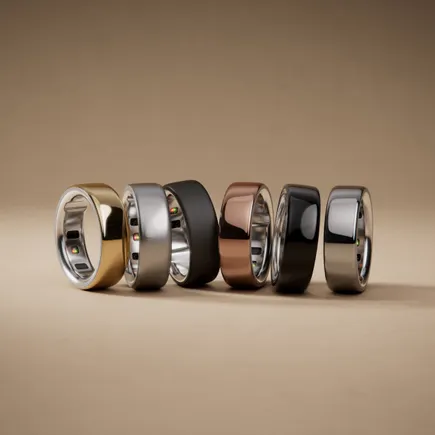
Oura, the prominent health technology company and manufacturer of the industry-leading Oura Ring, announced on Tuesday that it has officially delayed its planned initial public offering (IPO) due to prevailing market uncertainty. The decision marks a significant pivot for the wearable technology unicorn, which had been widely expected to debut on the public markets following a period of aggressive growth and financial maturation. While the company has already filed a registration statement with the Securities and Exchange Commission (SEC), it confirmed that the filing has not yet been declared effective and will remain on hold as the firm monitors the global economic climate.
The postponement comes at a time when the tech sector is grappling with a complex landscape of fluctuating interest rates, geopolitical instability, and a selective investor appetite for new public listings. Despite the delay, Oura remains in a position of relative strength compared to many of its peers in the "health-tech" space. The company’s internal metrics suggest a robust financial trajectory, characterized by a transition into profitability and a rapidly expanding subscriber base.
Financial Performance and Revenue Projections
Oura’s decision to pause its IPO is not driven by internal financial distress, but rather by a desire to optimize its market entry. According to the company’s prospectus, Oura has achieved what many high-growth hardware startups struggle to reach: consistent profitability. The company reported a staggering $907.9 million in revenue for its 2025 fiscal year. More impressively, management has signaled that it expects this momentum to accelerate, projecting a 90% year-over-year revenue increase for fiscal year 2026.
A cornerstone of Oura’s financial stability is its shift toward a recurring revenue model. As of the latest reporting period, the company boasts 5.7 million paid members. This subscription-based approach, which requires users to pay a monthly fee to access deep data insights and personalized health metrics, provides the company with a predictable and high-margin cash flow. This "Health-as-a-Service" (HaaS) model has been a key factor in Oura’s $11 billion valuation, a figure established following a massive $900 million funding round last year.
The company had intended to raise up to $2.2 billion through the IPO. These funds were earmarked for aggressive research and development, particularly in the realm of advanced health sensing features, and potentially for strategic acquisitions to further solidify its dominance in the smart ring category.
A Chronology of Oura’s Ascent
To understand the weight of the current postponement, it is necessary to examine the timeline of Oura’s development from a niche sleep tracker to a global health powerhouse.
- 2013–2015: Founding and Early Innovation: Founded in Oulu, Finland, Oura initially focused on the challenge of miniaturizing complex sensors into a wearable ring form factor. Its primary focus was sleep quality, leveraging infrared photoplethysmography (PPG) to measure heart rate and respiratory rate from the finger.
- 2018–2020: Market Expansion and COVID-19: The launch of the Oura Ring Generation 2 expanded the device’s capabilities. During the pandemic, Oura gained significant national attention when the NBA and WNBA utilized the rings to monitor player health and detect early physiological signs of illness.
- 2021: The Generation 3 Pivot: Oura released its third-generation ring, introducing daytime heart rate monitoring and blood oxygen (SpO2) sensing. This era also saw the introduction of the mandatory subscription model for new users, a controversial but ultimately lucrative move for the company’s bottom line.
- 2023: Massive Capital Injection: Oura raised over $900 million in a late-stage funding round. This influx of capital allowed the company to scale its marketing efforts and acquire smaller startups, such as the digital identification firm Proxy and the metabolic health company Veri.
- May 2024: Confidential Filing: Oura took the first formal step toward the public markets by confidentially filing its IPO paperwork with the SEC.
- Late 2024: The $2.2 Billion Target: The company revealed its ambitious goal to raise over $2 billion, signaling its intent to become the dominant player in the wearable health space.
- Present Day: Oura announces the postponement of the offering, citing the need for a more stable market window.
Official Responses and Strategic Rationale
In a statement released on Tuesday, Oura CEO Tom Hale emphasized that the company is acting from a position of "luxury" rather than necessity. "We aim to deliver an extraordinary IPO for our employees and investors and we have the luxury of choosing our moment," Hale stated. "In the meantime, we will execute against the opportunities ahead."
The sentiment reflects a broader trend among well-capitalized tech companies that are choosing to remain private longer. By delaying the IPO, Oura avoids the "valuation haircut" that has plagued several recent tech debuts. The company’s leadership appears focused on maintaining its $11 billion valuation, a figure that might be tested if the company went public during a period of high volatility or bearish sentiment toward consumer hardware.
Industry analysts suggest that by waiting, Oura can also continue to pad its balance sheet and further prove the scalability of its subscription model. If the company hits its projected 90% growth target for 2026, it could potentially seek an even higher valuation when it eventually returns to the public market.
The Competitive Landscape: The "Samsung Factor" and Big Tech
One of the most critical external factors influencing Oura’s strategy is the sudden intensification of competition in the smart ring market. For years, Oura enjoyed a near-monopoly on high-end, medically-focused smart rings. However, the entry of Samsung into the space with the Galaxy Ring has fundamentally altered the competitive dynamics.
Samsung’s entrance brings several challenges for Oura:
- Ecosystem Integration: Samsung can offer seamless integration with its vast array of smartphones and tablets, potentially siphoning off Android users who might have otherwise chosen Oura.
- Pricing Pressure: Unlike Oura, Samsung does not currently require a monthly subscription to access health data on the Galaxy Ring, a move that directly targets Oura’s primary revenue stream.
- Manufacturing Scale: As a global electronics giant, Samsung possesses manufacturing and distribution capabilities that Oura, despite its growth, cannot yet match.
Furthermore, rumors persist regarding Apple’s interest in a "smart ring" form factor. While Apple has not confirmed such a product, the mere possibility of an Apple Ring forces Oura to accelerate its innovation cycle. By delaying its IPO and focusing on "executing against opportunities," Oura likely intends to deepen its clinical and medical-grade features—such as FDA-cleared sleep apnea detection or advanced cardiovascular monitoring—to differentiate itself as a medical tool rather than a mere consumer gadget.
Macroeconomic Headwinds and the IPO Climate
The broader context for Oura’s delay is a stagnant IPO market that has yet to fully recover from the downturn of 2022 and 2023. While 2024 saw a slight uptick in activity with the debuts of companies like Reddit and Astera Labs, the market remains "skittish."
Investors are currently prioritizing companies with clear paths to profitability and sustainable growth over "growth-at-all-costs" startups. While Oura fits the "profitable" profile, the volatility in the tech-heavy Nasdaq index has made timing a public debut difficult. Factors such as the upcoming U.S. elections, uncertainty regarding the Federal Reserve’s long-term interest rate path, and fluctuating consumer spending patterns have created a "wait-and-see" atmosphere among investment banks and late-stage startups.
By postponing, Oura joins a list of other high-profile unicorns that are biding their time. This strategy allows the company to avoid the scrutiny of quarterly earnings calls during a period where external factors beyond its control could negatively impact its stock price.
Analysis of Implications and Future Outlook
The postponement of Oura’s IPO has several implications for the company and the wearable technology sector at large. First, it suggests that the "window" for multi-billion dollar tech IPOs remains narrow and highly sensitive to macro indicators. Second, it highlights Oura’s confidence in its private funding reserves; with $900 million raised recently and a profitable operation, the company does not need the IPO for survival.
From a product perspective, the delay allows Oura to focus on its "healthcare push." The company has been increasingly moving into the clinical space, partnering with researchers and medical institutions to validate its data. By the time Oura eventually goes public, it may no longer be viewed by investors as a "gadget maker," but as a data-driven healthcare company.
For employees and early investors, the delay means a longer wait for liquidity. However, a successful, well-timed IPO in a stable market is generally preferred over a premature listing that could lead to a post-IPO price collapse.
As Oura continues to navigate its 2026 fiscal year, the market will be watching closely to see if it can maintain its 90% growth trajectory. If Oura successfully hits its targets while fending off competition from Samsung and other emerging rivals, its eventual IPO could become one of the most significant events in the history of the health-tech industry. For now, the smart ring pioneer remains in a state of prepared waiting—refining its technology and strengthening its market position until the "moment" for its public debut finally arrives.
