









Disruption, an unavoidable reality in the dynamic landscape of product development, rarely chooses a convenient moment to manifest. Whether it’s a sudden tariff impacting the economics of a key ingredient, a stringent regulatory shift necessitating a complete reformulation, or groundbreaking research that challenges long-held scientific tenets, companies are perpetually tested. The entities that not only survive but thrive amidst these seismic shifts are those that proactively cultivate both strategic options and robust relationships, ensuring they are prepared for the unexpected and have the right allies when difficult decisions loom.
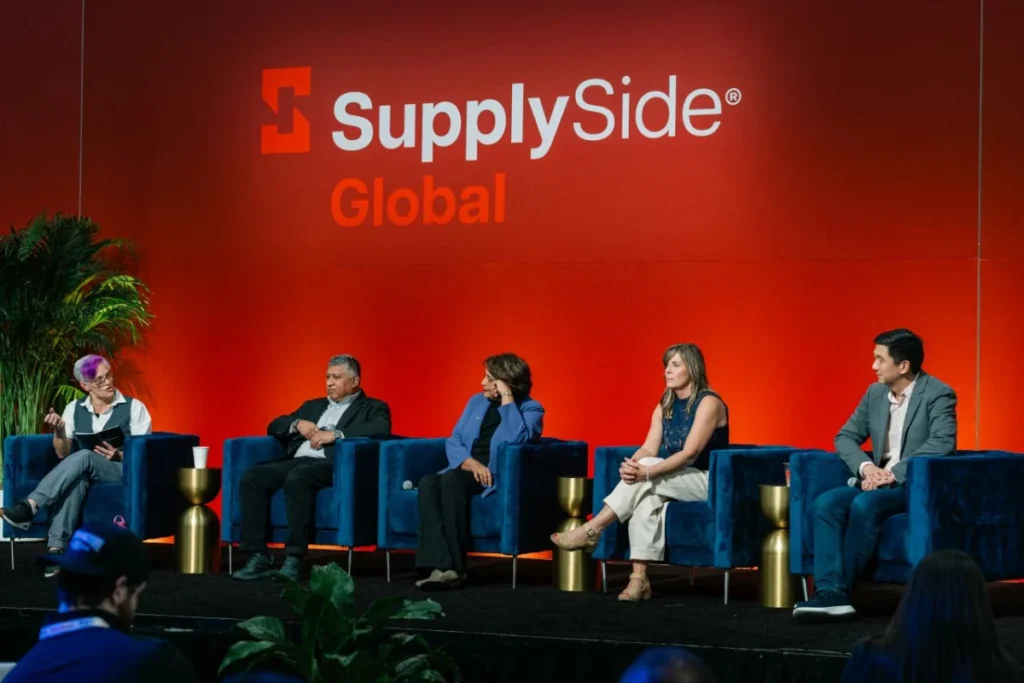
This critical theme resonated throughout the "Innovation Interrupted: How the Best Innovators Respond When Everything Changes" session at SupplySide Global 2026. The event, a premier gathering for professionals in the health and nutrition industries, provided a platform for four distinguished industry experts to dissect real-world scenarios. These hypothetical challenges—encompassing the ripple effects of tariffs, the complexities of color ingredient sourcing, and the implications of emerging scientific discoveries—served as catalysts for a deep dive into strategic preparedness and agile response mechanisms. Each expert was tasked with outlining their immediate course of action for each scenario, offering distinct yet complementary perspectives.
The panel comprised a diverse group of leaders, each bringing a unique and invaluable lens to the decision-making process. Guru Ramanathan, Managing Director of Dutch Medical Food, a leading medical nutrition company, anchored the discussion with a focus on overarching business strategy and forward-thinking innovation. Kantha Shelke, Founder and Principal of Corvus Blue LLC, a respected food science consultancy, provided the critical scientific and formulation expertise. Larisa Pavlick, Founder and Principal of Haven GMP Consulting, Training and Auditing, addressed the crucial regulatory and compliance considerations that often dictate product viability. Finally, Vincent Tseng, Co-founder and CEO of PartnerSlate, a CPG manufacturing marketplace, offered insights into the practicalities of manufacturing and commercialization.

Finding Common Ground Amidst Diverse Priorities: The Power of Preparation
The fundamental premise of the session was that a single disruptive event can be perceived and prioritized differently depending on an individual’s or department’s functional area. This divergence in perspective, far from being a hindrance, is precisely where the value lies. It fosters a more comprehensive understanding of the issue, leading to more informed and robust decisions when these varied viewpoints converge.
Across the spectrum of expertise represented on the panel, one overarching principle emerged with striking consistency: the paramount importance of proactive preparation. "This is not really a test of your plan. It’s a test of your preparation," emphasized Kantha Shelke, articulating a sentiment that underscored the entire discussion. She highlighted this point particularly when addressing the scenario of new research emerging that appears to contradict a product’s established scientific foundation.
The nature of this preparation is multifaceted. Shelke advocated for the strategic development of alternative formulations well in advance of any actual need, creating a ready arsenal of viable substitutes. Larisa Pavlick reinforced this proactive approach by recommending the rigorous qualification of not just primary, but also secondary and even tertiary suppliers. This multi-tiered supplier strategy mitigates the risk of single-source dependency and ensures continuity in the face of unforeseen supply chain disruptions. Vincent Tseng added that ensuring key stakeholders possess a clear understanding of potential problems before a crisis erupts is crucial. This foresight prevents rushed, suboptimal decisions made under intense pressure.
Beyond identifying potential alternatives and suppliers, effective preparation also involves establishing a clear framework for evaluating what truly necessitates change. Ramanathan outlined his systematic approach, beginning with the fundamental question: "What do I know versus what am I assuming?" This critical self-assessment helps delineate fact from conjecture. Subsequently, he focuses on identifying the specific areas impacted by the disruption—whether it’s the profit margin, the integrity of the supply chain, or a fundamental customer promise. A crucial next step, he noted, is determining the reversibility of any potential decision.
However, Ramanathan also stressed that certain aspects of a product and its development are non-negotiable. "There are some things that are sacrosanct," he stated. "If it involves a customer promise and it’s product integrity, there’s no compromise on that." This principle of maintaining core product integrity, even in the face of significant pressure, was echoed by Pavlick from a regulatory and quality standpoint. She underscored that when supply chain pressures necessitate exploring ingredient alternatives, the fundamental specifications for identity, purity, strength, composition, and the absence of potential contaminants must remain steadfast. The cost or availability of an ingredient cannot be a justification for compromising these essential quality standards.
Navigating the Currents of New Science: Adapting the Game Plan
The same disciplined approach to preparation and evaluation is equally applicable when the source of disruption stems from new scientific discoveries. While a highly publicized study can instantaneously trigger pressure from consumers, retailers, and the media, the panel cautioned against allowing a single finding to disproportionately influence decisions without rigorous and comprehensive evaluation.
Shelke aptly summarized this need for careful scientific scrutiny by stating, "With one dot, you cannot draw a line. You need several dots." She urged companies to possess a deep understanding of their own foundational science, enabling them to critically assess whether newly published research is genuinely relevant to their specific ingredients, formulations, and product categories. Her counsel was to adopt a strategic mindset akin to a chess player: anticipate potential moves and meticulously prepare for them long before external pressures materialize.
However, the evaluation of scientific findings cannot occur in an isolated vacuum, detached from the realities of the marketplace. Tseng highlighted a critical dynamic: retailers and distributors may react to new scientific studies and exert pressure on manufacturers even before the broader scientific community has reached a consensus or resolved the debate. Ramanathan drew a parallel to the discussion on color ingredient changes, observing that while regulatory bodies might grant companies a reasonable timeframe to adapt, "the marketplace, however, may not." This implies that commercial pressures can often outpace regulatory timelines.
The inherent challenge lies in the fact that scientific, regulatory, manufacturing, and business considerations often pull in divergent directions and rarely operate on synchronized timelines. No single functional department can possess the complete picture. This underscores the indispensable value of strong interdepartmental partnerships. Trusted relationships foster an environment where assumptions can be openly challenged, trade-offs can be effectively surfaced, and difficult decisions can be collaboratively navigated.
When innovation faces disruption, the path forward involves asking the right questions, engaging the appropriate perspectives, and then strategically determining the subsequent steps. This collaborative and prepared approach is the hallmark of resilient and successful innovators in today’s ever-evolving market.
The Evolving Landscape of Ingredient Sourcing and Consumer Trust
The implications of disruption extend beyond immediate product adjustments, impacting long-term consumer trust and market positioning. For instance, the scenario involving tariffs on specific ingredients, a recurring challenge in global trade, can force companies to re-evaluate their entire supply chain architecture. A tariff increase of, for example, 15% on a key botanical extract used in a popular supplement could drastically alter profit margins. If the extract is sourced from a region affected by new trade policies, companies might face a difficult choice: absorb the increased cost, risking reduced profitability, or seek alternative suppliers.
This search for alternatives, as Pavlick highlighted, is not merely a matter of finding a cheaper option. It necessitates a rigorous vetting process to ensure that any new source meets the same stringent quality and safety standards. A failure to do so could lead to product recalls, regulatory fines, and, most damagingly, a significant erosion of consumer confidence. Research from NielsenIQ indicates that 73% of consumers are willing to pay more for products from brands that are transparent about their ingredients and sourcing. Therefore, any shift in sourcing due to external pressures must be managed with transparency and a commitment to maintaining product integrity.
The timeline for responding to such disruptions can vary. In some cases, the impact might be immediate, requiring rapid sourcing adjustments. For example, if a tariff is imposed with little notice, companies might have mere weeks to identify and qualify new suppliers. This underscores the value of pre-established relationships with multiple qualified vendors, as recommended by Tseng. A company that has already vetted secondary and tertiary suppliers for critical ingredients can pivot much more effectively than one reliant on a single source.
Emerging Science: A Double-Edged Sword
The introduction of new scientific research presents a unique set of challenges and opportunities. A study suggesting a potential health risk associated with a commonly used ingredient, even if preliminary, can trigger immediate public concern. Consider the case of a widely consumed food additive that is later linked in a small study to adverse health effects. While regulatory bodies might take months or years to evaluate such findings and potentially issue new guidelines, consumer-driven demand for "cleaner" labels can force brands to act much faster.
Shelke’s analogy of "needing several dots" to draw a line is crucial here. Companies must resist the urge to make drastic changes based on single, uncorroborated studies. Instead, they should engage in a comprehensive review of the existing scientific literature, seeking to understand the robustness of the evidence, the study’s methodology, and its relevance to their specific product and target consumer. This internal scientific diligence allows companies to respond to external pressures with informed confidence, rather than reactive panic.
The timeline for responding to new science can be particularly complex. While the scientific evaluation process is inherently slow, market reaction can be swift. Retailers, driven by consumer sentiment and media coverage, might delist products or demand ingredient changes proactively. This creates a critical need for clear communication channels between a company’s R&D, regulatory affairs, marketing, and sales departments. Understanding the potential market implications of scientific findings, even before they are fully substantiated, allows for more strategic planning.
The Interplay of Regulation, Manufacturing, and Market Demands
The session’s discussions consistently highlighted the intricate interplay between scientific findings, regulatory mandates, manufacturing capabilities, and market demands. These elements do not operate in silos; they are interconnected, and disruptions in one area inevitably ripple through the others.
For instance, a new regulation mandating stricter limits on a particular colorant used in food products might require manufacturers to reformulate. This reformulation process is not simply a matter of swapping one ingredient for another. It involves extensive testing to ensure the new colorant provides the desired aesthetic appeal, remains stable under various processing and storage conditions, and does not negatively impact the product’s flavor or texture. This can be a lengthy and costly process, potentially taking 12-18 months from initial research to full-scale production.
Moreover, the availability and cost of compliant alternative colorants can be a significant factor. If the preferred alternative is significantly more expensive, it can impact the product’s profitability, requiring a strategic decision on whether to absorb the cost or pass it on to consumers. This decision is further complicated by market dynamics. If competitors are not immediately affected by the regulation or have already adapted, a company facing increased costs might find itself at a competitive disadvantage.
Tseng’s emphasis on manufacturing readiness is vital in this context. Ensuring that manufacturing facilities are equipped to handle new ingredients or processes, and that production lines can be efficiently reconfigured, is a critical step in navigating regulatory-driven disruptions. A lack of manufacturing flexibility can lead to production delays, further exacerbating market pressures.
Building Resilience Through Strategic Partnerships and Foresight
The overarching message from SupplySide Global 2026’s "Innovation Interrupted" session is that resilience in the face of disruption is not an accident; it is the result of deliberate strategy and continuous preparation. Companies that excel in managing unexpected challenges are those that:
- Cultivate a Culture of Proactive Risk Assessment: Regularly identifying potential points of disruption across their value chain, from ingredient sourcing to consumer perception.
- Develop Robust Contingency Plans: Establishing pre-approved alternative formulations, qualifying multiple suppliers, and creating clear decision-making frameworks.
- Foster Strong Internal Collaboration: Ensuring seamless communication and alignment between R&D, regulatory, manufacturing, marketing, and sales teams.
- Invest in Strong External Relationships: Building trust with suppliers, contract manufacturers, and even competitors, as these relationships can be invaluable during times of crisis.
- Prioritize Scientific Rigor and Market Awareness: Balancing the need for scientific validation with an acute understanding of market dynamics and consumer sentiment.
Ultimately, innovation is not a linear path but a journey marked by unforeseen obstacles. The ability to anticipate, adapt, and overcome these disruptions with strategic foresight and collaborative strength is what distinguishes leaders in the modern marketplace. The insights shared at SupplySide Global 2026 serve as a powerful reminder that preparation is not merely a best practice; it is the cornerstone of sustained innovation and business continuity.