







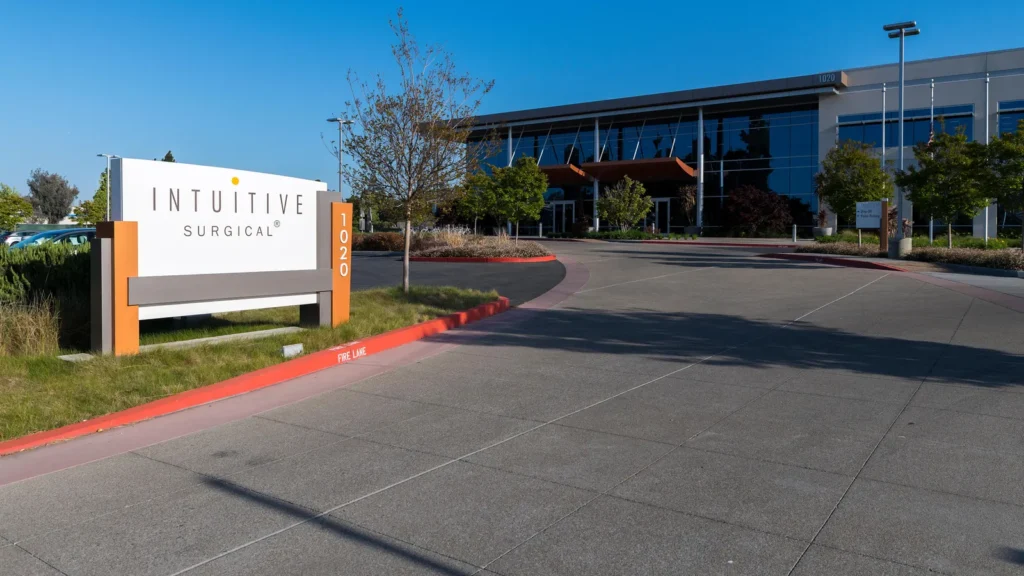
Intuitive Surgical, the global leader in robotic-assisted minimally invasive surgery, reported its third-quarter financial results for 2026, revealing a complex landscape of robust capital sales contrasted against a cooling rate of procedure growth in the United States. While the company achieved a significant 22% year-over-year increase in total revenue, reaching $3.05 billion, the data highlighted a pivotal shift in the domestic market. U.S. procedure growth using the flagship da Vinci surgical system slowed to 10% during the quarter, marking the lowest growth rate the company has recorded since the disruptions caused by the COVID-19 pandemic. This deceleration has prompted a strategic pivot, as the company increasingly looks toward benign general surgery and international markets to sustain its long-term trajectory.
Financial Performance and Capital Placement Trends
The third-quarter results provided a dual narrative of expansion and consolidation. Revenue for the period stood at $3.05 billion, a substantial jump from the previous year, driven largely by the continued rollout of the da Vinci 5, the company’s latest generation robotic platform. However, net income saw a contraction, falling to $523 million compared to $704 million in the same quarter of 2025. This dip in profitability is attributed to several factors, including increased research and development expenditures, costs associated with the manufacturing ramp-up of new hardware, and a strategic adjustment in instrument pricing.
In terms of hardware adoption, Intuitive demonstrated continued dominance in the capital equipment market. The company placed 546 da Vinci systems during the quarter, an increase from the 427 systems placed in the third quarter of 2025. Of these placements, 315 were the new da Vinci 5 systems, up from 240 in the prior year. The strong demand for the da Vinci 5 suggests that hospital systems remain committed to upgrading their robotic fleets, seeking the enhanced sensing capabilities, integration, and processing power offered by the newer generation, even as the volume of surgeries performed on those machines sees a more moderate growth rate.
Addressing the Slowdown in U.S. Procedure Growth
The 10% growth in U.S. procedures became a central point of discussion during the quarterly conference call. Wells Fargo analyst Larry Biegelsen noted that this figure represents a multi-year low, raising questions about whether the robotic surgery market in the U.S. is reaching a point of saturation in its core categories.
In response to these concerns, Intuitive CEO David Rosa characterized the current market environment as a transition phase rather than a permanent plateau. Rosa divided the U.S. market into two distinct categories: the immediate "addressable opportunity" that the company pursues daily and the "longer-term chance" to establish robotic standards in new medical indications. He emphasized that the path to renewed growth lies in "benign general surgery"—a category that includes common, non-cancerous procedures such as hernia repairs, cholecystectomies (gallbladder removal), and various gastrointestinal surgeries.
"The U.S. procedure opportunity is significant, particularly in benign general surgery," Rosa stated. He acknowledged that for robotic platforms to penetrate these high-volume areas, they must compete directly with established methods like laparoscopy and, in some cases, traditional open surgery. Unlike complex oncological or urological procedures where the benefits of robotics are widely accepted, benign surgeries are often scrutinized more heavily for their cost-to-benefit ratio.
The Role of Clinical and Economic Dashboards
To win over hospital administrators and surgeons who are "well-entrenched" in laparoscopic techniques, Intuitive is leaning into data-driven evidence. Rosa noted that customers are increasingly utilizing clinical and economic dashboards to compare robotic outcomes against alternative techniques. These dashboards track metrics such as length of stay, complication rates, readmission statistics, and total cost of care.
According to Rosa, the data is increasingly favoring the robotic approach, showing that the precision of the da Vinci system can lead to fewer post-operative complications and faster recovery times, which ultimately offsets the higher upfront cost of the technology. By proving that robotic surgery can be as cost-effective as laparoscopy when looking at the "total episode of care," Intuitive aims to make the da Vinci system the default choice for routine general surgeries.
Strategic Pricing Adjustments and Market Expansion
One of the most significant takeaways from the Q3 report was Intuitive’s decision to implement strategic price cuts. The company announced that it expects revenue from da Vinci instruments and accessories to decrease by 3% to 5% per procedure once these changes are fully enacted. This move is a calculated effort to lower the barrier to entry for high-volume, lower-margin procedures.
CFO Jamie Samath described the price reductions as a "deliberate choice" intended to broaden adoption. By making the cost of consumables more competitive, Intuitive aims to capture a larger share of the market in ambulatory surgical centers (ASCs) and in international markets where healthcare budgets are more constrained. "We believe broader adoption creates more long-term value than near-term revenue per procedure," Samath explained.
This pricing strategy signals a shift in Intuitive’s business model. While the company has historically commanded premium pricing, the emergence of competitors and the need to move into the "mass market" of general surgery necessitates a more flexible economic approach. By lowering the per-procedure cost, Intuitive hopes to lock in hospital systems for the long term, ensuring a steady stream of recurring revenue from a much higher volume of cases.
Chronology of the Robotic Surgery Evolution
To understand Intuitive’s current position, it is necessary to look at the timeline of its market evolution:
- 2000–2010: The Early Adopter Phase. The da Vinci system gained a foothold primarily in urology (prostatectomies) and gynecology (hysterectomies). During this era, the robotic approach became the "gold standard" for these specific, complex procedures.
- 2011–2019: Expansion into General Surgery. Intuitive began moving into thoracic surgery and more complex general surgeries. The company faced its first real questions regarding cost-effectiveness but continued to grow as surgeon training programs integrated robotics into their curricula.
- 2020–2022: The Pandemic Disruption. Elective procedure volumes plummeted during COVID-19 lockdowns, followed by a massive "catch-up" surge in 2022 and 2023. This volatility created difficult year-over-year comparisons for analysts.
- 2024–2025: The Next-Gen Transition. The launch of the da Vinci 5 focused on "integrated data" and "force feedback," aiming to reduce the learning curve for surgeons and improve outcomes in routine cases.
- 2026: The Benign Surgery Pivot. Faced with a maturing U.S. market in oncology and urology, the company has officially shifted its primary growth focus to benign indications and cost-competitiveness.
Implications for the Broader MedTech Sector
Intuitive’s report serves as a bellwether for the broader medical technology industry. The slowdown in U.S. procedure growth suggests that the "easy" growth from converting open surgeries to robotic ones in specialty fields has largely been realized. The next frontier—converting laparoscopic procedures to robotic ones—requires a much more nuanced argument centered on economics and marginal clinical gains.

Furthermore, Intuitive’s move to cut instrument prices may spark a pricing war in the robotic surgery space. Competitors such as Medtronic, with its Hugo system, and Johnson & Johnson, with its Ottava platform, are vying for market share. By proactively lowering prices, Intuitive is leveraging its scale to make it difficult for new entrants to compete on cost alone.
The emphasis on ambulatory surgical centers (ASCs) also reflects a broader trend in the U.S. healthcare system. More surgeries are moving out of traditional hospitals and into outpatient settings to reduce costs. For Intuitive to remain the leader, its systems must be compatible with the leaner operating models of these centers.
Future Outlook and 2026 Guidance
Despite the "temporary lull" in U.S. procedure growth, Intuitive remains optimistic about the coming year. The company has narrowed its full-year guidance for 2026, setting the expected da Vinci procedure growth rate at 14% to 15%. This is a slight adjustment from the July forecast of 13.5% to 15.5%, reflecting a more confident, albeit slightly more conservative, outlook.
The company’s ability to hit these targets will depend heavily on the successful execution of its pricing strategy and the continued adoption of the da Vinci 5. If the lower instrument costs successfully drive higher volumes in hernia and gallbladder surgeries, the 10% growth rate seen this quarter may indeed be remembered as a temporary dip before a new wave of expansion.
As the third quarter of 2026 concludes, Intuitive Surgical finds itself at a crossroads. It remains a financial powerhouse with a growing installation base, but it is now operating in a more mature, price-sensitive environment. The transition from a provider of high-end specialty tools to a provider of high-volume, everyday surgical solutions will define the company’s next decade. For now, the focus remains clear: proving that the robot is not just a luxury for the most complex cases, but an essential, cost-effective tool for the most common ones.