









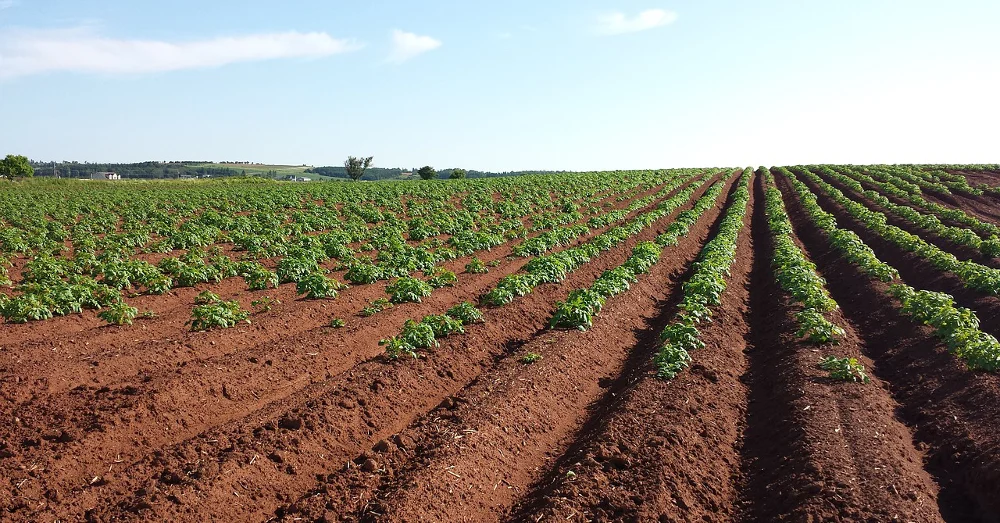
While the visual appearance of staple American crops such as wheat, rice, and various vegetables has remained largely unchanged over the last century, a growing body of scientific evidence reveals a silent and significant degradation in their internal quality. Modern agricultural outputs are no longer nutritionally equivalent to the produce consumed by previous generations, as essential minerals, vitamins, and proteins have seen a measurable decline. This phenomenon, often referred to by researchers as "nutrient dilution," suggests that while farmers are producing more food than ever before, the nutritional value per calorie is steadily eroding. This shift is driven by a combination of intensive farming practices focused on yield and the unintended consequences of human-driven environmental changes, specifically the rising concentration of carbon dioxide in the Earth’s atmosphere.
The scale of this nutritional decline was brought to the forefront of scientific discourse by a landmark study conducted in 2004 at the University of Texas at Austin. Led by Dr. Donald Davis, the research team analyzed U.S. Department of Agriculture (USDA) nutrient data from 1950 and 1999 for 43 different garden crops, including broccoli, spinach, kale, and tomatoes. The findings were stark: the researchers noted statistically significant declines in six major nutrients, including protein, calcium, phosphorus, iron, riboflavin (vitamin B2), and ascorbic acid (vitamin C). The decreases ranged from 6 percent for protein to as much as 38 percent for riboflavin. These findings confirmed a long-held suspicion among nutritionists that the drive for high-yield agriculture—often referred to as the Green Revolution—had come at a hidden cost to the consumer’s health.
The Evolution of the Nutritional Decline: A Historical Chronology
The trajectory of declining nutrient density can be traced back to the mid-20th century, a period marked by a radical transformation in global food production. To understand the current crisis, it is necessary to examine the timeline of agricultural development and the subsequent scientific discoveries that highlighted the trade-off between quantity and quality.

In the 1940s and 1950s, the Green Revolution introduced high-yielding varieties of cereal grains, expanded irrigation infrastructure, and popularized the use of synthetic fertilizers and pesticides. The primary objective was to avert global famine by maximizing the number of bushels produced per acre. While this movement was undeniably successful in feeding a rapidly growing global population, it shifted the focus of plant breeding away from nutrient density and toward physical volume and pest resistance.
By the 1990s, some scientists began to notice that the increase in crop yields did not correlate with an increase in nutrient uptake from the soil. In 1998, Irakli Loladze, then a graduate student at the University of Arizona, theorized that rising levels of atmospheric carbon dioxide (CO2) could be acting as a "junk food" source for plants. His hypothesis suggested that while higher CO2 levels accelerate photosynthesis and help plants grow larger, they also cause plants to accumulate more carbohydrates—such as sugars and starches—while diluting the concentration of vital minerals and proteins.
The 2004 Davis study provided the first comprehensive empirical evidence of this trend in the United States. Following this, in 2014, a massive study published in the journal Nature by an international team of researchers analyzed various cultivars of wheat, rice, field peas, soybeans, maize, and sorghum grown under elevated CO2 levels. This study found that under CO2 concentrations predicted for the middle of the 21st century, the concentrations of zinc, iron, and protein were significantly reduced in most of these staple crops.
The Biological Mechanism: Why CO2 Dilutes Nutrition
The relationship between atmospheric chemistry and plant biology is complex, but the mechanism behind nutrient dilution is increasingly well-understood. Plants absorb carbon dioxide from the air to produce glucose through photosynthesis. When CO2 levels are higher, plants can produce these sugars more efficiently. However, this increased growth rate often outpaces the plant’s ability to pull minerals like magnesium, potassium, and zinc from the soil through its root system.
Furthermore, elevated CO2 levels affect the way plants breathe. To take in CO2, plants open small pores on their leaves called stomata. When CO2 is abundant, plants do not need to open their stomata as wide or for as long. This reduction in stomatal conductance leads to a decrease in the amount of water moving through the plant, a process known as transpiration. Because transpiration is the primary driver for transporting soil-borne minerals into the plant’s tissues, the reduction in water flow results in a lower concentration of minerals in the edible portions of the crop.
This creates a "double-whammy" effect. On one hand, traditional plant breeding has selected for crops that grow faster and larger, naturally diluting their nutrient content. On the other hand, the changing atmosphere is physically altering plant metabolism to favor carbon-based compounds (sugars) over nitrogen-based compounds (proteins) and minerals.
Supporting Data and Statistical Evidence
The implications of these findings are supported by a wide array of data points collected over decades of observation. In addition to the 2004 University of Texas study, other international assessments have reinforced the severity of the decline:
- Protein Content: Research into wheat varieties has shown a decline in protein content by approximately 10 to 15 percent over the last several decades. Since wheat is a primary source of protein for billions of people, this decline has significant implications for global amino acid intake.
- Mineral Deficiencies: In rice, which is the staple food for more than half the world’s population, studies have shown that elevated CO2 leads to a 17 percent decrease in iron, a 12 percent decrease in zinc, and a significant drop in B-vitamins, including B1, B2, B5, and B9.
- The "Yield-Nutrient" Correlation: Historical data from the Broadbalk Wheat Experiment in the United Kingdom, one of the longest-running agricultural studies in the world, shows that while wheat yields have tripled since the 1840s, the concentrations of copper, magnesium, and zinc in the grain have decreased significantly.
Expert Analysis and Societal Reactions
The scientific community has expressed growing alarm over these trends, particularly regarding the lack of public awareness and the absence of a coordinated policy response. Kristie Ebi, a professor at the University of Washington’s Center for Health and the Global Environment, has been a vocal advocate for more intensive research into the intersection of climate change and nutrition.
"This is an issue that will affect absolutely everybody," Ebi stated in an analysis of the trend. "And it will affect the poor and the marginalized the most." Her assessment highlights a critical socio-economic dimension of the problem: while affluent consumers may be able to compensate for lower nutrient density by purchasing more diverse diets or taking supplements, those living in poverty often rely on a single staple crop for the majority of their calories. For these populations, a 10 percent drop in iron or zinc can be the difference between a healthy life and chronic malnutrition.
Reaction from the agricultural industry has been mixed. While some seed developers are beginning to explore "biofortification"—the process of breeding crops to have higher nutrient levels—the prevailing market incentives still prioritize yield and shelf-stability. Most farmers are paid by the weight or volume of their harvest, not by its vitamin content, meaning there is currently little financial motivation to address the nutrient gap at the farm level.
Broader Impact: The Global Health Perspective
The decline in nutrient density is not merely an academic concern; it is a public health crisis in the making. The World Health Organization (WHO) estimates that more than two billion people worldwide already suffer from "hidden hunger"—a form of malnutrition where individuals consume enough calories but lack essential micronutrients.
Iron deficiency is currently the most common nutritional disorder in the world, affecting a large percentage of women and children in developing nations. If staple crops continue to lose their iron content, the prevalence of anemia and its associated complications, such as impaired cognitive development and increased maternal mortality, is expected to rise. Similarly, zinc deficiency leads to weakened immune systems and is a leading cause of death among children under five due to increased susceptibility to infectious diseases like malaria and pneumonia.
In developed nations like the United States, the dilution of nutrients may contribute to the rising rates of obesity. When the body does not receive the necessary minerals and vitamins from food, it may signal hunger even when caloric intake is sufficient, leading to overconsumption of calorie-dense but nutrient-poor foods. This creates a paradoxical situation where populations are simultaneously overfed and undernourished.
Potential Solutions and Future Outlook
Addressing the nutrient collapse will require a multi-faceted approach involving changes to agricultural policy, plant breeding, and environmental management. Scientists suggest several potential pathways to mitigate the impact:
- Nutrient-Focused Breeding: Shifting the focus of agricultural research from purely yield-based metrics to "nutritional yield." This involves selecting for varieties that maintain high mineral concentrations even under elevated CO2 levels.
- Soil Health Restoration: Encouraging regenerative farming practices—such as cover cropping, reduced tillage, and the use of organic fertilizers—to improve the mineral availability in the soil.
- Biofortification: Utilizing genetic engineering or advanced conventional breeding to create "super-crops" that are enriched with specific nutrients like Vitamin A, iron, or zinc.
- Diversification of Diets: Reducing global reliance on a small handful of staple grains and encouraging the consumption of "ancient grains" and local vegetables that may be more resilient to atmospheric changes.
Despite the clarity of the threat, researchers note that funding for studying the nutritional impacts of climate change remains insufficient. Without a concerted effort to track these changes in real-time and develop adaptive agricultural strategies, the food on the world’s dinner tables will continue to lose its life-sustaining value. As the atmosphere continues to change, the challenge for the next century will not just be to produce enough food to fill stomachs, but to ensure that the food produced is capable of nourishing the human body.