

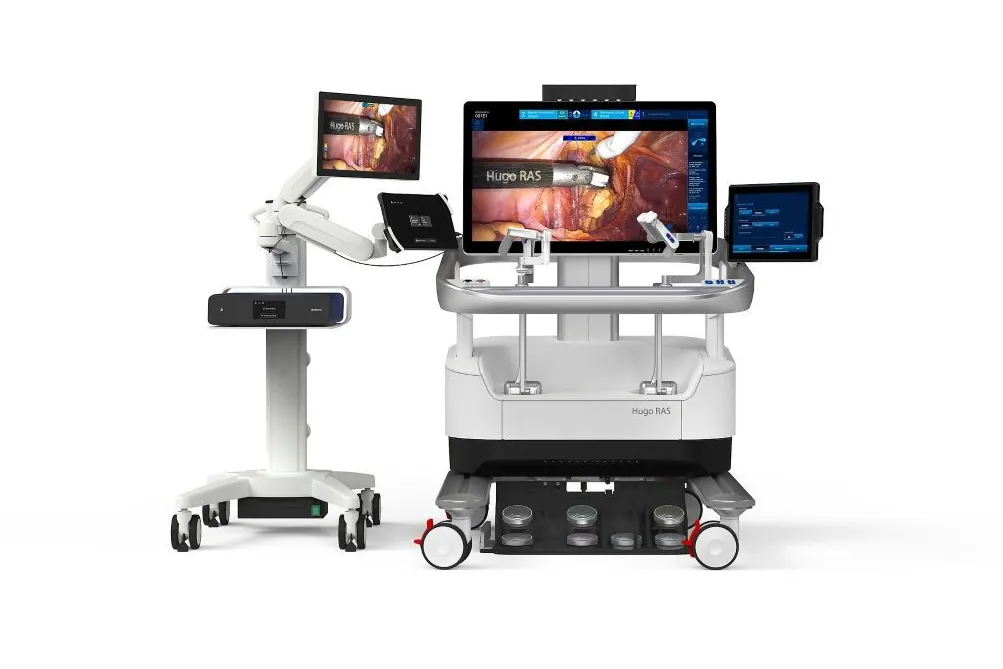
The medical technology landscape reached a significant milestone this month as Medtronic, a global leader in healthcare technology, announced the official launch of its Touch Surgery Aide platform. This advanced surgical computing system represents a pivotal shift in the integration of artificial intelligence within the operating theater, featuring the first AI-powered algorithm to receive clearance from the U.S. Food and Drug Administration (FDA) for real-time surgical application. The technology, specifically designed to augment the capabilities of the Hugo robotic-assisted surgery (RAS) system, aims to address critical gaps in surgical safety and procedural efficiency by providing surgeons with a level of digital assistance that has, until now, been largely absent from the clinical environment.
The introduction of Touch Surgery Aide is predicated on a striking observation regarding the current state of technological disparity in the professional world. George Murgatroyd, Medtronic’s Vice President and General Manager of Digital Technologies, noted that modern surgeons often benefit from more sophisticated AI assistance during their commute home in a semi-autonomous vehicle than they do while performing life-saving procedures. This "digital gap" has become a primary target for Medtronic’s surgical robotics division. By deploying a high-performance computing infrastructure directly into the operating room, Medtronic is attempting to standardize a new level of care where real-time data analysis becomes as fundamental to surgery as the scalpel or the robotic arm.
The Evolution of Surgical Computing and the Hugo System
The journey toward the launch of Touch Surgery Aide is rooted in Medtronic’s long-term strategy to digitize the surgical experience. The foundation of this ecosystem was solidified through the acquisition of Digital Surgery, a London-based pioneer in surgical AI and data analytics, which developed the original Touch Surgery platform. Over the past several years, this ecosystem has been deployed in more than 1,500 operating rooms globally, serving as a repository for surgical video, a tool for post-operative review, and a platform for automated benchmarking.
However, the leap from post-operative analysis to real-time intraoperative assistance required a massive upgrade in local computing power. Most contemporary operating rooms lack the server-grade hardware necessary to process high-definition video feeds through multiple AI models with the low latency required for live surgery. Touch Surgery Aide solves this infrastructure problem by providing a dedicated computing stack that sits within the surgical suite, capable of running complex neural networks simultaneously on the live video feed coming from the endoscope.
This hardware evolution coincides with the broader rollout of the Hugo robotic-assisted surgery system. Hugo was designed to be a modular and portable alternative to existing monolithic robotic platforms, focusing on soft-tissue procedures such as urology and gynecology. The integration of AI into this platform is seen by industry analysts as a move to differentiate Medtronic in a market historically dominated by Intuitive Surgical’s Da Vinci system.
Understanding the Instrument Exit Point (IEP) Algorithm
The centerpiece of the initial Touch Surgery Aide launch is the Instrument Exit Point (IEP) algorithm. While AI has seen widespread adoption in diagnostic fields like radiology—where it assists in identifying anomalies in static images—applying AI to live surgical video is exponentially more complex. In surgery, the AI must account for moving instruments, deformable biological tissues, and the presence of fluids or smoke, all while maintaining a frame rate that matches the surgeon’s movements.
The IEP algorithm functions as a digital safety net, specifically designed to track the location of robotic instruments. In the high-stakes environment of laparoscopic or robotic surgery, a surgeon’s field of view is limited by the camera’s perspective. It is possible for an instrument to move outside this visual frame, creating a "blind spot." If a surgeon is unaware of the exact position of an instrument that has exited the field of view, there is a marginal but real risk of unintended tissue contact or injury.
Medtronic’s AI provides a visual notification and a directional guide on the surgeon’s display, indicating exactly where an instrument has left the frame. This "blind spot" assistance is analogous to the proximity sensors in modern automobiles, providing the operator with situational awareness that exceeds human visual limits. While the IEP is the first such algorithm to receive FDA clearance, Medtronic has indicated that it is merely the first in a pipeline of planned applications designed to monitor various aspects of the surgical field.

Data Integrity and the Ethical Framework of Surgical AI
One of the primary challenges in developing AI for a global healthcare market is ensuring that the underlying models are robust, accurate, and free from bias. To train the IEP algorithm and subsequent models, Medtronic utilized an extensive and diverse dataset of surgical videos collected from hospitals worldwide. This global approach is critical; anatomical variations, differing surgical techniques, and varied clinical settings mean that an algorithm trained on a narrow dataset might fail to perform reliably in different geographic or demographic contexts.
To govern this development, the company adheres to the Medtronic AI Ethics Compass, a set of internal standards designed to ensure transparency, accountability, and patient safety. Because the FDA classifies any AI that provides visual information to a surgeon during a procedure as a medical device, the regulatory bar is significantly higher than for administrative or diagnostic AI. The clearance of IEP signals that the FDA is satisfied with the clinical validity of the algorithm and the safety of its integration into the surgical workflow.
Market Dynamics and the Competitive Landscape
The global robotic-assisted surgery market is projected to reach over $15 billion by 2030, driven by an increasing volume of minimally invasive procedures and a growing aging population. For decades, the market was almost entirely controlled by Intuitive Surgical. However, the entry of Medtronic’s Hugo system, alongside competing platforms like Johnson & Johnson’s Ottava and CMR Surgical’s Versius, has introduced a new era of competition.
Medtronic’s strategy focuses on "digital ecosystems" rather than just the hardware of the robot itself. By positioning Touch Surgery Aide as an open platform, Medtronic is signaling a departure from the "walled garden" approach often seen in medical technology. The company has expressed a willingness to host third-party applications on its platform, potentially allowing academic institutions or smaller startups to deploy their own specialized AI algorithms through Medtronic’s hardware. This open-platform philosophy is intended to catalyze innovation across the industry, addressing the "unwarranted variation" in surgical outcomes that remains a significant burden on global healthcare systems.
Future Implications: From Assistance to Automation
The launch of Touch Surgery Aide marks the beginning of what Medtronic describes as a "stepwise progression" toward the future of surgery. While the current technology is strictly assistive—providing visual data without offering clinical advice—the roadmap for surgical AI points toward more autonomous functions.
Industry experts anticipate several stages of evolution:
- Visual Assistance: (Current Stage) Providing situational awareness and tracking, such as the IEP algorithm.
- Decision Support: AI that can identify anatomical landmarks in real-time or warn surgeons if they are approaching critical structures like major blood vessels or nerves.
- Guidance: AI that suggests optimal paths for dissection or suturing based on the analysis of thousands of previous successful cases.
- Semi-Automation: The robot performing repetitive or highly precise tasks, such as suturing or specific tissue retractions, under the direct supervision of the surgeon.
While full automation remains a distant prospect, the ability of AI to reduce the cognitive load on surgeons is an immediate benefit. Surgery is a physically and mentally exhausting profession; by delegating "surveillance" tasks—like tracking instrument positions—to an AI, surgeons can maintain higher levels of focus on the complex decision-making aspects of the procedure.
Conclusion
The FDA clearance of Medtronic’s IEP algorithm and the rollout of Touch Surgery Aide represent more than just a product launch; they signify the arrival of high-performance edge computing in the operating room. By bridging the gap between the digital assistance available in daily life and the high-stakes environment of the surgical suite, Medtronic is laying the groundwork for a more data-driven, standardized, and ultimately safer approach to surgery.
As these systems become more prevalent, the focus will likely shift toward how hospitals integrate this data into their broader quality-of-care metrics. With the infrastructure now in place to run AI in real-time, the surgical community stands at the threshold of a digital transformation that promises to redefine the relationship between the surgeon, the robot, and the patient. The success of the Hugo system and the Touch Surgery ecosystem will depend not only on the precision of the mechanics but on the intelligence of the software that guides them.
