

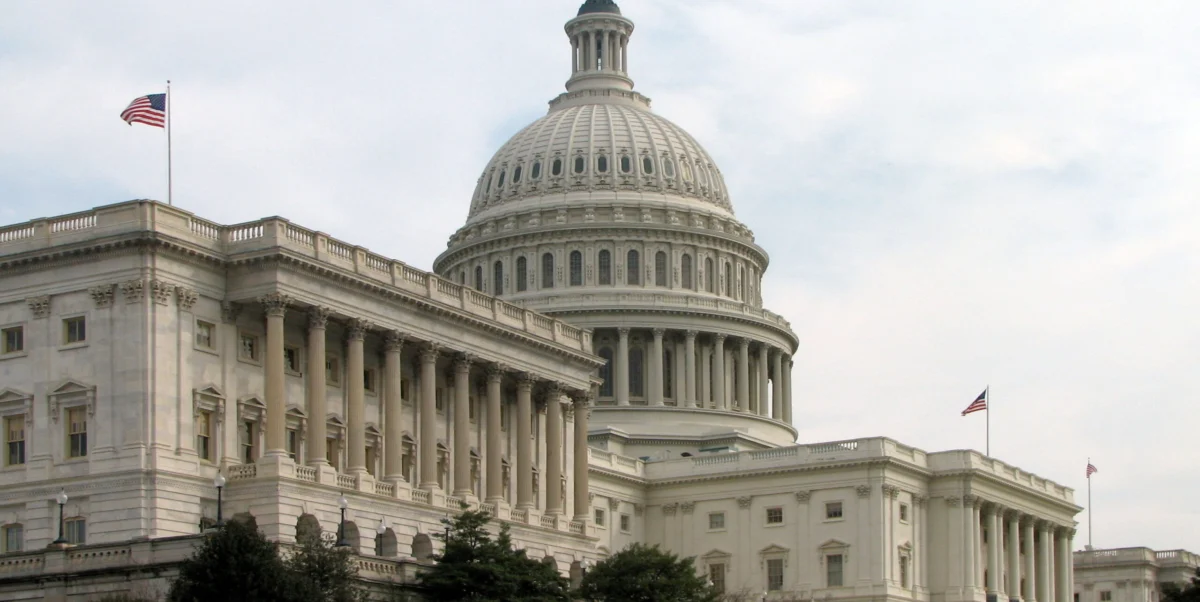
The United States Senate Agriculture Committee reached a contentious impasse on Thursday as Republican members voted to block a pivotal amendment to the upcoming Farm Bill. The amendment, introduced by Senator Cory Booker (D-NJ), was designed to restore the legal rights of American citizens to pursue litigation against pesticide manufacturers when their products result in significant health complications or environmental damage. The proposal sought to directly counter recent judicial precedents that have increasingly shielded large chemical corporations from state-level "failure to warn" lawsuits, a shift that advocates argue has left thousands of victims without a path to justice.
The failure of the amendment marks a significant victory for the agrochemical industry but has sparked a wave of condemnation from public health advocates and environmental organizations. The debate centers on the interpretation of federal preemption and whether Environmental Protection Agency (EPA) approval of a pesticide label should effectively immunize a company from being sued under state consumer protection laws. With the Farm Bill serving as the primary vehicle for national food and agricultural policy, the rejection of the Booker amendment ensures that the current legal protections for manufacturers like Bayer (which acquired Monsanto) and Syngenta remain largely intact for the foreseeable future.
The Legislative Context: Senator Booker’s Challenge to Judicial Precedent
Senator Cory Booker’s proposed amendment arrived at a time of heightened scrutiny regarding the long-term health effects of widely used herbicides and insecticides. The amendment specifically aimed to reverse the legal effects of Monsanto v. Durnell, a landmark case that has become a cornerstone of the industry’s defense strategy. In that ruling and others like it, courts have held that because the EPA regulates pesticide labeling under the Federal Insecticide, Fungicide, and Rodenticide Act (FIFRA), state-law claims regarding a manufacturer’s failure to warn of cancer risks are "preempted" by federal law.
The Booker amendment sought to clarify that FIFRA does not preclude individuals from seeking damages in state courts. By explicitly stating that federal labeling requirements set a floor, rather than a ceiling, for consumer safety, the amendment would have reopened the door for plaintiffs to argue that manufacturers knew of risks—such as the link between glyphosate and non-Hodgkin lymphoma—that were not adequately reflected on product packaging.
Jason Davidson, Senior Food and Agriculture Campaigner at Friends of the Earth, expressed the frustration of the environmental community following the committee’s decision. "We applaud Senator Booker for filing an amendment to reverse Monsanto v. Durnell and restore the right of people harmed by pesticides to seek justice in court," Davidson stated. He characterized the current legal environment as one that allows the "largest pesticide manufacturers off the hook for any health risks associated with their products," calling the Republican opposition "shameful."
A Chronology of Legal and Legislative Battles
The struggle over pesticide litigation has evolved over several decades, moving from local courtrooms to the highest levels of the federal government. To understand the significance of the blocked amendment, one must look at the timeline of events that led to the current stalemate:
- 1972: The Federal Insecticide, Fungicide, and Rodenticide Act (FIFRA) is significantly amended, establishing the EPA’s authority to regulate pesticides and their labels. For decades, it was generally understood that this did not prevent states from enforcing stricter safety warnings.
- 2015: The International Agency for Research on Cancer (IARC), a branch of the World Health Organization, classifies glyphosate—the active ingredient in Roundup—as "probably carcinogenic to humans." This triggers a massive wave of litigation in the United States.
- 2018-2020: Bayer, having acquired Monsanto, faces a series of high-profile trials. Juries in California and elsewhere award billions of dollars in damages to plaintiffs who claim Roundup caused their cancer. Bayer begins seeking a "pathway to closure" for the litigation, which includes lobbying for federal preemption.
- 2023-2025: A series of appellate court rulings, including the influential Monsanto v. Durnell, begin to favor the industry’s argument. These courts rule that if the EPA has determined a warning is not necessary, a state cannot require one, nor can a plaintiff sue for the lack of one.
- 2026: As the new Farm Bill is drafted, the battle moves to Congress. Industry groups lobby for "uniformity" in labeling, while advocates like Senator Booker push for the restoration of state-level legal rights.
Supporting Data: The Scope of Pesticide Exposure and Litigation
The stakes of this legislative battle are underscored by the sheer volume of pesticide use in the United States. According to data from the U.S. Geological Survey and the EPA, approximately 1.1 billion pounds of conventional pesticides are used annually in the U.S. Glyphosate remains the most widely used herbicide, with applications spanning millions of acres of corn, soybeans, and cotton, as well as residential lawns and public parks.
Health data continues to be a focal point of the controversy. A study published in Environmental Health found that nearly 80% of urine samples from both children and adults in a U.S. study group contained detectable levels of glyphosate. Furthermore, the National Institutes of Health (NIH) has overseen long-term studies, such as the Agricultural Health Study, which have provided mixed but often concerning data regarding the link between pesticide exposure and various cancers, Parkinson’s disease, and respiratory issues.
From a financial perspective, the litigation has been a massive burden for the agrochemical sector. Bayer alone has earmarked more than $16 billion to manage Roundup-related settlements and litigation. The industry argues that without federal preemption, the "patchwork" of state laws would make it impossible to distribute essential agricultural chemicals, potentially threatening national food security and increasing costs for farmers and consumers.
Divergent Perspectives: Industry Stability vs. Public Safety
The rejection of the Booker amendment by Republicans on the Senate Agriculture Committee reflects a fundamental philosophical divide in American governance. Republican members of the committee argued that the amendment would have introduced "regulatory chaos." They maintained that the EPA’s scientific experts are the sole authority qualified to determine the safety and labeling of pesticides. By allowing state-level lawsuits to dictate what warnings should appear on a label, they argued, the amendment would undermine the federal regulatory framework and embolden "predatory" trial lawyers.
Conversely, proponents of the amendment argue that the EPA’s review process is often influenced by industry lobbying and that the agency has, at times, ignored emerging independent science. They point to the "Precautionary Principle," suggesting that when there is credible evidence of harm, the burden of proof should be on the manufacturer to prove safety, rather than on the consumer to prove negligence after they have fallen ill.
Legal experts note that the current trend toward federal preemption creates a "regulatory vacuum" where a company can be aware of a risk but remain silent so long as the EPA does not mandate a label change. This, they argue, removes the primary incentive for companies to conduct rigorous, ongoing safety monitoring of their products once they have hit the market.
Broader Implications for the Farm Bill and Public Health
The removal of the Booker amendment from the Farm Bill draft has several immediate and long-term implications. For the 2026 Farm Bill, the absence of this provision simplifies the path to passage for the broader legislation, as it removes a "poison pill" that would have drawn a certain veto or filibuster from the opposition. However, it also leaves the underlying issue of pesticide harm unresolved.
For the thousands of plaintiffs currently in the legal system, the committee’s decision is a significant setback. Many cases currently pending in federal and state courts rely on the "failure to warn" argument. If the Booker amendment had passed, it would have provided a clear legislative mandate that would likely have overruled the current pro-industry judicial trend. Without it, many of these cases may be dismissed before they ever reach a jury.
Furthermore, the decision highlights the growing role of the Farm Bill as a site for high-stakes battles over corporate liability. Historically focused on crop insurance, subsidies, and nutrition programs, the bill is increasingly becoming a battleground for environmental and public health policy.
Future Outlook: The Path Forward for Reform
Despite the setback in the Senate Agriculture Committee, the movement to reform pesticide litigation is unlikely to disappear. Advocates have signaled that they will look to other legislative avenues, including standalone bills and potential challenges to the EPA’s registration process.
There is also the possibility of executive action. While the Farm Bill is a legislative matter, the executive branch could potentially direct the EPA to update its labeling requirements to include more comprehensive health warnings, which could partially mitigate the "failure to warn" loophole, though it would not restore the right to sue for past damages in the same way the Booker amendment intended.
As the 2026 Farm Bill moves toward a full floor vote, the focus will remain on how the government balances the economic interests of the multi-billion-dollar agrochemical industry against the health and safety of the American public. For now, the "shield" protecting pesticide manufacturers remains firmly in place, leaving the debate over corporate accountability to continue in both the halls of Congress and the courtrooms of the nation.
