





Stryker, a global leader in medical technology, has officially moved to strengthen its position in the high-growth sports medicine market through the acquisition of ZuriMED Technologies AG, a Switzerland-based firm specializing in innovative soft tissue repair solutions. The centerpiece of this acquisition is the FiberLocker, a novel system designed to address one of the most persistent challenges in orthopedic surgery: the high rate of failure in rotator cuff repairs. This strategic move follows a series of targeted acquisitions by Stryker, signaling a concerted effort to dominate the shoulder care and sports medicine segments by integrating advanced materials and robotic-assisted surgical platforms.
The acquisition of ZuriMED provides Stryker with a disruptive technology that complements its existing range of anchors, sutures, and biologic solutions. As surgical volumes for rotator cuff repairs continue to rise globally—driven by an aging but active population and advancements in minimally invasive techniques—the integration of the FiberLocker system is expected to provide surgeons with more reliable tools to improve patient outcomes and reduce the necessity for revision surgeries.
Technical Innovation: The FiberLocker System
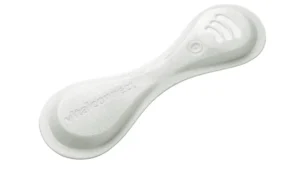
The FiberLocker technology represents a departure from traditional soft tissue fixation methods. The system is comprised of two primary components designed to work in tandem to reinforce surgical repairs. The first component is a non-degradable implant constructed from high-strength polyester staple fibers, which functions essentially as a medical-grade felt patch. This patch is designed to provide a scaffold that stabilizes the repair site, offering immediate mechanical reinforcement to the vulnerable tendon-to-bone interface.
The second component is a specialized surgical micro-stapling device. This tool allows surgeons to precisely fix the fiber implant into the soft tissue, ensuring the reinforcement stays in place during the critical early stages of the healing process. While traditional repairs rely heavily on sutures and bone anchors to provide mechanical strength, the FiberLocker system acts as a "belt and suspenders" approach, distributing mechanical loads more evenly across the repair site and protecting the primary suture line from excessive tension.
By utilizing non-degradable materials, the FiberLocker ensures long-term structural integrity, which is particularly vital in patients with poor tissue quality or those undergoing complex revision procedures. The micro-stapling mechanism is designed for ease of use within the confined space of an arthroscopic environment, aligning with the industry-wide shift toward less invasive surgical procedures.
Addressing the Clinical Challenge of Rotator Cuff Retears
The primary driver behind the development and acquisition of FiberLocker is the statistically significant failure rate of current rotator cuff repair techniques. According to a comprehensive systematic review and meta-analysis published in 2021, the rate of rotator cuff retears within three to six months post-surgery stands at approximately 21%. In some patient demographics, particularly older individuals or those with large, chronic tears, failure rates have been reported even higher.

Retears typically occur because the biological healing of the tendon to the bone—a process that can take several months—is often outpaced by the mechanical stresses placed on the repair during early rehabilitation. If the mechanical fixation fails before the biological integration is complete, the tendon pulls away from the bone, resulting in a recurrence of pain and loss of function.
ZuriMED’s approach focuses on bridging this "vulnerability gap." By providing a reinforcement layer that can withstand immediate physiological loads, the FiberLocker system aims to create a more stable environment for biological healing to occur. The clinical focus on this specific problem reflects a broader trend in orthopedics where "biocomposite" and "augmented" repairs are becoming the standard of care for complex soft tissue injuries.
Regulatory Pathway and Clinical Milestones
The path to commercialization for ZuriMED has been marked by rapid regulatory progress and a rigorous clinical trial strategy. The company received 510(k) clearance from the U.S. Food and Drug Administration (FDA) in 2024. The clearance was supported by extensive bench testing and animal performance studies, which demonstrated the mechanical superiority of the micro-stapled fiber system compared to traditional suture-only repairs.
Following the FDA clearance, ZuriMED and Stryker have initiated a robust clinical evidence-gathering phase. In 2025, the company launched its first-in-human studies to validate the safety and efficacy of the device in clinical practice.
- The Swiss Safety Trial: Conducted at a specialized orthopedic site in Switzerland, this study is primarily focused on evaluating the safety profile of the implant and the ease of use of the micro-stapling delivery system.
- The U.S. Multicenter Trial: This more extensive study involves multiple high-volume orthopedic centers across the United States. The primary endpoint of this trial is the assessment of tendon healing and structural integrity six months post-operation, utilizing magnetic resonance imaging (MRI) to provide objective data on the success of the repair.
The results of these trials are highly anticipated by the orthopedic community, as they will provide the clinical validation necessary to drive widespread adoption of the FiberLocker system within Stryker’s commercial network.
Strategic Integration into Stryker’s Portfolio
For Stryker, the ZuriMED acquisition is a logical extension of its "Mako" ecosystem. During the company’s Q2 2026 earnings call, CFO Preston Wells emphasized that the shoulder business has become a significant driver of double-digit growth within the sports medicine division. This growth has been catalyzed by the full commercial launch of the Mako Shoulder application on the Mako 4 robotic platform.
By combining the precision of robotic-assisted bone preparation and implant placement with the advanced soft tissue fixation of the FiberLocker, Stryker is positioning itself to offer a comprehensive, end-to-end solution for shoulder surgeons. The ability to market a "total shoulder solution"—encompassing both the robotic hardware and the specialized consumables used for soft tissue repair—provides Stryker with a significant competitive advantage over rivals such as Arthrex, Smith & Nephew, and Zimmer Biomet.

The acquisition also reflects Stryker’s broader M&A strategy, which has recently focused on high-growth, high-margin segments. In February 2025, Stryker completed its multi-billion dollar acquisition of Inari Medical, which brought advanced venous thromboembolism (VTE) clot removal technologies into its peripheral vascular portfolio. This was followed in May 2026 by the acquisition of Amplitude Vascular Systems, adding an intravascular lithotripsy (IVL) platform to the mix. The ZuriMED deal demonstrates that while Stryker is expanding aggressively into vascular care, it remains committed to defending and expanding its core dominance in the orthopedic and sports medicine markets.
Industry Implications and Market Analysis
The global sports medicine market is projected to reach over $9 billion by the end of the decade, with the extremities segment (shoulders, feet, and ankles) growing at a faster rate than traditional knee and hip replacements. Within this market, the demand for "augmentation" products—devices that enhance the strength of a standard repair—is surging.
Industry analysts suggest that the acquisition of ZuriMED allows Stryker to capture a larger share of the "per-procedure" spend. In a standard rotator cuff repair, a surgeon may use two to four bone anchors. By adding the FiberLocker system to the surgical tray, Stryker increases the value of each procedure while simultaneously offering a clinical benefit that may reduce long-term healthcare costs by preventing expensive revision surgeries.
Furthermore, the FiberLocker technology has potential applications beyond the rotator cuff. The principles of fiber reinforcement and micro-stapling could eventually be adapted for Achilles tendon repairs, ACL reconstructions, and other ligamentous injuries, providing Stryker with a pipeline of future product iterations.
Conclusion and Future Outlook
The integration of ZuriMED’s FiberLocker into the Stryker portfolio marks a pivotal moment in the evolution of soft tissue repair. By addressing the mechanical failures that lead to the 21% retear rate in rotator cuff surgeries, Stryker is not only expanding its product catalog but also tackling a fundamental clinical challenge that has frustrated surgeons for decades.
As the 2025 clinical trials progress and the data is presented at major orthopedic conferences, the industry will be watching closely to see if the FiberLocker can set a new benchmark for surgical outcomes. With the backing of Stryker’s massive distribution network and its synergy with the Mako robotic platform, the FiberLocker is well-positioned to become a staple in operating rooms worldwide.
For investors and healthcare providers, the message from Stryker is clear: the company is committed to a strategy of "category leadership" through the acquisition of best-in-class technologies. Whether in the peripheral vascular space with Inari or the sports medicine arena with ZuriMED, Stryker is effectively identifying clinical gaps and filling them with innovative solutions that drive both clinical excellence and financial performance. As the integration of ZuriMED concludes, the focus will shift to the commercial execution and the potential for FiberLocker to redefine the standard of care in shoulder surgery.