


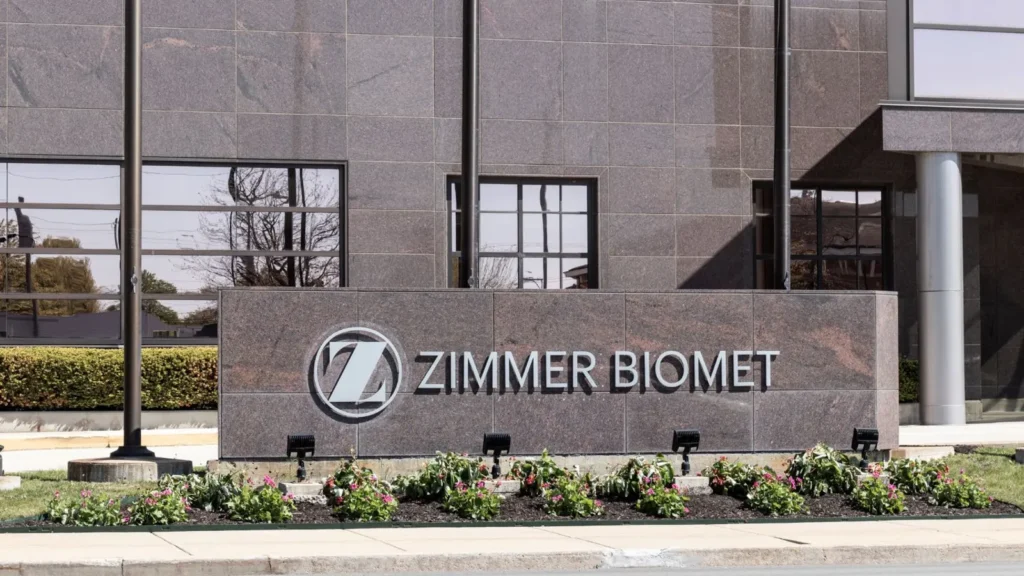
Zimmer Biomet Holdings, Inc., a global leader in medical technology and musculoskeletal healthcare, has officially named Chintan Desai as its new President of the Asia Pacific (APAC) region, a move that signals a tactical shift in the company’s approach to one of the world’s most dynamic healthcare markets. Effective immediately, Desai assumes the mantle of leadership for a territory that has recently faced a complex array of regulatory shifts, pricing pressures, and logistical reorganizations. He succeeds Sang Yi, a veteran executive who has been instrumental in Zimmer Biomet’s regional operations for over a decade and will officially depart the company on August 28.
The appointment comes at a pivotal juncture for the Indiana-headquartered company. As Zimmer Biomet navigates the post-pandemic landscape of elective surgeries and the rapid integration of digital robotics into the operating room, the APAC region remains a cornerstone of its international strategy. Desai’s arrival is viewed by industry analysts as a concerted effort to stabilize and then accelerate growth in markets where the company has recently seen performance lag behind its domestic United States operations.
A Proven Track Record in Healthcare Leadership
Chintan Desai joins Zimmer Biomet with a resume defined by nearly three decades of high-level leadership within the medical technology sector. His most recent tenure was at Alcon, the global leader in eye care, where he served as the Vice President and General Manager of International Growth and Export Markets. Based in Switzerland for that role, Desai was responsible for navigating diverse regulatory environments and driving commercial excellence across multiple continents.

Prior to his global role at Alcon, Desai was based in Singapore as the Vice President of Surgical for Asia Pacific. In this capacity, he oversaw Alcon’s surgical medtech franchise, managing complex supply chains and commercial teams across a variety of developed and emerging markets. This specific regional expertise is what Zimmer Biomet’s leadership highlighted as a primary asset.
Before his time at Alcon, Desai spent more than 22 years at GE HealthCare, one of the most prolific training grounds for medical technology executives. During his two decades at GE, he held various leadership roles that spanned several geographies and product lines, giving him a comprehensive understanding of the intersection between diagnostic technology, hospital infrastructure, and clinical outcomes.
Ivan Tornos, President and CEO of Zimmer Biomet, expressed high confidence in the new appointment. In an official statement, Tornos emphasized that Desai "knows this market" and "knows how to lead," noting that his deep expertise in the Asia Pacific region would make him a "strong addition" to the executive leadership team. The hire reflects Tornos’ broader strategy of placing seasoned operators in key regional roles to ensure that Zimmer Biomet’s global "Free Cash Flow" and "Revenue Growth" targets are met through local precision.
The Leadership Transition and Sang Yi’s Legacy
The departure of Sang Yi marks the end of a significant era for Zimmer Biomet in Asia. Yi joined the company in 2013 and was promoted to President of Asia Pacific in 2015. His leadership saw the company through the critical 2015 merger between Zimmer and Biomet, a $14 billion deal that reshaped the orthopedic industry.
In 2021, Yi’s role was expanded to Group President of Asia Pacific, reflecting the growing importance of the region to the company’s bottom line. Under his watch, Zimmer Biomet expanded its footprint in China and Japan and began the early rollout of the ROSA Robotics platform, which has since become a centerpiece of the company’s "ZBEdge" digital ecosystem. While the transition marks a change in leadership, the company has structured a handover period that lasts until late August to ensure continuity in ongoing regional projects.
Navigating a Challenging Financial Period
Desai steps into the role following a period of relative volatility for Zimmer Biomet’s international segment. Financial data from the start of 2026 indicated a rare trend: international growth trailed behind U.S. growth. This was a departure from previous years where emerging markets often served as the primary engine for double-digit expansion.
During the first-quarter earnings call in April 2026, David Roman, an analyst with Goldman Sachs, pointed out that the company’s performance outside the U.S. likely trailed the general performance of the end markets. This observation underscored the need for a leadership refresh to address specific headwinds in the APAC theater.
The company’s financial leadership, including former CFO Suketu Upadhyay—who departed Zimmer Biomet in April for a new opportunity—had previously warned investors of these challenges. Upadhyay noted that the Asia Pacific region was expected to see year-over-year declines in certain segments, primarily due to the biennial price decreases in Japan. These price cuts are a standard, albeit challenging, part of the Japanese reimbursement landscape, where the Ministry of Health, Labour and Welfare (MHLW) regularly adjusts the prices of medical devices to manage healthcare spending.

Strategic Reconfiguration in China
One of the most significant tasks facing Desai will be the continued overhaul of Zimmer Biomet’s "go-to-market" strategy in China. The Chinese market has undergone a seismic shift due to the implementation of Volume-Based Procurement (VBP). This government-led initiative aims to lower the cost of medical devices—specifically high-volume items like hip and knee implants—by awarding large contracts to companies that offer the lowest prices.
In response to these pricing pressures, CEO Ivan Tornos detailed a shift in the company’s logistical approach. Zimmer Biomet has been moving away from a traditional model that utilized a large, fragmented network of distributors. Instead, the company is consolidating its operations to work with "one, if not two, partners" in key markets.
While this consolidation is expected to improve margins and provide better control over the brand and clinical training in the long term, the transition has created short-term disruptions. Suketu Upadhyay had noted earlier in the year that sales in China were expected to be "slightly down" as the company reconfigured these strategies. Desai’s experience in managing international growth and export markets will be critical as he attempts to finalize this transition and return the Chinese segment to a growth trajectory.
The Broader Impact: Robotics and the Aging Demographic
Beyond the immediate financial hurdles, Desai’s leadership will be defined by how well he can integrate Zimmer Biomet’s technological innovations into the APAC healthcare infrastructure. The region is home to some of the world’s fastest-aging populations, particularly in Japan, South Korea, and China. This demographic shift represents a massive, long-term demand for orthopedic interventions, including total joint replacements.
However, the modern orthopedic market is no longer just about the hardware of implants. Zimmer Biomet has pivoted heavily toward its ROSA Robotics system and the ZBEdge platform, which uses data analytics to improve surgical outcomes. In many APAC markets, there is a high appetite for precision medicine and robotic-assisted surgery. Desai’s background at GE HealthCare—a company rooted in medical imaging and diagnostics—aligns well with this "medtech-plus-data" strategy.
The success of the ROSA platform in the region will be a key metric for Desai. By positioning Zimmer Biomet as a technology partner rather than just a device supplier, the company hopes to insulate itself from the commodity-style pricing of the VBP era.
Industry Implications and Future Outlook
The appointment of Chintan Desai is being watched closely by competitors such as Stryker, Smith & Nephew, and DePuy Synthes (a division of Johnson & Johnson). All these firms are vying for dominance in the APAC region, particularly as the middle class expands in Southeast Asia and India, leading to increased access to private healthcare.
Industry analysts suggest that Desai’s Singapore-based experience will be particularly valuable in navigating the diverse cultural and regulatory nuances of the ASEAN bloc. Unlike the more centralized markets of China or Japan, Southeast Asia requires a bespoke approach to market entry and clinical education.
As Zimmer Biomet moves into the latter half of 2026, the focus will remain on whether the company can close the growth gap between its domestic and international operations. With a new President of Asia Pacific at the helm, the company is betting that a blend of regional familiarity and global executive experience will be the catalyst needed to overcome regulatory headwinds and capitalize on the immense potential of the Asian medical technology market.
The immediate priorities for Desai will likely include stabilizing the distribution partnerships in China, managing the impact of Japanese reimbursement cycles, and accelerating the adoption of the ROSA robotic suite. If successful, his leadership could provide the blueprint for how Western medtech giants navigate the increasingly complex and competitive landscape of the Eastern hemisphere.