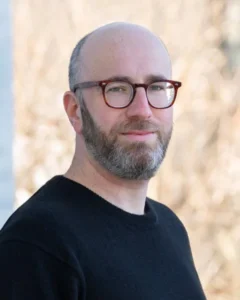






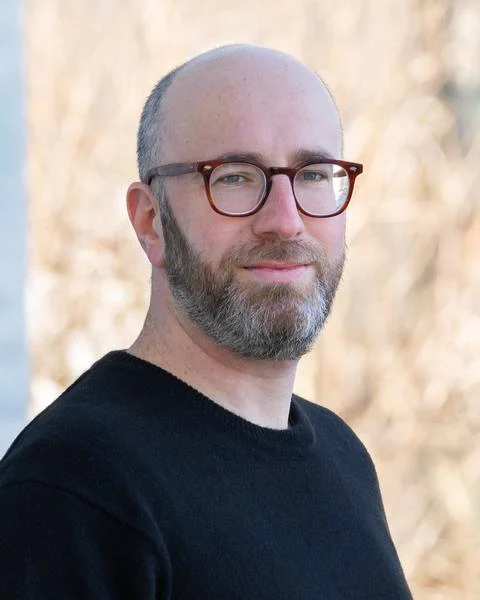
The Pershing Square Foundation has officially announced the recipients of the 2026 Maximizing Innovation in Neuroscience Discovery (MIND) Prize, naming Dr. Daniel Hochbaum as one of the eight distinguished scientists to receive the prestigious award. Dr. Hochbaum, an Endocrine Society member and an assistant professor in the Program in Neuroscience at Harvard Medical School and Beth Israel Deaconess Medical Center, has been granted $750,000 to be distributed over a three-year period. This funding is specifically earmarked for his pioneering research into the relationship between thyroid hormone signaling and neurodegenerative conditions, specifically Alzheimer’s disease.
The MIND Prize was established to catalyze high-risk, high-reward research that addresses the growing global crisis of cognitive decline. By providing significant financial support to early-to-mid-career investigators, the Pershing Square Foundation aims to foster breakthroughs that might otherwise struggle to secure traditional federal funding. Dr. Hochbaum’s selection underscores a growing recognition within the scientific community of the critical intersection between endocrinology and neurology—a field often referred to as neuroendocrinology—and its potential to unlock new therapeutic pathways for dementia.
Investigating the Thyroid-Brain Connection in Neurodegeneration
Dr. Hochbaum’s research focuses on a specific and often overlooked physiological mechanism: the age-related decline of thyroid hormone signaling within the central nervous system. While the role of thyroid hormones in systemic metabolism is well-documented, their specific impact on brain health during the aging process remains a frontier of modern neuroscience.
The project funded by the MIND Prize will investigate how inflammation—a hallmark of Alzheimer’s disease—disrupts the local production of the active thyroid hormone, triiodothyronine (T3), in the brain. In many cases of neurodegeneration, systemic levels of thyroid hormones may appear normal in clinical blood tests, yet the brain itself may suffer from "local hypothyroidism." This occurs because the enzymes responsible for converting the precursor hormone T4 into the active T3 are often impaired by neuroinflammatory processes.
Dr. Hochbaum’s study aims to define these inflammatory pathways and test a provocative hypothesis: that restoring brain-specific T3 signaling can rescue synaptic loss and reverse behavioral deficits in Alzheimer’s models. If successful, this research could pave the way for a novel endocrine-based strategy to slow or even halt the progression of neurodegeneration, shifting the focus from simply clearing protein aggregates like amyloid-beta to restoring metabolic and hormonal homeostasis within the brain.
The Significance of the MIND Prize and the Pershing Square Foundation
The Pershing Square Foundation (PSF), co-founded in 2006 by Bill Ackman and Neri Oxman, has long been a major player in philanthropic efforts targeting health, medicine, and social innovation. With over $930 million committed to various causes, the foundation’s MIND Prize represents its primary vehicle for influencing the future of neuroscience.
The prize is designed to change the paradigm of research by building a community of "next-frontier thinkers." In an era where Alzheimer’s research has seen decades of clinical trial failures, the PSF emphasizes interdisciplinary and multidisciplinary work. The MIND Prize encourages collaborations that span academic departments, the biomedical industry, and the business community. Each of the eight winners in the 2026 cohort receives $250,000 annually for three years, providing the financial stability necessary to pursue complex, multi-year experiments.
Neri Oxman, PhD, a Pershing Square Foundation Trustee, highlighted the transformative potential of this year’s awardees. "Thanks to advanced technologies and human creativity, Alzheimer’s Disease and her siblings are finally being considered remediable disorders of the human condition," Oxman stated. She noted that the current cohort of researchers reflects a unique "serendipity" between technological and biological research, utilizing tools such as artificial intelligence and advanced molecular imaging to untangle the complexities of the human brain.
Chronology of Research and Upcoming Presentations
The awarding of the MIND Prize marks a significant milestone in Dr. Hochbaum’s career and sets a clear timeline for his upcoming contributions to the field. As an active member of the Endocrine Society, Dr. Hochbaum is scheduled to present his preliminary findings and theoretical framework at the ENDO 2026 conference, one of the world’s leading gatherings for endocrine research and clinical practice.
The conference, set to take place in Chicago, Illinois, in June 2026, will feature Dr. Hochbaum during a high-profile session on Sunday, June 14. The session, titled "Thyroid Hormone on the Brain," is scheduled to begin at 10:30 a.m. Dr. Hochbaum’s specific presentation, "Synchronizing Body and Brain: Coordination of Metabolism and Exploration by Thyroid Hormone," is expected to draw significant attention from both neurologists and endocrinologists.
This presentation will serve as a critical platform for disseminating the early results of his MIND Prize-funded work. It will also highlight the importance of "cross-talk" between different physiological systems, a theme that is becoming increasingly central to the study of complex diseases like Alzheimer’s.
Supporting Data: The Growing Burden of Alzheimer’s Disease
The urgency of Dr. Hochbaum’s work is underscored by the sobering statistics surrounding neurodegenerative diseases. According to data from the Alzheimer’s Association, more than 6 million Americans are currently living with Alzheimer’s, a number projected to rise to nearly 13 million by 2050. Globally, the World Health Organization estimates that over 55 million people have dementia, with nearly 10 million new cases diagnosed every year.
The economic impact is equally staggering. In the United States alone, the cost of caring for individuals with Alzheimer’s and other dementias is estimated to be hundreds of billions of dollars annually. Despite these figures, the development of effective disease-modifying therapies has been notoriously slow. The "amyloid hypothesis," which has dominated research for decades, has led to several recently approved drugs that clear plaques but offer only modest improvements in cognitive decline.
This context explains why the scientific community is increasingly looking toward alternative drivers of the disease, such as metabolic dysfunction, neuroinflammation, and hormonal imbalances. Dr. Hochbaum’s focus on T3 signaling fits squarely into this new wave of research. Data suggests that thyroid hormones play a vital role in the maintenance of myelin (the protective coating of neurons) and the regulation of synaptic plasticity. A deficit in these hormones, even if localized to the brain, could theoretically accelerate the structural decay seen in Alzheimer’s patients.
Broader Implications for Endocrine-Based Strategies
The implications of Dr. Hochbaum’s research extend beyond a single hormone. If he can demonstrate that restoring T3 signaling rescues behavioral deficits, it could validate a broader "endocrine-first" approach to neurology. This would involve a more nuanced understanding of how systemic health—regulated by the endocrine system—dictates the resilience of the brain against aging.
Furthermore, the interdisciplinary nature of the MIND Prize encourages the use of advanced technologies. In Dr. Hochbaum’s case, this may include high-resolution imaging to track hormone receptor activity in real-time or the use of AI to model how inflammatory cytokines interact with thyroid hormone transporters at the blood-brain barrier. Such tools are essential for moving from theoretical models to practical, translatable medical interventions.
The collaboration facilitated by the Pershing Square Foundation also means that Dr. Hochbaum’s work will be exposed to leaders in the biomedical industry. This increases the likelihood that successful laboratory results can be transitioned into clinical trials. The foundation’s focus on "scalable and sustainable global impact" ensures that the research is not just an academic exercise but a step toward a viable treatment for millions.
Analysis of the Shift in Neuroscience Research
The selection of Dr. Hochbaum for the MIND Prize reflects a broader shift in the philosophy of medical research funding. For years, major institutions focused on "siloed" research, where endocrinology and neurology were treated as distinct entities. However, the complexity of the human brain demands a more integrated view.
Dr. Hochbaum’s dual affiliation with Harvard Medical School and Beth Israel Deaconess Medical Center provides him with an ideal environment for this type of integrative science. Beth Israel Deaconess is known for its strong emphasis on translational research—moving discoveries from the lab bench to the patient’s bedside. By bridging the gap between metabolic science and cognitive health, Dr. Hochbaum is at the forefront of what many believe will be the next era of geriatric medicine.
The Pershing Square Foundation’s decision to fund this specific line of inquiry also highlights the role of private philanthropy in taking risks that public sectors might avoid. Investigating the "local hypothyroidism" of the brain is a complex undertaking that requires precise measurements and innovative modeling. By providing $750,000, the PSF is essentially "de-risking" the project, allowing Dr. Hochbaum to gather the foundational data necessary to eventually apply for larger federal grants from the National Institutes of Health (NIH).
Future Outlook and Scientific Community Reaction
While official statements from the Endocrine Society regarding this specific award are typically focused on the achievement of their members, the broader sentiment in the society is one of support for the expansion of endocrine research into neurological domains. The inclusion of Dr. Hochbaum’s session at ENDO 2026 suggests that the society is prioritizing the study of how hormones affect the brain across the lifespan.
As the three-year grant period progresses, the scientific community will be watching closely for Dr. Hochbaum’s publications. The success of his project could lead to the development of new diagnostic tools—such as PET tracers that can measure brain T3 levels—or new drug delivery systems that can bypass the blood-brain barrier to deliver thyroid hormone precursors directly to affected areas.
In conclusion, the awarding of the Pershing Square Foundation MIND Prize to Dr. Daniel Hochbaum represents a critical investment in the future of Alzheimer’s research. By exploring the delicate balance of thyroid hormone signaling in the aging brain, Dr. Hochbaum is tackling one of the most significant challenges in modern medicine. His work at Harvard Medical School and his upcoming contributions to the ENDO 2026 conference signal a promising new direction in the quest to understand and treat neurodegenerative diseases. Through the support of the Pershing Square Foundation, the scientific community moves one step closer to untangling the complex "knot" of Alzheimer’s and providing hope to millions of families worldwide.