








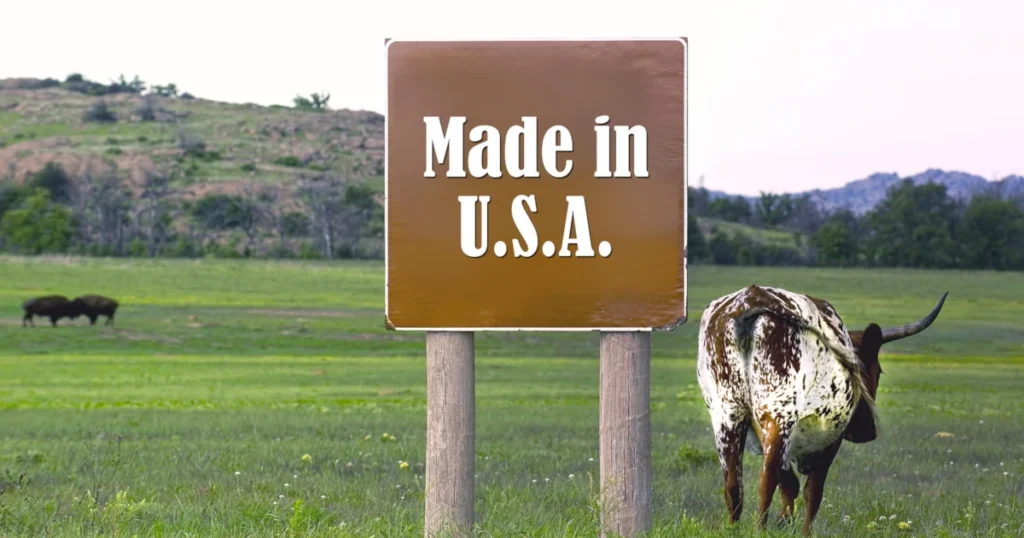
The landscape of American food labeling underwent a transformative shift as of January 1, 2026, marking the official enforcement of the United States Department of Agriculture’s (USDA) final rule regarding the voluntary "Product of USA" label. This regulatory milestone effectively terminates a long-standing policy loophole that allowed meat, poultry, and egg products to carry the domestic origin label even if the animals were born, raised, and slaughtered in foreign countries. Under the new requirements, any company utilizing the "Product of USA" or "Made in the USA" claim must ensure the product is derived from animals born, raised, slaughtered, and processed exclusively within the United States. This transition represents a significant victory for domestic agricultural producers and consumer advocacy groups who have argued for decades that previous labeling standards were deceptive and economically harmful to American family farms.
The Evolution of Origin Labeling and the Policy Loophole
To understand the significance of the 2026 enforcement, one must examine the regulatory environment that preceded it. For years, the USDA’s Food Safety and Inspection Service (FSIS) maintained a policy that permitted imported meat products to be labeled as "Product of USA" if they underwent "substantial transformation" or even simple repackaging in a federally inspected domestic facility. This meant that beef raised in Brazil, slaughtered in another country, and merely sliced or ground in a U.S. plant could legally bear a label suggesting it was a domestic product.
This loophole created what many industry analysts described as a "marketing trick" used by large-scale meatpacking corporations to capture the price premium consumers are often willing to pay for domestic goods. For American ranchers, this policy was more than a technicality; it was a direct threat to their livelihoods. By allowing cheaper imported meat to masquerade as American-grown, the previous rules depressed the value of domestic livestock and made it difficult for local producers to differentiate their high-quality products in a crowded marketplace.

A Chronology of the Rulemaking Process
The journey toward the 2026 implementation began in earnest following years of pressure from grassroots organizations, most notably Farm Action and the United States Cattlemen’s Association. In 2019, these groups filed petitions with the USDA, arguing that the existing labeling standards violated the integrity of the "Product of USA" claim.
In 2021, the Biden-Harris administration issued an Executive Order on Promoting Competition in the American Economy, which specifically directed the USDA to consider initiating a rulemaking process to address the unfair labeling of meat products. Following this directive, the USDA conducted a comprehensive review, which included a rigorous consumer survey to determine what the "Product of USA" label actually meant to the average shopper.
The results of the USDA’s consumer research were definitive: a vast majority of consumers believed the label implied the entire lifecycle of the animal took place in the United States. Armed with this data, the USDA proposed the new rule in March 2023. After a public comment period that garnered thousands of responses from stakeholders across the spectrum—including ranchers, consumers, and international trade partners—the final rule was announced in March 2024, providing the industry with a nearly two-year window to adjust supply chains and labeling inventory before the January 1, 2026, compliance deadline.
Supporting Data: The Economic Value of Transparency
The USDA’s decision to tighten labeling requirements was backed by significant economic data indicating a high consumer preference for domestic products. According to the USDA’s 2023 consumer study, approximately 65% of surveyed consumers indicated they would be more likely to purchase meat labeled "Product of USA" over unlabeled products. Furthermore, the study found that consumers were willing to pay a premium for verified domestic meat, with some estimates suggesting a price elasticity that allowed for a 10% to 15% increase in value for products with transparent origin labeling.
Before the rule change, the "Big Four" meatpacking companies—which control over 80% of the U.S. beef market—were able to leverage their global supply chains to source cheaper foreign cattle while still benefiting from the American brand. This created an uneven playing field. Data from the National Agricultural Statistics Service (NASS) has shown a steady decline in the number of small-to-mid-sized cattle operations over the last two decades, a trend that advocates link to the erosion of domestic market advantages caused by deceptive labeling.
Industry and Advocacy Reactions
The implementation of the rule has drawn diverse reactions from across the agricultural and political landscape. Farm Action, a primary driver behind the policy change, hailed the January 2026 enforcement as a "watershed moment" for the American food system. In a statement reflecting on the change, leadership at Farm Action noted that the rule finally aligns the law with the expectations of the American people, ensuring that "Made in the USA" actually means what it says.
Secretary of Agriculture Tom Vilsack emphasized that the rule is a cornerstone of the administration’s efforts to promote fair competition. "Today’s announcement is a vital step toward consumer protection and builds on the Biden-Harris Administration’s work to bolster trust and fairness in the marketplace," Vilsack stated during the rollout. "By closing this loophole, we are ensuring that American consumers have the information they need to make informed choices while supporting the hard-working men and women who raise livestock here in the United States."
Conversely, some industry groups representing large-scale processors and international exporters expressed concerns regarding potential trade friction. The North American Meat Institute (NAMI) previously cautioned that overly restrictive labeling could complicate integrated North American supply chains and potentially invite retaliatory measures from trade partners like Canada and Mexico under World Trade Organization (WTO) agreements. However, because the "Product of USA" label remains voluntary rather than mandatory, the USDA maintains that the rule is consistent with international trade obligations.
Broader Impact and Implications for the Global Supply Chain
The shift to stricter labeling standards has immediate and long-term implications for the global meat supply chain. For international exporters, the rule necessitates a clear bifurcation of products destined for the U.S. market. Meat that does not meet the "born, raised, slaughtered, and processed" criteria can still be sold in the U.S., but it cannot carry the "Product of USA" claim. This creates a more honest market where imported meat must compete on its own merits rather than riding on the coattails of the American brand.
For domestic retailers and processors, the rule requires more robust record-keeping and traceability. To use the label, entities must maintain documentation that tracks the animal’s origin from birth to the retail shelf. While this adds a layer of administrative oversight, many small-scale producers already utilize such systems for "Grass-Fed" or "Organic" certifications and view the extra step as a minor hurdle compared to the benefit of market clarity.
The rule also serves as a template for potential future labeling reforms in other sectors. As consumers become increasingly concerned with the provenance of their food—driven by interests in food safety, environmental impact, and local economic support—the "Product of USA" rule sets a precedent for how the federal government can intervene to prevent corporate "greenwashing" or deceptive marketing in the food industry.
Analysis: A Move Toward Market Integrity
From a policy perspective, the 2026 enforcement represents a move toward market integrity and the correction of "asymmetric information." In economics, asymmetric information occurs when one party (the seller) has more or better information than the other (the buyer), leading to market inefficiencies. By allowing imported meat to be labeled as domestic, the government was essentially facilitating a market failure where consumers could not accurately express their preferences through their purchasing power.
The new rule restores the signaling power of the "Product of USA" label. It ensures that the premium paid by consumers for American-raised meat actually flows back to the American ranchers who incurred the costs of domestic production, rather than being absorbed as profit by mid-stream processors. This is expected to provide a stabilizing effect for rural economies, particularly in the Midwest and Western states where cattle ranching is a primary economic driver.
As the industry moves forward from the January 1, 2026, start date, the focus will likely shift to enforcement and monitoring. The FSIS will be responsible for ensuring that companies claiming domestic origin can prove it through their "star" (System for Tracking and Reviewing) audits. For the American consumer, the change brings a new level of confidence at the grocery store, ensuring that the flag on the package truly represents the labor and heritage of the American farmer.