






The United States Supreme Court is currently preparing to hear oral arguments in a high-stakes legal battle involving Monsanto, now a subsidiary of Bayer AG, which could fundamentally reshape the landscape of federal oversight, state sovereignty, and the future of American agriculture. At the heart of the litigation is the question of whether federal law—specifically the Federal Insecticide, Fungicide, and Rodenticide Act (FIFRA)—pre-empts state-level requirements for product labeling, particularly concerning chemicals that have been linked to serious health risks. While the legal community focuses on the technicalities of federal pre-emption, a series of amicus briefs filed in support of Monsanto have elevated the stakes to a matter of national survival, suggesting that a ruling against the company could lead to agricultural devastation, food shortages, and even vulnerability to foreign attacks.
Conversely, legal experts and consumer advocacy groups representing thousands of plaintiffs argue that a victory for Monsanto would effectively immunize corporations from liability for failing to warn consumers about known carcinogenic risks. This tension between the perceived necessity of industrial pesticides for national stability and the fundamental right of citizens to seek redress for health injuries represents one of the most significant judicial crossroads in modern regulatory history.
The Core Dispute: Federal Pre-emption and Glyphosate
The case centers on glyphosate, the active ingredient in Roundup, which remains the most widely used weed-killer in the world. Since its introduction in the 1970s, glyphosate has become the cornerstone of modern industrial farming, particularly following the development of "Roundup Ready" genetically modified crops. However, the chemical’s safety profile has been the subject of intense international debate for nearly a decade.

The legal conflict arises from a fundamental disagreement between federal regulators and state-level safety standards. The U.S. Environmental Protection Agency (EPA) has consistently maintained that glyphosate is not likely to be carcinogenic to humans when used according to its current label. However, the International Agency for Research on Cancer (IARC), a branch of the World Health Organization, classified glyphosate as "probably carcinogenic to humans" in 2015. This classification prompted several states, most notably California under Proposition 65, to seek requirements for warning labels on glyphosate-based products.
Monsanto’s legal team argues that because the EPA approves the labeling of pesticides under FIFRA, states cannot legally require a warning that contradicts the federal agency’s findings. If the Supreme Court agrees, it would establish a "pre-emption" defense, effectively blocking thousands of pending lawsuits from individuals who claim their non-Hodgkin lymphoma was caused by Roundup exposure.
A Chronology of the Glyphosate Controversy
To understand the gravity of the current Supreme Court case, it is essential to trace the timeline of the legal and scientific battles that led to this moment:
- 1974: Monsanto introduces glyphosate to the market under the brand name Roundup.
- 1996: The introduction of genetically engineered "Roundup Ready" crops leads to a massive surge in glyphosate application across the U.S. Midwest.
- March 2015: The IARC publishes its assessment classifying glyphosate as a Group 2A carcinogen, citing "limited evidence" in humans and "sufficient evidence" in experimental animals.
- 2018: Bayer AG completes its $63 billion acquisition of Monsanto, inheriting the burgeoning litigation.
- August 2018: A California jury awards Dewayne Johnson $289 million in the first Roundup cancer trial, finding that the company failed to warn of the product’s risks.
- 2019-2021: Multiple high-profile verdicts, including the Hardeman and Pilliod cases, result in hundreds of millions of dollars in damages, though many are later reduced on appeal.
- June 2020: Bayer announces a settlement of up to $10.9 billion to resolve roughly 125,000 existing and unfiled Roundup claims, though litigation continues for those who did not join the settlement.
- 2022-2023: Conflicting rulings in federal appellate courts regarding whether FIFRA pre-empts state law create a "circuit split," making the issue ripe for Supreme Court intervention.
Supporting Data: The Scale of Glyphosate Reliance
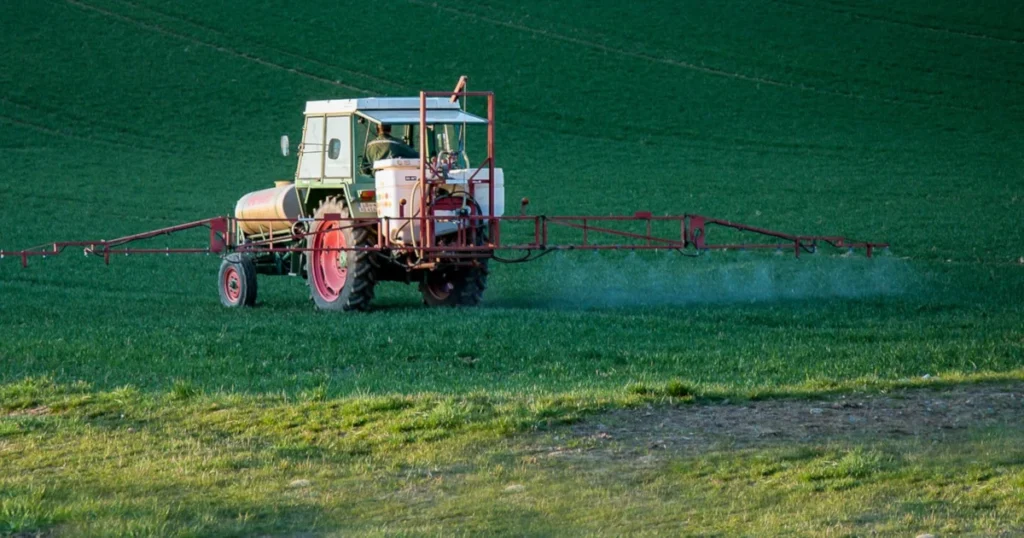
The arguments regarding "agricultural devastation" are rooted in the sheer scale of glyphosate use in the United States. According to data from the U.S. Geological Survey, approximately 280 million pounds of glyphosate are applied to U.S. farmland annually. It is utilized on roughly 90% of all corn, cotton, and soybean acres planted in the country.
Proponents of the pesticide point to data suggesting that without glyphosate, U.S. agricultural productivity could drop significantly. A study by the American Farm Bureau Federation suggests that the loss of glyphosate could increase production costs for farmers by over $40 per acre, potentially leading to a sharp rise in consumer food prices. Furthermore, the use of glyphosate is integral to "no-till" farming practices, which are credited with reducing soil erosion and lowering carbon emissions from farm machinery.
In the legal briefs supporting Monsanto, trade groups and national security analysts argue that any disruption to this chemical supply chain would weaken the U.S. economy. They contend that if state-level regulations make it impossible to sell uniform products across the country, the resulting "patchwork" of regulations would force manufacturers to withdraw products, leading to a domestic food crisis that foreign adversaries could exploit.
Arguments from the Defense and Industry Allies
The amicus briefs filed in support of Monsanto present a dire outlook for the nation’s infrastructure. These filings argue that the EPA’s role as the central authority on pesticide safety is vital for interstate commerce. They suggest that allowing states to dictate labeling would undermine the scientific expertise of the federal government and create an environment of "regulatory chaos."
"If a single state can effectively ban a product through labeling requirements that the federal government has deemed unnecessary, the entire national food supply becomes vulnerable to the political whims of individual jurisdictions," one brief stated. The most extreme arguments suggest that a weakened agricultural sector would leave the U.S. dependent on foreign food imports, creating a strategic vulnerability that impacts national defense and geopolitical stability.
The Counter-Argument: Consumer Rights and Corporate Accountability
On the other side of the aisle, consumer rights advocates and trial lawyers argue that the "national security" narrative is a hyperbolic attempt to shield a corporation from the consequences of its own negligence. They point to internal Monsanto documents, often referred to as the "Monsanto Papers," which were unsealed during previous trials. These documents allegedly show that the company ghostwrote scientific studies, pressured regulators, and sought to discredit independent scientists who raised alarms about glyphosate.
Opposing briefs argue that FIFRA was never intended to act as a "shield" for companies to hide known risks. They contend that the EPA’s labeling process is a minimum standard, not a maximum one, and that states have a traditional "police power" to protect the health and safety of their citizens.
"If the Supreme Court sides with Monsanto, it will send a message to every chemical manufacturer in the world that as long as they can convince a federal agency to approve a label, they are immune from being sued by the people they harm," said a spokesperson for a leading environmental advocacy group. "This would essentially strip Americans of their Seventh Amendment right to a jury trial in cases of corporate toxic exposure."
Official Responses and Regulatory Positions
The Biden administration’s stance on the issue has been a point of contention. Initially, the Solicitor General’s office was asked to provide the government’s view on whether the Supreme Court should take up the case. In a move that surprised many, the administration reversed the position held during the previous administration, suggesting that state-law claims are not necessarily pre-empted by federal law.
The EPA, meanwhile, continues to stand by its scientific assessment. In its most recent interim registration review, the agency stated, "EPA continues to find that there are no risks of concern to human health when glyphosate is used in accordance with its current label and that glyphosate is not a carcinogen." This federal stance remains the primary pillar of Monsanto’s defense.
Broader Implications and Potential Outcomes
The Supreme Court’s decision, expected by the end of the term, will have implications far beyond the agricultural sector.
- The "Patchwork" Doctrine: If the court rules for the plaintiffs, it will affirm the right of states to impose stricter safety standards than the federal government. This could lead to a wave of new regulations for other chemicals, such as PFAS (per- and polyfluoroalkyl substances) and various plastics.
- Corporate Liability: A ruling for Monsanto would significantly raise the bar for "failure to warn" litigation. It could potentially provide a blueprint for pharmaceutical companies and other chemical manufacturers to seek federal pre-emption as a defense against state-level product liability suits.
- Agricultural Innovation: A ruling against Monsanto might accelerate the transition toward alternative weed-control methods, including robotic weeding and biological pesticides. However, industry experts warn that these technologies are not yet scalable enough to replace glyphosate entirely without significant disruption.
- International Relations: As other nations, particularly in the European Union, move toward banning or strictly limiting glyphosate, a U.S. Supreme Court ruling that protects the chemical could create friction in international trade agreements and environmental treaties.
As the legal world awaits the oral arguments, the case remains a profound test of the "Federalism" balance. It asks whether the perceived need for a unified, efficient national economy—protected by the "devastation" warned of in Monsanto’s support briefs—outweighs the historic right of individuals to hold corporations accountable for the long-term health consequences of their products. The outcome will define the boundaries of corporate responsibility and government oversight for a generation.