







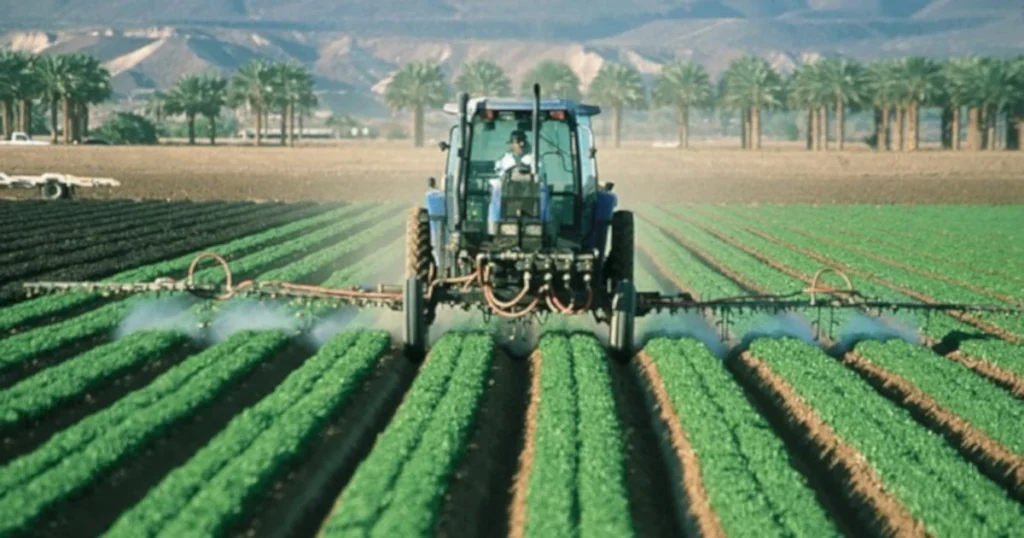
In the rolling hills of the Palouse region, near the small town of Garfield, Washington, a quiet technological revolution is fundamentally altering the landscape of American commodity production. Andrew Nelson, a fifth-generation farmer who describes himself as "tech-forward," has become a prominent figure in this transition, utilizing a sophisticated suite of precision agriculture tools and artificial intelligence to manage a sprawling 7,500-acre operation. On this vast expanse of land, which straddles the border between eastern Washington and northern Idaho, Nelson produces a diverse array of crops, including winter and spring wheat, canola, lentils, garbanzo beans, and green peas. His approach represents a significant departure from traditional "blanket" farming methods, opting instead for a data-driven strategy that treats every square meter of soil as a unique variable.
The integration of high-tech solutions into the agricultural sector—a field often perceived as resistant to rapid digital change—has reached a critical mass. For Nelson and an increasing number of large-scale producers, the "smart farm" is no longer a futuristic concept but a daily operational reality. By leveraging the power of global positioning systems (GPS), Internet of Things (IoT) sensors, and machine learning algorithms, modern farmers are attempting to solve the age-old puzzle of maximizing yields while minimizing the rising costs of fuel, fertilizer, and seed.
The Infrastructure of Precision Farming
At the heart of Nelson’s operation is a complex ecosystem of hardware and software designed to capture high-fidelity data at every stage of the growing cycle. Precision farming technologies function by gathering data from a multitude of disparate points across the farm’s 7,500 acres. This process begins in the tractor cab, where GPS coordinates ensure that machinery moves with sub-inch accuracy, preventing overlaps in seeding or spraying that can lead to wasted resources.
The equipment used on the Nelson farm is a testament to the sophistication of modern ag-tech. Planters are equipped with sensors that monitor seeding rates in real-time, ensuring that each seed is placed at the optimal depth and spacing for its specific soil type. Sprayers utilize variable-rate technology (VRT) to adjust pesticide and herbicide volumes on the fly, applying only what is necessary based on the weed pressure detected by onboard cameras. In the soil, probes provide constant moisture and temperature readings, while combines during harvest generate detailed yield maps that highlight which areas of a field were most productive.
This data is not siloed. Industry giants such as John Deere, Bayer (through its Climate FieldView platform), Corteva, and Trimble have developed integrated platforms that allow these various streams of information to communicate. By weaving together tractor telemetry with external data feeds—including high-resolution satellite imagery and local weather station readings—artificial intelligence can detect patterns that would be invisible to the human eye. Farmers can then access comprehensive dashboards on smartphones or computers, receiving suggestions on how to tweak practices for the following season or even the following hour.
A Chronology of Agricultural Innovation
The shift toward the AI-driven farm seen today in Garfield is the result of three decades of incremental technological evolution. Understanding this timeline is essential to grasping the current state of the industry.
The first major milestone occurred in the mid-1990s with the public release of high-accuracy GPS signals. This allowed for the initial development of yield mapping, where farmers could finally see a visual representation of their harvest variations. By the early 2000s, "auto-steer" technology became commercially viable, reducing operator fatigue and ensuring that equipment followed precise paths.
The decade between 2010 and 2020 saw the "Cloud Revolution" in agriculture. As wireless connectivity improved in rural areas, data began moving from physical USB drives in tractor cabs to cloud-based servers. This period saw the rise of platforms like Bayer’s Climate FieldView and John Deere’s Operations Center, which centralized data management.
Since 2020, the focus has shifted from mere data collection to data interpretation via artificial intelligence. The current era is defined by predictive analytics. Rather than simply looking at what happened last year, farmers like Nelson use AI to predict what might happen next week, allowing for proactive rather than reactive management. This includes AI models that can predict the onset of fungal diseases based on humidity patterns or algorithms that determine the exact nitrogen requirements of a crop based on its "greenness" as seen from space.
Supporting Data and Economic Impact
The economic stakes of these technological investments are immense. According to a 2023 report by Grand View Research, the global precision farming market was valued at approximately $10.5 billion and is expected to grow at a compound annual growth rate (CAGR) of 13.1% through 2030. In the United States, the Department of Agriculture (USDA) reports that more than 50% of corn and soybean acreage is now managed using some form of precision technology.
For a 7,500-acre operation like Nelson’s, the efficiencies gained through AI and precision tools can translate into hundreds of thousands of dollars in savings. Research from the Association of Equipment Manufacturers (AEM) suggests that precision agriculture can lead to a 4% increase in crop yields, a 7% increase in fertilizer placement efficiency, and a 9% reduction in herbicide and pesticide use. Furthermore, the reduction in fuel consumption—achieved through optimized machine paths—contributes to an estimated 6% decrease in carbon emissions for the average precision-enabled farm.
In the Palouse region specifically, where the topography consists of steep, rolling hills, the precision of GPS-guided machinery is vital. Traditional farming on such terrain often led to significant soil erosion and uneven chemical application. Modern systems allow for "contour farming" with such accuracy that it significantly mitigates topsoil loss, preserving the land’s long-term viability.
Industry Perspectives and Official Responses
The rapid adoption of AI in agriculture has elicited a variety of responses from stakeholders across the sector. Representatives from John Deere have frequently emphasized that their goal is to make every individual plant manageable. In recent shareholder communications, the company noted that their "See & Spray" technology—which uses AI to distinguish weeds from crops—can reduce herbicide use by up to two-thirds in certain conditions.
However, the transition is not without its critics and concerns. Agricultural economists point to the "digital divide" that may leave smaller, less capitalized farms at a disadvantage. While Andrew Nelson’s 7,500-acre farm provides the scale necessary to see a return on investment (ROI) for expensive AI subscriptions and hardware upgrades, smaller operations may struggle to afford the entry costs.
There is also the ongoing debate regarding data privacy and ownership. Organizations such as the American Farm Bureau Federation (AFBF) have worked to establish the "Privacy and Security Principles for Farm Data." The concern among many producers is that the massive amounts of data they generate—soil quality, yield performance, and chemical usage—could be used by large corporations to influence commodity markets or set seed prices, potentially to the detriment of the individual farmer.
"The data is the farmer’s property," the AFBF stated in a recent policy brief. "As we move into an era where AI makes the decisions, the transparency of how that data is used becomes our primary concern."
Broader Implications and the Future of Food Security
The implications of Andrew Nelson’s tech-forward approach extend far beyond the borders of Garfield, Washington. As the global population is projected to reach nearly 10 billion by 2050, the United Nations Food and Agriculture Organization (FAO) warns that global food production must increase by 70% to meet demand. With arable land limited and climate change making weather patterns increasingly unpredictable, efficiency is the only viable path forward.
AI-driven agriculture offers a blueprint for "sustainable intensification." By applying water and chemicals only where they are needed, farmers can reduce the environmental footprint of large-scale commodity production. This is particularly relevant in the Palouse, where runoff from farms can affect the watershed of the Snake and Columbia rivers.
Furthermore, the automation of data analysis helps address the chronic labor shortages facing the agricultural sector. As fewer young people choose farming as a career, the ability for a single operator to manage 7,500 acres with the help of AI becomes a matter of necessity rather than just a preference for high-tech gadgets.
Looking ahead, the next frontier for farms like Nelson’s is likely fully autonomous machinery. Companies are already testing tractors that can operate without a driver in the cab, managed entirely through the same digital dashboards Nelson currently uses to monitor his soil moisture. While the sight of a driverless tractor in eastern Washington might have seemed like science fiction a decade ago, the infrastructure Nelson has built—grounded in data, connectivity, and AI—has already laid the groundwork for that reality.
In conclusion, the story of Andrew Nelson’s farm is a microcosm of a global shift. The marriage of traditional agronomy and cutting-edge data science is creating a more resilient, efficient, and transparent food system. While challenges regarding data ethics and the cost of technology remain, the trend toward precision is irreversible. For the farmers of the Palouse, the future is being written in code, one acre at a time.