







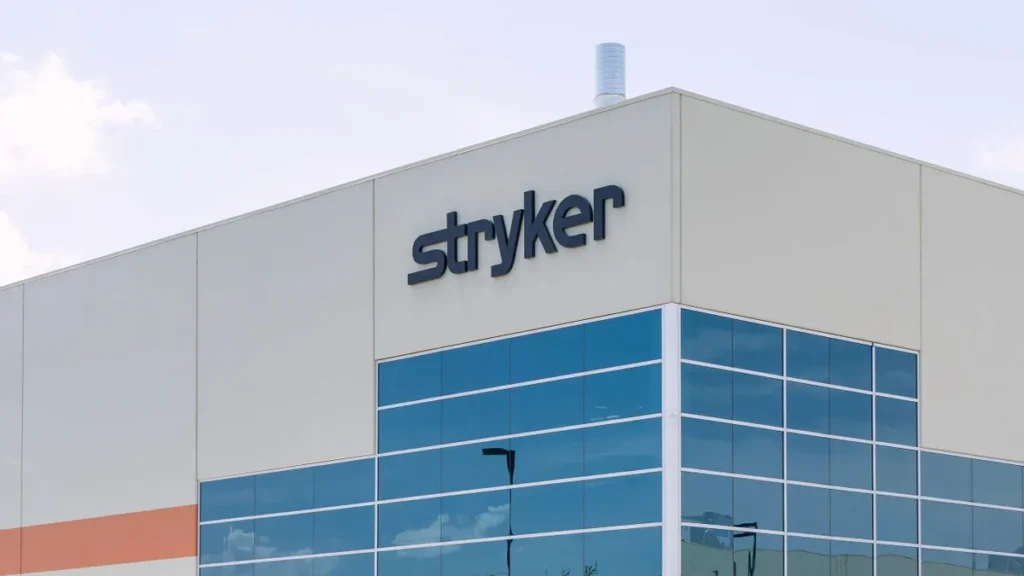
Stryker Corporation, a global leader in medical technology, announced on Thursday that its global manufacturing and commercial operations have been fully restored following a significant cyberattack that paralyzed the company’s internal infrastructure for several weeks. In a formal disclosure with the Securities and Exchange Commission (SEC), the Kalamazoo, Michigan-based firm confirmed that its ordering, shipping, and distribution systems are once again fully operational. While the company expressed confidence in its ability to meet full-year financial targets, it warned investors to expect a material impact on its first-quarter 2026 earnings as a direct result of the operational standstill.
The restoration of services marks the end of a tumultuous period for the medtech giant, which saw its internal Microsoft environment compromised in mid-March. The breach necessitated an immediate shutdown of critical business functions to contain the threat, leading to widespread disruptions in the delivery of essential medical devices, including orthopedic implants and surgical equipment. Despite the immediate financial hit, Stryker’s leadership remains optimistic about the company’s long-term trajectory, maintaining its previous guidance for organic sales growth and adjusted earnings per share.
The Anatomy of the Cyberattack and Restoration Efforts
The cyber incident first came to light on March 11, 2026, when Stryker detected unauthorized activity within its digital environment. To mitigate the risk of further infiltration, the company proactively took several systems offline, which inadvertently halted manufacturing and distribution workflows across its global footprint. According to technical investigations cited in the company’s regulatory filings, the threat actor utilized a sophisticated malicious file designed to execute commands and obfuscate its presence within Stryker’s systems.

The investigation, supported by third-party cybersecurity experts, revealed that while the malicious file allowed the attackers to navigate the network, it lacked the capability to self-replicate or spread to external environments, such as those of Stryker’s hospital customers or suppliers. This containment was a critical factor in preventing a broader industry-wide contagion.
Responsibility for the attack has been attributed to an Iran-linked threat actor known as "Handala." According to reports from Check Point Research, Handala is a group frequently associated with the Iranian Ministry of Intelligence and Security. The group claimed to have not only disrupted operations but also to have wiped thousands of servers and mobile devices, while allegedly exfiltrating sensitive corporate data. Stryker has not publicly detailed the specific volume of data lost or the exact nature of the "wiping" activity, though the SEC filing confirms the "material impact" on the company’s operational capacity during the outage.
Financial Outlook and Guidance Stability
In the wake of the restoration, the primary concern for shareholders has shifted toward the financial fallout. Stryker’s management acknowledged that the inability to process orders and ship products for a significant portion of March will result in a notable dip in the first-quarter 2026 financial results. Because the medical device industry relies heavily on just-in-time delivery for elective surgeries and emergency procedures, even a few days of downtime can lead to deferred revenue.
However, Stryker took the proactive step of reaffirming its full-year 2026 guidance, suggesting that the company expects to recoup much of the lost momentum in the subsequent quarters. The company is currently projecting organic sales growth in the range of 8% to 9.5% for the full year. Furthermore, Stryker maintained its adjusted earnings per share (EPS) forecast of $14.90 to $15.10.
The decision to maintain guidance is rooted in the belief that the demand for Stryker’s products—which include Mako robotic-arm assisted surgery systems, hip and knee replacements, and neurosurgical tools—remains inelastic. Procedures that were delayed in March are expected to be rescheduled rather than canceled, allowing the company to capture that revenue later in the fiscal year. "Overall product supply remains healthy, with strong availability across most product lines, as we continue to meet customer demand and support patient care," a company spokesperson stated in an official communication.
A Chronology of the Disruption
The timeline of the event illustrates the speed with which cyber threats can escalate into operational crises for multinational corporations:
- March 11, 2026: Stryker identifies a breach in its Microsoft environment. Systems are taken offline globally to prevent the spread of the intrusion.
- March 18, 2026: Reports emerge of significant delays in medical procedures at hospitals across the United States and Europe as Stryker’s shipping and ordering portals remain inaccessible.
- March 25, 2026: Preliminary forensic analysis identifies the involvement of the Handala group. Stryker begins a phased recovery of its manufacturing plants, prioritizing high-demand surgical kits.
- April 2, 2026: The company reports that ordering systems are partially online, though a backlog of manual orders continues to hamper distribution.
- April 9, 2026: Stryker files an 8-K with the SEC, announcing that all manufacturing, commercial, and distribution systems are fully restored.
This month-long window of disruption highlights the vulnerability of modern "smart" manufacturing. As medtech firms increasingly integrate cloud-based systems and IoT (Internet of Things) devices into their production lines, the surface area for cyberattacks expands significantly.
Wall Street Analysis and Market Sentiment
Despite the short-term volatility, financial analysts have largely maintained a "buy" or "outperform" rating on Stryker’s stock. The consensus among Wall Street experts is that Stryker’s market dominance and the essential nature of its product portfolio provide a "moat" that protects it from long-term damage caused by such incidents.

Robbie Marcus, an analyst at J.P. Morgan, noted that the market had largely anticipated some level of disruption and that the quick restoration of services is a testament to Stryker’s operational resilience. Marcus characterized Stryker as one of the "best-executing names" in the medtech sector, suggesting that its premium valuation remains justified despite the first-quarter headwinds.
Similarly, Shagun Singh of RBC Capital Markets emphasized the defensive nature of the medtech industry. Singh pointed out that Stryker’s strategic focus on high-growth areas like surgical robotics and digital health should continue to provide a multi-year growth runway. The belief is that while the cyberattack was a significant "speed bump," it does not alter the fundamental demand for orthopedic and neurotechnology solutions, especially given the aging global population and the rising volume of elective procedures.
The Broader Impact on the Healthcare Supply Chain
The Stryker cyberattack is not an isolated incident but rather part of a growing trend of "big game hunting" by state-sponsored and criminal hacking groups targeting the healthcare sector. The disruption at Stryker follows the catastrophic Change Healthcare hack earlier in the year, which crippled billing systems across the United States.
For hospitals and surgical centers, the Stryker outage served as a stark reminder of their dependency on a handful of major suppliers. During the height of the disruption, some surgical departments reported having to scramble for alternative vendors or delay non-critical joint replacements. The incident has prompted calls for hospitals to diversify their supply chains and for medtech companies to implement more robust "fail-safe" manual protocols for ordering and distribution.
The "material impact" mentioned in the SEC filing likely includes not only lost sales but also the costs associated with forensic investigations, legal fees, and the implementation of enhanced cybersecurity protocols. Furthermore, the company may face increased insurance premiums and potential regulatory scrutiny regarding its data protection practices.
Regulatory Implications and Future Security Measures
In light of the new SEC rules regarding cybersecurity disclosures, Stryker’s transparency in reporting the "material impact" is being closely watched by compliance officers across the corporate landscape. The SEC now requires companies to disclose "material" cybersecurity incidents within four business days of determining that an incident is material. Stryker’s ongoing updates and detailed 8-K filings represent a commitment to these regulatory standards, providing a blueprint for how large-cap companies might navigate the PR and legal complexities of a digital breach.

Moving forward, Stryker is expected to significantly increase its investment in cybersecurity infrastructure. This will likely include more rigorous network segmentation—ensuring that a breach in an administrative environment (like Microsoft Office) cannot easily migrate to industrial control systems (ICS) that manage manufacturing robots.
The involvement of a state-linked actor like Handala also elevates the incident from a simple criminal enterprise to a matter of national economic security. As medical technology becomes a cornerstone of modern infrastructure, the protection of these companies is increasingly viewed through the lens of national defense, potentially leading to closer cooperation between private medtech firms and government agencies like the Cybersecurity and Infrastructure Security Agency (CISA).
Conclusion: Resilience in the Face of Digital Warfare
As of April 2026, Stryker has emerged from the immediate crisis with its manufacturing and distribution engines humming once again. While the first-quarter financial report will undoubtedly reflect the scars of the March outage, the company’s ability to maintain its full-year outlook suggests a robust recovery.
The incident serves as a definitive case study for the medtech industry: a reminder that in an era of digital interconnectedness, operational resilience is just as important as clinical innovation. For Stryker, the focus now shifts to clearing the backlog of orders and reinforcing its digital fortresses to ensure that such a disruption remains a one-time event in its otherwise storied history of market leadership. Investors and healthcare providers alike will be watching the company’s upcoming earnings call for further details on the specific financial metrics of the recovery and the long-term strategies being deployed to prevent a recurrence of this digital siege.