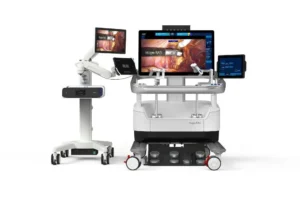









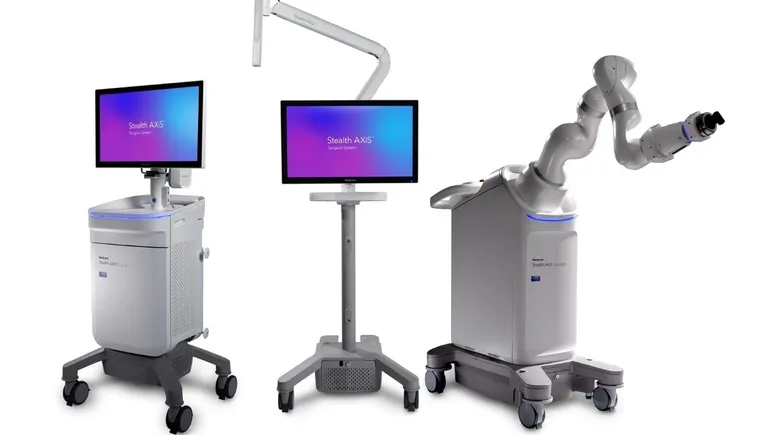
The landscape of neurosurgical and spinal intervention has reached a new milestone with the formal integration of GE HealthCare’s bkActiv intraoperative ultrasound system into Medtronic’s Stealth AXiS surgical navigation platform. This technological synergy, which follows a series of critical Food and Drug Administration (FDA) clearances earlier this year, represents a significant leap forward in addressing the dynamic challenges of real-time surgical visualization. By combining Medtronic’s leadership in robotic-assisted surgery and navigation with GE HealthCare’s advanced imaging capabilities, the partnership aims to mitigate long-standing hurdles such as anatomical deformation during surgery, thereby enhancing the precision of complex procedures.
A Chronology of Regulatory Milestones and Development
The journey toward this integrated solution began in earnest during the first quarter of 2024. In February, Medtronic received FDA clearance for the Stealth AXiS system specifically for use in spinal procedures. This initial clearance allowed surgeons to leverage the platform’s guidance for hardware placement and anatomical mapping in the lumbar and thoracic regions. Recognizing the broader potential of the technology, the companies moved quickly to expand its scope.
By March 2024, the FDA granted subsequent clearances for the Stealth AXiS to be utilized in cranial and ear, nose, and throat (ENT) procedures. These regulatory approvals were the catalyst for the current integration with GE HealthCare’s bkActiv system. The timeline reflects a rapid transition from specialized spinal application to a multi-disciplinary surgical tool capable of handling some of the most delicate operations in modern medicine.

This expansion is part of a broader trend in the MedTech industry toward "ecosystem" development, where hardware and software from different manufacturers are designed to interoperate seamlessly. The integration of the bkActiv system into the Stealth AXiS platform is the latest chapter in a multi-year collaborative framework between Medtronic and GE HealthCare, which has previously seen the companies partner on initiatives for ambulatory surgical centers (ASCs) and the expansion of patient monitoring alliances.
Addressing the Challenge of "Brain Shift"
One of the primary drivers behind the integration of real-time ultrasound into surgical navigation is the phenomenon known as "brain shift." In traditional neurosurgery, surgeons rely heavily on preoperative imaging—high-resolution Magnetic Resonance Imaging (MRI) or Computed Tomography (CT) scans—to plan their approach and identify the boundaries of tumors or vascular malformations. However, these static images represent the brain’s state only at the moment the scan was taken.
Once a craniotomy is performed and the dura is opened, the physical state of the brain changes. Factors such as the loss of cerebrospinal fluid, the effects of gravity, the administration of osmotic diuretics, and the physical removal of tissue cause the brain to shift or deform. Research indicates that brain shift can range from several millimeters to over a centimeter. When a surgeon is working near critical structures or attempting to maximize tumor resection while preserving healthy tissue, even a few millimeters of inaccuracy can lead to suboptimal clinical outcomes.
By integrating the bkActiv ultrasound system, the Stealth AXiS platform allows surgeons to overlay live, intraoperative ultrasound images directly onto the preoperative MRI or CT maps. This creates a "live GPS" effect, where the navigation system accounts for the movement of the brain in real-time. This capability ensures that the surgical guidance remains accurate throughout the entirety of the procedure, rather than becoming progressively less reliable as the surgery advances.
Technical Synergy: How Stealth AXiS and bkActiv Interoperate
The Stealth AXiS platform is designed to support comprehensive preoperative planning. It enables surgeons to generate patient-specific brain maps and trajectory plans before the patient ever enters the operating room. However, the partnership with GE HealthCare transforms this planning tool into an active intraoperative asset.
The bkActiv system, which GE HealthCare added to its portfolio following its $1.45 billion acquisition of BK Medical in 2021, is optimized for the surgical environment. The integration provides a "plug-and-play" experience, meaning surgical teams can introduce ultrasound visualization without the need for extensive reconfiguration of the operating room or disruption of established workflows.
Key technical features of this integration include:
- Synchronized Visualization: Physicians can view live ultrasound feeds side-by-side with preoperative scans, allowing for immediate comparison and adjustment.
- Uniform Image Resolution: The bkActiv utilizes advanced algorithms that ensure image clarity remains consistent across the entire field of view, which is critical for identifying the margins of deep-seated lesions.
- Ergonomic Design: The system allows surgical staff to maintain visibility of the ultrasound images even when the primary clinical display is oriented toward the surgeon.
- Operational Efficiency: A dedicated button for freezing, storing, and printing images allows for rapid documentation without requiring the surgeon to break focus from the operative field.
Strategic Context: The Medtronic and GE HealthCare Alliance
The integration of bkActiv into Stealth AXiS is not an isolated event but rather a strategic expansion of a long-standing alliance. Medtronic and GE HealthCare have increasingly aligned their interests to capture a larger share of the evolving healthcare market.
In 2022, the two companies announced a collaboration aimed at the burgeoning ambulatory surgical center (ASC) market. As more procedures migrate from traditional hospital settings to outpatient centers, there is a growing demand for integrated, cost-effective technology suites that provide high-end capabilities in a smaller footprint. The Stealth AXiS and bkActiv combination fits this profile, offering advanced navigation and imaging in a streamlined package.
Furthermore, the companies recently expanded their patient monitoring alliance, focusing on integrating Medtronic’s Microstream capnography and Nellcor pulse oximetry into GE HealthCare’s monitoring platforms. This history of cooperation suggests that the integration of surgical navigation and ultrasound is part of a broader vision to create a connected "digital operating room" where data flows freely between diagnostic and therapeutic devices.
Market Analysis and Industry Implications
The global surgical navigation market is projected to grow significantly over the next decade, driven by an aging population and an increasing preference for minimally invasive procedures. Industry analysts estimate the market for neurosurgical navigation alone is expanding at a compound annual growth rate (CAGR) of approximately 7-9%.
By combining their strengths, Medtronic and GE HealthCare are positioning themselves to compete more effectively against other major players such as Stryker, Brainlab, and Zimmer Biomet. While many of these competitors offer their own versions of intraoperative imaging, the specific integration of high-performance ultrasound—which is more portable and cost-effective than intraoperative MRI (iMRI) or intraoperative CT (iCT)—provides a unique value proposition.
From an economic perspective, the use of intraoperative ultrasound can reduce the need for expensive and time-consuming intraoperative MRI scans, which require specialized, shielded operating rooms and significantly extend the duration of surgery. By providing a "real-time check" through ultrasound, hospitals can potentially increase OR turnover and reduce the overall cost of care while maintaining high standards of precision.
Clinical Outcomes and Future Trajectory
The primary beneficiaries of this integration are the patients. Improved visualization and navigation accuracy are directly linked to higher rates of "gross total resection" in oncology cases, which is a key predictor of long-term survival in patients with malignant brain tumors. In spinal surgery, the accuracy provided by Stealth AXiS reduces the risk of pedicle screw misplacement, which can lead to neurological deficits or the need for revision surgery.
Looking forward, the integration of bkActiv and Stealth AXiS paves the way for further advancements in artificial intelligence (AI) and machine learning. As the system collects more intraoperative data, there is potential for the development of predictive algorithms that can anticipate brain shift or identify tissue types automatically.
The collaboration also highlights the shift in MedTech toward software-centric innovation. While the physical ultrasound probes and navigation sensors are essential, the "magic" happens in the software that fuses these disparate data streams into a coherent, actionable visualization for the surgeon.
Conclusion
The integration of GE HealthCare’s bkActiv ultrasound into Medtronic’s Stealth AXiS platform marks a definitive step in the evolution of image-guided surgery. By addressing the physical realities of the operating room—specifically the challenge of anatomical movement—the two companies have provided surgeons with a tool that enhances both confidence and precision. As the healthcare industry continues to move toward value-based care, the ability to deliver high-precision outcomes through integrated, efficient technology will remain a cornerstone of surgical excellence. This partnership not only reinforces the market positions of Medtronic and GE HealthCare but also sets a new standard for what is possible in the modern, digitally-integrated surgical suite.