

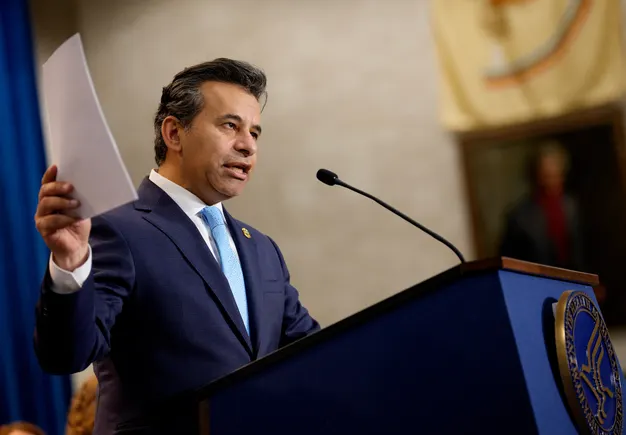
The United States Food and Drug Administration (FDA) is currently navigating a period of significant administrative transition that has left the nation’s primary regulatory body for pharmaceuticals and food safety without a Senate-confirmed leader for over two months. Following the resignation of Dr. Marty Makary, the Trump administration has yet to formally nominate a permanent successor, a delay that is increasingly unsettling for biopharmaceutical stakeholders, public health advocates, and legislative observers. While Kyle Diamantas has stepped into the role of acting commissioner to maintain day-to-day operations, the absence of a permanent, Senate-confirmed head is raising questions about the agency’s long-term strategic direction and its ability to maintain regulatory consistency during a period of rapid technological advancement in medicine.
The FDA is a behemoth within the federal government, overseeing products that account for approximately 20 cents of every dollar spent by American consumers. Its mandate covers everything from the safety of the food supply to the rigorous approval process for life-saving medications, medical devices, and vaccines. When a leadership vacuum persists at such an influential agency, the ripple effects are felt throughout the global healthcare economy. Industry watchdogs warn that without a confirmed commissioner, the agency may lack the political capital necessary to defend its scientific independence or to implement the sweeping reforms often promised during presidential transitions.
Historical Context of Leadership Gaps at the FDA
The current vacancy is not an unprecedented event in the history of the FDA, but it follows a trend of increasing reliance on acting leadership. Historically, the confirmation process for FDA commissioners has become a lightning rod for broader political debates regarding drug pricing, reproductive health, and corporate oversight. Under former President George W. Bush, the agency functioned for 22 months without a confirmed leader. More recently, during the Biden administration, a 13-month gap preceded the confirmation of Dr. Robert Califf.
While acting commissioners possess the legal authority to manage the agency’s 18,000-plus employees and execute existing regulations, they often lack the "mandate of the chair." A Senate-confirmed commissioner carries the weight of executive and legislative backing, which is essential when making controversial decisions or negotiating with Congress on funding. The frequent use of acting leaders has led some critics to argue that the agency is becoming perpetually "rudderless," making it difficult for pharmaceutical companies to predict how evidentiary standards might shift over a multi-year drug development cycle.
The Departure of Dr. Marty Makary and the Current Transition
Dr. Marty Makary’s resignation marked the end of a brief and often contentious tenure. His time at the helm was characterized by efforts to overhaul internal agency culture, yet it was also marred by reports of high staff turnover and internal friction regarding the influence of political priorities on scientific reviews. Upon his departure, Kyle Diamantas, a figure known for his legal expertise and internal stability, was named acting commissioner.
Diamantas has been largely praised by industry insiders for providing a "steady hand" during the initial transition. Unlike his predecessor, whose tenure was viewed by some as disruptive, Diamantas has focused on maintaining the status quo and ensuring that the drug review pipeline remains functional. However, as Genevieve Kanter, an economist and associate professor of public policy at the University of Southern California, noted, "any uncertainty in leadership is not good for the industry or the public." The consensus among experts is that while an acting commissioner can prevent the ship from sinking, they are rarely empowered to chart a new course.
The Shortlist: Potential Nominees and Their Regulatory Profiles
As the White House deliberates on a formal nominee, three names have emerged as frontrunners, each representing a different potential direction for the agency.
-
Dr. Stephen Hahn: Having served as FDA Commissioner during the first Trump administration, Hahn is a known quantity. His experience leading the agency during the initial rollout of Operation Warp Speed gives him significant credibility within the pharmaceutical industry. Supporters view him as a "safe" choice who understands the mechanics of the agency and prioritizes science-based decision-making.
-
Admiral Brett Giroir: A former Assistant Secretary for Health and the "testing czar" during the COVID-19 pandemic, Giroir has extensive experience in federal health coordination. His background in pediatric oncology and his familiarity with large-scale health crises make him a formidable candidate, though his previous roles were more focused on public health policy than direct regulatory oversight.
-
Dr. Heidi Overton: Currently serving as a domestic policy advisor within the Trump administration, Overton represents the "wild card" option. With a focus on healthcare reform and a smaller footprint in the traditional pharmaceutical regulatory world, her nomination would likely signal a desire for a more disruptive, policy-driven approach. Industry analysts are closely watching for signs of whether she would align with the White House’s broader health agenda or maintain the FDA’s traditional independence.
Legislative Hurdles and the "Lame Duck" Risk
The path to confirmation is fraught with logistical challenges. Jordan Brossi, a senior public affairs advisor at Holland & Knight, highlights a critical bottleneck: the legislative calendar. With fewer than 30 legislative days remaining before the upcoming elections, the window for the Senate to conduct hearings and a full floor vote is closing rapidly.
The confirmation process involves several stages:
- Formal nomination by the President.
- Extensive background checks and financial disclosures.
- Staff review by the Senate Health, Education, Labor, and Pensions (HELP) Committee.
- A public committee hearing where the nominee is questioned by Senators.
- A committee vote to advance the nomination.
- A final vote on the Senate floor.
Given that the Senate is scheduled to be in session for only a handful of weeks between August and September, any nominee named today would likely face a grueling timeline. If a nominee is not confirmed before the midterms, the process could be further delayed by a "lame duck" session or the seating of a new Congress, which would require the President to resubmit the nomination in the following year.
Economic Implications for the Biopharmaceutical Sector
For biopharmaceutical companies, the FDA is the ultimate gatekeeper. The development of a single new drug can cost upwards of $2 billion and take over a decade. Such investments require a stable regulatory environment. When leadership is in flux, companies often become risk-averse.
"Companies will slow down their pipeline, delay their trials, and delay their submissions until they get more stability and clarity in terms of policy," Kanter explained. This hesitation can have a chilling effect on innovation. If a company is unsure whether an acting commissioner will uphold a previous agreement on a surrogate endpoint for a clinical trial, they may pause multi-million dollar investments until a permanent leader is in place.
Furthermore, the lack of a permanent commissioner complicates international harmonisation efforts. The FDA often leads global discussions on regulatory standards with the European Medicines Agency (EMA) and other international bodies. Without a confirmed leader, the U.S. may lose its seat at the head of the table in shaping global pharmaceutical policy.
The Looming Crisis: User Fee Reauthorization
Perhaps the most urgent reason for a permanent commissioner is the upcoming reauthorization of the various User Fee Acts (PDUFA, BsUFA, and MDUFA). These programs, which must be renewed by Congress every five years, allow the FDA to collect fees from drug and device manufacturers to fund the review process.
These fees account for nearly half of the FDA’s total budget and fund thousands of staff positions. The negotiation process for these fees is complex and involves intense discussions between the agency and industry representatives. A confirmed commissioner is vital to this process, as they must testify before Congress and vouch for the agency’s performance and resource needs. Jordan Brossi emphasizes that these are "must-pass" items; failure to reauthorize them would lead to catastrophic delays in drug approvals and potential furloughs within the agency.
Restoring Public Trust and Agency Independence
Public trust in the FDA has reached a near-record low in recent years, exacerbated by the politicization of health issues and high-profile regulatory reversals. A permanent commissioner with a strong scientific background is seen as essential to restoring the agency’s reputation.
The "wish list" for the next leader, as described by policy experts, includes a commitment to the scientific process, the ability to manage "absurd levels of unpredictability," and a track record of transparent communication. The public needs to believe that drug approvals are based on data, not political pressure. Until a nominee is confirmed who can demonstrate this independence, the shadow of political influence may continue to loom over the agency’s decisions.
Conclusion and Future Outlook
The current leadership gap at the FDA is more than just an administrative delay; it is a source of systemic uncertainty that affects the entire healthcare ecosystem. While acting commissioner Kyle Diamantas provides a necessary bridge, the complex challenges facing the agency—from the opioid crisis and tobacco regulation to the approval of gene therapies and AI-driven medical devices—require a leader with a permanent mandate.
As the legislative clock ticks down toward the midterms, the pressure on the White House to name a nominee intensifies. The pharmaceutical industry, healthcare providers, and, most importantly, the American public are waiting for a signal that the FDA will remain a stable, science-led institution capable of navigating the challenges of 21st-century medicine. Whether the administration chooses a veteran hand like Hahn or a new voice like Overton, the speed and transparency of the upcoming confirmation process will be a defining moment for the future of American public health.
